

Practical ways to help your child crush stage fright and master public speaking
By Orchids Editorial Team |
Date 10-12-2025
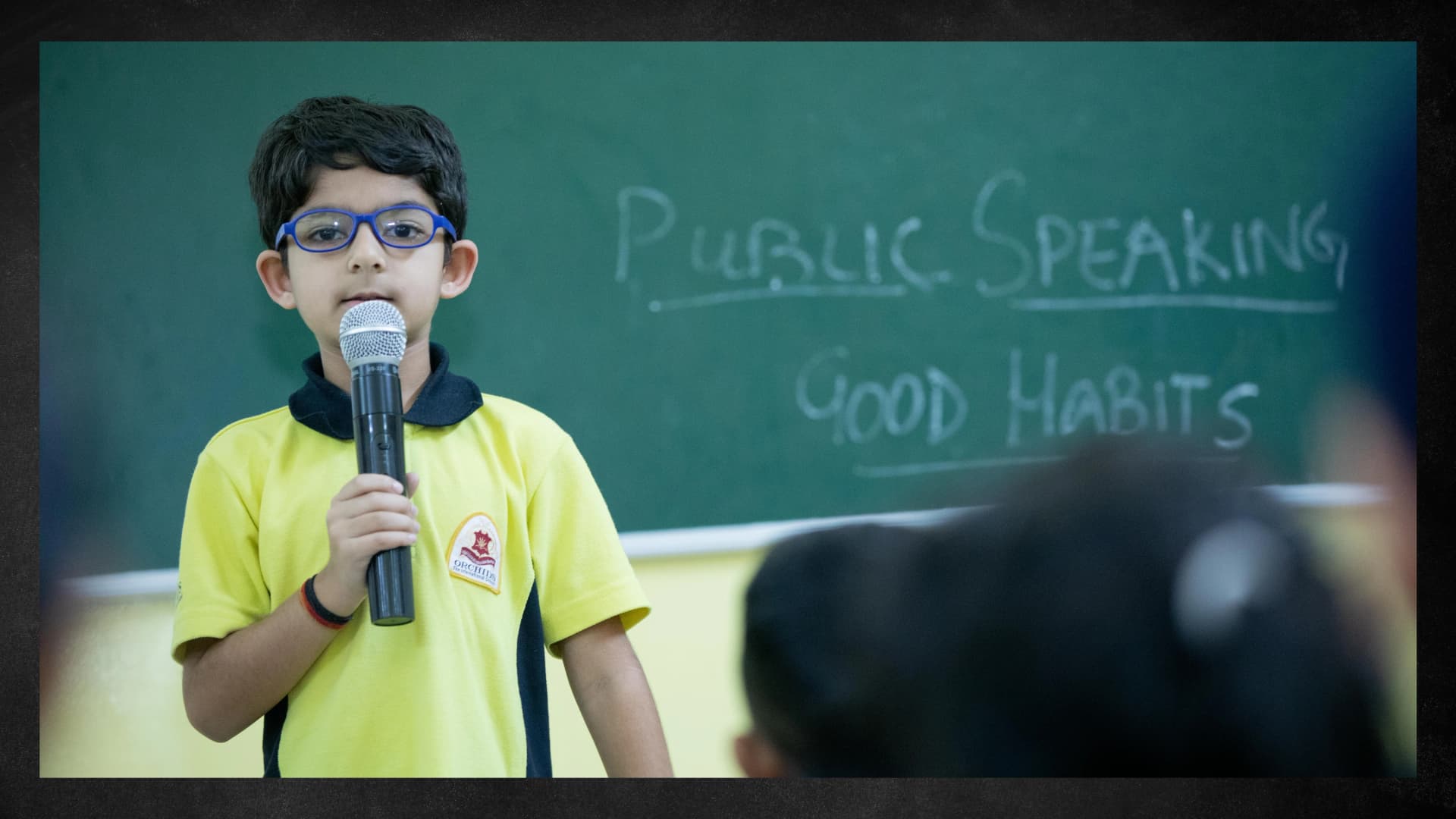
A young student delivers his classroom speech during a public speaking session.
Admissions Open for 2026-27
Every parent hopes to see their child have all the opportunities and the confidence to step into the world. Whether it's academics or participating in a sports event or as simple as expressing their thoughts. In a world saturated with information, buzzing with social media, technology and endless screens, there is one skill that not only benefits children but also quietly shapes their lives more than we realise: public speaking. Developing this 21st-century skill is more than just a choice; it's a necessity. It builds confidence, critical thinking and improves communication needed for academic success, leadership, and navigating the digital world.
For children growing up in the digital age, public speaking articulates ideas, builds empathy, and stands out in a noisy, idea-driven environment where clear expression often outweighs mere knowledge. Whether presenting in a classroom, engaging in debates, or simply communicating effectively online, public speaking empowers kids to thrive in a fast-evolving landscape.

.webp "Public Speaking")
Understanding what kids struggle with
Every age group experiences public speaking differently. Younger children, typically aged 6 to 9, often fear making mistakes. Limited vocabulary, stage fright and unfamiliar audiences can make them hesitant. Preteens between 10 and 13 tend to struggle with self-consciousness and peer comparisons. They often know the content but worry about how they sound. Teenagers, on the other hand, face a different challenge: the pressure of being judged. With higher academic expectations and social scrutiny, speaking in front of others can feel overwhelming if not practised gradually. Recognising these age-specific challenges helps adults create supportive environments that make speaking feel natural, not intimidating.
Overcoming nervousness: Simple tools for kids
Even seasoned speakers get nervous. Teaching children to manage anxiety equips them with a lifelong skill. Deep breathing exercises calm the mind. Practising with familiar people reduces fear. Using cue cards or simple prompts helps structure thoughts. Positive self-talk “I can do this” builds emotional resilience. Over time, these techniques help children convert nervousness into positive energy.
Fun exercises to practise at home or school
Public speaking becomes enjoyable when turned into interactive games. Activities like “object talk,” where a child speaks about any random household object, make children think quickly. “Picture prompt storytelling” enhances creativity. “Two truths and a tall tale” builds expression and humour. Even “reverse teaching,” where children explain a concept to adults, boosts their clarity and confidence.
Giving children their voice
Public speaking is not about perfect speeches; it is about empowering children to express themselves with clarity and confidence. When nurtured through simple, consistent practice, every child can grow into a strong communicator. The journey may begin with a minute-long talk at home, but it eventually shapes a young learner into someone ready to lead, influence, and make their voice heard in the world.


Admissions Open for 2026-27
Recent Blogs




CBSE Schools In Popular Cities
- CBSE Schools in Bangalore
- CBSE Schools in Mumbai
- CBSE Schools in Pune
- CBSE Schools in Hyderabad
- CBSE Schools in Chennai
- CBSE Schools in Gurgaon
- CBSE Schools in Kolkata
- CBSE Schools in Indore
- CBSE Schools in Sonipat
- CBSE Schools in Delhi
- CBSE Schools in Rohtak
- CBSE Schools in Bhopal
- CBSE Schools in Aurangabad
- CBSE Schools in Jabalpur
- CBSE Schools in Jaipur
- CBSE Schools in Jodhpur
- CBSE Schools in Nagpur
- CBSE Schools in Ahmednagar
- CBSE School In Tumkur

Call Us to know more about Orchids











Orchids The International School is one of India's leading chains of CBSE and ICSE schools, with 110+ schools across the country.