

Picture Reading for Class 1 English with Examples
Picture reading is an important early English learning skill for Class 1 students. It helps children understand stories, objects, actions, and settings through visuals instead of difficult text. At this stage, students often find reading long sentences challenging, so pictures act as a bridge between understanding and learning. Picture comprehension builds observation skills, vocabulary, and sentence formation ability in a simple and enjoyable way.
In this guide, you will learn what picture reading is, how to solve picture comprehension questions, important steps to follow, common mistakes to avoid, and examples with simple answers to help Class 1 students learn effectively.
Table of Contents
- What is Picture Reading in English?
- How to Read a Picture
- Common Mistakes in Picture Reading
- Practice Questions and Learning Tips
- How to Practise Class 1 Picture Reading Exercises at Home
- Frequently Asked Questions on Picture Reading for Class 1

What is Picture Reading in English?
Picture reading, also called picture comprehension, is the process of understanding information by carefully observing an image and answering questions based on it. For Class 1 students, it is one of the easiest ways to develop reading skills without depending heavily on written text.
Picture reading helps children identify:
-
Characters in the picture
-
Actions happening in the scene
-
Place or setting of the image
-
Objects and small details
This concept builds early reading confidence and prepares students for formal reading comprehension in higher classes.
Examples:

Observe the picture and answer the following questions.
1. What does the picture depict?
3. What is the cook doing?
4. How many customers are there in the restaurant?
How to Read a Picture
Look at the picture below and notice the key-points you need to focus on when reading the picture.
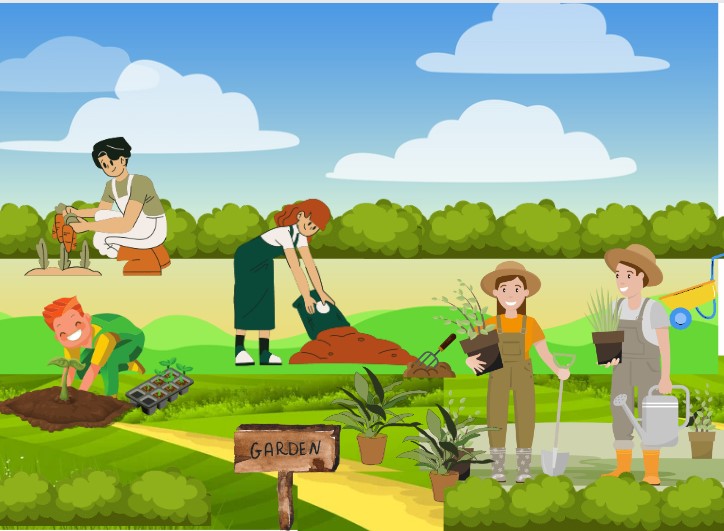
1. Which place can be seen in the picture?
Observe the picture to see the area it shows. The surrounding of a picture always gives hints as to location of the picture.
Examples: The place in the picture is a garden.2. Characters in the picture
There will always be a few characters in a picture. You can mention the number of the characters seen in the picture. Use words like man, woman, girl, boy, etc. to name the characters in the picture.
Examples: There are five people in the garden.3. What action each character does?
Each character will be performing an action. You need to identify which character does the action and specify the details about the character while mentioning this action.
Examples:- A man is harvesting carrots.
- A girl is gathering soil in a container.
- A boy is planting a sapling.
4. Mention other things observed in the picture. There may be many items apart from the characters observed in the picture. Specify information about those items, like name them and give a number of the quantity of things seen in a picture. For example, words like table, tree, chair, etc.
Examples:- There are four potted plants in the garden.
- There is a shovel in the soil.
Common Mistakes in Picture Reading
Before you give the answers, read the questions attentively. Don’t add unnecessary information unless asked.
Examples:
Question:
Can you identify the place in the picture?
Answer:- Yes. This is a picture of a farm.
- Yes. This is a picture of a farm. There are 6 animals in the picture.
Look at the mind map to have a better understanding of the concept.
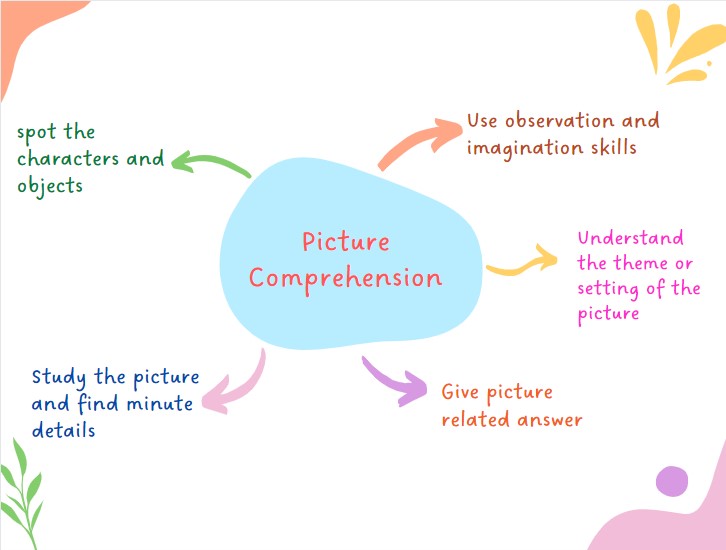
Strong language skills open doors well beyond the classroom, shaping how confidently a child reads, writes and expresses ideas. If you want to know more about how Orchids The International School builds these skills through its English curriculum, get in touch with our admissions team.
Frequently Asked Questions on Picture Reading for Class 1
1. What is picture reading in English for Class 1?
Picture reading is a learning activity where students look at an image carefully and answer questions based on what they observe. It helps young learners understand meaning through visuals instead of long text.
2. Why is picture reading important for children?
Picture reading is important because it improves observation skills, vocabulary, and understanding ability. It also helps students build confidence in reading and answering simple questions.
3. What should students look for in a picture reading exercise?
Students should focus on the place, characters, actions, and objects shown in the picture. These details help them answer questions correctly and completely.
4. How do you answer picture comprehension questions correctly?
You should first observe the picture carefully, understand the question, and then write only the relevant details shown in the image without adding extra information.
5. What are the common mistakes in picture reading?
Common mistakes include guessing answers, missing small details, writing extra information, and not reading the question properly before answering.
6. How can students improve picture reading skills?
You can improve by practicing daily with different pictures, describing scenes in simple sentences, and focusing on key details like actions, characters, and places.
Related Links


Admissions Open for 2026-27
What type of concept pages would you prefer?
CBSE Schools In Popular Cities
- CBSE Schools in Bangalore
- CBSE Schools in Mumbai
- CBSE Schools in Pune
- CBSE Schools in Hyderabad
- CBSE Schools in Chennai
- CBSE Schools in Gurgaon
- CBSE Schools in Kolkata
- CBSE Schools in Indore
- CBSE Schools in Sonipat
- CBSE Schools in Delhi
- CBSE Schools in Rohtak
- CBSE Schools in Bhopal
- CBSE Schools in Aurangabad
- CBSE Schools in Jabalpur
- CBSE Schools in Jaipur
- CBSE Schools in Jodhpur
- CBSE Schools in Nagpur
- CBSE Schools in Ahmednagar
- CBSE School In Tumkur











Orchids The International School is one of India's leading chains of CBSE and ICSE schools, with 130+ schools across the country.