

Heavy and Light: Understanding Weight Comparison with Examples
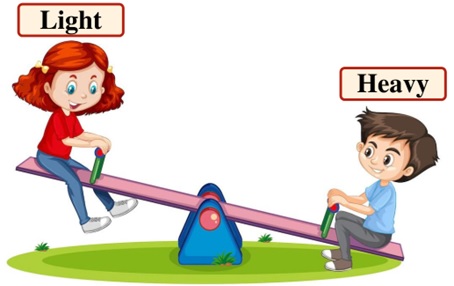
The ideas of 'heavy' and 'light' are among the first concepts children learn to understand their surroundings. This topic helps kids compare objects, feel weight differences, and begin to understand how weighing works. In this article, we explain the concept of heavy and light in simple words, with easy examples and colourful illustrations. You’ll find common misconceptions, a handy mind map to remember the ideas, and fun activities that make learning playful.
Table of Contents
- What Does Heavy and Light Mean?
- How Do We Measure Heavy and Light?
- Examples of Heavy and Light Objects
- Comparing Heavy and Light Objects
- Fun Activities to Learn the Light and Heavy Concept
- Why Is Learning Heavy and Light Important?
- Real-Life Uses of the Light and Heavy Concept
- Understanding Weight in Science
- How to Teach Heavy and Light at Home
- Common Misconceptions
- Fun Facts about Heavy and Light
- Frequently Asked Questions of Heavy and Light

What Does Heavy and Light Mean?
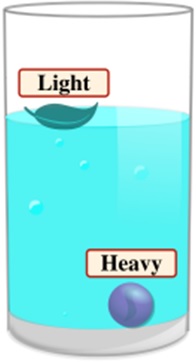
Heavy and light help us describe how much an object weighs. A heavy object has more weight and is usually harder to lift or carry. For example, a large stone is heavy because it takes more effort to pick up. A light object has less weight, so it is easier to lift and move. A feather or a leaf is light because it weighs very little
This distinction among heavy and light enables us understand and compare matters. It is important to remember that size does not always tell us the weight. Sometimes, a small object can be heavier than a bigger one.
How Do We Measure Heavy and Light?
We can usually tell whether or not something is heavy or light via lifting it, there are tools that help us measure weight more precisely. One such tool is a balance scale. When we put items on both on both sides of the scale, the heavier side moves down while the lighter side moves up, making it easy to compare their weights.
Another tool is a weighing scale, which offers us the exact weight of an object in units such as grams (g) or kilograms (kg).
Examples of Heavy and Light Objects
To understand the concept of heavy and light, let us look at a few simple examples of objects that are heavy and light.
Heavy Objects
- Watermelon
- School bag packed with books
- Refrigerator
- Rock
- Chair
- Bag of rice
- Large pumpkin
- Metal toy automobile
Light Objects
- Balloon
- Pencil
- Paper sheet
- Leaf
- Feather
- Cotton ball
- Plastic spoon
- Empty balloon
Comparing Heavy and Light Objects
Once we recognise which objects are heavy and which are light, we can describe and compare them using suitable words.
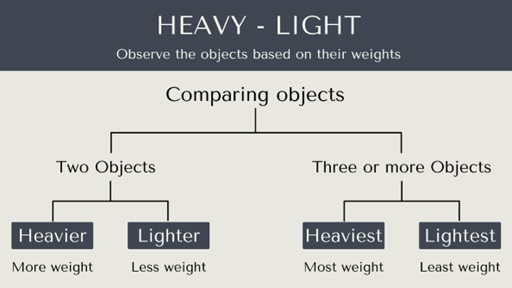
Heavier and lighter: These words are used to compare two objects based on their weight.
Example: A watermelon is heavier than a mango.
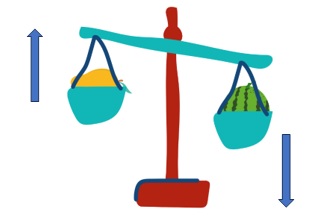
Heaviest and lightest: These words are used when comparing three or more items.
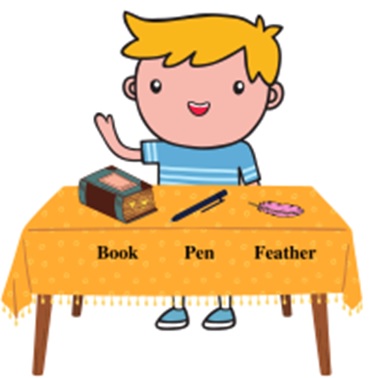
Example: Among a rock, a feather, and a chair, the chair is the heaviest and the feather is the lightest.
Using these words helps children describe objects accurately and understand the differences in their weight.
Fun Activities to Learn the Light and Heavy Concept
Learning becomes easier and more enjoyable through fun activities. Here are some simple games and hands-on activities that help learners understand the concepts of heavy and light.
1. Balance Scale Experiment
Use a balance scale and place objects that are available in our surroundings on either side of the scale. See which side goes down; that side has the heavier object. Try pairs like a book and a pencil or a small rock and a feather.
2. Heavy-Light Sorting
Collect objects like a toy automobile, a spoon, a balloon, a rock, a cotton ball and a book. Ask children to organise the objects from the heaviest to the lightest. This helps them to practise sorting objects by weight.
3. Lift and Guess
Let children pick out up two items without looking and guess which one is heavier. This activity helps them develop a sense of weight through touch.
4. Draw and Color
Ask learners to draw objects they assume are heavy and colour them purple. Then draw lighter objects and shade them blue. This helps improve memory and makes learning more creative.
Why Is Learning Heavy and Light Important?
Understanding heavy and mild is useful in many parts of existence. For example:
- When packing your college bag, you could determine which books or items are too heavy to hold.
- When assisting in the kitchen, you could compare the weight of fruits and vegetables.
- In sports activities, understanding the load of balls or equipment helps you play better.
- Scientists use the concept of weight to apprehend how things flow and remain stable.
Real-Life Uses of the Light and Heavy Concept
We use the ideas of heavy and light each day, regularly, without considering it. Here are some real-life conditions in which this understanding allows us:
- At the grocery shop, you might compare a sack of potatoes (heavy) to a bag of chips (light).
- In the kitchen, a metal pot is heavier than a plastic spoon.
- When packing your school bag, you know now not to carry too many heavy books.
- Playing seesaw at the park: The heavier person goes down at the same time as the lighter one goes up.
- In nature, a coconut is heavier than a small apple.
Understanding Weight in Science
The concept of heavy and light allows us study different essential technological know-how standards like pressure, balance, and gravity.
- Force: Heavy items need extra pressure to boost or flow.
- Balance: Balancing items requires understanding of their weights so the seesaw or scale may be even.
- Gravity: Gravity pulls heavier gadgets down with extra force.
How to Teach Heavy and Light at Home
Parents and teachers can help children understand the concepts of heavy and light through everyday activities:
Let children use a kitchen scale to measure the weight of fruits or cooking ingredients.
Let children handle a variety of objects and discuss whether they feel heavy or light.
Visit the playground and use the seesaw to give an explanation for balance and weight.
Sort family items into heavy and light groups.
Use storybooks or educational videos to help children understand weight more easily.
Common Misconceptions
- Big things are usually heavy: Some huge things, like a balloon or a large container manufactured from paper, can be very light
- Small matters are usually mild: A small gold coin or steel ball can be heavy although it seems tiny. You can’t constantly guess how heavy some thing is until you lift or weigh it.
- All things of the identical length weigh the identical: Two objects of the same length, like a sponge and a rock, can weigh very otherwise.
- If something floats, it must be mild: Some huge boats are first rate heavy but nonetheless go with the flow because of their shape and how they push water.
Fun Facts about Heavy and Light
A feather and a hammer fall at the same velocity on the Moon.There's no air on the Moon, so heavy and light things fall the same way!
An unmarried paperclip is light, but a jar complete with them is heavy.Lots of light things together can emerge as heavy.
Helium balloons waft because helium is lighter than air.That's why birthday celebration balloons cross up!
An ant can bring something a good deal heavier than its own frame!That's like a child lifting a small vehicle!
Air has weight tooEven though we are able to see it, air presses down on us all the time, it’s referred to as air stress.
Things You’ve Learned
Meaning of Heavy and Light:Heavy objects have more weight and are harder to raise, whilst light objects have less weight and are easier to carry. For example, a rock is heavy and a feather is mild.
Size Doesn’t Always Equal Weight:Just because something is massive doesn't suggest it’s heavy. For instance, a massive balloon may be mild, and a small steel ball may be heavy. Weight depends on mass, not simply size.
Tools to Measure Weight:We can use balance scales to examine objects and weighing scales to locate the precise weight in grams or kilograms. This enables young learners to recognize weight more as it should be
Fun Activities Reinforce Learning:Activities like sorting items with the aid of weight, drawing and coloring, and the use of a balance scale help students understand the concept of weight in an interesting and hands-on way
Real-Life Applications Matter:Learning about heavy and mild is useful in ordinary life like packing school baggage, gambling on a see-saw, or deciding on groceries. It also connects to science concepts like pressure, stability, and gravity.
Know more about related topics:
Numbers make sense when they're taught right. To see how Orchids The International School turns Maths from intimidating to intuitive, reach out to our admissions team.
Frequently Asked Questions of Heavy and Light
1. What is the distinction among heavy and light?
Heavy approach some thing that is difficult to raise because it has more weight. Light method something that is simple to raise as it has much less weight. For example, a rock is heavy, however a feather is mild.
2. Can a small object be heavy?
Yes, a small item can be heavy. Just because something is small doesn’t mean it's miles light. For instance, a small metallic ball can be a lot heavier than a massive balloon.
3. How can we compare the weight of objects?
We can compare the weight of objects by lifting them or using a weighing scale. If an object is hard to lift, it is heavy. If it is easy to lift, it is light. A scale helps us find the exact weight of an object.
4. Why is it essential to learn about heavy and mild?
It is critical because it facilitates us live safe and make excellent picks. For instance, we want to realize if some thing is simply too heavy to hold or if it needs help. It also enables us while packing, cooking, or transferring matters.
5. Can we degree weight?
Yes, we are able to degree weight using tools like a weighing scale. The weight is typically shown in gadgets like grams or kilograms. This facilitates us realize precisely how heavy some thing is.
6. How to teach heavy and light?
To teach heavy and light, use real objects that children can see and hold, such as a book, a pencil, or a bottle. Ask them to lift and compare which object feels heavier or which feels lighter. You can also use simple examples or a balance scale to help them understand the difference easily.
7. What is an example of heavy and light?
A rock is an example of a heavy object, while a feather is an example of a light object. We can compare them by lifting or holding them to feel the difference in weight.
Related Links


Admissions Open for 2026-27
What type of concept pages would you prefer?
CBSE Schools In Popular Cities
- CBSE Schools in Bangalore
- CBSE Schools in Mumbai
- CBSE Schools in Pune
- CBSE Schools in Hyderabad
- CBSE Schools in Chennai
- CBSE Schools in Gurgaon
- CBSE Schools in Kolkata
- CBSE Schools in Indore
- CBSE Schools in Sonipat
- CBSE Schools in Delhi
- CBSE Schools in Rohtak
- CBSE Schools in Bhopal
- CBSE Schools in Aurangabad
- CBSE Schools in Jabalpur
- CBSE Schools in Jaipur
- CBSE Schools in Jodhpur
- CBSE Schools in Nagpur
- CBSE Schools in Ahmednagar
- CBSE School In Tumkur











Orchids The International School is one of India's leading chains of CBSE and ICSE schools, with 130+ schools across the country.