

Tens and Ones: Definition, Examples and Place Value
Tens and ones are an important part of place value. Tens and ones help us understand how numbers are made. For example, 24 has 2 tens and 4 ones. This makes counting and writing numbers easier for young learners.
Table of Contents
- What Are Tens and Ones?
- Understanding Place Value
- How to Count Tens and Ones
- Tens and Ones Chart
- Examples Using the Chart
- Representing Numbers Using Tens and Ones
- Base 10 Blocks Representation
- How to Identify Tens and Ones in a Number
- Real Life Examples of Tens and Ones
- Solved Examples on Tens and Ones
- Word Problems on Tens and Ones
- Practice Questions on Tens and Ones
- Frequently Asked Questions on Tens and Ones

What Are Tens and Ones?
Tens and ones are the two basic place values used to understand and represent two digit numbers. A number can be made of a single digit, two digits, or more than two digits. If a number is made of two digits, we group the number in Tens and Ones to make the counting/calculations easier.
Example: Tanmay wants to count all the books on the bookshelf. But it’s difficult for him to count all the books. If there are 94 books on the bookshelf, group them in tens and ones to help him count the books

Answer: 94 books can be grouped in tens and ones as follows:
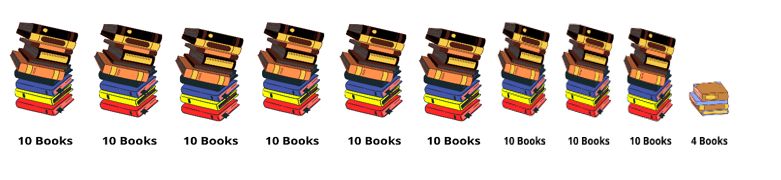
Now he can count the number of books as:
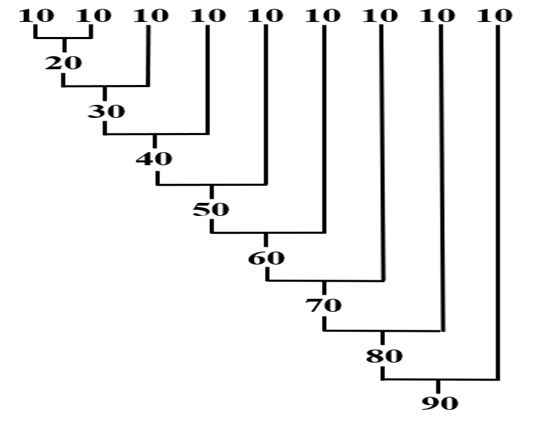
So, there are 90 books in 9 groups, adding remaining 4 individual books it will give:
90 books and 4 books = 94 books
Understanding Place Value
Ones Place
The ones place is the rightmost position in a number. It tells you how many single units there are.
In the number 27:
ONES place = 7
(7 single units)
Tens Place
The tens place is the second position from the right. It tells you how many groups of ten there are.
In the number 27:
TENS place = 2
(2 groups of ten = 20)
How Place Value Works
The position of a digit decides its value
Digit 3 in TENS place = 30
Digit 3 in ONES place = 3
SAME digit, DIFFERENT position = DIFFERENT value.
What Is Place Value
- When we have more than 9 items, write them in two columns ‘Tens’ and ‘Ones’.
- In the Tens column we write down how many "tens" we have, followed by the remaining items in the ones column.
- A ‘Ten’ indicates bundle or group of 10 individuals or singles.
- 1 Object = 1 Ones
- 10 Ones = 1 Ten
- If there is a group of 10 Tens, we call it Hundreds.
- 10 Tens = 1 Hundred
Place Value Order
Ones, Tens and Hundreds from right to left are written as follows.
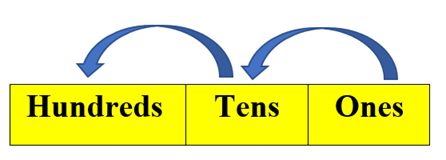
Place value of One-digit numbers
- All One-digit numbers are smaller than 10. A single digit number cannot make a group of 10.
Place Value 2 Digit Numbers
- The number 10 is the first and the smallest two-digit number.
How to Count Tens and Ones
Counting with Objects
Let's say you have 10 pencils. How do you count them using tens and ones?
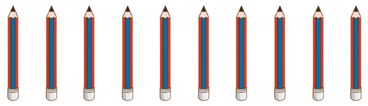
Now make a group of 10 pencils.

- We can make only 1 group. It represents 1 Ten. But there is no single pencil remaining. It indicates 0 ones.
- So, the number 10 can write as:
Similarly, we can write representation of the all two-digits numbers.
Example
- If we take 21 pencils, we can make 2 groups of 10 pencils that can be represented as 2 Tens.
- 1 remaining pencil can be represented as 1 Ones.
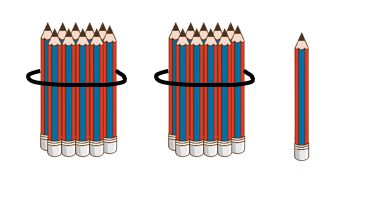
2 Tens and 1 Ones = 21
- We can write 21 as:
What Is the Place Value of 100
We can represent 100 as 10 groups of pencils.
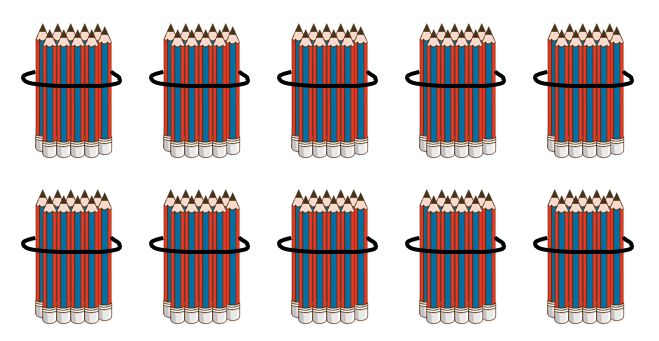
We cannot write 100 as:
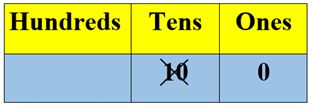
We use the hundreds place. The number 100 is written as:
100 is the first and smallest three-digit number.
Misconception:
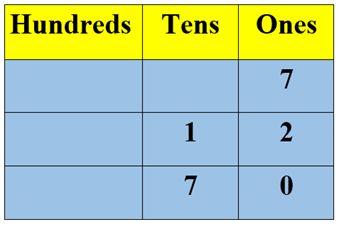
Do not write the numbers at the place value table from the left. If we have to write the numbers 7, 12 and 70. Don’t write as:
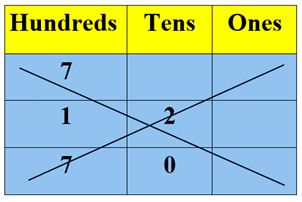
The correct way is: Always write the numbers from right to left.
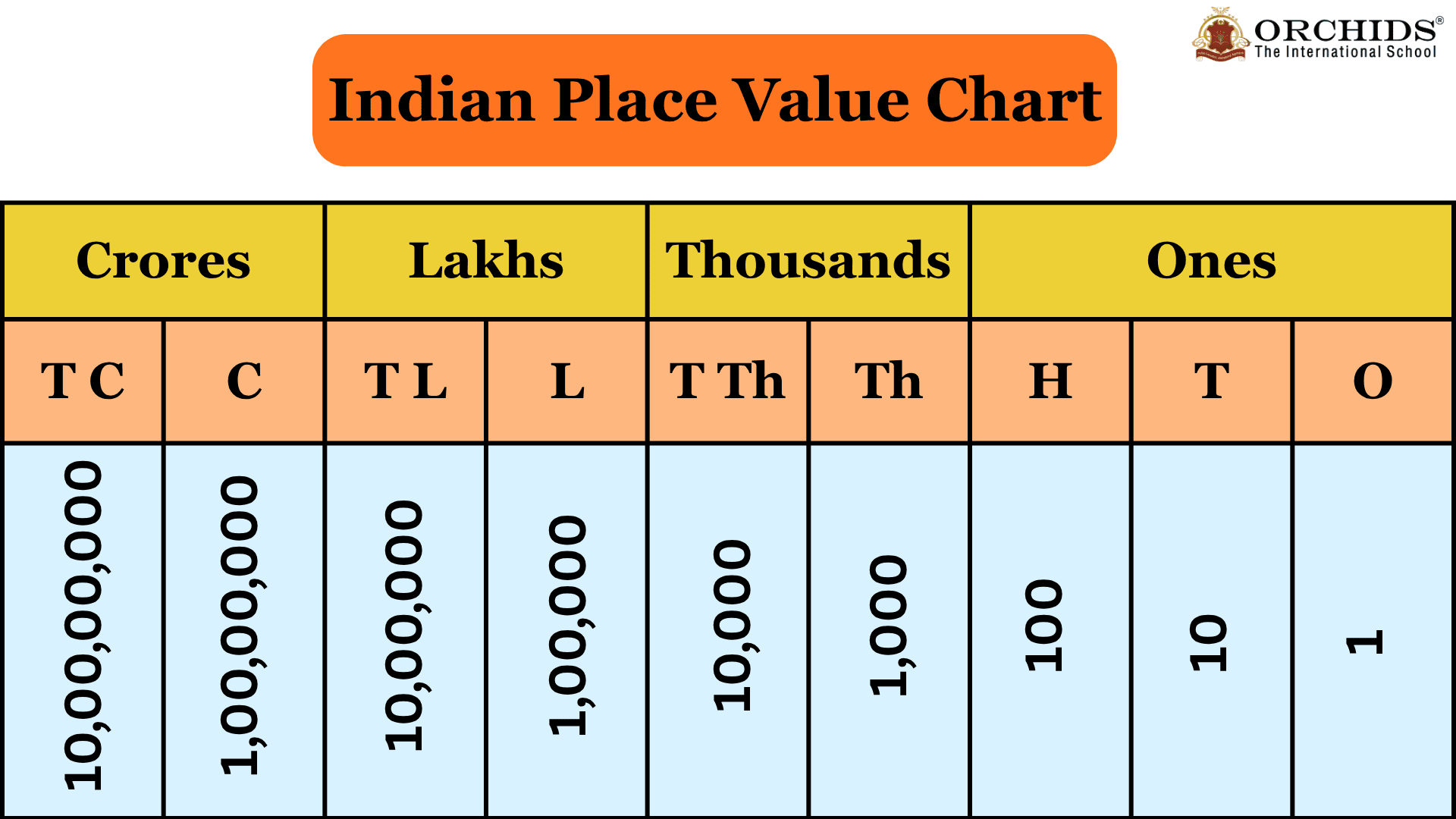
Tens and Ones Chart
The Chart is given Below indian Place Value Chart
Examples Using the Chart
Number: 45
4 in TENS = 4 × 10 = 40
5 in ONES = 5 × 1 = 5
Total = 40 + 5 = 45
Number: 72
7 in TENS = 7 × 10 = 70
2 in ONES = 2 × 1 = 2
Total = 70 + 2 = 72
Number: 30
3 in TENS = 30
0 in ONES = 0
Total = 30
Numbers make sense when they're taught right. To see how Orchids The International School turns Maths from intimidating to intuitive, reach out to our admissions team.
Frequently Asked Questions on Tens and Ones
1. What are tens and ones?
Tens and ones are place values used to represent numbers. A ten is equal to 10 ones, and the ones place represents single units.
2. What is place value in maths?
Place value is the value of a digit based on its position in a number. In a two-digit number, the left digit shows the tens, and the right digit shows the ones.
3. How many ones make one ten?
10 ones make 1 ten.
4. How do you identify tens and ones in a number?
Look at the digits:
- The left digit shows the tens.
- The right digit shows the ones.
Example: In 47, there are 4 tens and 7 ones.
5. How do you write a number using tens and ones?
Multiply the tens digit by 10 and add the ones digit.
Example: 3 tens and 5 ones = 35
6. How do you teach tens and ones to kids?
Use base-ten blocks, bundles of sticks, beads, number charts, and everyday objects to show that 10 ones make 1 ten.
7. What are some examples of tens and ones?
- 24 = 2 tens and 4 ones
- 58 = 5 tens and 8 ones
- 90 = 9 tens and 0 ones
- 13 = 1 ten and 3 ones
8. What is the difference between place value and face value?
- Place value depends on the digit's position in the number.
- Face value is the digit itself, regardless of its position.
9. How do you compare numbers using tens and ones?
First compare the tens digits. If they are the same, compare the ones digits. The number with the greater digit is larger.
10. What is a place value chart?
A place value chart organizes digits according to their positions, such as ones, tens, hundreds, and thousands, making numbers easier to read and understand.
Related Links


Admissions Open for 2026-27
What type of concept pages would you prefer?
CBSE Schools In Popular Cities
- CBSE Schools in Bangalore
- CBSE Schools in Mumbai
- CBSE Schools in Pune
- CBSE Schools in Hyderabad
- CBSE Schools in Chennai
- CBSE Schools in Gurgaon
- CBSE Schools in Kolkata
- CBSE Schools in Indore
- CBSE Schools in Sonipat
- CBSE Schools in Delhi
- CBSE Schools in Rohtak
- CBSE Schools in Bhopal
- CBSE Schools in Aurangabad
- CBSE Schools in Jabalpur
- CBSE Schools in Jaipur
- CBSE Schools in Jodhpur
- CBSE Schools in Nagpur
- CBSE Schools in Ahmednagar
- CBSE School In Tumkur











Orchids The International School is one of India's leading chains of CBSE and ICSE schools, with 110+ schools across the country.