

Rolling, Sliding and Flipping Objects
Objects around us move in different ways. Some objects roll, some slide, and some can be flipped. The movement of an object depends on its shape and surface. Shapes with curved surfaces usually roll, while shapes with flat surfaces can slide. In this lesson, we will learn about rolling, sliding, and flipping objects and understand these movements with the help of simple real-life examples.
We have learned about 3D solid shapes. Now let’s see which 3-d shapes can roll, and which can slide.
Rolling objects
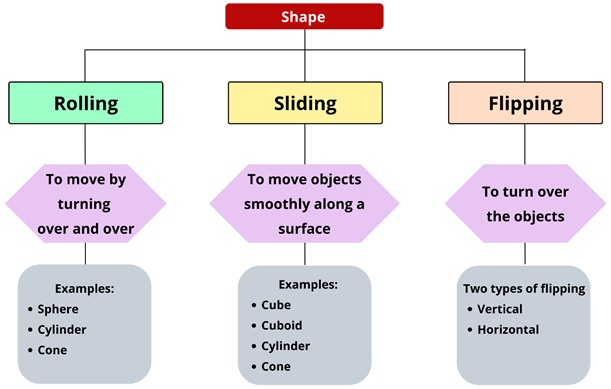
- Rolling: To move by turning over and over.
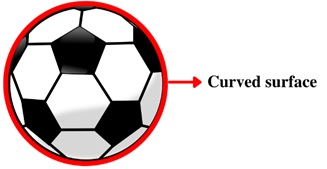
- Objects with curved surfaces roll.
Example:
- Sphere shape has a curved surface.
- Ball is an example of a sphere shape. If we just move the ball it will roll.
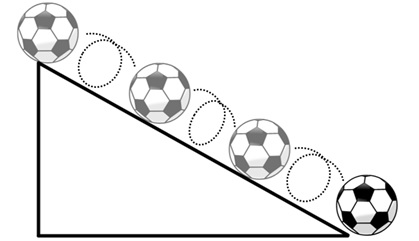
Rolling Ball
- Which 3-D shapes can roll?
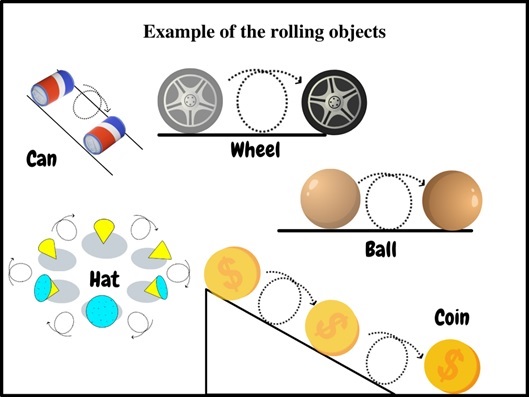
Sphere, Cylinder, Cone shapes have curved surfaces. So, these shapes can roll.

Real-life examples of the objects which can roll.
Sliding objects
- Slide: To move objects smoothly along a surface.
- Objects with smooth plane surfaces can slide.
Example:
- Cube shape has a plain smooth surface.
- Box is an example of a cube shape. It has a smooth surface. If we push the box, it will slide.
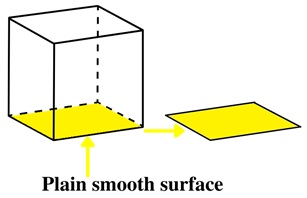
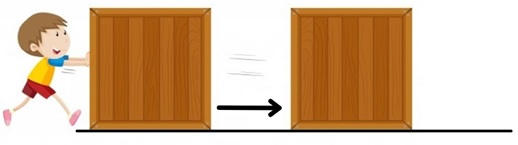
Sliding box
- Which 3-D shapes can slide?
- Cube and Cuboid shapes have smooth surfaces. So, these shapes can easily slide.
- But Cone and cylinder shapes can also slide. Cone and cylinder shapes also have smooth plain surfaces.
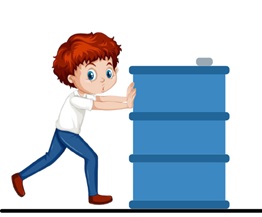
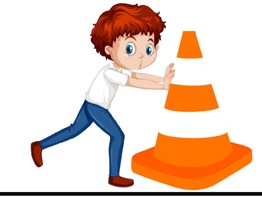
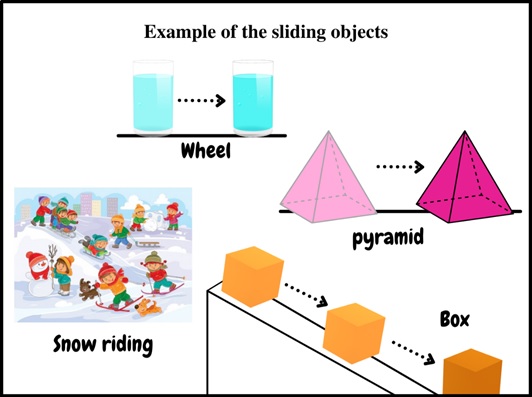
Real-life examples of the objects which can slide.
Flipping objects
- Flipping: To turn over the objects.
- Creating a mirror image is flipping.
There are two types of flipping -
- Vertical flip
- Horizontal flip
Example:
Vertical flip: Top side switches to the bottom and bottom side switches to the top side.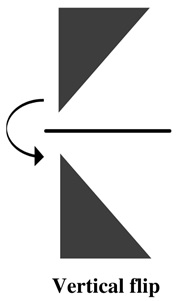 Horizontal flip: In the horizontal flip left side switches to the right side and right side switches to the left side.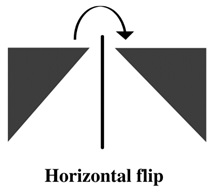
New Words:
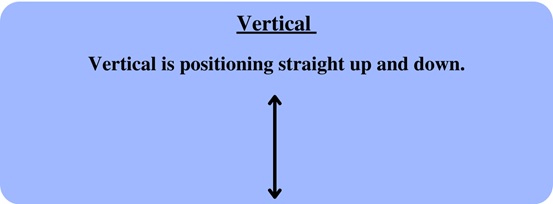
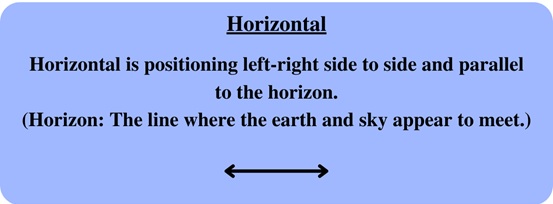
Numbers make sense when they're taught right. To see how Orchids The International School turns Maths from intimidating to intuitive, reach out to our admissions team.
Frequently Asked Questions on Rolling, Sliding and Flipping Objects
1. What does rolling mean?
Rolling is when an object moves by turning around on its curved surface. For example, a ball rolls across the floor.
2. What does sliding mean?
Sliding is when an object moves along a surface without turning. For example, a book slides across a table when pushed.
3. What does flipping mean?
Flipping is when an object turns over from one side to another. For example, a coin flips in the air.
4. Which objects roll?
Objects with curved surfaces usually roll, such as:
- Ball
- Marble
- Wheel
- Orange
- Can
5. Which objects slide?
Objects with flat surfaces usually slide, such as:
- Book
- Box
- Eraser
- Pencil box
- Brick
6. Which objects can both roll and slide?
Some objects can do both depending on how they are placed, such as:
- Tin can
- Water bottle
- Cylinder
- Rolling pin
7. Why do balls roll easily?
Balls have a smooth, curved surface that allows them to turn and move easily in any direction.
8. Why doesn't a cube roll?
A cube has flat faces and sharp edges, so it slides instead of rolling.
9. Can an object both roll and flip?
Yes. Some objects, like a coin or a toy wheel, can roll on a surface and also flip when tossed.
10. What shape is best for rolling?
Shapes with curved surfaces, such as circles, spheres, and cylinders, roll most easily.
11. What is the difference between rolling and sliding?
Rolling involves turning while moving, whereas sliding involves moving without turning.
12. What happens when you flip an object?
When you flip an object, it rotates and lands on its opposite side or another face.
Related Links


Admissions Open for 2026-27
What type of concept pages would you prefer?
CBSE Schools In Popular Cities
- CBSE Schools in Bangalore
- CBSE Schools in Mumbai
- CBSE Schools in Pune
- CBSE Schools in Hyderabad
- CBSE Schools in Chennai
- CBSE Schools in Gurgaon
- CBSE Schools in Kolkata
- CBSE Schools in Indore
- CBSE Schools in Sonipat
- CBSE Schools in Delhi
- CBSE Schools in Rohtak
- CBSE Schools in Bhopal
- CBSE Schools in Aurangabad
- CBSE Schools in Jabalpur
- CBSE Schools in Jaipur
- CBSE Schools in Jodhpur
- CBSE Schools in Nagpur
- CBSE Schools in Ahmednagar
- CBSE School In Tumkur











Orchids The International School is one of India's leading chains of CBSE and ICSE schools, with 130+ schools across the country.