

Describing Words for Class 3: Meaning, Usage, Types, Examples and Exercises
Describing words help us add more information to people, places, animals, objects, and ideas. Without describing words, sentences can sound plain and incomplete. By using words such as beautiful, tall, soft, or happy, we can make our writing and speaking more interesting and meaningful.
In English grammar, describing words are called adjectives. They tell us more about a noun or pronoun by describing qualities, colours, sizes, shapes, numbers, feelings, and other characteristics. Learning describing words helps Class 3 students improve vocabulary, build better sentences, and communicate ideas clearly.
In this guide, you’ll learn the meaning of describing words, their types, rules of usage, examples, sentence formation, and practice exercises designed for Class 3 students.
Table of Contents
- What are Describing Words for Class 3?
- Usage of Describing Words for Class 3
- How to Use Fat in Sentences
- Types of Describing Words for Class 3
- Describing Words Worksheet for Class 3
- Frequently Asked Questions on Describing Words for Class 3

What are Simple Describing Words for Class 3?
Describing words for Class 3 are words that provide additional information about a noun or pronoun. They help us understand how a person, animal, place, object, or thing looks, feels, sounds, tastes, smells, or behaves. Without describing words, sentences can sound incomplete because they do not give enough details.
In English grammar, describing words are called adjectives. They are one of the most important parts of speech because they make language vivid, meaningful, and interesting. Imagine reading a story where every noun is described only as "thing" or "person." The story would become difficult to imagine. Describing words help create clear pictures in the reader's mind.
For Class 3 students, learning describing words helps improve:
-
Vocabulary development
-
Reading comprehension
-
Sentence writing skills
-
Story writing ability
-
Speaking confidence
-
Creative expression
Usage of Simple Describing Words for Class 3
- Let us see how is a describing word used for things that we see.
| Describing a Shape | Any colour can be used as a description | Sizes | Numbers | Senses |
|---|---|---|---|---|
| circular | red | small | one | soft |
| square | black | big | a lot | bitter |
| triangle | brown | tiny | a million | roar |
| rectangle | white | medium | a dozen | floral |
2. Look at the table to see how a describing word is used in a sentence.
| No. | Sentences without Descriptive Words | Sentences with Descriptive Words | Explanation |
|---|---|---|---|
| 1. | A new shop has opened in my locality. | A new grocery shop has opened in my locality, owned by my neighbour. | Adjective grocery and a noun neighbour have been added to describe the new shop. |
| 2. | Jitesh spoke to his mom. | Jitesh spoke to his mom politely. | Adverb politely has been added to describe how Jitesh spoke to his mom. |
| 3. | Meena is a student. | Meena is an undergraduate student. | Describing words can be used to indicate clear meaning. The word ‘student’ was vague. Instead, the word undergraduate gives an idea that Meera is pursuing her graduation in a college. |
Rules
- An adjective is usually used to describe a noun or a pronoun. Mostly the adjectives are placed before the noun. Sometimes it can be used after the noun as well.
Examples:
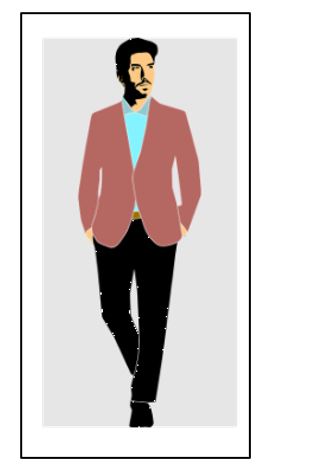
- He is a handsome man.
-
- Quantity or number (One, two, etc.)
- Quality or opinion (great, sweet)
- Size (big, small, etc.)
- Age (old, new, etc.)
- Shape (circle, square, etc.)
- Colour (blue, green, etc.)
Example:
I like the pretty pink new dress.

In the above example, there are only three adjectives used to describe the noun ‘dress’. Notice the order of adjectives used in the sentence.
Exceptions
Certain adjectives never stand in front of the nouns they describe, for example, words like alone, afraid, happy, sorry, and ill.
Examples:
- Seema is afraid of lizards.
- Neethi is sorry.

Strong language skills open doors well beyond the classroom, shaping how confidently a child reads, writes and expresses ideas. If you want to know more about how Orchids The International School builds these skills through its English curriculum, get in touch with our admissions team.
Frequently Asked Questions on Describing Words for Class 3
1. What are describing words for Class 3?
Describing words are words that tell us more about a noun or pronoun. They are also called adjectives.
2. What is another name for describing words?
Describing words are called adjectives in English grammar.
3. Can describing words describe people and places?
Yes. They can describe people, places, animals, objects, and feelings.
4. Where are describing words usually placed in a sentence?
They are usually placed before the noun they describe, such as a red ball or a tall tree.
Related Links


Admissions Open for 2026-27
What type of concept pages would you prefer?
CBSE Schools In Popular Cities
- CBSE Schools in Bangalore
- CBSE Schools in Mumbai
- CBSE Schools in Pune
- CBSE Schools in Hyderabad
- CBSE Schools in Chennai
- CBSE Schools in Gurgaon
- CBSE Schools in Kolkata
- CBSE Schools in Indore
- CBSE Schools in Sonipat
- CBSE Schools in Delhi
- CBSE Schools in Rohtak
- CBSE Schools in Bhopal
- CBSE Schools in Aurangabad
- CBSE Schools in Jabalpur
- CBSE Schools in Jaipur
- CBSE Schools in Jodhpur
- CBSE Schools in Nagpur
- CBSE Schools in Ahmednagar
- CBSE School In Tumkur











Orchids The International School is one of India's leading chains of CBSE and ICSE schools, with 110+ schools across the country.