

Places in My Neighbourhood for Class 1 EVS: Community Places, Importance [4 Neighbourhood Games, 4 Drawing Worksheets]
|
The learning outcomes are as follows:
|
Table of Contents
- What is Neighbourhood
- 13 Major Places in My Neighbourhood
- New Words - It's Fun to Learn!
- Did You Know?
- Fill in the Blanks
- Practice Worksheets
- Find My Way: A Neighbourhood Game
- Drawing Worksheets: Colour Your Neighbourhood Places
- Things You Have Learnt

What is Neighbourhood
- Neighbourhood consists of the areas around our house and the people living there. People and places in our neighbourhood help make life comfortable by providing services and facilities.
- Neighbours are the people who live near our homes.
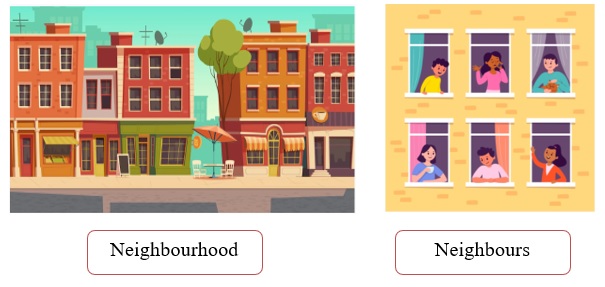
13 Major Places in My Neighbourhood
Every neighbourhood has several important places that help people meet their daily needs and make life easier. Some places help us learn, some keep us healthy and safe, while others provide services that we use regularly. By learning about these places, children can better understand their surroundings and the role each place plays in the community.
Let us explore some of the most common and useful places that we often find in a neighbourhood.
1. Playground and Park
-
A park is an open ground with many trees, small ponds, and tracks for running and walking.
-
Playgrounds are separate areas for playing sports like cricket, tennis, and football.
-
These also have several rides like see-saws, swings, and slides.
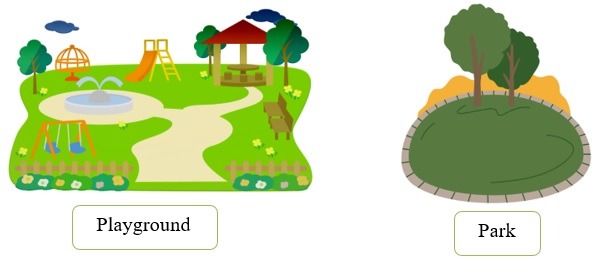
Try Yourself! - What are the things that you see in a park? (Hint: see-saw)
2. School
-
We go to school to read, learn and write.
-
Our teachers teach us different subjects.
-
We share our tiffin and play with our friends at school.
-
Our teachers have us do activities like reading, shape hunting, story reading, and collage making.
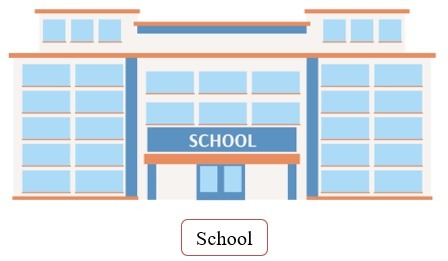
Try Yourself! - Do you have friends in school? What are their names?
3. Police Station
-
People go to police stations to complain about theft, robbery, and accidents.
-
Police officers work day and night to maintain the safety of the neighbourhood.
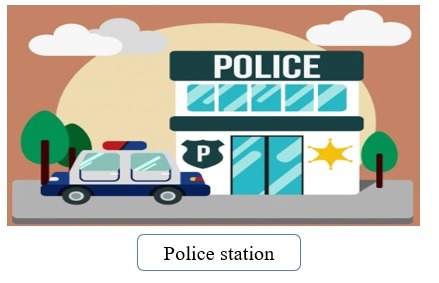
Try Yourself! - Who keeps our neighbourhood safe?
4. Hospital
-
We go to the hospitals for health check-ups and consult doctors when we fall ill.
-
After accidents, patients are taken to the hospitals for treatments.
-
People get their surgeries done in the hospital.
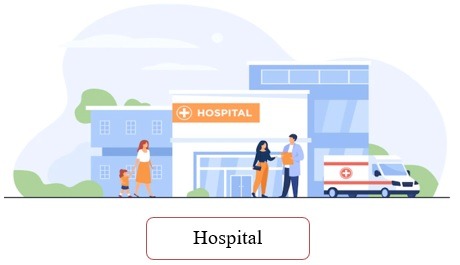
Try Yourself! - Whom do we visit when we fall sick?
5. Market
-
A market has many shops selling different things.
-
We go to the market to buy our daily needs like groceries, medicines, fish, vegetables, shoes, dresses, etc.
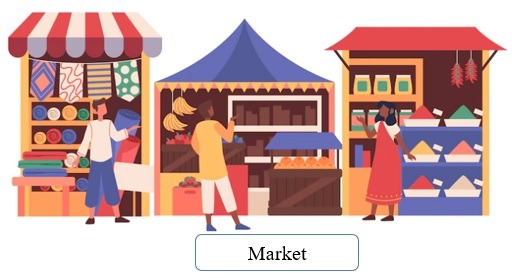
Try Yourself! - Have you ever gone to a market for shopping? What is your favourite fruit?
6. Bus Stop
-
It is a place where the buses stop to pick up and drop passengers.
-
People wait at bus stops to travel safely from one place to another.
-
School buses and public buses usually stop here at scheduled times.
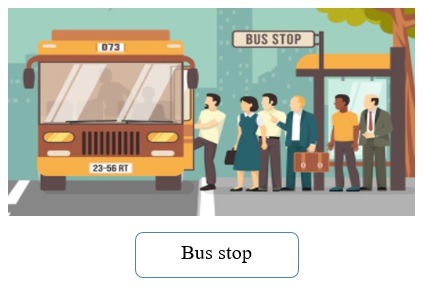
Try Yourself! - Do you know from where we catch the school bus or any bus to go to a place?
7. Bank
-
A bank is a place where people keep their money safe.
-
People can deposit money, withdraw money, and save for the future through a bank account.
-
Banks also provide loans and other financial services to help people manage their money.
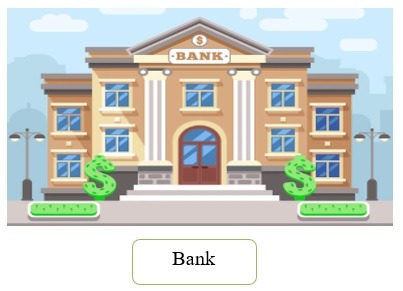
Try Yourself! - What do we keep in a bank?
8. Post Office
-
One can buy postcards, envelopes, and stamps from a post office.
-
We post letters in a post box; the postman collects them and delivers them to the correct addresses.
-
We also send our parcels through a post office.
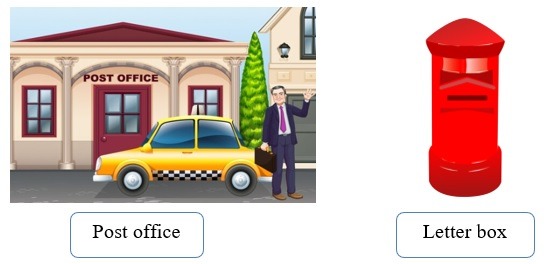
Try Yourself! - Have you seen a letter-box like the one in the image? Do you know what is kept inside of them?
9. Railway Station
-
We board trains from the railway stations.
-
They have many platforms.
-
We can see many tea stalls, snacks shops, books and newspaper stalls in a railway station.
-
We buy train tickets from the ticket counters in the stations.
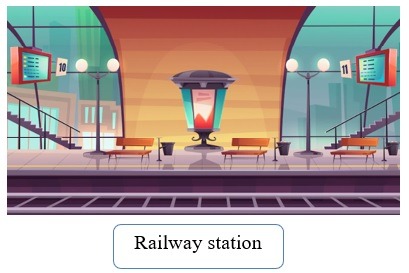
Try Yourself! - Have you travelled by a train? What is the sound made by it?
10. Restaurant
-
A restaurant is a place where people go to enjoy meals with their family and friends.
-
Chefs prepare a variety of delicious dishes, and the staff serve food to customers.
-
Restaurants offer different types of food and provide a comfortable place to eat.
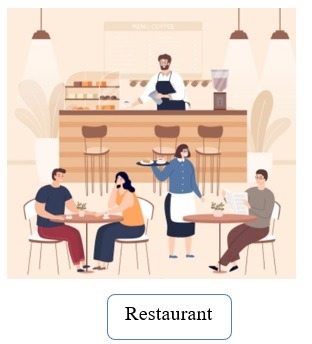
Try Yourself! - What is your favourite food?
11. School Library
-
We go to the library to read and borrow books and magazines.
-
A school library is a quiet place where students can read and borrow books.
-
It contains storybooks, magazines, newspapers, and educational resources.
-
Libraries help children develop reading habits and learn new things beyond the classroom
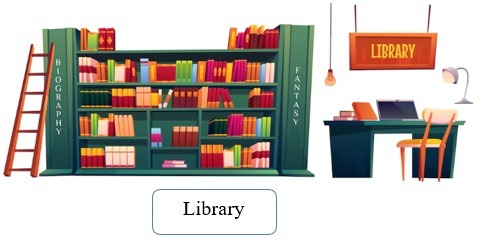
Try Yourself! - What we should not do when we are in a library? (Hint: Shhh....)
12. Fire Station
-
In a fire station, there are firefighters, fire engines, and other necessary equipment required to put out a fire.
-
A fire station is the workplace of firefighters who help during emergencies.
-
It houses fire engines, water hoses, and other equipment used to control fires.
-
Firefighters also rescue people and protect property during accidents and natural disasters.
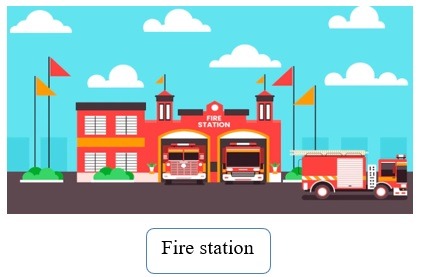
Try Yourself! - Is water used in stopping a fire?
13. Place of Worship
-
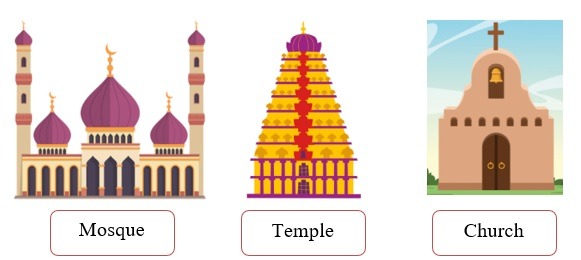
A place of worship is where people gather to pray and express their faith.
-
Temples, churches, mosques, and gurudwaras are common places of worship.
-
These places promote peace, respect, and spiritual well-being within the community.
New Words: It's fun to learn!
As we explore the different places in our neighbourhood, we come across many new words. Learning these words helps us understand our surroundings better and improves our vocabulary.
Let us discover some useful words related to neighbourhood places and services.
|
Did You Know?
1. Is it neighbourhood or neighbourhood? In American English, it is neighbourhood, while in British English it is neighbourhood.
Google Maps help us to move around our neighbourhood.
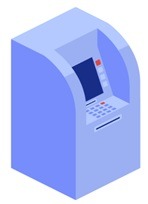
2. We can withdraw or deposit money through ATM machines in our neighbourhood.
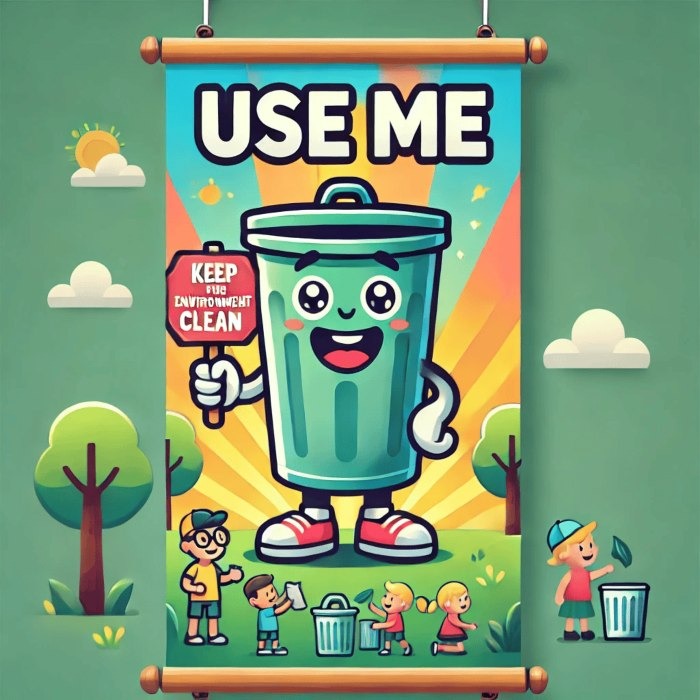
3. Every neighbourhood has litter bins or dustbins where all garbage is thrown. We should always use those.
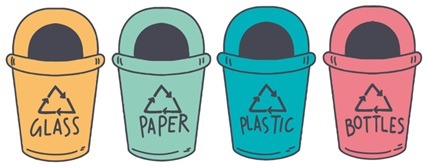
Try it yourself! - Look at the image shown below. Who is saying "USE ME"? Why it is telling to "USE ME"?
Fill in the blanks!
1. My neighbourhood has a ____________ where children can play. (park/school)
2. The ____________ helps to keep our neighbourhood safe. (police officer/shopkeeper)
3. We buy fruits and vegetables from the ____________. (market/playground)
4. The ____________ is a place where we can read books. (library/playground)
5. We should keep our neighbourhood ____________ by not littering. (clean/messy)
Try it yourself!
1. Who protects us from robbery?
2. Where do we buy food and household supplies?
3. Is it only a bank that can give loan to a person?
Practice Worksheets
Things you have learnt?
-
Our neighbourhood is a place where we all live together. It has homes, parks, schools, and shops.
-
Neighbours help each other and make our community feel like one big family.
-
We play in the park, visit the local store, or go to school, we are part of this happy neighbourhood. It is a fun place to be in!
So far, we have learned that places in my neighbourhood for Class 1 EVS help children understand the important places and people around them. From schools and parks to hospitals and markets, each place serves a special purpose in our daily lives. By exploring these neighbourhood places through activities, games, and worksheets, children can develop observation skills, learn good community habits, and build a better understanding of the world around them.
Understanding the world starts with the environment around us. To see how Orchids The International School brings EVS to life, reach out to our admissions team.
Frequently Asked Questions on Places in My Neighbourhood for Class 1 EVS
1. Why is the topic "Places in My Neighbourhood" important in Class 1 EVS?
The topic places in my neighbourhood for Class 1 EVS helps children understand their surroundings and learn about the places they visit in their daily lives.
2. How does learning about places in my neighbourhood help children?
Learning about places in my neighbourhood helps children identify important community locations and understand how they support everyday activities.
3. What skills do children develop through places in my neighbourhood activities?
Through places in my neighbourhood for Class 1 EVS activities, children develop observation, communication, creativity, and social awareness skills.
4. How can parents teach places in my neighbourhood at home?
Parents can teach places in my neighbourhood by taking children on short walks, showing them nearby places, and discussing their importance in daily life.
5. What is the role of community helpers in places in my neighbourhood?
Community helpers support the smooth functioning of places in my neighbourhood by providing services such as education, healthcare, safety, transportation, and communication.
6. How do worksheets make places in my neighbourhood learning more effective?
Worksheets related to places in my neighbourhood for Class 1 EVS encourage children to identify, colour, match, and remember different neighbourhood places in a fun way.
7. How can games help children learn about places in my neighbourhood?
Neighbourhood games make places in my neighbourhood lessons interactive by helping children recognise places, improve observation skills, and connect learning with real-life experiences.
8. What values can children learn from places in my neighbourhood for Class 1 EVS?
Through places in my neighbourhood for Class 1 EVS, children learn values such as cleanliness, responsibility, cooperation, respect for community spaces, and care for their surroundings.


Admissions Open for 2026-27
What type of concept pages would you prefer?
CBSE Schools In Popular Cities
- CBSE Schools in Bangalore
- CBSE Schools in Mumbai
- CBSE Schools in Pune
- CBSE Schools in Hyderabad
- CBSE Schools in Chennai
- CBSE Schools in Gurgaon
- CBSE Schools in Kolkata
- CBSE Schools in Indore
- CBSE Schools in Sonipat
- CBSE Schools in Delhi
- CBSE Schools in Rohtak
- CBSE Schools in Bhopal
- CBSE Schools in Aurangabad
- CBSE Schools in Jabalpur
- CBSE Schools in Jaipur
- CBSE Schools in Jodhpur
- CBSE Schools in Nagpur
- CBSE Schools in Ahmednagar
- CBSE School In Tumkur










Orchids The International School is one of India's leading chains of CBSE and ICSE schools, with 130+ schools across the country.