

Sandy Soil: Definition, Constituents, Types, Uses and Significance
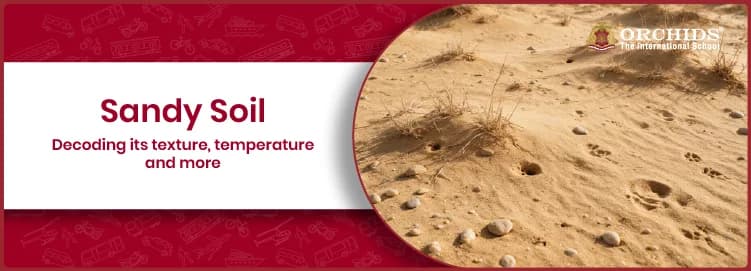
Sandy soil is the one the main type of naturally occurring soils found on arid regions such as deserts. Easily recognised by its gritty, grainy texture, sandy soil consists of 85% of sand and less than 10% of clay. Unlike silty, clayey and loamy soil, the sandy soil does not stick together and has a tendency to fall apart when squeezed. It contains large sand particles and drains water quickly. Let’s explore some interesting facts anduses of sandy soil along with its properties and types.
Table of Contents
- What is Sandy Soil
- Characteristics of Sandy Soil
- Types of Sandy Soil
- Five Uses of Sandy Soil
- Frequently Asked Questions about Sandy Soil

What is Sandy Soil
Sandy soil is grainy soil with a lower amount of nutrients. This type of soil warms quickly and becomes dry as it has low water retention capabilities and supports medium plant growth. Plants that need well-draining soil and hot weather conditions grow easily in such a kind of soil for example: olives, rosemary and oregano. There are some unique characteristics of sandy soil that set it apart from the other types of soils. We will learn all these features in the next section.
Characteristics of Sandy Soil
Texture: Among the physical characteristics of sandy soil are its gritty texture, pale yellow colour and light weight. The grainy texture of sandy soil comes from the large visibly sand particles of 0.5 mm to 2.00 mm size.
Water Retention: Sandy soil has poor water retention and it has less moisture as compared to the other types of soil. This happens mainly due to the large gaps between the particles of sand that allow water to easily pass through it.
Drainage: The water doesn’t stay for much longer in this soil and drains easily. The sandy soil needs frequent irrigation than the other types of soils.
Nutrients: The sandy solid is generally less fertile and lower in nutrients as compared to the other types of soil. It is mainly due to the lower water retention capabilities that make it drain more nutrients and moisture.
Types of Sandy Soil
Based on composition, location and formation process the sandy soil can be classified into different types:
- Desert Sandy Soil: This sandy soil is present in arid and semi-arid regions that receive very low rainfall. This soil is dry, loose and low in organic matter. One of the common examples of desert sandy soil is the soil in the Thar desert of Rajasthan.
- Coastal Sandy Soil: It is the sandy soil which is present near the seashores and beaches. This soil is often a mixture of salts and minerals that come from seawater. Coastal soils along the Konkan coast is an example of the coastal sandy soil.
- Riverine Sandy Soil: The soil found around the banks and floodplains of the river often get a small amount of silt mixed in it are called riverine sandy soil. One example is the sandy stretches along the banks of the Brahmaputra.
- Inland Sandy Soil: Found in regions away from coasts or deserts, usually formed from the erosion of sandstone or granite rock. Example: Parts of the Deccan Plateau with sandstone bedrock.
- Sandy Loam: More fertile than sandy soil, this type of soil contains higher content of clay and silt. It is considered more suitable for growing plants and for agriculture as compared to any other type of sandy soil.
Five Uses of Sandy Soil
The unique properties of sandy soil make it valuable in our lives in many ways. Here are some major uses of sandy soil:
- Agriculture: The loosely packed structure of sandy soil makes it perfect for growing various drought-resistant crops such as carrots, watermelons, millets, radishes, potatoes and groundnuts.
- Construction: The sandy soil is suitable for building foundations due its excellent drainage capabilities and minimal expansion. The large loose structure of sandy particles makes it suitable for construction work. Along with clay, sandy soil is a perfect mixture for making bricks, tiles and pottery items. It helps in bettering the texture and reducing cracking during drying.
- Coastal Ecosystems: The coastline sandy soil plays a key role in supporting the unique coastal ecosystems. It is a home to a variety of flora and fauna including coastal grass, turtles, crabs and shorebirds.
- Water Filtration: Sandy soil is ideal for filtration of groundwater. It is widely used in filtration plants for water filtration as the large particle size retains the impurities while allowing water to pass through it.
- Glass Manufacturing: Sandy soil is rich in silica which is a primary raw material in the making glass in the glass industry. The silica sand melts to form glass at high temperatures.
Frequently Asked Questions about Sandy Soil
1. Why does sandy soil dry out so quickly?
Sandy soil consists of large particles of sand that have some gaps between them. It lets the water drain rapidly instead of holding it. This causes the soil to become dry and less moist as compared to the clayey or loamy soil.
2. Which crops can be grown successfully in sandy soil?
There are certain crops that can survive in low water naturally such as watermelon, groundnut, carrots, radish, potatoes and millets.
3. Where is sandy soil commonly found in India?
There are different types of sandy soil found in different states of India including Goa, Tamil Nadu, Rajasthan, coastal regions of Maharashtra and Andhra Pradesh.
4. Why is sand used in construction?
The sand gives structural strength to the building as it has excellent binding properties. When mixed with cement and water, the sand forms concrete which is helpful for making structures stable and durable.
Understanding the world starts with the environment around us. To see how Orchids The International School brings EVS to life, reach out to our admissions team.


Admissions Open for 2026-27
What type of concept pages would you prefer?
CBSE Schools In Popular Cities
- CBSE Schools in Bangalore
- CBSE Schools in Mumbai
- CBSE Schools in Pune
- CBSE Schools in Hyderabad
- CBSE Schools in Chennai
- CBSE Schools in Gurgaon
- CBSE Schools in Kolkata
- CBSE Schools in Indore
- CBSE Schools in Sonipat
- CBSE Schools in Delhi
- CBSE Schools in Rohtak
- CBSE Schools in Bhopal
- CBSE Schools in Aurangabad
- CBSE Schools in Jabalpur
- CBSE Schools in Jaipur
- CBSE Schools in Jodhpur
- CBSE Schools in Nagpur
- CBSE Schools in Ahmednagar
- CBSE School In Tumkur











Orchids The International School is one of India's leading chains of CBSE and ICSE schools, with 130+ schools across the country.