

Macavity: the Mystery Cat - Summary, Analysis, Themes and Poetic Devices
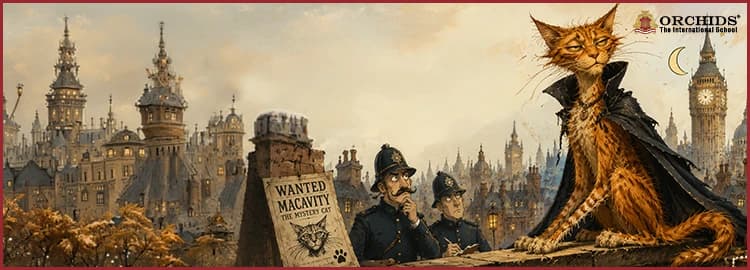
Have you ever met a cat who could break every law both human and natural and still never get caught? That is exactly who Macavity: the Mystery Cat is! Written by the legendary poet T.S. Eliot, “Macavity: The Mystery Cat” is one of the most exciting and imaginative poems in English literature. It is part of Eliot's famous 1939 poetry collection Old Possum's Book of Practical Cats, the only book Eliot wrote for a younger audience.
The poem describes a cunning, mysterious, and seemingly supernatural cat named Macavity, who is a master criminal, yet is never caught at the scene of any crime. He is called “the Napoleon of Crime” and “the Hidden Paw.” Whether you are reading this poem for your Class 8 English exam or simply out of curiosity, this article will walk you through everything you need to know, from a full summary and analysis to poetic devices, and themes.
Table of Contents
- About the Author: T.S. Eliot
- Macavity the Mystery Cat: Full Poem
- Macavity: the Mystery Cat Summary
- Stanza-by-Stanza Analysis
- Rhyme Scheme
- Poetic Devices in Macavity: the Mystery Cat
- Themes in Macavity: the Mystery Cat
- Character Sketch of Macavity
- Literary Inspiration: Macavity and Professor Moriarty
- Key Takeaways
- Frequently Asked Questions about Macavity: the Mystery Cat
About the Author: T.S. Eliot
Thomas Stearns Eliot (1888–1965), popularly known as T.S. Eliot, was an American-British poet, playwright, and literary critic. He is considered one of the greatest poets of the 20th century and is best known for works like The Waste Land (1922) and The Love Song of J. Alfred Prufrock (1915). In 1948, he was awarded the Nobel Prize in Literature.
While most of Eliot's work is dense and philosophical, he had a playful, lighter side and that side shines through in Old Possum's Book of Practical Cats (1939), a collection of humorous poems about cats, written originally as letters to his godchildren. "Macavity: The Mystery Cat" is the most well-known poem from this collection and was later adapted into the world-famous musical Cats (1981) by Andrew Lloyd Webber.
Eliot was a big admirer of the Sherlock Holmes stories by Arthur Conan Doyle, which strongly influenced the character of Macavity.
Macavity the Mystery Cat: Full Poem
Macavity’s a Mystery Cat: he’s called the Hidden Paw—
For he’s the master criminal who can defy the Law.
He’s the bafflement of Scotland Yard, the Flying Squad’s despair:
For when they reach the scene of crime—Macavity’s not there!
Macavity, Macavity, there’s no one like Macavity,
He’s broken every human law, he breaks the law of gravity.
His powers of levitation would make a fakir stare,
And when you reach the scene of crime—Macavity’s not there!
You may seek him in the basement, you may look up in the air—
But I tell you once and once again, Macavity’s not there!
Macavity’s a ginger cat, he’s very tall and thin;
You would know him if you saw him, for his eyes are sunken in.
His brow is deeply lined with thought, his head is highly domed;
His coat is dusty from neglect, his whiskers are uncombed.
He sways his head from side to side, with movements like a snake;
And when you think he’s half asleep, he’s always wide awake.
Macavity, Macavity, there’s no one like Macavity,
For he’s a fiend in feline shape, a monster of depravity.
You may meet him in a by-street, you may see him in the square—
But when a crime’s discovered, then Macavity’s not there!
He’s outwardly respectable. (They say he cheats at cards.)
And his footprints are not found in any file of Scotland Yard’s.
And when the larder’s looted, or the jewel-case is rifled,
Or when the milk is missing, or another Peke’s been stifled,
Or the greenhouse glass is broken, and the trellis past repair—
Ay, there’s the wonder of the thing! Macavity’s not there!
And when the Foreign Office find a Treaty’s gone astray,
Or the Admiralty lose some plans and drawings by the way,
There may be a scrap of paper in the hall or on the stair—
But it’s useless to investigate—Macavity’s not there!
And when the loss has been disclosed, the Secret Service say:
‘It must have been Macavity!’—but he’s a mile away.
You’ll be sure to find him resting, or a-licking of his thumbs;
Or engaged in doing complicated long division sums.
Macavity, Macavity, there’s no one like Macavity,
There never was a Cat of such deceitfulness and suavity.
He always has an alibi, and one or two to spare:
At whatever time the deed took place—MACAVITY WASN’T THERE!
And they say that all the Cats whose wicked deeds are widely known
(I might mention Mungojerrie, I might mention Griddlebone)
Are nothing more than agents for the Cat who all the time
Just controls their operations: the Napoleon of Crime!
Macavity: the Mystery Cat Summary
“Macavity: the Mystery Cat” is a poem about a fictional cat who is a brilliant criminal mastermind. He is accused of committing all sorts of crimes from stealing milk and breaking treaties to cheating at cards and conducting espionage. Yet, every time the Scotland Yard (London's famous detective police) or the Flying Squad arrive at the crime scene, Macavity is never there.

The poem portrays Macavity as a tall, thin, ginger cat with sunken eyes, an unkempt coat, and uncombed whiskers. He sways his head like a snake and seems half-asleep, but he is actually always alert. His powers are so extraordinary that they appear to defy the law of gravity itself.
By the end of the poem, we learn that Macavity is the mastermind behind an entire organised crime ring, with other notorious cats like Mungojerrie, Rumpleteazer, and Griddlebone working as his agents. He is the one who controls their operations from the shadows, earning him the title “the Napoleon of Crime.”
Stanza-by-Stanza Analysis
Stanza 1: Introducing Macavity
The poem opens by introducing Macavity as the “Hidden Paw”, a master criminal who defies the law. Scotland Yard (the police) and the Flying Squad are baffled by him because every time they reach the crime scene, Macavity has already vanished. This sets the central mystery of the poem: who is Macavity, and how does he always escape?
Stanza 2: Macavity Breaks Every Law
This stanza establishes that Macavity has broken not only every human law, but also the law of gravity, hinting at his almost supernatural abilities. The poet uses hyperbole (exaggeration) here to emphasise how impossible and extraordinary Macavity is. Even the Secret Service cannot pin anything on him.
Stanza 3: Macavity's Physical Description
Here, the poet describes Macavity's appearance: tall, thin, with deep-set eyes, a lined brow, a domed head, and an unkempt, dusty coat. He sways his head from side to side like a snake. Although he looks as if he might be half asleep, he is actually always wide awake and scheming.
Stanza 4: Macavity's Crimes
This stanza lists Macavity's crimes: stealing milk, eating mutton, swiping fish, cheating at cards, causing havoc among dogs, meddling with the Foreign Office (treaties disappearing) and the Admiralty (secret plans going missing). He is called a “fiend in feline shape, a monster of depravity.”
Stanza 5: The Alibi
Every time a crime happens, Macavity is elsewhere, doing long division sums or lounging innocently. This alibi is his cleverest trick. He controls crimes from a distance, so he is never at the scene and can never be charged.
Stanza 6: The Napoleon of Crime
The final stanza reveals the full truth: all the notorious cats (Mungojerrie, Griddlebone) are just agents for Macavity. He is the mastermind, the puppeteer, the hidden hand behind all criminal activity, the Napoleon of Crime.
Rhyme Scheme
The poem follows a regular, bouncy rhyme scheme that makes it feel almost like a song or a children's chant which suits its playful, dramatic tone perfectly.
Each stanza uses a couplet rhyme scheme (AABB), meaning every two consecutive lines rhyme with each other. For example:
Macavity's a Mystery Cat: he's called the Hidden Paw → (A)
For he's the master criminal who can defy the Law. → (A)
He's the bafflement of Scotland Yard, the Flying Squad's despair: → (B)
For when they reach the scene of crime — Macavity's not there! → (B)
This AABB pattern continues throughout the entire poem. The regular, predictable rhyme scheme gives the poem a rhythmic, musical quality, almost like a nursery rhyme, which humorously contrasts with the dark criminal subject matter. The metre is broadly anapestic, meaning lines often have a galloping, fast-paced beat that mimics the quick, elusive movements of Macavity himself.
The refrain “Macavity's not there!” is repeated at the end of multiple stanzas, acting like a chorus in a song. This repetition reinforces the central mystery and makes the poem highly memorable.
Poetic Devices in Macavity: the Mystery Cat
T. S. Eliot uses a variety of poetic devices in “Macavity: the Mystery Cat” to make the poem engaging, humorous, and memorable. These literary techniques help create the mysterious personality of Macavity while adding rhythm, imagery, and dramatic effect to the poem. Through devices such as alliteration, hyperbole, metaphor, and repetition, Eliot transforms an ordinary cat into a legendary criminal mastermind. Understanding these poetic devices allows readers to appreciate both the poem's artistic beauty and its deeper meaning.
Themes in Macavity: the Mystery Cat
Crime and Evasion of Justice
The central theme of “Macavity: the Mystery Cat” is that of crime going unpunished. Macavity commits crime after crime but is always one step ahead of the law. This can be seen as a commentary on how clever criminals exploit loopholes in systems of justice.
Mystery and the Unknown
Macavity's very title “the Mystery Cat” reflects the theme of the unknown. He is a figure who operates in shadows, never seen, never caught. The poem builds suspense through the repeated refrain that he is simply “not there.”
Appearance vs. Reality
Macavity appears to be a sleepy, neglected, unkempt cat but in reality, he is the mastermind of an organised criminal network. The contrast between his shabby appearance and his extraordinary capabilities explores how looks can be deeply deceiving.
Power and Control
Macavity does not commit crimes directly he controls others who commit them for him. This theme of invisible power and remote control over people (or cats) reflects how real power often operates from behind the scenes.
Humour and Playfulness
Though the poem deals with crime, it is also deeply playful and funny. The idea of Scotland Yard being stumped by a cat is inherently comic. Eliot uses wit, exaggeration, and a nursery-rhyme tone to keep the mood light and entertaining.
Character Sketch of Macavity
Macavity is the central character of T. S. Eliot's poem Macavity: The Mystery Cat. He is portrayed as a clever, mysterious, and elusive criminal who always manages to escape capture. Known as the "Hidden Paw" and the "Napoleon of Crime," Macavity is feared and admired for his intelligence and cunning nature.
Although he appears to be a thin, untidy ginger cat with dusty fur and uncombed whiskers, his appearance hides a brilliant mind. He carefully plans crimes and ensures that he is never present when they are discovered. This ability to stay out of sight makes him a true mystery.
Macavity is highly intelligent and strategic. Rather than committing crimes himself, he controls others from behind the scenes and always has a perfect alibi. Even Scotland Yard and the Flying Squad cannot catch him, which highlights his exceptional cleverness.
Despite being described as a criminal, Macavity is presented in a humorous and entertaining way. His mysterious personality, remarkable intelligence, and ability to outsmart everyone make him one of the most memorable characters in English poetry. He represents the idea that appearances can be deceiving and that true power often works unseen.
Literary Inspiration: Macavity and Professor Moriarty
One of the most fascinating aspects of this poem is its literary inspiration. T.S. Eliot was a great admirer of the Sherlock Holmes stories by Arthur Conan Doyle, and Macavity is widely understood to be a cat version of Professor Moriarty, the criminal mastermind who is Sherlock Holmes's arch-enemy.
In a letter to his friend Frank Morley, Eliot himself wrote that he had “done a new cat modeled on the late Professor Moriarty.” Even the name “Macavity” is a pun on “Moriarty,” and the word cavity implies a void or absence fitting for a cat who is never there. Scholars H.T. Webster and H.W. Starr first identified this connection in 1954.
The parallels are striking: just as Moriarty is described as the “Napoleon of Crime” in the Sherlock Holmes story The Adventure of the Final Problem, Macavity carries that same title. The physical description of Macavity tall, thin, with a deeply lined brow and a domed head, swaying his head like a snake closely mirrors Conan Doyle's description of Moriarty. Even Macavity's alibi (doing “complicated long division sums”) mirrors Moriarty being found “working out problems on a blackboard ten miles away” when crimes are committed.
Key Takeaways
-
-
Macavity: the Mystery Cat is a humorous poem by T. S. Eliot.
-
Macavity is known as the “Hidden Paw” because he always escapes capture.
-
He is portrayed as a clever and mysterious criminal mastermind.
-
The poem combines mystery, humour, and imagination.
-
Macavity is often compared to Professor Moriarty from the Sherlock Holmes stories.
-
Repetition, imagery, hyperbole, and personification are important poetic devices used in the poem.
-
The major themes include mystery, deception, intelligence, and appearance versus reality.
-
Frequently Asked Questions about Macavity: the Mystery Cat
Why does the poet call Macavity 'a mystery cat'?
Answer: The poet calls Macavity 'a mystery cat' because he is never found at the scene of a crime. Even though everyone suspects him, there is never any evidence to prove his involvement.
What is the theme of Macavity: the Mystery Cat?
Answer: The main themes of the poem are mystery, crime, deception, intelligence, humour, and appearance versus reality.
Who wrote Macavity: the Mystery Cat poem?
Answer: The poem Macavity: the Mystery Cat poem was written by T. S. Eliot and published in Old Possum's Book of Practical Cats in 1939.
What kind of cat is Macavity?
Answer: Macavity is described as a tall, thin ginger cat with sunken eyes, dusty fur, and uncombed whiskers.
What does the title “Napoleon of Crime” mean?
Answer: The title suggests that Macavity is a powerful criminal mastermind who secretly controls the actions of other criminals while remaining hidden himself.
Admissions Open for 2026-27
More Poems
We hope this was useful for your child's learning journey. To explore more about what Orchids The International School has to offer, get in touch with our admissions team.
Popular Searches
- NCERT Solutions for Class 1 subjects
- NCERT Solutions for Class 2 subjects
- NCERT Solutions for Class 3 subjects
- NCERT Solutions for Class 4 subjects
- NCERT Solutions for Class 5 subjects
- CBSE School In Aurangabad
- CBSE Schools In Bangalore
- CBSE School In Bhopal
- CBSE Schools In Chennai
- CBSE Schools In Delhi
- Best CBSE Schools In Gurgaon
- CBSE School In Hyderabad
- CBSE School In Indore
- CBSE School In Jabalpur
- CBSE Schools In Jaipur
- CBSE Schools In Kolkata
- CBSE Schools In Mumbai
- CBSE Schools In Nagpur
- CBSE Schools In Pune
- Top CBSE School In Rohtak
- Best CBSE Schools In Sonipat











Orchids The International School is one of India's leading chains of CBSE and ICSE schools, with 110+ schools across the country.