

Ode to a Nightingale: Full Poem, Summary and Poetic Devices for Students
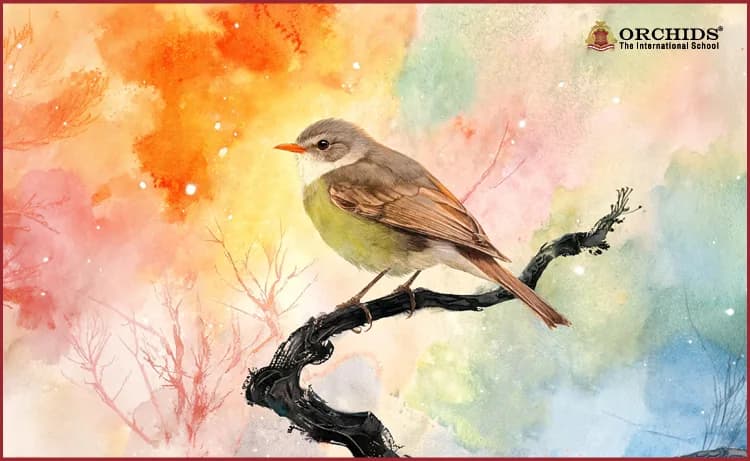
One morning in the spring of 1819, John Keats sat down beneath a plum tree in the garden of a friend’s house in Hampstead and wrote Ode to a Nightingale in a matter of hours. A nightingale has been singing in the garden for several days, and Keats had taken to sitting quietly beneath the tree to listen. The poem he produced that morning is not really about the bird at all. It is about the gap between the world as it is, full of illness, ageing and loss, and the world as the imagination briefly makes it seem, where beauty and song appear permanent and the pain of being human falls away.
Keats was twenty-three when he wrote it. His brother Tom had died of tuberculosis the previous year; Keats himself was already showing the early signs of the same illness, and his entire poetic career would last barely five years before his death at twenty-five. None of that is stated anywhere in the poem, yet the weight of it shapes almost every stanza. This page sets out the complete poem, a clear Ode to a Nightingale summary, a stanza wise breakdown, a line by line explanation, an analysis of its tone and central ideas and the poetic devices that make it the poem it is, along with FAQs.
Table of Contents
- Ode to a Nightingale: The Full Poem
- Ode to a Nightingale Summary
- Ode to a Nightingale Analysis
- Poetic Devices Used in the Poem Ode to a Nightingale
- Frequently Asked Questions about Ode to a Nightingale
Ode to a Nightingale: The Full Poem
by John Keats
My heart aches, and a drowsy numbness pains
My sense, as though of hemlock I had drunk,
Or emptied some dull opiate to the drains
One minute past, and Lethe-wards had sunk:
'Tis not through envy of thy happy lot,
But being too happy in thy happiness,
That thou, light-winged Dryad of the trees,
In some melodious plot
Of beechen green, and shadows numberless,
Singest of summer in full-throated ease.
O for a draught of vintage, that hath been
Cooled a long age in the deep-delved earth,
Tasting of Flora and the country green,
Dance, and Provençal song, and sun-burnt mirth!
O for a beaker full of the warm South,
Full of the true, the blushful Hippocrene,
With beaded bubbles winking at the brim,
And purple-stained mouth;
That I might drink, and leave the world unseen,
And with thee fade away into the forest dim:
Fade far away, dissolve, and quite forget
What thou among the leaves hast never known,
The weariness, the fever, and the fret
Here, where men sit and hear each other groan;
Where palsy shakes a few, sad, last gray hairs,
Where youth grows pale, and spectre-thin, and dies;
Where but to think is to be full of sorrow
And leaden-eyed despairs;
Where beauty cannot keep her lustrous eyes,
Or new love pine at them beyond tomorrow.
Away! away! for I will fly to thee,
Not charioted by Bacchus and his pards,
But on the viewless wings of Poesy,
Though the dull brain perplexes and retards:
Already with thee! tender is the night,
And haply the Queen-Moon is on her throne,
Clustered around by all her starry fays;
But here there is no light,
Save what from heaven is with the breezes blown
Through verdurous glooms and winding mossy ways.
I cannot see what flowers are at my feet,
Nor what soft incense hangs upon the boughs,
But, in embalmed darkness, guess each sweet
Wherewith the seasonable month endows
The grass, the thicket, and the fruit-tree wild;
White hawthorn, and the pastoral eglantine;
Fast-fading violets covered up in leaves;
And mid-May's eldest child,
The coming musk-rose, full of dewy wine,
The murmurous haunt of flies on summer eves.
Darkling I listen; and for many a time
I have been half in love with easeful Death,
Called him soft names in many a mused rhyme,
To take into the air my quiet breath;
Now more than ever seems it rich to die,
To cease upon the midnight with no pain,
While thou art pouring forth thy soul abroad
In such an ecstasy!
Still wouldst thou sing, and I have ears in vain,
To thy high requiem become a sod.
Thou wast not born for death, immortal Bird!
No hungry generations tread thee down;
The voice I hear this passing night was heard
In ancient days by emperor and clown:
Perhaps the self-same song that found a path
Through the sad heart of Ruth, when, sick for home,
She stood in tears amid the alien corn;
The same that oft-times hath
Charmed magic casements, opening on the foam
Of perilous seas, in faery lands forlorn.
Forlorn! the very word is like a bell
To toll me back from thee to my sole self!
Adieu! the fancy cannot cheat so well
As she is famed to do, deceiving elf.
Adieu! adieu! thy plaintive anthem fades
Past the near meadows, over the still stream,
Up the hill-side; and now 'tis buried deep
In the next valley-glades:
Was it a vision, or a waking dream?
Fled is that music: do I wake or sleep?
Who Wrote Ode to a Nightingale
For students asking who wrote Ode to a Nightingale, the answer is John Keats, and placing the poem in the context of his life makes it considerably easier to understand. Keats was born in London in 1795; trained as a surgeon but gave up medicine for poetry; and produced almost all the work for which he is remembered in a single extraordinary year between 1818 and 1819. The ode was composed in May 1819 at Wentworth Place, the Hampstead home of his friend Charles Armitage Brown, and was first published in July of the same year in a literary journal called Annals of the Fine Arts.
The poem belongs to a group of poems Keats wrote in close succession that spring, including Ode on a Grecian Urn and Ode to Melancholy, and the group is collectively regarded as the high point of his achievement. He died in Rome in February 1821, aged twenty-five, from tuberculosis. The brevity of his life and the intensity of his output have made him one of the most studied poets in English literature, and Ode to a Nightingale by John Keats remains the poem most closely associated with his name.

Ode to a Nightingale Summary
The following Ode to a Nightingale summary in English covers the full arc of the poem in accessible terms.
A poet sitting alone at night hears a nightingale singing nearby and is immediately affected by the song, feeling a strange, heavy numbness that comes not from unhappiness but from being almost overwhelmed by the bird’s happiness. He wishes he could drink deeply of wine and use that loosening of the senses to escape with the bird into its forest world, far from the exhaustion, illness and loss that define ordinary human life.
He decides, however, that imagination rather than wine will carry him there, and for a time he succeeds, finding himself in a dark, fragrant, moonlit forest, sensing the flowers around him even though he cannot see them. In this suspended state he begins to think that death would be a beautiful thing, that to die quietly while the nightingale pours out its song would be a kind of perfection.
But the thought of death brings him back to the difference between himself and the bird. The nightingale will not die. Its song has been heard across centuries, by ancient emperors; by the biblical Ruth weeping in a foreign field; and by travellers gazing from lit windows over unknown seas. It is, in a sense, immortal. The word ‘forlorn’, which the poet has used dreamily about those faraway lands, suddenly rings out like a bell and returns him sharply to himself, to his actual solitude on an actual evening. The bird's song fades away. The poem ends with the poet uncertain whether the whole experience was a vision or simply a dream from which he has now woken.
Stanza Wise Summary
Stanza 1: Overwhelmed by the Song
The poet opens by describing a strange physical sensation, a heavy, aching numbness, as though he had swallowed a sedative or the waters of Lethe, the mythological river of forgetfulness. He clarifies that this numbness comes not from envy of the nightingale but from being so moved by its happiness that his own senses have become overwhelmed. The bird, called a light-winged Dryad, a tree spirit from classical mythology, sings with effortless, full-throated joy in its green and shadowy world.
Stanza 2: A Wish for Wine and Escape
The poet longs for wine, not just any wine but an ancient, earthen, richly flavoured drink that carries the warmth of southern landscapes, dancing and song. He imagines a cup overflowing with Hippocrene, the mythological fountain of poetic inspiration, its bubbles winking at the brim and staining the lips purple. His wish is to drink deeply enough to slip away from the world entirely and fade into the nightingale's dim forest alongside the bird.
Stanza 3: The World Left Behind
The poet describes what he would be fading away from: a human world of weariness, fever and fret, where the old tremble and the young fall ill and die young, where even the effort of thinking brings sorrow, and where beauty and love are too fragile to last beyond tomorrow.
Stanza 4: Flight on the Wings of Poetry
He declares he will fly to the nightingale not through the intoxication of wine or the chariot of Bacchus, the god of wine, but through the invisible wings of poetry alone, even though the rational mind tries to slow him down. The transition happens almost instantly: he is already there with the bird in the night, under a moon attended by stars, in a place of deep green shadow where no light reaches from above.
Stanza 5: The Dark, Fragrant Forest
In the darkness of the forest the poet cannot see the flowers at his feet but can sense them through smell and instinct, identifying one by one the white hawthorn, the eglantine, the fast-fading violets half hidden by leaves and the musk-rose just coming into bloom, heavy with dew, on a warm summer evening alive with the hum of flies.
Stanza 6: Half in Love with death
Listening in the dark, the poet reflects that he has often been drawn to the idea of dying peacefully, of simply exhaling quietly and stopping. Now, in this moment, with the nightingale singing at its most intense, death seems more appealing than ever, as though ceasing to exist at this precise, beautiful instant would be a kind of completion. But then he considers that if he did die, the bird would keep singing, and he would become merely a mound of earth beneath it, unable to hear anymore.
Stanza 7: The Immortality of the Bird
The poet addresses the nightingale directly as an immortal bird, one not subject to death as human beings are. The voice he hears tonight is the same voice that has been heard throughout all of human history, by emperors and peasants alike. Perhaps it is even the same song that comforted Ruth in the Bible as she stood weeping and homesick in a foreign field; perhaps the same song that once drifted through open windows over dark, dangerous, magical seas in lands no longer known.
Stanza 8: Return and Uncertainty
The word ‘forlorn’, just used to describe those magical distant shores, strikes the poet suddenly like a tolling bell, pulling him back from the nightingale's world to his own isolated self. The spell of the imagination, which the poet now calls a deceiving elf, has broken. He says his farewells as the bird's song fades away across meadows, streams and hillsides until it disappears entirely into the next valley. He is left with a single haunting question: was this a vision or a waking dream? He cannot tell whether he is awake or still asleep.
Ode to a Nightingale Line by Line Explanation
Stanza 1
‘My heart aches, and a drowsy numbness pains / My sense’ opens the poem not with joy but with a strange, drugged heaviness. The comparison to hemlock, a poison, and to Lethe, the river of forgetfulness in the underworld, sets up immediately the poem's interest in oblivion and escape. Keats is careful to clarify, however, that this numbness is not caused by envy of the bird but by an excess of sympathetic feeling with it, being too happy in its happiness. The nightingale is called a light-winged Dryad, placing it in a classical, mythological world that feels more permanent than the human one and is said to sing of summer in full-throated ease, with an effortlessness the poet conspicuously does not share.
Stanza 2
The longing for wine here is not simply for intoxication. Keats describes wine ‘cooled a long age in the deep-delved earth’, tasting of Flora (the goddess of flowers), Provençal song and sunburnt mirth, making it an almost mythological substance, rich with the accumulated warmth and sensory pleasure of Mediterranean life. Hippocrene is the fountain on Mount Helicon sacred to the Muses, so asking for a cup full of it is asking for pure poetic inspiration along with the wine. The image of beaded bubbles winking at the brim is one of the most celebrated pieces of sensory writing in Keats, and the whole stanza ends with the wish to use this drink to fade quietly out of the visible world into the forest where the bird sings.
Stanza 3
This stanza lays out exactly what the poet wants to escape: not just personal sadness but the entire human condition as Keats experienced it around him. ‘Where youth grows pale, and spectre-thin, and dies’ is widely read as a direct reference to his brother Tom, who had recently died of tuberculosis at nineteen, though Keats does not name him. The parallelism of the three lines beginning with ‘Where’ creates a rhythmic accumulation of grievances against the world, and the final image of beauty unable to keep its eyes lustrous and new love unable to last beyond tomorrow extends the argument to everything fragile and beautiful in human life.
Stanza 4
The declaration ‘Away! away!’ signals a decisive turn, and the choice of poetry rather than wine as the vehicle of escape is significant: it privileges the imagination over sensory indulgence. The ‘viewless wings of Poesy’ are invisible precisely because they are mental rather than physical. The phrase ‘Already with thee!’ is one of the most admired in the poem, the sudden transition from wishing to being accomplished mid-stanza in two words. The rest of the stanza describes the moonlit night the poet now inhabits imaginatively, with the moon on her throne surrounded by her starry attendants, though no light penetrates through the layers of leaves to where the poet stands below.
Stanza 5
Unable to see in the deep forest darkness, the poet moves into his other senses, guessing at the flowers around him through scent and touch and the feel of the season. The list of flowers, white hawthorn, eglantine, fast-fading violets and the coming musk-rose, works as both a sensory catalogue and a seasonal marker, suggesting that everything here is at its fullest and most beautiful yet already beginning to pass. The musk-rose is described as full of dewy wine and surrounded by the murmurous haunt of flies, a phrase that manages to make even an insect sound a part of the evening's rich, warm texture.
Stanza 6
The turn to death here is not as startling as it first appears, given that the poet has already been moving through darkness, fragrance and an almost suspended state of consciousness. The phrase ‘half in love with easeful Death’ makes it clear that this is not a desperate wish but a recurring, gentle temptation, one the poet has even addressed before in his own poetry, calling death by soft names. What makes death seem most appealing in this moment is the specific combination of dying painlessly at midnight while the nightingale is at the height of its song, as though the beauty of the sound could cover the moment of ending. The final two lines of the stanza puncture this fantasy: if the poet were dead, he could no longer hear the song, and the bird would become his requiem rather than his companion.
Stanza 7
The poem's pivotal stanza opens with a direct, almost defiant address: ‘Thou wast not born for death, immortal Bird!’ The nightingale is separated entirely from the human condition: no generations consume it, no individual nightingale's death ends its voice, since the species and its song persist across history. The poet imagines that voice reaching back through time to ancient courts and to the biblical story of Ruth, a young woman who left her homeland to follow her mother-in-law and found herself weeping in a foreign field at harvest time, sick for home. This is one of the most compassionate images in all of English poetry, and it arrives naturally in a poem written by someone whose own life had been shadowed by loss and displacement. The stanza ends with a vision of lit windows opening on dark, unknown seas, and the word ‘forlorn’ lands at the close, the hinge on which the entire poem turns.
Stanza 8
‘Forlorn! the very word is like a bell’ uses the word the poet has just used romantically to describe faraway magical lands and replays it as the sound of a church bell calling him back to earth. The enchantment breaks, and Keats turns on the imagination itself, calling it a deceiving elf, a faculty that promised more than it could deliver. As the bird's song fades physically across the landscape, moving from meadow to stream to hillside to valley, the poet is left in complete uncertainty, unable to say whether what he has experienced was genuine vision or mere sleep. The final question, ‘do I wake or sleep?’, is left completely unanswered, which is precisely the point.
Ode to a Nightingale Analysis
What Kind of Poem is Ode to a Nightingale?
Ode to a Nightingale is a Horatian ode, meaning it is composed in uniform stanzas of a consistent shape and metre, as opposed to the more irregular Pindaric ode. Each of its eight stanzas consists of ten lines, the first seven in iambic pentameter and the eighth a shorter line of iambic trimeter, which gives each stanza a characteristic slight pause or dip just before its close. The poem belongs to the tradition of English Romantic poetry and is often grouped with Keats's other great odes of 1819 as the peak achievement of that movement.
What is the Tone of Ode to a Nightingale?
The tone shifts considerably across the poem's eight stanzas, and tracking those shifts is central to any good Ode to a Nightingale analysis. It opens in a state of heavy, almost drugged melancholy, moves through longing and wishful fantasy in the middle stanzas, reaches a brief, suspended moment of something close to peace or even rapture in the fifth and sixth stanzas, then turns sharply back to a more sober, questioning self-awareness in the final stanza. The overall emotional movement is from numbed sadness to imaginative ecstasy and back to uncertainty, and no single word covers all of it. Elegiac, longing, tender and finally questioning are perhaps the most accurate descriptions taken together.
The Tension between Beauty and Mortality
The poem's deepest preoccupation is the contrast between human transience and the apparent permanence of the nightingale's song. Human beings age, fall ill and die; beauty fades, and love does not last; even the act of thinking brings sorrow. The nightingale, by contrast, exists outside this cycle, its song unchanged from the days of ancient emperors to the present evening. What Keats explores, and does not resolve, is whether the imagination can genuinely give a human being access to that more permanent world, or whether the boundary between the two is finally uncrossable. The poem suggests both possibilities and leaves the poet, and the reader, suspended between them.
Keats and Negative Capability
Keats himself coined the phrase ‘negative capability’ to describe the capacity to remain in uncertainty without irritably grasping after fixed answers, and Ode to a Nightingale is one of his finest demonstrations of it. The poem refuses to resolve its central question, the final lines offer no comfort and no conclusion, and the experience of reading it closely mirrors the experience the poet describes: a brief, vivid entry into something beautiful followed by a return to ordinary uncertainty.
Poetic Devices Used in the Poem Ode to a Nightingale
- Simile: The opening comparison of the poet's numbed state to someone who has drunk hemlock or an opiate establishes immediately the degree to which the nightingale's song has affected him, not as a pleasure but as an almost overwhelming physical sensation.
- Allusion: The poem is dense with classical and biblical allusion: Lethe, Flora, Bacchus, the Dryad, Hippocrene, the Queen-Moon, and the story of Ruth from the Book of Ruth. Each allusion places the nightingale's world against a backdrop of human history and mythology that makes the bird seem to belong to a timeless order that ordinary life cannot reach.
- Imagery: Keats builds the poem on extraordinarily rich sensory imagery, particularly in the second and fifth stanzas, where the wine, the flowers, the darkness and the evening sounds of summer are rendered with a precision and warmth that make the reader feel they are there alongside the poet.
- Personification: Death is personified as someone who can be called by soft names and invited to take a quiet breath, giving the sixth stanza its peculiarly gentle, almost tender treatment of a subject that might otherwise seem grim.
- Apostrophe: The seventh stanza opens with a direct address to the bird, ‘Thou wast not born for death, immortal Bird!’, a rhetorical move that allows Keats to shift the poem from personal meditation to a broader statement about the nature of art and beauty.
- Rhyme scheme and metre: Each stanza follows the scheme ABABCDECDE, with the ninth line of each stanza rhyming with the sixth, binding the second half of each stanza together tightly. The consistent use of iambic pentameter throughout, broken only by the shorter eighth line of each stanza, creates a formal, controlled container for emotional material that might otherwise feel overwhelming.
Frequently Asked Questions about Ode to a Nightingale
1. What does the nightingale represent in the poem?
The nightingale represents beauty, art and a kind of permanence that exists outside the cycles of human ageing and death. Its song is described as immortal precisely because it has been heard across all of human history.
2. What is meant by ‘half in love with easeful Death’?
Keats describes a recurring, gentle temptation towards death, not a violent or desperate urge but a quiet attraction to the idea of ceasing to exist painlessly at a moment of great beauty. It reflects both his own health and his Romantic preoccupation with the relationship between beauty and mortality.
3. Why does the poem end with a question?
The final question, ‘do I wake or sleep?’, reflects the poem's central uncertainty about whether the imagination can truly transport a human being into a different and more permanent world or whether the experience was merely an illusion. Keats leaves it unanswered deliberately.
Admissions Open for 2026-27
More Poems
We hope this was useful for your child's learning journey. To explore more about what Orchids The International School has to offer, get in touch with our admissions team.
Popular Searches
- NCERT Solutions for Class 1 subjects
- NCERT Solutions for Class 2 subjects
- NCERT Solutions for Class 3 subjects
- NCERT Solutions for Class 4 subjects
- NCERT Solutions for Class 5 subjects
- CBSE School In Aurangabad
- CBSE Schools In Bangalore
- CBSE School In Bhopal
- CBSE Schools In Chennai
- CBSE Schools In Delhi
- Best CBSE Schools In Gurgaon
- CBSE School In Hyderabad
- CBSE School In Indore
- CBSE School In Jabalpur
- CBSE Schools In Jaipur
- CBSE Schools In Kolkata
- CBSE Schools In Mumbai
- CBSE Schools In Nagpur
- CBSE Schools In Pune
- Top CBSE School In Rohtak
- Best CBSE Schools In Sonipat











Orchids The International School is one of India's leading chains of CBSE and ICSE schools, with 130+ schools across the country.