

Thermal Camera: Definition, Core Components, Infrared Imaging, Modern Use and Wildlife Surveillance
A thermal camera is a special device that helps us see heat that is invisible to the naked eye. Also called the thermographic camera, this gadget can detect temperature differences in objects, people, animals and buildings by capturing the heat they emit.
Have you ever thought about how firefighters find people through smoke or how engineers locate overheating machines? A thermal camera makes this possible by creating images based on heat instead of visible light. This article provides insights into thermal cameras, thermal imaging, their working principles and real-life applications.
Table of Contents
- What is a Thermal Camera
- What is Thermal Imaging
- How Does a Thermal Camera Work
- Thermal Camera for Mobile Devices
- The Use of Thermal Cameras in Wildlife Surveillance
- Thermal Imaging in Environmental Monitoring
- Other Important Applications of Thermal Imaging Cameras
- Frequently Asked Questions on Thermal Camera

What is a Thermal Camera
A thermal camera, or thermal imaging, is a device that detects heat emitted by objects and converts it into a visible image. Unlike ordinary cameras that capture visible light, a thermal imaging camera captures infrared radiation, which is a form of heat energy.
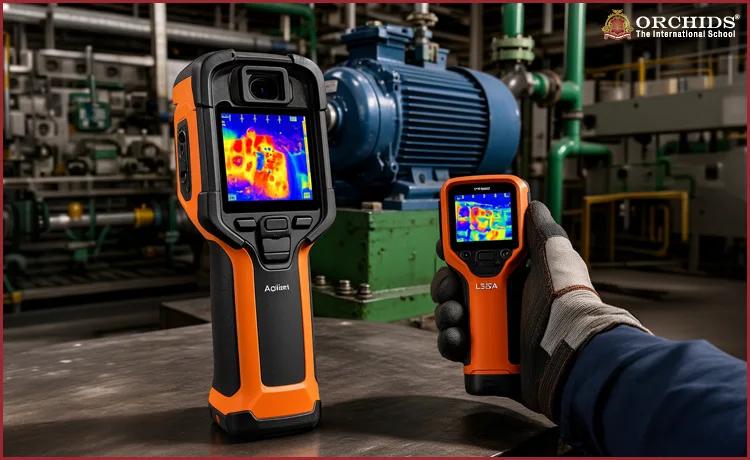
Every object with a temperature above absolute zero releases infrared radiation. A thermal camera detects this radiation and creates a thermal image that shows temperature differences using different colors.
Because thermal imaging cameras do not need direct contact with an object, they are widely used in industries, healthcare, security and rescue operations.
Important Features of a Thermal Imaging Camera
- Detects infrared radiation
- Creates visible thermal images
- Works in darkness and smoke
- Measures temperature without contact
- Helps identify hot and cold areas quickly
What is Thermal Imaging
A thermal image, also known as a thermogram, is the image created by a thermal camera after detecting heat emitted by objects. Unlike a normal photograph that captures visible light, a thermal image shows temperature differences using colors.
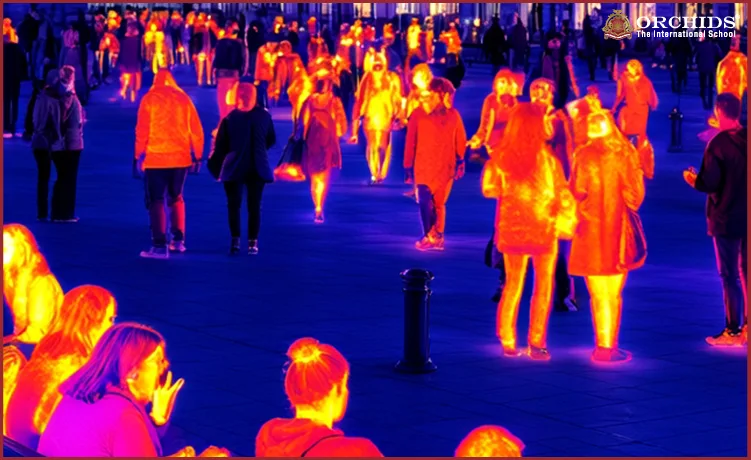
Have you ever wondered how a thermal camera can show heat? It does this by detecting infrared radiation released by objects and converting it into a visual image that people can easily interpret.
How Does a Thermal Image Show Temperature
A thermal image uses different colours to represent different temperature ranges.
- Red, orange and yellow usually indicate hotter areas.
- Green represents moderate temperatures.
- Blue and purple often indicate cooler areas.
Because of these colour differences, thermal images act like a temperature map, making it easier to identify hot spots, cold areas and unusual temperature patterns.
Thermal Image vs Normal Photograph
|
Feature |
Thermal Image |
Normal Photograph |
|
Captures |
Heat (Infrared Radiation) |
Visible Light |
|
Works in Darkness |
Yes |
No |
|
Shows Temperature Differences |
Yes |
No |
|
Main Purpose |
Heat Detection |
Visual Appearance |
How Does a Thermal Camera Work
Thermal imaging works by detecting the heat energy, also called infrared radiation, emitted by objects. Since every object around us releases some amount of heat, a thermal camera can capture this invisible energy and convert it into a visible image.
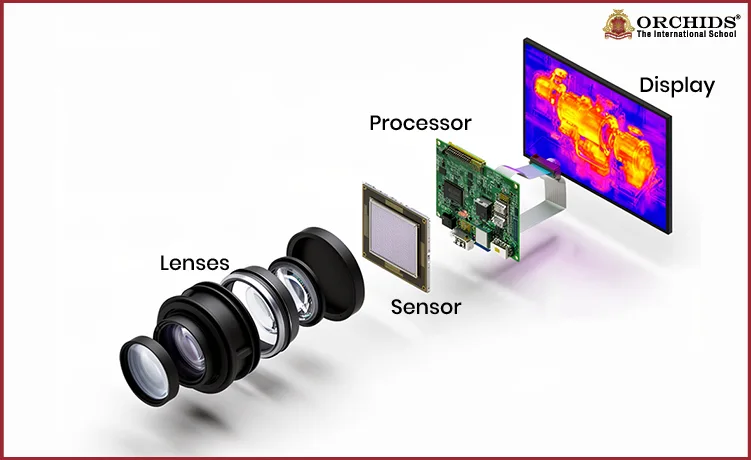
The process happens in a few simple steps:
- The thermal camera detects infrared radiation emitted by objects.
- Special sensors inside the camera collect this heat energy.
- The camera's software processes the collected information.
- Different temperatures are assigned different colors.
- A thermal image, also called a thermogram, appears on the screen.
In most thermal images, warmer areas appear in red, orange, or yellow shades, while cooler areas appear in blue or purple shades. This helps users quickly identify temperature differences and potential problem areas.
Thermal Camera for Mobile Devices
Have you heard about thermal cameras that can be used with smartphones? Thermal imaging is no longer limited to large industrial equipment. Today, compact thermal cameras for mobile devices allow users to capture thermal images directly from their smartphones or tablets.
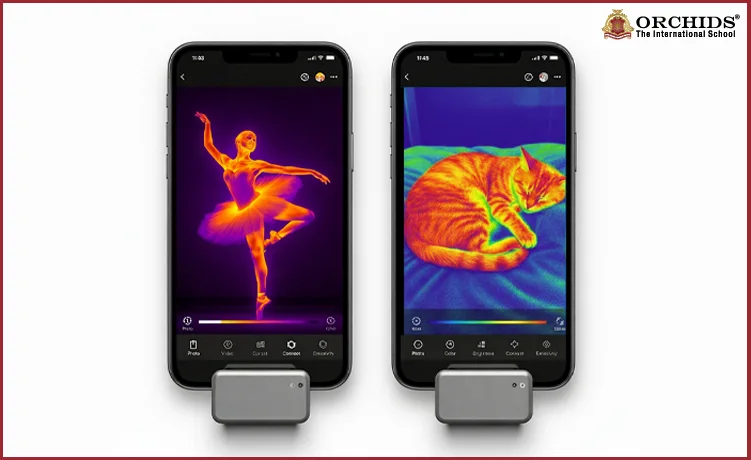
A thermal camera for mobile is a small attachment that connects to a mobile device through a charging port or wirelessly. It works by detecting infrared radiation and displaying thermal images through a dedicated mobile application.
Features of Thermal Camera for Mobile
- Compact and lightweight design
- Easy to carry and use
- Captures thermal images instantly
- Connects directly to smartphones
- Displays temperature information on the screen
The Use of Thermal Cameras in Wildlife Surveillance
A recent wildlife protection project near Coimbatore, Tamil Nadu, uses thermal cameras and an intelligent warning system to reduce train-elephant collisions. The system detects elephants near railway tracks using thermal imaging technology and immediately alerts train operators and railway authorities.
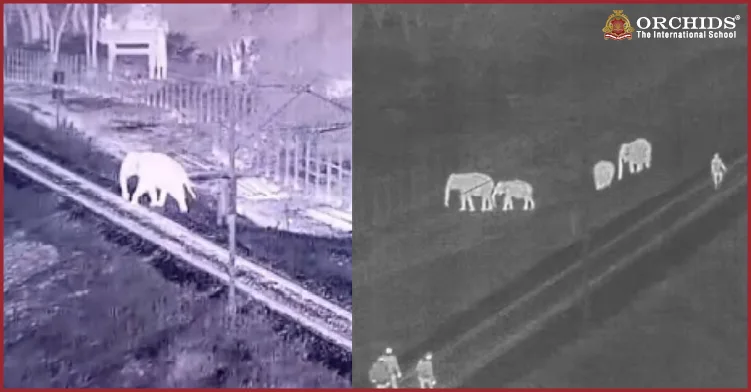
According to reports, this technology has helped prevent 9,481 potential train-elephant collisions without any elephant fatalities, making it an important example of how thermal imaging can support wildlife conservation.
Thermal cameras can detect animals even at night or in poor visibility conditions, allowing authorities to take quick action and improve safety for both wildlife and transportation systems.
Today, these cameras are also helping protect endangered animals and preserve biodiversity through smart monitoring systems.
Thermal Imaging in Environmental Monitoring
A well-known project in the Amazon Rainforest used infrared and multispectral imaging technology to capture the effects of deforestation and forest fires. These special cameras revealed heat patterns, burned areas and environmental damage that were difficult to observe with ordinary photography.
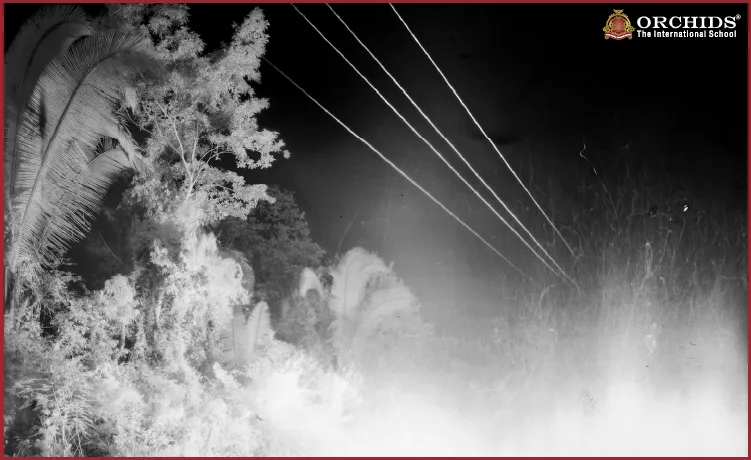
The images helped scientists, researchers and environmental organisations better understand the scale of rainforest destruction and its impact on wildlife and ecosystems.
Thermal imaging technology is now widely used around the world to monitor forests, track wildfires, detect illegal land clearing and support conservation efforts. By identifying changes in temperature and vegetation, thermal cameras help experts protect natural habitats and respond more quickly to environmental threats.
Other Applications of Thermal Imaging Cameras
Thermal cameras help people detect heat patterns that cannot be seen with ordinary cameras. Because of this, they are useful in many fields.
- Electrical Inspections: Thermal cameras help electricians find overheated wires, loose connections and faulty electrical equipment. Detecting these problems early can help prevent accidents and equipment damage.
- Checking Industrial Equipment: Many machines generate heat while working. A thermal imaging camera can identify unusual hot spots in motors, pumps and other equipment before they stop working properly.
- Firefighting and Rescue Operations: Thermal cameras help them detect heat signatures, making it easier to locate trapped people and identify fire sources.
- Security and Surveillance: Thermal cameras are widely used in security systems. They can detect people, animals, or vehicles even in darkness, fog, or poor weather conditions.
- Animal Health Monitoring: Veterinarians sometimes use thermal imaging cameras to identify changes in an animal's body temperature. This can help detect injuries or health problems at an early stage.
- Building Inspections: Thermal imaging cameras help identify heat loss, poor insulation, water leaks and air leaks in buildings. This information can improve energy efficiency and reduce energy costs.
- Gas Leak Detection: In many industries, thermal cameras are used to detect gas leaks. They help workers identify leaks quickly and improve workplace safety.
- Roads and Bridge Inspections: Thermal imaging is also used to inspect roads, bridges and other structures. It can reveal hidden cracks, gaps, or damaged areas that may not be visible during a regular inspection.
- Medical Applications: Thermal cameras can help healthcare professionals observe temperature variations on the human body. These observations may support health monitoring and medical research.
In this article, we have learned that a thermal camera is a device that detects heat and converts it into a visible image called a thermal image. We also looked at its real-life applications in wildlife protection, environmental monitoring, firefighting, security, healthcare, industrial inspections and building maintenance. Thermal cameras have become valuable tools that help people detect problems, improve safety and study the world around us through heat detection.
Frequently Asked Questions on Thermal Camera
1. What is a thermal camera in simple words?
A thermal camera is a device that detects heat emitted by objects and converts it into a visible image. It helps people see temperature differences that cannot be seen with normal cameras.
2. How does a thermal imaging camera work?
A thermal imaging camera detects infrared radiation released by objects. It processes this heat information and displays it as a thermal image, where different colors represent different temperatures.
3. What is the difference between a thermal camera and a normal camera?
A normal camera captures visible light, while a thermal camera captures heat energy. Because of this, thermal cameras can work in darkness and show temperature variations that ordinary cameras cannot detect.
4. What is a thermal camera for mobile used for?
A thermal camera for mobile allows users to capture thermal images using their smartphones. It is useful for checking electrical systems, finding heat leaks, inspecting equipment, and outdoor activities.
5. Can thermal cameras be used for wildlife protection?
Yes. Thermal cameras can detect animals even at night or in low-visibility conditions. They are used in wildlife conservation projects to monitor animal movement and help prevent accidents involving wildlife.
Science isn't just a subject, it's the way of seeing the world. Curious how Orchids The International School teaches it that way? Talk to our admissions team.


Admissions Open for 2026-27
What type of concept pages would you prefer?
CBSE Schools In Popular Cities
- CBSE Schools in Bangalore
- CBSE Schools in Mumbai
- CBSE Schools in Pune
- CBSE Schools in Hyderabad
- CBSE Schools in Chennai
- CBSE Schools in Gurgaon
- CBSE Schools in Kolkata
- CBSE Schools in Indore
- CBSE Schools in Sonipat
- CBSE Schools in Delhi
- CBSE Schools in Rohtak
- CBSE Schools in Bhopal
- CBSE Schools in Aurangabad
- CBSE Schools in Jabalpur
- CBSE Schools in Jaipur
- CBSE Schools in Jodhpur
- CBSE Schools in Nagpur
- CBSE Schools in Ahmednagar
- CBSE School In Tumkur











Orchids The International School is one of India's leading chains of CBSE and ICSE schools, with 110+ schools across the country.