

An Astrologer’s Day: Summary, Analysis and Character Study of RK Narayan’s Classic Tale
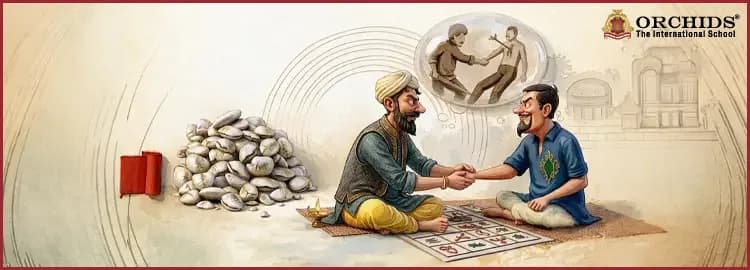
An Astrologer’s Day is one of the most widely read short stories written by the Indian author RK Narayan. First published in 1947 as the title story of his collection An Astrologer’s Day and Other Stories, and later included in the famous anthology Malgudi Days, the tale is set in a bustling small town in South India and follows a single evening in the life of a man who earns his living pretending to read the future. This page covers everything a student needs, including An Astrologer’s Day summary, a detailed An Astrologer’s Day analysis, character analysis and a full set of questions and answers.
Table of Contents
- About An Astrologer’s Day
- An Astrologer’s Day at a Glance
- An Astrologer’s Day Author Introduction
- About Malgudi Days
- An Astrologer’s Day: The Full Story
- An Astrologer’s Day Summary
- An Astrologer’s Day: Title Significance
- An Astrologer’s Day: Setting of the Story
- Point of View and Narrative Style in An Astrologer’s Day
- Analysis of An Astrologer’s Day
- An Astrologer’s Day: Character Analysis
- Humour and Irony in An Astrologer’s Day
- Themes, Symbolism and Literary Devices in An Astrologer’s Day
- Moral of the Story ‘An Astrologer’s Day’
- Glossary of Difficult Words in An Astrologer’s Day
- An Astrologer’s Day Questions and Answers
- Frequently Asked Questions about An Astrologer’s Day
About An Astrologer’s Day
About An Astrologer’s Day, the story is built around a chance meeting between two men, one of whom has been running from a guilty secret for years. Narayan uses the ordinary bustle of a town market, the flickering shop lights and the noisy vendors to build an atmosphere of mystery around the astrologer’s stall. The story is often studied for its critical analysis of An Astrologer’s Day, since it works on two levels at once: as a simple tale of coincidence and as a deeper meditation on guilt, fate and the stories people tell themselves in order to survive.
The narrative is compact, containing very little physical action, yet it holds a twist that changes the meaning of everything that came before it. This makes it a favourite text for teaching An Astrologer’s Day by RK Narayan summary exercises in schools, since it demonstrates how a writer can build suspense without violence or spectacle, relying instead on atmosphere, dialogue and a single withheld fact.
An Astrologer's Day at a Glance
|
Detail |
Information |
|
Author |
RK Narayan |
|
First published |
1947 |
|
Collection |
An Astrologer's Day and Other Stories; also featured in Malgudi Days |
|
Genre |
Short story, Indian English fiction |
|
Setting |
A market street near the Town Hall Park in a South Indian town |
|
Narration |
Third person, past tense |
|
Main characters |
The astrologer, his wife, Guru Nayak |
|
Central device |
Dramatic irony and a delayed reveal |
|
Themes |
Guilt, fate versus chance, identity, deception, escape and confession |
An Astrologer's Day Author Introduction
For the An Astrologer's Day author introduction, it helps to know that RK Narayan, full name Rasipuram Krishnaswami Iyer Narayanaswami, lived from 1906 to 2001 and remains one of the pioneers of Indian writing in English. Born in Madras, now Chennai, Narayan is best remembered for creating the fictional South Indian town of Malgudi, a setting that appears across many of his novels and stories and stands in for the countless small towns of the region.
Narayan's writing is known for its gentle irony, its plain and unhurried prose and its deep sympathy for ordinary people caught in ordinary dilemmas. He began writing in the 1930s, and his first novel, Swami and Friends, introduced readers to Malgudi for the first time. Over a career spanning more than six decades, he wrote novels such as The Guide, The Financial Expert, Waiting for the Mahatma and The English Teacher, along with dozens of short stories, essays and retellings of Indian epics.
As the author of An Astrologer's Day, Narayan draws on the everyday texture of Indian town life, the astrologers, vendors and hawkers who lined the roads near parks and marketplaces, to create a setting that feels lived in rather than invented. His stories rarely rely on dramatic events. Instead they find their power in small human moments, which is exactly the technique used in this story. Narayan was awarded the Sahitya Akademi Award, the Padma Bhushan and the Padma Vibhushan during his lifetime, and he remains one of the most translated and widely taught Indian authors in English.
About Malgudi Days
Malgudi Days is a celebrated collection of short stories by RK Narayan, first published in 1943 and later expanded with additional stories, including An Astrologer's Day, in subsequent editions. The collection is set almost entirely in Malgudi, the fictional South Indian town that Narayan invented and returned to throughout his career. Malgudi is often described as a microcosm of small town India, complete with its own railway station, river, market, school and temple, and it recurs as the backdrop for many of Narayan's novels as well.
The stories in Malgudi Days focus on ordinary people, including children, shopkeepers, teachers, con artists and labourers, and explore their small triumphs, disappointments and moral dilemmas with warmth and gentle humour. The collection became especially well known in India after it was adapted into a popular television series in the late 1980s, which brought Narayan's characters and Malgudi itself to a much wider audience.
An Astrologer's Day fits naturally into this collection because it shares the same concerns as the other Malgudi stories: an ordinary trade, a hidden truth and an ending that quietly reshapes how the reader sees everything that came before. Where many Malgudi stories are lighter in tone, this particular story stands out for the darker secret at its centre, making it one of the more dramatically ironic entries in the collection.
An Astrologer's Day: The Full Story
Punctually at midday he opened his bag and spread out his professional equipment, which consisted of a dozen cowrie shells, a square piece of cloth with obscure mystic charts on it, a notebook and a bundle of palmyra writing. His forehead was resplendent with sacred ash and vermilion, and his eyes sparkled with a sharp abnormal gleam which was really an outcome of a continual searching look for customers, but which his simple clients took to be a prophetic light and felt comforted.
The power of his eyes was considerably enhanced by their position, placed as they were between the painted forehead and the dark whiskers which streamed down his cheeks. Even a half wit's eyes would sparkle in such a setting. To crown the effect he wound a saffron coloured turban around his head. This colour scheme never failed. People were attracted to him as bees are attracted to cosmos or dahlia stalks.
He sat under the boughs of a spreading tamarind tree which flanked a path running through the Town Hall Park. It was a remarkable place in many ways. A surging crowd was always moving up and down this narrow road morning till night. A variety of trades and occupations was represented all along its way: medicine sellers, sellers of stolen hardware and junk, magicians and, above all, an auctioneer of cheap cloth, who created enough din all day to attract the whole town. Next to him in vociferousness came a vendor of fried groundnuts, who gave his ware a fancy name each day, calling it Bombay Ice Cream one day, and on the next Delhi Almond, and on the third Raja's Delicacy, and so on and so forth, and people flocked to him.
A considerable portion of this crowd dallied before the astrologer too. The astrologer transacted his business by the light of a flare which crackled and smoked up above the groundnut heap nearby. Half the enchantment of the place was due to the fact that it did not have the benefit of municipal lighting. The place was lit up by shop lights. One or two had hissing gaslights, some had naked flares stuck on poles, some were lit up by old cycle lamps and one or two, like the astrologer's, managed without lights of their own. It was a bewildering crisscross of light rays and moving shadows.

This suited the astrologer very well, for the simple reason that he had not in the least intended to be an astrologer when he began life, and he knew no more of what was going to happen to others than he knew what was going to happen to himself next minute. He was as much a stranger to the stars as were his innocent customers. Yet he said things which pleased and astonished everyone, that was more a matter of study, practice and shrewd guesswork. All the same, it was as much an honest man's labour as any other, and he deserved the wages he carried home at the end of a day.
He had left his village without any previous thought or plan. If he had continued there he would have carried on the work of his forefathers, namely tilling the land, living, marrying and ripening in his cornfield and ancestral home. But that was not to be. He had to leave home without telling anyone, and he could not rest till he left it behind a couple of hundred miles. To a villager it is a great deal, as if an ocean flowed between.
He had a working analysis of mankind's troubles: marriage, money and the tangles of human ties. Long practice had sharpened his perception. Within five minutes he understood what was wrong. He charged three pies per question and never opened his mouth till the other had spoken for at least ten minutes, which provided him enough stuff for a dozen answers and advices. When he told the person before him, gazing at his palm, "In many ways you are not getting the fullest results for your efforts," nine out of ten were disposed to agree with him. Or he questioned: "Is there any woman in your family, maybe even a distant relative, who is not well disposed towards you?" Or he gave an analysis of character: "Most of your troubles are due to your nature. How can you be otherwise with Saturn where he is? You have an impetuous nature and a rough exterior." This endeared him to their hearts immediately, for even the mildest of us loves to think that he has a forbidding exterior.
The nuts vendor blew out his flare and rose to go home. This was a signal for the astrologer to bundle up too, since it left him in darkness except for a little shaft of green light which strayed in from somewhere and touched the ground before him. He picked up his cowrie shells and paraphernalia and was putting them back into his bag when the green shaft of light was blotted out. He looked up and saw a man standing before him.
He sensed a possible client and said, "You look so careworn. It will do you good to sit down for a while and chat with me." The other grumbled some vague reply. The astrologer pressed his invitation, whereupon the other thrust his palm under his nose, saying, "You call yourself an astrologer?" The astrologer felt challenged and said, tilting the other's palm towards the green shaft of light, "Yours is a nature . . ." "Oh, stop that," the other said. "Tell me something worthwhile . . ."
Our friend felt piqued. "I charge only three pies per question, and what you get ought to be good enough for your money . . ." At this the other withdrew his arm, took out an anna and flung it out to him, saying, "I have some questions to ask. If I prove you are bluffing, you must return that anna to me with interest." "If you find my answers satisfactory, will you give me five rupees?" "No." "Or will you give me eight annas?" "All right, provided you give me twice as much if you are wrong," said the stranger. This pact was accepted after a little further argument.
The astrologer sent up a prayer to heaven as the other lit a cheroot. The astrologer caught a glimpse of his face by the match light. There was a pause as cars hooted on the road, jutka drivers swore at their horses and the babble of the crowd agitated the semi darkness of the park. The other sat down, sucking his cheroot, puffing out, sat there ruthlessly. The astrologer felt very uncomfortable. "Here, take your anna back. I am not used to such challenges. It is late for me today . . ." He made preparations to bundle up.
The other held his wrist and said, "You can't get out of it now. You dragged me in while I was passing." The astrologer shivered in his grip, and his voice shook and became faint. "Leave me today. I will speak to you tomorrow." The other thrust his palm in his face and said, "Challenge is challenge. Go on." The astrologer proceeded with his throat drying up. "There is a woman . . ." "Stop," said the other. "I don't want all that. Shall I succeed in my present search or not? Answer this and go. Otherwise I will not let you go till you disgorge all your coins."
The astrologer muttered a few incantations and replied, "All right. I will speak. But will you give me a rupee if what I say is convincing? Otherwise I will not open my mouth, and you may do what you like." After a good deal of haggling the other agreed.
The astrologer said, "You were left for dead. Am I right?" "Ah, tell me more." "A knife has passed through you once?" said the astrologer. "Good fellow!" He bared his chest to show the scar. "What else?" "And then you were pushed into a well nearby in the field. You were left for dead." "I should have been dead if some passer by had not chanced to peep into the well," exclaimed the other, overwhelmed by enthusiasm. "When shall I get at him?" he asked, clenching his fist. "In the next world," answered the astrologer. "He died four months ago in a far off town. You will never see any more of him."
The other groaned on hearing it. The astrologer proceeded. "Guru Nayak, listen carefully to what I have to say." "You know my name!" the other said, taken aback. "As I know all other things. Guru Nayak, listen carefully to what I have to say. Your village is two days' journey due north of this town. Take the next train and be gone. I see once again great danger to your life if you go from home." He took out a pinch of sacred ash and held it out to him. "Rub it on your forehead and go home. Never travel southward again, and you will live to be a hundred."
"Why should I leave home again?" the other said reflectively. "I was only going away now and then to look for him and to choke out his life if I met him." He shook his head regretfully. "He has escaped my hands. I hope at least he died as he deserved." "Yes," said the astrologer. "He was crushed under a lorry." The other looked gratified to hear it.
The place was deserted by the time the astrologer picked up his articles and put them into his bag. The green shaft was also gone, leaving the place in darkness and silence. The stranger had gone off into the night, after giving the astrologer a handful of coins.
It was nearly midnight when the astrologer reached home. His wife was waiting for him at the door and demanded an explanation. He flung the coins at her and said, "Count them. One man gave all that." "Twelve and a half annas," she said, counting. She was overjoyed. "I can buy some jaggery and coconut tomorrow. The child has been asking for sweets for so many days now. I will prepare some nice stuff for her." "The swine has cheated me! He promised me a rupee," said the astrologer. She looked up at him. "You look worried. What is wrong?" "Nothing."
After dinner, sitting on the pyol, he told her, "Do you know a great load is gone from me today? I thought I had the blood of a man on my hands all these years. That was the reason why I ran away from home, settled here and married you. He is alive." She gasped. "You tried to kill!" "Yes, in our village, when I was a silly youngster. We drank, gambled and quarrelled badly one day, why think of it now? Time to sleep," he said, yawning, and stretched himself on the pyol.
An Astrologer's Day Summary
For a quick An Astrologer's Day summary, the story opens with a detailed description of an astrologer setting up his stall each evening in a busy market near the Town Hall Park. He has no real knowledge of astrology and survives purely on guesswork, observation and a talent for reading people. Narayan spends the first part of the story establishing this routine, describing the market, its vendors, its lighting and the astrologer's practised patter with his customers.
As the market empties for the night, a stranger named Guru Nayak stops at his stall and challenges him to prove his skills, offering a wager of coins if the astrologer can answer his questions convincingly. Reluctant at first, the astrologer eventually agrees under pressure. Speaking under the pretence of astrological insight, he reveals accurate details about an old attack: a knife wound and a well into which the stranger was pushed and left for dead. He tells Guru Nayak that his attacker is already dead, crushed under a lorry in a distant town, and advises him to return home immediately and never travel south again.
Satisfied and relieved, the stranger pays the astrologer and leaves. Only when the astrologer returns home late that night does the twist become clear to the reader. He tells his wife that a great weight has been lifted from him because he had believed for years that he had killed a man in a drunken village brawl in his youth. That belief was the reason he fled his home and started an entirely new life. He is, in fact, the very man who attacked Guru Nayak, and this chance meeting has allowed him to send his would be avenger away in the false belief that his attacker is dead, thereby protecting himself and quietly settling an old, unspoken guilt without ever revealing his identity.
An Astrologer's Day: Title Significance
The title An Astrologer's Day is deliberately understated. On the surface it promises nothing more than an account of one ordinary working day for a man in an ordinary trade. This plainness is part of Narayan's technique, since the events of that single day turn out to be anything but routine for the astrologer himself. The title also carries a double meaning once the story is finished: it is both a day in the working life of a fortune teller and the day on which the astrologer's own fortune, the guilt he has carried for years, is finally and unexpectedly resolved.
An Astrologer's Day: Setting of the Story
The story is set entirely within a single evening in a crowded market street beside the Town Hall Park in an unnamed South Indian town. Narayan builds this setting with great care in the opening paragraphs, describing the tamarind tree under which the astrologer sits, the mixture of gaslights, flares and cycle lamps that light the road unevenly and the crowd of hawkers, vendors and customers who pass through. This half lit, noisy and constantly shifting setting is essential to the plot, since it is precisely the poor lighting that allows the astrologer to study Guru Nayak's face by match light without being clearly recognised in return, setting up the story's central irony.
Point of View and Narrative Style in An Astrologer's Day
An Astrologer's Day is narrated in the third person, with the narrator following the astrologer closely without ever stepping fully into his private thoughts until the final scene. This distant narration is important, since it allows Narayan to withhold the astrologer's true identity from the reader for almost the entire story, even though the astrologer himself knows the truth from the very first moment he recognises Guru Nayak. The prose style is plain, unhurried and heavily reliant on dialogue, particularly in the central bargaining and question and answer scene between the astrologer and Guru Nayak, which builds tension gradually through spoken exchange rather than description.
Analysis of An Astrologer's Day
Any analysis of An Astrologer's Day has to begin with structure. Narayan builds the story around a single reveal that is withheld until the very last lines, which means every earlier detail, the astrologer's nervousness, his reluctance to take on the stranger as a client, his shaking voice, takes on new meaning on a second reading. This technique of delayed revelation is central to the story's design and is one reason it continues to be studied closely in An Astrologer's Day analysis discussions.
The setting is equally important. The half lit market, with its clashing lamps and flares, mirrors the astrologer's own double life: a man hiding in half light, neither fully seen nor fully hidden. Narayan uses this physical darkness to represent the moral darkness the astrologer has been carrying for years, and the sudden loss of the green shaft of light at the story's climax coincides exactly with the moment his past catches up with him.
The story also explores questions of identity and escape. The astrologer has built an entirely new life, a new trade, a new town and a new family on the foundation of a crime he believed made him a murderer. His unmasking to the reader, though never to his wife or to Guru Nayak, shows how thin the boundary can be between reinvention and running away. The story does not ask the reader to judge him harshly for this, since Narayan presents his years of guilt, and the relief he feels once it is lifted, with genuine sympathy rather than condemnation.
Structurally, the story can be divided into three clear movements: the extended description of the astrologer's daily trade and the marketplace, the tense central confrontation with Guru Nayak, and the brief closing scene at home with his wife, where the true meaning of the encounter is revealed. Each section shifts in pace, moving from leisurely description to tight, dialogue driven suspense and finally to a quiet, domestic close.
An Astrologer's Day: Character Analysis
Character of the Astrologer
To analyse the character of the astrologer in An Astrologer's Day, it helps to look at him from three angles: his profession, his past and his private fear.
- As a professional, the astrologer is resourceful and observant rather than mystical. Narayan makes clear early on that his success comes from shrewd guesswork and a study of human nature rather than any genuine gift. He reads worry in a stranger's face, notices his clothing and manner, and constructs vague but reassuring statements that most people are eager to agree with. His costume, the sacred ash, the turban and the sparkling eyes, is a calculated performance rather than a mark of any real spiritual authority.
- As a man with a past, he is someone who fled his village after a violent quarrel left another man for dead. He has spent years assuming himself a murderer, carrying that guilt into every part of his new life without ever confessing it, even to his own wife. This unspoken guilt shapes his caution, his discomfort around confrontation and his instinct, seen clearly in the story, to avoid Guru Nayak's challenge at first rather than face it directly.
- As a husband and father, he shows a softer, more human side. His concern is practical: providing sweets for his daughter, worrying about the coins he did not receive, keeping his family's life steady. His final confession to his wife is deliberately incomplete. He tells her he once tried to kill a man but withholds the fact that the very man sat before him that same night. This selective honesty rounds him out as neither a villain nor a saint but an ordinary man shaped by fear and circumstance, someone who has done a terrible thing in his youth and has spent the rest of his life quietly trying to atone for it through honest, if fraudulent, labour.
Character of Guru Nayak
Guru Nayak is the stranger who challenges the astrologer on the evening the story takes place. He is presented as a blunt, impatient and somewhat aggressive man, someone who distrusts the astrologer's claims and demands proof before he will pay. His single minded goal, mentioned early in their exchange, is to find and take revenge on the man who once attacked him and left him for dead in a well. Ironically, Guru Nayak spends the story searching for justice while sitting directly opposite the man he is searching for, and he leaves the encounter satisfied, believing his enemy already dead and his long search finally over. His character exists mainly to drive the plot and to embody the theme of fate, since his decision to stop at this particular stall, on this particular evening, is what finally resolves the astrologer's years of hidden guilt.
Humour and Irony in An Astrologer's Day
To bring out the humour and irony in An Astrologer's Day, several moments stand out. There is gentle humour in the description of the groundnut seller renaming his goods each day and in the astrologer's exaggerated appearance, his turban, ash and whiskers, which Narayan openly admits would make even an ordinary man look wise in such lighting. There is also mild comedy in the haggling scene, where the astrologer and Guru Nayak negotiate over annas and rupees like two shrewd traders rather than a mystic and his believer.
The deeper irony, however, is dramatic rather than comic. The astrologer, a man who makes his living pretending to know the future, is confronted by his own past without recognising the danger at first. Guru Nayak wants to know if he will succeed in finding and punishing his attacker, unaware he is speaking to that very attacker. The astrologer's accurate predictions are not the result of any mystical insight but simple firsthand knowledge, which the stranger mistakes for supernatural power. This situational irony, where the audience understands far more than the characters themselves at the moment of the exchange, is what gives the story its lasting power on a second reading. There is a final layer of irony too, in that the astrologer's lie to Guru Nayak, that his attacker is dead, is in a sense also a kind of truth, since the man he once was, the violent, frightened youth who fled his village, is indeed gone, replaced entirely by the cautious, hardworking astrologer he has since become.
Themes, Symbolism and Literary Devices in An Astrologer's Day
Themes in An Astrologer's Day
- Fate versus chance: The story repeatedly raises the question of whether the meeting between the astrologer and Guru Nayak is a matter of destiny or pure coincidence. The astrologer's own trade rests on the pretence of reading fate, yet the central event of the story is an accident of timing that no astrology could have predicted.
- Guilt and confession: The astrologer has carried the belief that he is a murderer for years. His late night confession to his wife, though incomplete, marks the release of that guilt, and the story suggests that some truths need to be spoken aloud, even partially, before a person can move forward.
- Identity and reinvention: The astrologer has entirely remade himself, changing his trade, his home and his name in all but the story's telling. The narrative explores how far a person can outrun their past and what it costs to live permanently behind a performance.
- Deception and self deception: The astrologer deceives his clients daily for a living, yet by the story's end it becomes clear that this small, harmless deception sits alongside a much larger truth he has been hiding even from himself, his belief that he was a murderer, which turns out to be false all along.
- Escape and homecoming: Both the astrologer and Guru Nayak are shaped by the idea of leaving home, one having fled in guilt and the other travelling in search of revenge. The story closes with Guru Nayak being sent back home, while the astrologer, in a sense, is also finally allowed to go home emotionally, free of the burden he has carried since he left his village.
Symbolism in An Astrologer's Day
- Light and darkness run throughout the story as a controlling symbol. The uneven mixture of gaslights, flares and cycle lamps in the market represents the astrologer's own half hidden existence, neither fully honest nor fully false. The single green shaft of light that falls on the astrologer's spot is particularly significant, since it appears exactly when Guru Nayak arrives and disappears the moment he leaves, framing the entire encounter as though lit by fate itself.
- The turban, ash and vermilion symbolise performance and disguise. They transform an ordinary man into a figure of borrowed authority, much as the astrologer's entire new identity in the town is itself a kind of disguise over the frightened young man who once fled his village.
- The well into which Guru Nayak was pushed can be read as a symbol of the past itself, a dark, buried place from which he was pulled back to life, just as the astrologer's crime resurfaces briefly before being buried again by the end of the story.
Literary Devices in An Astrologer's Day
In terms of literary devices, the story relies heavily on dramatic irony, since the reader eventually understands the full situation while Guru Nayak never does. It also uses situational irony, since the outcome of the astrologer and Guru Nayak's meeting is the opposite of what either character expects going in. Foreshadowing appears through small details such as the astrologer's fear and reluctance to engage with the stranger, which only make sense once the twist is revealed. Imagery, particularly the interplay of light and darkness across the marketplace, is used throughout to build atmosphere. The plain, conversational dialogue between the astrologer and Guru Nayak also builds tension gradually, since neither character explains their thoughts directly to the reader, leaving the final revelation to land with full force. Finally, Narayan employs a twist ending, a hallmark of the short story form, to reframe the entire narrative in its closing lines.
Moral of the Story ‘An Astrologer's Day’
The story suggests that the past cannot always be permanently outrun, but that chance encounters, however unsettling, can also bring unexpected release. It also gently reminds readers that people are rarely as simple as their trade or their public role suggests and that even a man who spends his days deceiving strangers for coins may be carrying a private truth far heavier than any of his performances.
Glossary of Difficult Words in An Astrologer's Day
- Cowrie shells: small shells traditionally used by fortune tellers as part of their equipment.
- Vermilion: a bright red pigment, often worn on the forehead for religious or ceremonial reasons.
- Palmyra: a type of palm tree whose leaves were traditionally used for writing manuscripts.
- Vociferousness: the quality of being loud and forceful in expression.
- Din: a loud, continuous noise.
- Cheroot: a type of cigar with both ends open.
- Anna and pie: old units of Indian currency used before decimalisation, with several pies making up an anna and several annas making up a rupee.
- Jutka: a light, horse drawn cart once common in South Indian towns.
- Pyol: a raised platform or veranda in front of a traditional South Indian house, often used for sitting or sleeping.
- Disgorge: to give up or hand over something, often unwillingly.
An Astrologer's Day Questions and Answers
The following section works through common An Astrologer's Day questions and answers asked in classrooms and examinations.
1. Where is the story set?
The story is set in a crowded market street near the Town Hall Park in a South Indian town, where the astrologer sets up his stall every evening.
2. Why did the astrologer leave his village?
He left after a violent quarrel in which he attacked a man named Guru Nayak, pushed him into a well and believed he had killed him.
3. Who is Guru Nayak?
Guru Nayak is the stranger who challenges the astrologer that evening. He is the very man the astrologer attacked years earlier, though neither character says this aloud.
4. What does the astrologer tell Guru Nayak?
He tells him that his attacker died four months ago, crushed under a lorry in a distant town, and advises him to return home and never travel south again.
5. Does the astrologer tell his wife the full truth?
No. He tells her he once tried to kill a man in his youth but does not reveal that the man was alive and had sat before him that very night.
6. What is the twist in the story?
The twist is that the astrologer, who spends his life pretending to predict the future for strangers, is confronted by a man from his own past and manages to send him away without ever being recognised.
7. How does the astrologer earn his living?
He earns his living by charging small fees, three pies per question, to tell fortunes using cowrie shells, guesswork and careful observation of his customers, without any genuine astrological knowledge.
8. Why does the astrologer initially try to avoid Guru Nayak's challenge?
He is unsettled by recognising Guru Nayak's face and fears being exposed, since he already knows exactly who the stranger is and what happened between them in the past.
9. What does the ending reveal about the astrologer's profession?
It reveals that his entire trade, though built on pretence for his ordinary customers, briefly becomes genuinely accurate by pure coincidence, since his one truthful prediction of the story rests on lived experience rather than any mystical skill.
Frequently Asked Questions about An Astrologer's Day
1. What is the summary of An Astrologer's Day in one line?
A fake astrologer unknowingly meets the man he once tried to kill and convinces him that his attacker is already dead.
2. Who wrote An Astrologer's Day?
The story was written by RK Narayan, one of the most celebrated Indian writers in English.
3. What genre does An Astrologer's Day belong to?
It belongs to the genre of short fiction, often classed within Indian English literature and known for its ironic, twist based ending.
4. Why is the ending of the story considered ironic?
Because the astrologer, who has no genuine ability to predict the future, ends up giving Guru Nayak entirely accurate information about his own attacker simply because he was that attacker.
5. What is the significance of the title An Astrologer's Day?
The title points to the ordinary, routine framing of the story, a single working day, while the events of that day turn out to be anything but ordinary for the astrologer himself.
6. Is An Astrologer's Day based on a true story?
No. It is a work of fiction, though it draws on the everyday life of astrologers and marketplaces that were common in South Indian towns during Narayan's time.
7. Which collection does An Astrologer's Day belong to?
It was first published in the collection An Astrologer's Day and Other Stories in 1947 and later became part of the well known anthology Malgudi Days.
8. What is Malgudi Days about?
Malgudi Days is a collection of short stories by RK Narayan set in the fictional South Indian town of Malgudi, focusing on the everyday lives, struggles and small triumphs of its residents.
9. What is the central conflict in An Astrologer's Day?
The central conflict is internal and psychological rather than physical, centred on the astrologer's hidden guilt over a crime he believed he had committed, which is resolved through his chance meeting with his supposed victim.
10. What lesson can students take from An Astrologer's Day?
Students often take away the idea that guilt and the past can shape a person's entire life in hidden ways and that chance events can bring unexpected resolution to burdens carried silently for years.
Admissions Open for 2026-27
More Stories
We hope this was useful for your child's learning journey. To explore more about what Orchids The International School has to offer, get in touch with our admissions team.
Popular Searches
- NCERT Solutions for Class 1 subjects
- NCERT Solutions for Class 2 subjects
- NCERT Solutions for Class 3 subjects
- NCERT Solutions for Class 4 subjects
- NCERT Solutions for Class 5 subjects
- CBSE School In Aurangabad
- CBSE Schools In Bangalore
- CBSE School In Bhopal
- CBSE Schools In Chennai
- CBSE Schools In Delhi
- Best CBSE Schools In Gurgaon
- CBSE School In Hyderabad
- CBSE School In Indore
- CBSE School In Jabalpur
- CBSE Schools In Jaipur
- CBSE Schools In Kolkata
- CBSE Schools In Mumbai
- CBSE Schools In Nagpur
- CBSE Schools In Pune
- Top CBSE School In Rohtak
- Best CBSE Schools In Sonipat











Orchids The International School is one of India's leading chains of CBSE and ICSE schools, with 130+ schools across the country.