

Picture-Based Story Writing for Class 7: Turn Pictures into Engaging Stories
A single picture can tell a complete story if you observe it carefully. Picture-based story writing helps you use your imagination, organise your thoughts, and express ideas clearly.
In this article, students will learn how to observe a picture, build a storyline, and write a meaningful and engaging story.
Table of Contents
- What is Picture-Based Story Writing
- Why is it Important
- How to Write a Story from a Picture
- Key Elements of a Good Story
- Useful Writing Tips
- Common Mistakes
- Practice Zone
- Frequently Asked Questions about Picture-Based Story Writing

What is Picture-Based Story Writing? (Let’s Understand Simply)
Picture-based story writing is a creative writing activity where you:
- Observe a picture or a series of pictures
- Understand what is happening
- Create a story based on it
You use both observation and imagination to build the story. Here’s an example:
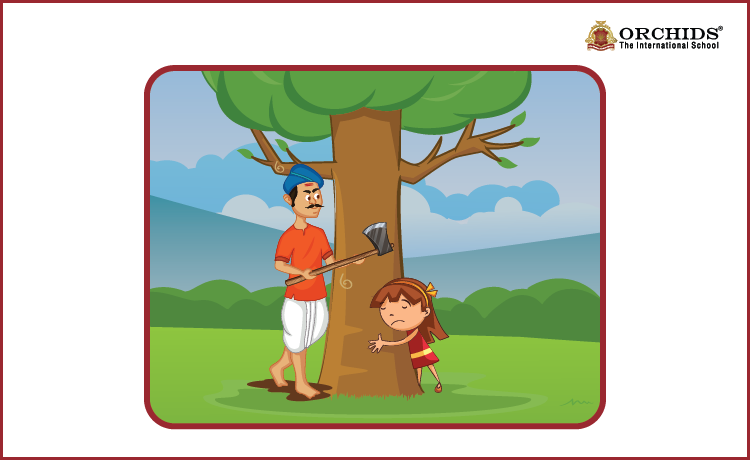
Observe the picture and answer the questions:
- Who are the characters in the picture?
- What might be the man’s occupation?
- What are they doing?
- What might be the setting?
- What is the main idea/theme of the picture?
- What can be the title of the picture?
Why is it Important?
This skill helps you:
- Improve creativity and imagination
- Develop logical thinking
- Build strong writing skills
- Express ideas clearly and effectively
How to Write a Story from a Picture (Step-by-Step)
Step 1: Observe the Picture Carefully
Here’s a sample story for you:
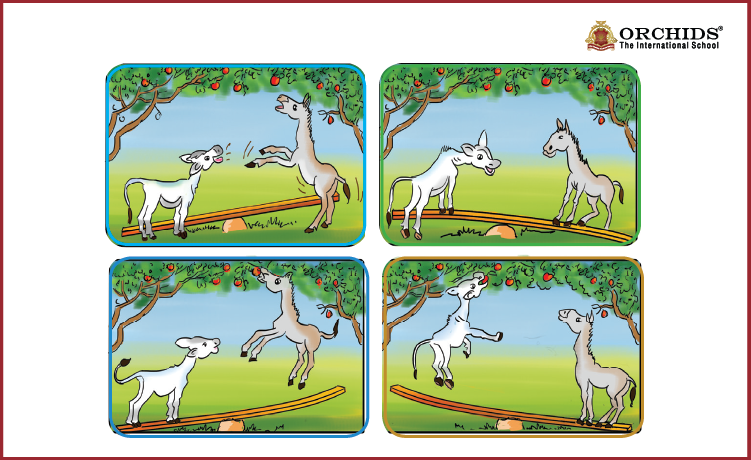
Look at:
- Characters (people or animals)
- Setting (place)
- Actions (what is happening)
Example: Two donkeys, apple trees, a plank, difficulty reaching apples
Step 2: Note Down Key Points
Write simple observations.
Example:
- Two donkeys are hungry
- Apples are too high
- They find a plank
Step 3: Frame Questions and Answer Them
Ask yourself:
- Who are the characters?
- Where is the story taking place?
- What is the problem?
- How is the problem solved?
- What is the message?
Example:
- Characters: Two donkeys (Hira and Moti)
- Setting: Apple orchard
- Problem: Cannot reach apples
- Solution: Use plank like a see-saw
- Message: Teamwork helps
Step 4: Arrange Ideas in Order
Put your points in a logical sequence:
- Beginning: Introduce characters and setting
- Middle: Describe the problem
- End: Show the solution and message
Example:
- Beginning: Two donkeys, Hira and Moti, are hungry in an orchard.
- Middle: They try to reach apples but fail because they are too high.
- End: They use a plank like a see-saw and get the apples together.
Step 5: Develop the Story
Expand your points into full sentences using imagination.
Example:
- Points: Two donkeys are hungry → see apple trees → cannot reach → find plank → work together
- Story Sentence Expansion: Two hungry donkeys named Hira and Moti were walking through an orchard. They saw apple trees full of ripe fruits but could not reach them. After thinking for a while, they found a plank and used it like a see-saw to reach the apples.
Step 6: Give a Suitable Title
Choose a title based on the main idea.
Example:Together We Can!
Key Elements of a Good Story
A good story should include:
- Characters – Who is in the story
- Setting – Where it happens
- Problem – What challenge occurs
- Solution – How the problem is solved
- Message – What we learn
Useful Writing Tips
- The picture clue should be an important part of the story.
- Include the elements of a story: plot, sequence of events, characters, dialogue, setting, and resolution.
- Use your imagination to add supporting details such as names of the characters, descriptions of the setting and so on.
- Add emotions to make your characters lively.
Common Mistakes Students Make
- Ignoring picture details: Missing important clues from the image
- Writing without sequence: Events are not in order
- Not including a clear message: Story feels incomplete
- Using very basic or repetitive sentences: Lack of creativity
Practice Zone
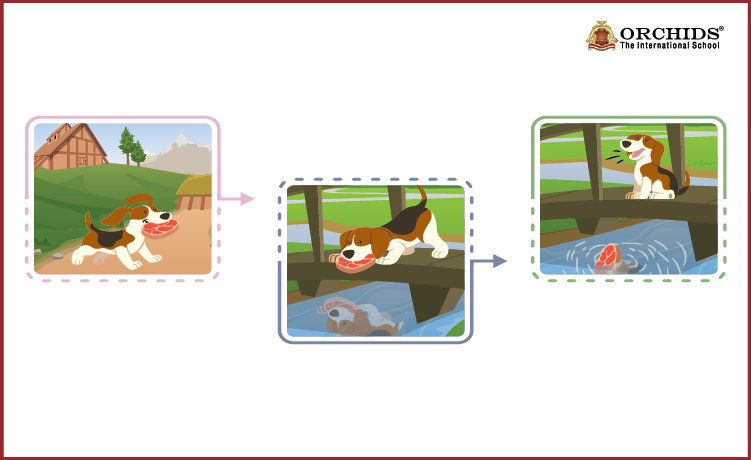
- Observe the pictures given above and frame five questions and answers based on your observation.
- Arrange answers as points in a logical order.
- Make a list of verbs and emotion words that you can use in your story based on the pictures given in step 1.
- Write a story based on your answers from steps 1, 2 and 3. Give a suitable title to your story.
Frequently Asked Questions about Picture-Based Story Writing
1. What is picture-based story writing?
Picture-based story writing is a creative activity where you observe a picture and build a story around it. You use clues from the image, such as characters, setting, and actions, and add your imagination to create a complete and meaningful story.
2. How do I start writing a story from a picture?
Start by carefully observing the picture. Identify who is in the picture, where it is set, and what is happening. Then note down key points and arrange them in order before writing your story.
3. What should a good story include?
A good story should include clear characters, a proper setting, a problem or situation, a solution, and a message or moral. It should also follow a logical sequence from beginning to end.
4. How long should the story be?
For Class 7, a picture-based story is usually written in 150–200 words. It should be long enough to explain the idea clearly but not too lengthy or repetitive.
5. Can I add my own ideas?
Yes, you should use your imagination to make the story more captivating. Feel free to incorporate names, emotions, descriptions, and minor details, provided they relate to the image.
6. Why is this skill important?
This skill helps improve creativity, observation, and writing ability. It also teaches you how to organise ideas logically and express them clearly, which is useful for exams and real-life communication.
Strong language skills open doors well beyond the classroom, shaping how confidently a child reads, writes and expresses ideas. If you want to know more about how Orchids The International School builds these skills through its English curriculum, get in touch with our admissions team.


Admissions Open for 2026-27
What type of concept pages would you prefer?
CBSE Schools In Popular Cities
- CBSE Schools in Bangalore
- CBSE Schools in Mumbai
- CBSE Schools in Pune
- CBSE Schools in Hyderabad
- CBSE Schools in Chennai
- CBSE Schools in Gurgaon
- CBSE Schools in Kolkata
- CBSE Schools in Indore
- CBSE Schools in Sonipat
- CBSE Schools in Delhi
- CBSE Schools in Rohtak
- CBSE Schools in Bhopal
- CBSE Schools in Aurangabad
- CBSE Schools in Jabalpur
- CBSE Schools in Jaipur
- CBSE Schools in Jodhpur
- CBSE Schools in Nagpur
- CBSE Schools in Ahmednagar
- CBSE School In Tumkur











Orchids The International School is one of India's leading chains of CBSE and ICSE schools, with 110+ schools across the country.