

What is a Coral Reef: Meaning, Anatomy, Types, Climate Threats and Environmental Benefits
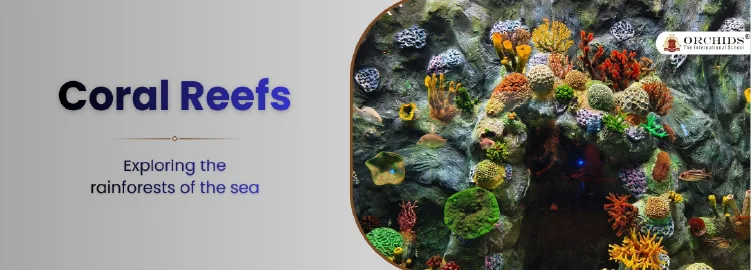
Beneath the surface of warm, sunlit seas lies one of nature’s most spectacular creations, the coral reef. Coral reefs have been growing quietly underwater for millions of years. Most people know they're colourful and full of fish, but not many know how they actually work or why losing them is such a big deal. These reefs take up barely any space in the ocean, yet nearly a quarter of all sea life depends on them. This piece breaks it all down in plain, simple language.
Table of Contents:
- What is a Coral Reef
- Anatomy of a Coral Reef
- Types of Coral Reefs
- Climate Threats to Coral Reefs
- Environmental Benefits of Coral Reefs
- Frequently Asked Questions about Coral Reefs

What is a Coral Reef
A coral reef is basically an underwater city built by tiny animals called coral polyps. These creatures are soft inside but produce a hard limestone shell around themselves. Over thousands of years, those shells stack up into the massive reef structures we see today. The crazy part is that reefs cover less than 1% of the ocean floor, but around 25% of all marine species call them home. That's an enormous amount of life packed into a very small space.
Anatomy of a Coral Reef
Each coral polyp looks a bit like a small sea anemone with a mouth and tiny tentacles. Inside their bodies live microscopic algae called zooxanthellae. These algae soak up sunlight and hand over about 90% of the coral's energy. In return, the coral gives the algae a safe place to live. This partnership is also what gives reefs their bright colours.
A full reef has a few different sections:
- Reef flat: Shallow and sandy, sitting behind the main reef. Seagrass and small creatures live here.
- Reef crest: The top edge of the reef that takes the full force of waves.
- Fore reef: The sloping outer wall goes deeper. This is where you find the most variety of coral.
- Lagoon: The calm, protected water inside the reef, packed with fish.
Types of Coral Reefs
Charles Darwin sorted reefs into three groups back in 1842 and we still use the same system today.
Fringing reefs grow right alongside the shore with almost no gap in between. They're the most common type and show up in places like Hawaii and the Red Sea.
Barrier reefs sit further from the coast with a deep lagoon between them and the land. Australia’s Great Barrier Reef is the biggest one on the planet, stretching over 2,300 kilometres.
Atolls are ring-shaped reefs that form around old volcanic islands as they slowly sink. The Maldives is a well-known example.
Patch reefs are smaller, standalone formations that grow inside lagoons or on the seafloor.
Climate Threats to Coral Reefs
Ocean warming and coral bleaching
When ocean temperatures climb just 1-2°C higher than normal for too long, corals push out their algae and turn completely white. This is called bleaching. Without their algae, corals stop getting energy and can die within weeks. The Great Barrier Reef alone has gone through five mass bleaching events since 2016. That's an alarming rate.
Ocean acidification
The ocean absorbs CO₂ from the air. As CO₂ levels rise, seawater turns more acidic and that slowly eats away at the limestone structures corals build. Reefs grow more slowly and break apart more easily.
Destructive fishing and pollution
Blast fishing, heavy trawling, farm runoff and plastic waste all cause serious direct damage to reefs every single day.
Environmental Benefits of Coral Reefs
Biodiversity hotspot: Reefs are home to fish, turtles, sharks, crabs and thousands of other species that can’t be found anywhere else.
Coastal protection: Reefs absorb up to 97% of wave energy before it hits the shore, protecting coastlines from flooding and storms. That service is worth around $9 billion a year globally.
Food and livelihoods: More than 500 million people around the world rely on reefs for food and income.
Medical potential: Compounds from reef organisms are being used in treatments for cancer, HIV and heart disease.
Frequently Asked Questions about Coral Reefs
1. Are corals plants or animals?
Corals are actually animals, not plants. Each coral polyp is a tiny invertebrate closely related to jellyfish. They only look plant-like because of the photosynthetic algae living symbiotically inside their tissues.
2. Can bleached corals recover?
Yes, they can recover if water temperatures return to normal within around 8-12 weeks. However, when bleaching happens repeatedly or lasts too long, corals cannot bounce back and eventually die.
3. How old are coral reefs?
Coral reefs are ancient structures. The Great Barrier Reef began forming nearly 20 million years ago, though its current visible surface is relatively younger, estimated to be around 6,000-8,000 years old.
Understanding the world starts with the environment around us. To see how Orchids The International School brings EVS to life, reach out to our admissions team.


Admissions Open for 2026-27
What type of concept pages would you prefer?
CBSE Schools In Popular Cities
- CBSE Schools in Bangalore
- CBSE Schools in Mumbai
- CBSE Schools in Pune
- CBSE Schools in Hyderabad
- CBSE Schools in Chennai
- CBSE Schools in Gurgaon
- CBSE Schools in Kolkata
- CBSE Schools in Indore
- CBSE Schools in Sonipat
- CBSE Schools in Delhi
- CBSE Schools in Rohtak
- CBSE Schools in Bhopal
- CBSE Schools in Aurangabad
- CBSE Schools in Jabalpur
- CBSE Schools in Jaipur
- CBSE Schools in Jodhpur
- CBSE Schools in Nagpur
- CBSE Schools in Ahmednagar
- CBSE School In Tumkur











Orchids The International School is one of India's leading chains of CBSE and ICSE schools, with 110+ schools across the country.