

Fascinating Facts about Kangaroos for Kids: Characteristics, Habitat, and Diet
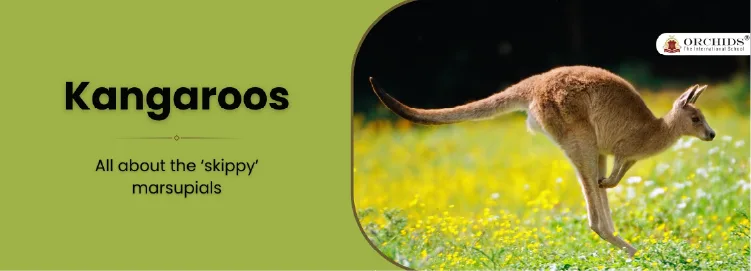
You have seen one of nature's most amazing athletes if you have ever seen a kangaroo bound over a vast plain. Around the world, kangaroos are quickly recognised as iconic animals with a wealth of unexpected secrets. Here is all the information you need to understand these remarkable marsupials, whether you are a young nature enthusiast or just inquisitive.
Table of Contents:
- What is a Kangaroo
- Amazing Physical Characteristics
- Where do Kangaroos Live
- What do Kangaroos Eat
- Super Jumping Skills and Other Fun Facts
- Frequently Asked Questions about Kangaroos

What is a Kangaroo
Large marsupials, or mammals that carry their young in pouches, include kangaroos. The red kangaroo, eastern grey kangaroo, western grey kangaroo, and antilopine kangaroo are the four primary species of kangaroos. The largest native land mammal in Australia and the largest of all marsupials is the red kangaroo. Kangaroos belong to the family Macropodidae, which literally means ‘big foot’ in Latin, and if you have ever seen a kangaroo’s enormous hind feet, you will understand why. The kangaroo is also the national animal of Australia.
Amazing Physical Characteristics
Among all animals, kangaroos have some of the most peculiar bodies. They can leap up to nine meters in a single bound thanks to their strong rear legs, which are designed for speed. A kangaroo's long, thick tail functions as a fifth limb; as it moves slowly, it pushes off the ground like an extra leg. Male fighters, referred to as “boomers” or “bucks,” utilise their tails as a pivot to throw strong kicks with their hind legs.
Male red kangaroos can stand up to 1.8 metres tall and weigh over 90 kilograms, making them truly giant animals. Females are noticeably smaller and are called ‘does’ or ‘flyers’. Baby kangaroos are called ‘joeys’ and are born after a very short pregnancy of just about 33 days. At birth, a joey is no bigger than a grape; hairless, blind, and helpless. It crawls entirely on its own through its mother's fur and into her pouch, where it attaches to a teat and continues growing for several months.
Kangaroos cannot walk backwards. Their muscular legs and heavy tail make reversing physically impossible, which is one reason the kangaroo appears on Australia’s coat of arms, symbolising a nation that always moves forward.
Where do Kangaroos live
Kangaroos are native exclusively to Australia and Papua New Guinea, and they have adapted to a remarkable range of environments. Red kangaroos thrive in the hot, dry outback, the vast desert and semi-arid interior of Australia. Eastern and western grey kangaroos prefer open woodlands, grasslands, and coastal heathlands. Antilopine kangaroos are found in the tropical north. Some species are also found on offshore Australian islands.
As gregarious creatures, kangaroos dwell in groups called “mobs” (sometimes called herds or troops), which can number anything from a few individuals to hundreds. Living in a mob provides safety in numbers and additional eyes to keep an eye out for predators like eagles and dingoes.
What do Kangaroos Eat
Kangaroos only consume plants because they are herbivores. Grass, leaves, ferns, flowers, and occasionally moss make up the majority of their food. They are grazers, and in order to avoid the heat of the Australian day, they eat more at dawn and twilight and sleep in the shade during the hottest parts of the day. Like cows, kangaroos regurgitate and re-chew their food to extract as much nourishment as possible. They also have specialised teeth for efficiently cropping grass.
The fact that kangaroos require very little water is among their most remarkable characteristics. Because they get the majority of their moisture from the plants they eat, red kangaroos in particular may go for extended periods of time without drinking. In times of intense heat, they can even reduce their metabolic rate, which allows them to conserve energy in ways that few other animals can.
Super Jumping Skills and Other Fun Facts
Kangaroos are unable to hop slowly; in fact, hopping at high speeds-roughly 20 to 25 km/h, is the most energy-efficient. They can sustain 40 km/h over extended stretches and achieve speeds of up to 70 km/h in brief bursts. Because of elastic tendons in its legs that function like springs, a kangaroo needs less energy the faster it leaps than most other animals. Strong swimmers, kangaroos will go into the water to avoid predators, occasionally drowning a chaser with their forepaws. Australia has more kangaroos than people; there are estimated to be around 50 million kangaroos in the country, compared to roughly 26 million humans.
Frequently Asked Questions about Kangaroos
1. How long does a joey stay in its mother’s pouch?
Depending on the species, a joey stays in its mother's pouch for six to eight months. Young kangaroos will return to the pouch for protection and warmth even after they have left it for a few more months, until they are too big to fit.
2. Do kangaroos really box each other?
Yes! Male kangaroos are well known for “boxing” - they lock forearms and try to push each other off balance, and deliver powerful kicks with their strong hind legs. This behaviour is used to establish dominance within a mob and to compete for females. It can look a lot like a martial arts fight!
3. Are kangaroos endangered?
The four main kangaroo species are not currently considered endangered; in fact, they are among the most numerous large mammals in Australia. However, some smaller wallaby and tree-kangaroo species closely related to kangaroos are threatened by habitat loss and introduced predators. Conservation efforts are still ongoing to safeguard these lesser-known relatives.
Understanding the world starts with the environment around us. To see how Orchids The International School brings EVS to life, reach out to our admissions team.


Admissions Open for 2026-27
What type of concept pages would you prefer?
CBSE Schools In Popular Cities
- CBSE Schools in Bangalore
- CBSE Schools in Mumbai
- CBSE Schools in Pune
- CBSE Schools in Hyderabad
- CBSE Schools in Chennai
- CBSE Schools in Gurgaon
- CBSE Schools in Kolkata
- CBSE Schools in Indore
- CBSE Schools in Sonipat
- CBSE Schools in Delhi
- CBSE Schools in Rohtak
- CBSE Schools in Bhopal
- CBSE Schools in Aurangabad
- CBSE Schools in Jabalpur
- CBSE Schools in Jaipur
- CBSE Schools in Jodhpur
- CBSE Schools in Nagpur
- CBSE Schools in Ahmednagar
- CBSE School In Tumkur











Orchids The International School is one of India's leading chains of CBSE and ICSE schools, with 110+ schools across the country.