

What is Sea Buckthorn: Origin, Ecological Importance, Uses and Health Benefits
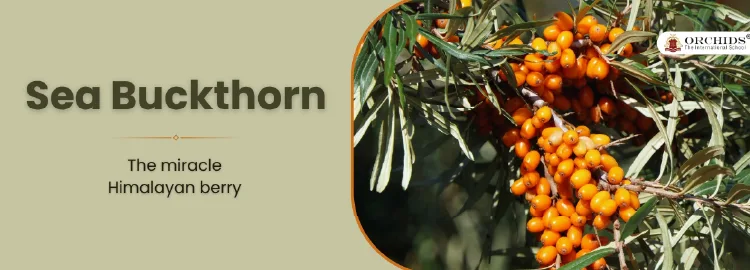
Hidden in plain sight across riverbanks, coastal dunes, and mountain slopes from Europe to China, sea buckthorn is one of the most extraordinary plants on Earth. A thorny, silver-leaved shrub blazing with clusters of vivid orange berries, civilisations have used it for thousands of years, yet it remains relatively unknown in the modern Western world. As both an ecological powerhouse and a nutritional marvel, sea buckthorn is rapidly attracting the attention of scientists, farmers, and health-conscious consumers worldwide.
Table of Contents:
- Origin and Distribution of Sea Buckthorn
- Ecological Importance of Sea Buckthorn
- Uses of Sea Buckthorn through the Ages
- Health Benefits of Sea Buckthorn
- Growing Global Interest in Sea Buckthorn
- Frequently Asked Questions about Sea Buckthorn

Origin and Distribution of Sea Buckthorn
Sea buckthorn (Hippophae rhamnoides and related species) belongs to the family Elaeagnaceae. The genus name Hippophae is derived from Greek, with historical references suggesting that ancient Greeks observed that horses eating these berries developed shinier coats, hence “hippo” (horse) and “phaos” (shining). The plant is native to a vast swath of Eurasia, stretching from the Atlantic coast of western Europe across to China, Mongolia, and the Himalayan plateaus, growing at altitudes from sea level up to 5,200 metres.
Sea buckthorn has been a staple of traditional medicine in China, Russia, Tibet, Mongolia, and Scandinavia for centuries. In ancient Greek texts, it appears as a treatment for horses; in Tibetan and Mongolian medicine, it was used for everything from wound healing to digestive complaints. Russian cosmonauts reportedly used sea buckthorn oil as a skin protectant against radiation during space missions.
Ecological Importance of Sea Buckthorn
Sea buckthorn is an ecological engineer. Like legumes, it is a nitrogen-fixing plant; its root system hosts symbiotic bacteria (Frankia species) that convert atmospheric nitrogen into forms that enrich the surrounding soil, making it invaluable for land restoration and reforestation projects. Its extensive, deep root network also stabilises soil, preventing erosion on slopes, riverbanks, sand dunes and desertified land. China has planted vast tracts of sea buckthorn across the Loess Plateau and other degraded regions as part of large-scale ecological restoration programmes, with remarkable success in halting desertification.
The plant is also a keystone habitat species. Its dense, thorny thickets provide nesting sites for numerous bird species. Its berries are a significant source of food for birds in the fall and winter, especially for species like thrushes, waxwings, and fieldfares. The plant grows in areas where few other plants can thrive because it can withstand severe cold, drought, salinity, and poor soil. This hardiness makes it increasingly important in the context of climate change and land degradation.
Uses of Sea Buckthorn through the Ages
Sea buckthorn has been used medicinally, nutritionally, and commercially across many cultures. In traditional Tibetan medicine, it features in over 80 per cent of known medicinal formulations. In Siberia and Russia, sea buckthorn oil has long been applied to burns, wounds, and radiation injuries. The berries are pressed into juices and jams across Scandinavia, Russia, and Central Asia, where they are considered a winter health food.
Today, sea buckthorn is used in a dazzling array of products. The berries and seed oil appear in skin creams, anti-ageing serums, sunscreens, and hair care products, prized for their high levels of rare fatty acids and antioxidants. The juice is sold as a health drink, either alone or blended with other fruits to balance its intensely tart flavour. The plant is also used in functional foods, dietary supplements, pharmaceuticals, and even animal feed. In some regions, sea buckthorn is grown as a windbreak and living fence.
Health Benefits of Sea Buckthorn
Sea buckthorn is arguably the most nutrient-dense plant yet studied. The berries are rich in vitamins C, E, K, and A, as well as most of the B vitamins. The vitamin C content is particularly staggering;sea buckthorn berries contain anywhere from 10 to 15 times more vitamin C per gram than oranges. They are also among the very few plant sources of omega-7 fatty acids (palmitoleic acid), typically found only in fish and macadamia nuts.
The seed oil and berry oil are prized for their anti-inflammatory properties, their ability to support skin healing, and their antioxidant content (including rare carotenoids that give the berries their vivid orange colour). Potential advantages in immunological support, diabetic management, liver protection, and cardiovascular health have been proposed by research. In experimental studies, sea buckthorn extracts have demonstrated antiviral and antibacterial properties. Additionally, the berries include plant sterols and flavonoids linked to lower cholesterol and better gut health.
Sea buckthorn is a topic of great scientific interest since it contains omega-3, -6, -7, and -9 fatty acids in a single plant source, which is practically unique in the plant kingdom.
Growing Global Interest in Sea Buckthorn
As demand for natural superfoods and plant-based medicines grows, sea buckthorn is finding new audiences. It is cultivated commercially in China (the world's largest producer), Russia, Germany, Finland, Canada, and increasingly India and Nepal. Scientists are actively studying new cultivars for greater yield, lower thorniness, and improved cold resistance. Once a regional secret of the steppes and tundra, sea buckthorn looks set to become one of the defining superplants of the 21st century, healing landscapes and bodies alike.
Frequently Asked Questions about Sea Buckthorn
1. What does sea buckthorn taste like?
Sea buckthorn berries are incredibly tangy, sour, and astringent, often likened to a cross between a citrus fruit and a pineapple with a tinge of bitterness. They are rarely eaten raw but are delicious when sweetened and made into juices, jams, syrups, or blended into smoothies. The flavour is distinctive and powerful, which is why commercial products often blend sea buckthorn with sweeter fruits.
2. Is sea buckthorn safe to consume?
For thousands of years, people have eaten sea buckthorn, which is widely regarded as safe. However, the berries, juice, and oil should only be consumed in moderation due to their potency. Sea buckthorn's high vitamin K and fatty acid content may conflict with some medications; people taking blood thinners should see a doctor before taking supplements. Before taking supplements containing sea buckthorn oil, women who are pregnant or nursing should consult a doctor.
3. Where can I buy sea buckthorn products?
Products made from sea buckthorn, such as berry juice, seed oil, skin lotions, and dietary capsules, are becoming more widely available in pharmacies, health food stores, and internet merchants. Berry oils and powders that are organic are very well-liked. In countries like China, Russia, and Scandinavia, fresh and frozen berries are sold at markets in season (typically late summer to autumn). As global demand rises, availability continues to improve in South Asia, Europe and North America.
Understanding the world starts with the environment around us. To see how Orchids The International School brings EVS to life, reach out to our admissions team.


Admissions Open for 2026-27
What type of concept pages would you prefer?
CBSE Schools In Popular Cities
- CBSE Schools in Bangalore
- CBSE Schools in Mumbai
- CBSE Schools in Pune
- CBSE Schools in Hyderabad
- CBSE Schools in Chennai
- CBSE Schools in Gurgaon
- CBSE Schools in Kolkata
- CBSE Schools in Indore
- CBSE Schools in Sonipat
- CBSE Schools in Delhi
- CBSE Schools in Rohtak
- CBSE Schools in Bhopal
- CBSE Schools in Aurangabad
- CBSE Schools in Jabalpur
- CBSE Schools in Jaipur
- CBSE Schools in Jodhpur
- CBSE Schools in Nagpur
- CBSE Schools in Ahmednagar
- CBSE School In Tumkur











Orchids The International School is one of India's leading chains of CBSE and ICSE schools, with 110+ schools across the country.