

Flamingos: Physical Characteristics, Species, Behaviour & Hotspots in India
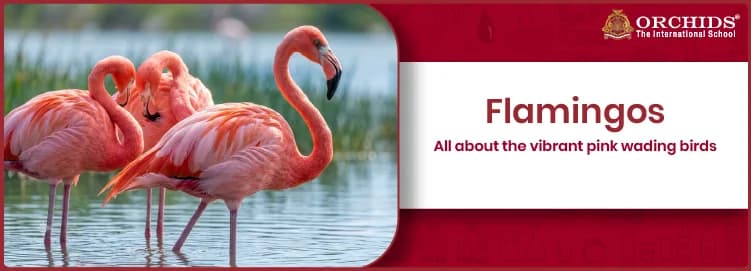
Few birds in the world command attention quite like the flamingo. Pink, long-legged and often standing perfectly still on one foot in shallow water, they look almost too elegant to be real. They show up on four continents and have been turning heads for centuries, among bird lovers, photographers and scientists equally. But there's more to them than good looks. Flamingos are natural indicators of a healthy ecosystem. Where they gather, the water is clean, mineral-rich and full of life. In a way, spotting a flock of flamingos isn't just a visual treat; it's a quiet signal that nature, in that spot, is doing just fine.
Table of Contents
- Physical Traits
- Six Distinct Species
- Behaviour
- Breeding
- Flamingo Hotspots in India
- Frequently Asked Questions about Flamingos

Physical Traits
Flamingos stand anywhere between 90 and 145 cm tall, with some nearly touching 1.5 metres. That pink colour? It comes entirely from their food, algae, crustaceans and brine shrimp, all of which contain carotenoid pigments that tint their feathers. Feed a flamingo a plain diet and it would turn white.
Their bent, downward-curving bill is built for one job: filtering food from water. They dip their head upside-down and use comb-like structures called lamellae, along with a strong, muscular tongue, to sieve out tiny food particles, not unlike how baleen whales feed. Their long legs let them wade deeper than most birds and their webbed feet keep them steady on soft mud and salt flats.
Six Distinct Species
There are six flamingo species in the world, each living in its own kind of habitat:
Greater Flamingo (Phoenicopterus roseus)
The biggest of the six and the most widespread, found across Africa, southern Europe and Asia. Pale pink with deeper pink-red on the wings.
Lesser Flamingo (Phoeniconaias minor)
The smallest but most numerous. Found mainly in East Africa and India, known for gathering in enormous flocks of millions.
Chilean Flamingo (Phoenicopterus chilensis)
It lives in South America, has grey legs with pink at the joints and a pinkish bill tipped in black.
Andean Flamingo (Phoenicoparrus andinus)
Found on high-altitude Andean plateaus in South America. One of the rarest of the six.
James’s Flamingo (Phoenicoparrus jamesi)
Also called the Puna Flamingo. Lives in high-altitude salt lakes in the Andes. Easy to identify by its bright red and yellow bill.
American Flamingo (Phoenicopterus ruber)
The most vividly coloured, with deep pink-red feathers. Found in the Caribbean, the Galápagos and parts of South America.
Behaviour
Flamingos are deeply social. They live in colonies that can run into the hundreds of thousands, which makes it harder for predators to single them out and easier to find food. They’re quite vocal too; honks, grunts and growls help them stay coordinated and keep their pair bonds intact. The one-leg stance is probably their most talked-about habit. The most widely accepted explanation is heat conservation; standing on one leg keeps more body surface away from cold water. Their legs also have a passive locking mechanism, so they don't need to use any muscle effort to hold the position. They can just stay like that for hours. Flamingos also migrate, sometimes covering hundreds of kilometres, mainly following changes in water levels and food availability.
>Breeding
Flamingos pair up for the breeding season and go through elaborate group courtship rituals, head movements, wing displays and marching together in sync. All of this helps get the whole colony into breeding condition around the same time. They nest on open mudflats, building small volcano-shaped mounds of mud about 30 cm high. This keeps the single egg off the ground if water levels rise. Both parents take turns incubating the egg, which hatches in about 27 to 31 days. Chicks are born with grey-white fluffy feathers and are fed crop milk, a nutrient-rich fluid produced in the parents' digestive tract. It takes two to four years for young flamingos to develop their full pink colour.
Flamingo Hotspots in India
India has some impressive flamingo gathering spots, mostly along the western coast and around inland salt lakes. The best time to visit is from October to March. Mumbai's Thane Creek Flamingo Sanctuary is probably the easiest to get to; tens of thousands of Lesser and Greater Flamingos show up on the mudflats every year and are visible even from the highway. Sewri Mudflats, also in Mumbai, is another popular urban birding spot for flamingos.
Gujarat is home to the Rann of Kutch, one of the very few places in India where flamingos actually breed. Lesser Flamingos nest here in the remote saline flats. Nal Sarovar Bird Sanctuary and Flamingo City (Bajana) are also major gathering spots in the state. In Rajasthan, Sambhar Salt Lake draws large flocks, while Pulicat Lake and Kolleru Lake in Andhra Pradesh are good winter destinations.
Frequently Asked Questions about Flamingos
1. Why are flamingos pink?
Their pink colour comes from carotenoid pigments in the algae, brine shrimp and crustaceans they eat. Without those, their feathers would be white.
2. Why do flamingos stand on one leg?
It's thought to help them hold onto body heat by keeping part of their body out of cold water. Their legs also lock passively into position, so it takes no effort to stay that way.
3. How many flamingo species exist?
There are six recognized species: Greater, Lesser, Chilean andean, James's (Puna) and American Flamingo.
4. Do flamingos breed in India?
Yes. The Rann of Kutch in Gujarat is one of the few confirmed breeding sites in India, mainly used by the Lesser Flamingo.
5. What do flamingos eat?
They filter algae, diatoms, brine shrimp and other tiny aquatic organisms from water using their specially shaped bill and tongue.
Understanding the world starts with the environment around us. To see how Orchids The International School brings EVS to life, reach out to our admissions team.


Admissions Open for 2026-27
What type of concept pages would you prefer?
CBSE Schools In Popular Cities
- CBSE Schools in Bangalore
- CBSE Schools in Mumbai
- CBSE Schools in Pune
- CBSE Schools in Hyderabad
- CBSE Schools in Chennai
- CBSE Schools in Gurgaon
- CBSE Schools in Kolkata
- CBSE Schools in Indore
- CBSE Schools in Sonipat
- CBSE Schools in Delhi
- CBSE Schools in Rohtak
- CBSE Schools in Bhopal
- CBSE Schools in Aurangabad
- CBSE Schools in Jabalpur
- CBSE Schools in Jaipur
- CBSE Schools in Jodhpur
- CBSE Schools in Nagpur
- CBSE Schools in Ahmednagar
- CBSE School In Tumkur











Orchids The International School is one of India's leading chains of CBSE and ICSE schools, with 110+ schools across the country.