

Crocodile: Taxonomy, Characteristics, Species, Diet & Habitat
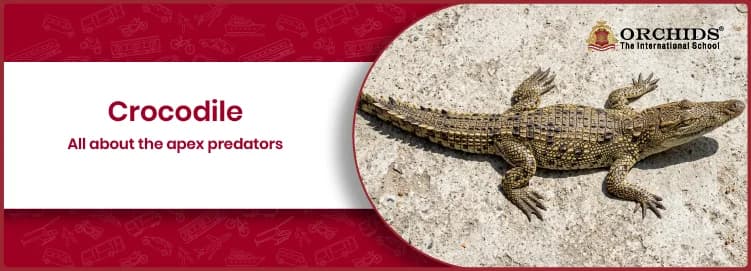
Few creatures on Earth carry the weight of deep time quite like the crocodile. These tough reptiles have been living in rivers, lakes, and coastlines for more than 200 million years. They were already around before the dinosaurs disappeared, and they survived several mass extinctions along the way. Even now, they’re still one of the most successful predators alive, which says a lot about how well their body design works. Nature really hasn’t needed to change much about them.
Table of Contents
- Taxonomy
- Physical Characteristics
- Major Species
- Diet and Feeding Behaviour
- Aquatic Environments
- Frequently Asked Questions about Crocodile

Taxonomy
Crocodiles fall under the order Crocodilia, which has three living families under it: Crocodylidae (true crocodiles), Alligatoridae (alligators and caimans), and Gavialidae (gharials and false gharials). When people say ‘crocodile’ in everyday talk, they usually mean the Crocodylidae family, although sometimes the word gets used more loosely to cover all crocodilians.
Here's the full classification: Kingdom Animalia, Phylum Chordata, Class Reptilia, Order Crocodilia, Family Crocodylidae. Inside Crocodylidae, the main genus is Crocodylus, and this is where most of the well-known crocodile species belong, including the ones that are most widespread and important to their ecosystems.
Crocodilians belong to a very old group called archosaurs, the same group that dinosaurs came from, and later, birds, too. In fact, birds are the closest living relatives crocodiles have. We know this from genetic studies, and it's also backed up by similarities in anatomy and behaviour.
Physical Characteristics
A few key features make crocodiles such effective hunters in and around water. Their bodies are long and covered in thick, bony plates called scutes, which act like natural armor. Their tails are powerful and flattened on the sides, which helps push them through water quickly. The skull is long and flat, and the eyes, ears, and nostrils all sit high up on the head, so the crocodile can stay almost completely underwater while still being able to breathe, see, and hear what's going on around it.
Crocodiles have the strongest bite of any animal alive today. A saltwater crocodile, for example, can bite down with over 16,000 newtons of force, enough to crush bone with no effort. Oddly enough, though, the muscles that open their jaws are quite weak. You could actually hold a crocodile's mouth shut with something as simple as a rubber band.
Their teeth are shaped like cones, made for gripping prey rather than chewing it. Crocodiles can't chew at all; they either swallow food whole or spin their whole body around in the water (known as the “death roll”) to rip off smaller pieces. They keep growing new teeth their entire lives, going through thousands of them over the decades. Crocodiles are cold-blooded, so they control their body temperature by basking in the sun to warm up and slipping into the water to cool off. They can also slow their metabolism way down, which lets them go months without eating if they need to.
Major Species
The family Crocodylidae contains 17 recognized species, of which several are particularly notable.
Saltwater Crocodile (Crocodylus porosus)
This is the biggest living reptile on Earth. It can grow past 6 meters long and weigh over 1,000 kilograms. You'll find it along coastal areas of Southeast Asia, the Indian subcontinent, and northern Australia. It’s also the species considered most dangerous to people.
Nile Crocodile (Crocodylus niloticus)
This is Africa’s top crocodile, living in rivers, lakes, and estuaries across sub-Saharan Africa. It’s the second-largest crocodile species and has a reputation as a powerful, opportunistic hunter; it’s also linked to a high number of human deaths every year.
American Crocodile (Crocodylus acutus)
This one lives along coastlines from southern Florida down through Central America and into South America. It can handle saltwater well. Unlike its cousin, the American alligator, it tends to be shy and doesn't usually go after people.
Mugger Crocodile (Crocodylus palustris)
Found throughout the Indian subcontinent in freshwater lakes, rivers, and marshes, this crocodile has strong ties to Hindu tradition and is treated as sacred at some temples in India.
Dwarf Crocodile (Osteolaemus tetraspis)
This is the smallest crocodile species, usually staying under 1.5 meters long. It lives in rainforest streams and swamps across Central and West Africa and is mostly active at night.
Diet and Feeding Behaviour
Crocodiles are apex predators that will eat pretty much whatever they can catch. What they eat changes a lot as they grow. Young crocodiles go after insects, frogs, small fish, and crustaceans. As they get bigger, they move on to larger fish, turtles, birds, and mammals. The biggest adults can even take down zebras, wildebeest, buffalo, and sharks.
They hunt by ambush, staying perfectly still at the water’s edge or just below the surface, waiting for prey to get close. Once they strike, it happens fast and with a lot of force. After grabbing something, water-dwelling crocodiles will sometimes do the death roll to finish subduing it or break it into pieces they can swallow. They’ll also scavenge food when the chance comes up.
Many crocodiles swallow stones on purpose. These are called gastroliths, and they sit in the stomach, helping grind down tough food. They might also help the crocodile control its buoyancy in the water.
Aquatic Environments
Crocodiles live in a wide variety of watery habitats. Most species stick to freshwater, rivers, lakes, wetlands, and swamps. But a few, like the saltwater and American crocodile, can live in brackish or even fully salty water, thanks to special glands in their tongues that get rid of excess salt.
These habitats aren't just places crocodiles happen to live, crocodiles actually help shape them. As apex predators, they keep prey populations in check, which stops aquatic plants from being overgrazed. Their nest mounds help aerate the soil, and the wallows they dig out create pools that fish and amphibians rely on during dry seasons. In short, crocodiles function as a keystone species in their ecosystems.
Crocodiles might come from a prehistoric world, but they're still very much a part of how today's ecosystems function. Everything about them, their classification, their bodies, how they hunt, and the role they play in nature, reflects hundreds of millions of years of evolution doing its work. Many crocodile species are now under pressure from habitat loss, hunting, and illegal trade, so protecting them also means protecting some of the healthiest water ecosystems on the planet.
Frequently Asked Questions about Crocodile
1. What is the difference between a crocodile and an alligator?
Crocodiles have long, V-shaped snouts with both upper and lower teeth visible when closed. Alligators have wider, U-shaped snouts with hidden lower teeth. Alligators live mainly in the US and China; crocodiles span Africa, Asia, Australia, and the Americas.
2. How long do crocodiles live?
Most crocodiles live 70 to 100 years in the wild, with saltwater and Nile crocodiles sometimes living even longer. They barely lose reproductive ability or strength with age, a trait called negligible senescence.
3. Are crocodiles dangerous to humans?
Some species pose a genuine threat. Nile and saltwater crocodiles cause hundreds of human deaths yearly, mainly where people share rivers and waterholes with them. Others, like American or dwarf crocodiles, are calmer and rarely attack unless provoked.
4. How do crocodiles communicate?
Crocodiles hiss, bellow, and produce low vibrations that ripple the water, using these sounds during mating, territorial disputes, and with their young. Mothers are attentive and respond vocally when their babies call.
5. Are crocodiles endangered?
Conservation status varies by species. The Philippine and Siamese crocodiles are critically endangered, with only hundreds left. Saltwater and Nile crocodiles are stable or growing. The IUCN Crocodile Specialist Group monitors and supports conservation worldwide.
Understanding the world starts with the environment around us. To see how Orchids The International School brings EVS to life, reach out to our admissions team.


Admissions Open for 2026-27
What type of concept pages would you prefer?
CBSE Schools In Popular Cities
- CBSE Schools in Bangalore
- CBSE Schools in Mumbai
- CBSE Schools in Pune
- CBSE Schools in Hyderabad
- CBSE Schools in Chennai
- CBSE Schools in Gurgaon
- CBSE Schools in Kolkata
- CBSE Schools in Indore
- CBSE Schools in Sonipat
- CBSE Schools in Delhi
- CBSE Schools in Rohtak
- CBSE Schools in Bhopal
- CBSE Schools in Aurangabad
- CBSE Schools in Jabalpur
- CBSE Schools in Jaipur
- CBSE Schools in Jodhpur
- CBSE Schools in Nagpur
- CBSE Schools in Ahmednagar
- CBSE School In Tumkur











Orchids The International School is one of India's leading chains of CBSE and ICSE schools, with 130+ schools across the country.