

India’s Top Mangrove Forests: Climate Change Impact, Ecological Significance and Conservation Initiatives
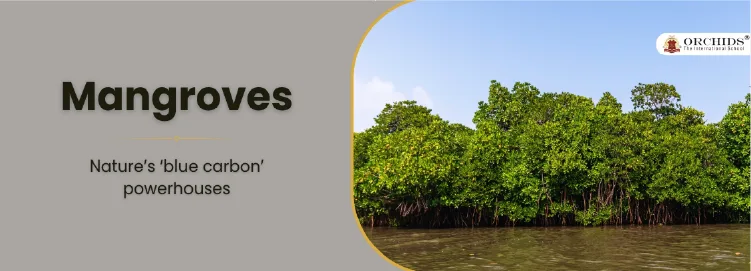
Mangrove ecosystems in India are among the most biologically varied and ecologically rich in the world. Stretching across approximately 4,992 square kilometres of tidal coastline, these salt-tolerant forests occur along the deltas, estuaries, and sheltered coastlines of peninsular India, the Andaman and Nicobar Islands, and the Lakshadweep archipelago. Mangroves are among the most productive ecosystems on Earth-nurseries for fish, buffers against storms and formidable carbon sinks- and India’s commitment to their protection is both ecologically urgent and economically vital.
Table of Contents:
- India’s Major Mangrove Forests
- Ecological Significance
- Climate Change Impact
- Conservation Initiatives
- Frequently Asked Questions about India’s Top Mangrove Forests

India’s Major Mangrove Forests
The Sundarbans, spread across India and Bangladesh, are the largest mangrove forests in the world. The Indian part lies mainly in West Bengal and is home to animals such as the Royal Bengal Tiger, crocodiles, Irrawaddy dolphins, and many bird species. The second-largest mangrove forest in India is the Bhitarkanika Mangroves in Odisha, which are well-known for hosting nesting olive ridley turtles and saltwater crocodiles. In Tamil Nadu, the Pichavaram Mangroves are popular for their beautiful boat rides, rich birdlife, and fish species that grow safely in these waters before moving into the sea.
Other significant mangrove patches include the Coringa Mangroves in Andhra Pradesh (the country's third largest), the Gulf of Kutch mangroves in Gujarat, notable for growing in an arid climate, and the Godavari-Krishna mangroves along the Andhra-Odisha coast. The Andaman and Nicobar Islands harbour some of India's most pristine and least disturbed mangrove habitats.
Ecological Significance
Mangroves are very important for both nature and people living near the coast. Their thick roots hold the soil firmly and protect the shore from big waves, cyclones, and even tsunamis. During the 2004 Indian Ocean tsunami, areas with mangroves were far safer than areas without them. Mangroves also work like a nursery for small fish, shrimp, and crabs, giving them a safe place to grow up. This keeps the sea full of life and helps millions of fishing families in India earn a living every day.
Additionally, mangroves are crucial in combating climate change. They store a significant amount of carbon, often referred to as “blue carbon”, in their soil for hundreds of years. Mangroves are really among the finest natural systems for mitigating the effects of climate change because they can collect and store significantly more carbon than many tropical forests.
Climate Change Impact
India's mangrove ecosystems are facing severe challenges due to climate change. One of the main risks is rising sea levels, particularly in low-lying regions like the Sundarbans. As seawater continues to move farther inland, many islands are gradually losing land. Large portions of the Sundarbans may go underwater if sea levels rise, according to scientists, which would have an impact on the region's millions of residents as well as animals.
Mangroves are also repeatedly being harmed by stronger cyclones brought on by increasing water temperatures. For instance, the Sundarbans mangrove forests were severely impacted by Super Cyclone Amphan in 2020. Mangrove growth is hampered by altered rainfall patterns and decreased freshwater availability. Fish and other marine animals associated with these forests are being negatively impacted by rising ocean acidity. Increasing temperatures are also causing certain mangrove species to relocate to other places, while others may slowly perish from certain regions.
Conservation Initiatives
India has taken numerous actions to safeguard its mangrove forests. Mangroves and their inhabitants are preserved in a number of places, including the Sundarbans Tiger Reserve and the Bhitarkanika Wildlife Sanctuary. In order to regulate detrimental activity close to coastal areas, especially mangrove areas, the government has also implemented Coastal Regulation Zone (CRZ) regulations. According to recent statistics, India's mangrove cover has gradually risen over the past few years. Mangrove forests are constantly studied and monitored by various government agencies.
Additionally, local people are contributing significantly to the preservation of these woods. Local fishing organisations and village communities collaborate to maintain mangrove ecosystems and make responsible use of resources in states like West Bengal and Odisha. India is also working on restoring damaged mangrove forests through national and international conservation programmes like the Bonn Challenge.
Frequently Asked Questions about India’s Top Mangrove Forests
1. What makes the Sundarbans unique among Indian mangrove forests?
The Sundarbans is special because it is the world’s largest mangrove forest and home to Royal Bengal Tigers that live in salty coastal areas. Its rivers, islands, and forests are home to a wide variety of animals, birds, and marine creatures.
2. How do mangroves protect coastal communities?
Mangroves act like a natural wall between the sea and the land. When strong waves, storms, or cyclones hit the coast, mangroves slow them down before they reach homes and villages. Their thick roots hold the soil tightly in place, which stops the land from washing away. This also helps prevent flooding in nearby areas, keeping people and their homes safer during bad weather.
3. Can destroyed mangroves be restored?
Yes, mangroves can grow back, but it takes time, effort, and patience. You cannot just plant them anywhere and hope for the best. The land needs to be right for them, the water needs to flow properly, and the right type of mangrove needs to be planted for that area. When local people get involved and keep a close eye on how the plants are doing, mangroves can come back surprisingly fast and healthy.
Understanding the world starts with the environment around us. To see how Orchids The International School brings EVS to life, reach out to our admissions team.


Admissions Open for 2026-27
What type of concept pages would you prefer?
CBSE Schools In Popular Cities
- CBSE Schools in Bangalore
- CBSE Schools in Mumbai
- CBSE Schools in Pune
- CBSE Schools in Hyderabad
- CBSE Schools in Chennai
- CBSE Schools in Gurgaon
- CBSE Schools in Kolkata
- CBSE Schools in Indore
- CBSE Schools in Sonipat
- CBSE Schools in Delhi
- CBSE Schools in Rohtak
- CBSE Schools in Bhopal
- CBSE Schools in Aurangabad
- CBSE Schools in Jabalpur
- CBSE Schools in Jaipur
- CBSE Schools in Jodhpur
- CBSE Schools in Nagpur
- CBSE Schools in Ahmednagar
- CBSE School In Tumkur











Orchids The International School is one of India's leading chains of CBSE and ICSE schools, with 130+ schools across the country.