

What are Wildfires: Definition, Causes, Types, Effects and Preventive Measures
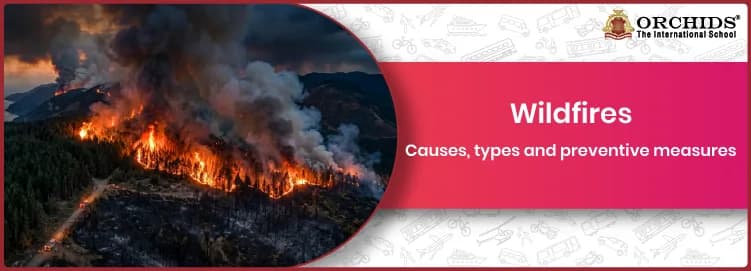
Wildfires destroy millions of hectares of land every year around the world. These disastrous events are frequent in the wild-prone regions of the US, Canada, Australia and Africa. There is an enormous amount of heat, smoke and carbon dioxide that gets released into the atmosphere as a result of these events. They adversely affect our air and are a significant factor in driving climate change. In this article, we will learn about the wildfires, their impact on our environment and preventive measures we can take to avoid them.
Table of Contents
- What are Wildfires
- Causes of Wildfires
- Types of Wildfires
- Effects of Wildfires
- Measures to Prevent Wildfires
- Frequently Asked Questions about Wildfires

What are Wildfires
A wildfire, also called a forest fire, is an uncontrolled fire that spreads rapidly across land areas covered with vegetation such as trees, grasslands, shrubs or dry leaves. Unlike a campfire or a fire in a fireplace, a wildfire is not planned and cannot be easily stopped once it begins to burn.
Wildfires can occur in forests, grasslands, deserts and even near towns and cities. They burn with intense heat and can travel very fast, some wildfires spread at speeds of up to 23 kilometres per hour.
Causes of Wildfires
There are natural causes and human activities that are responsible for causing wildfires. Some of them are here:
- Lightning is the most common natural cause of wildfires worldwide.
- Lava flows and hot ash ejected from volcanoes can set forests and vegetation ablaze.
- In rare cases, dry organic matter such as peat or leaves can heat up internally due to microbial activity and eventually catch fire without any external spark.
- Extended dry periods cause plants and soil to lose moisture, making them highly flammable.
- Human activities such as unattended campfires, clearing agricultural land using fire and fireworks are equally responsible for causing wildfires.
Types of Wildfire
Wildfires are classified into three major categories based on the place of occurrence:
Ground Fire: Fire burns under the soil surface and destroys the roots as well as the organic matter. This type of wildfire is extremely dangerous as it is hidden and creates less flame which makes it extremely difficult to detect. Extinguishing such a ground fire is tricky as it keeps on burning for days or even months without getting noticed.
Surface Fire: Fire spreads on the ground surface, burning dry leaves, grass and all other plants. These are the most common types of wildfires that are relatively slow as compared to other types. Even though they are highly damaging, they can be controlled easily as compared to the other types.
Crown Fire: A fast-moving intense fire that moves across the tree top or canopies. It is the most dangerous and destructive type of wildfire that can spread across treetops at incredible speeds through strong winds.
Effects of Wildfires
Pollution: Wildfires release a lot of dust, heat, smoke and carbon dioxide into the environment, polluting our air and other natural resources. The ash and debris that gets washed into rivers and streams reduces water quality and affects aquatic life as well as contaminates the drinking water.
Environmental Effect : The forests are turned into barren lands within a few hours due to wildfire resulting in land losing its vegetation. With wildfire the roots of plants and trees that hold the soil together are destroyed and during heavy rains these lands are prone to severe soil erosion and landslides.
Ecosystem Disruption: The nutrient rich topsoil of land after wildfire gets washed away into rivers and streams which leaves the soil barren and affects the habitat of many micro organisms and animals living in the forest.
Loss of Livelihood: Humans living near in such areas are forced to evacuate and face a loss of property and livelihood, such as farmers losing land and tourism operators losing their earnings.
Measures to Prevent Wildfires
- Do not burn rubbish or dry vegetation on windy days.
- Avoid using fireworks near dry forests or grasslands.
- Dispose of cigarette butts safely and never throw them out of car windows.
- Report smoke or suspected fires immediately to local fire authorities.
- Clear dry leaves and debris from around homes, especially in fire-prone areas.
- Follow local fire bans and restrictions during high-risk periods.
- Participate in or support community fire-awareness programmes.
Frequently Asked Questions about Wildfires
1. How is wildfire controlled?
Firefighters use three basic principles to battle flames. They remove one of the three most important components used for combustion: fuel, oxygen supply and heat. For example, to cut the fuel, they often dig or bulldoze firebreaks ahead of an approaching fire to create a barrier it cannot cross.
2. What is the impact of wildfire on climate?
There is a huge impact of wildfires on our climate. With increasing frequency, intensity, and size of wildfires more greenhouse gases are released into the atmosphere causing rise in temperature leading to climate change and melting of glaciers.
3. How can we help prevent human-caused wildfires?
Preventing wildfire is far less costly than fighting it. Since human activity is responsible for the vast majority of wildfires we should always take some preventative measures like following rules and bans in restrictive areas and never leaving a campfire unattended.
4. Is there any benefit of wildfire for the environment?
Although wildfires are often destructive, low-intensity fires that occur naturally play an important role in maintaining healthy ecosystems. It plays a key role in the soil nutrient cycle and in habitat cleaning.
Understanding the world starts with the environment around us. To see how Orchids The International School brings EVS to life, reach out to our admissions team.


Admissions Open for 2026-27
What type of concept pages would you prefer?
CBSE Schools In Popular Cities
- CBSE Schools in Bangalore
- CBSE Schools in Mumbai
- CBSE Schools in Pune
- CBSE Schools in Hyderabad
- CBSE Schools in Chennai
- CBSE Schools in Gurgaon
- CBSE Schools in Kolkata
- CBSE Schools in Indore
- CBSE Schools in Sonipat
- CBSE Schools in Delhi
- CBSE Schools in Rohtak
- CBSE Schools in Bhopal
- CBSE Schools in Aurangabad
- CBSE Schools in Jabalpur
- CBSE Schools in Jaipur
- CBSE Schools in Jodhpur
- CBSE Schools in Nagpur
- CBSE Schools in Ahmednagar
- CBSE School In Tumkur











Orchids The International School is one of India's leading chains of CBSE and ICSE schools, with 130+ schools across the country.