

Class 8 - Data Organization
Data Organising means arranging data in the required form. The need to organise data arises because the data that is generally available to us is in an unorganised form or raw form. This unorganised form of data is called raw data. Raw data cannot be analysed and interpreted. To draw meaningful inferences, we need to organise the data systematically.
Table Of contents
- What is Data Organization?
- Why is Data Organization Important?
- Classification of Data Organization
- Solved Examples on Data Organization
- Frequently Asked Questions on Data Organization

What is Data Organization?
Data organization is about taking raw, jumbled information and turning it into something structured that you can actually use. It means:
- Putting information in logical order
- Storing data where you can find it again
- Keeping everything clean and mistake-free
- Following a system that actually works
Here's a Table of how it works:
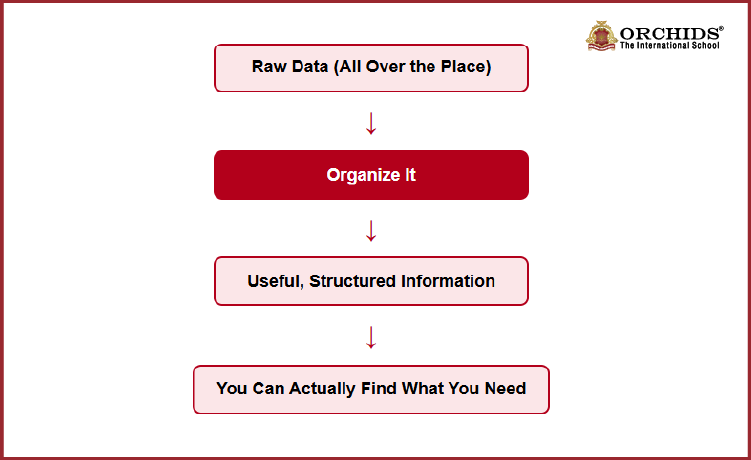
The whole point is making your life easier. Whether you're managing a business, keeping school notes, or running any kind of operation, good data organization saves you from pulling your hair out later.
Read more: Important Questions on Data Handling - Class 8
Know more about related topics:
Why is Data Organization Important?
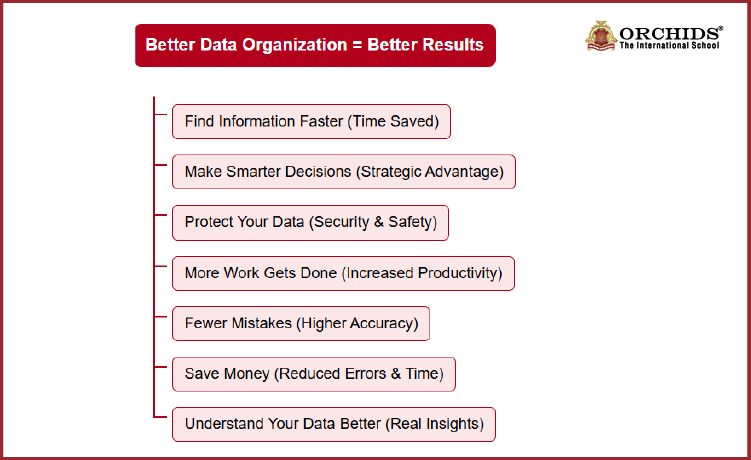
There are a lot of benefits to organizing data. but it's actually one of those things that changes everything once you get it right.
1. It Saves You Time
When your data is organized, you find what you need in seconds instead of minutes or hours. Imagine you're a manager and you need to pull a client's information. With organized data, you're done in 10 seconds. Without it You're searching through files for 20 minutes. That's the difference.
2. You Make Better Decisions
When information is clean and organized, you actually understand it. You can spot patterns. You can see trends. And that means you make smarter choices. A business owner with organized sales data knows exactly what's selling. Without it? They're just guessing.
3. Your Data Doesn't Disappear
Losing important information is painful. When you organize data properly with backups and systems in place, it's protected. You don't lose customer records. You don't lose financial data.
4. Your Team Work Done
This is huge for businesses. When people spend less time finding for files, they spend more time on actual work. That's more productivity, more output, better results.
5. Everything Stays Accurate
Mistakes happen, But organized systems catch errors early. You can verify information is correct before you use it. With messy data, you might not notice the mistake until it's too late.
6. Security Becomes Actually Manageable
When you know exactly where your sensitive information is stored, you can protect it properly. You know who can access what. You can track changes. That's way better than sensitive data floating around everywhere.
7. You Can Actually Analyze Things
Want to find out what your data means That's impossible with disorganized information. But with organized data, you can run analysis, find insights, and discover things that help your business grow.
Here's the benefits when you actually implement them:
Classification of Data Organization
you need to organize data. But there are different ways to do it, and some work better than others depending on what you're doing. Let me walk you through the main approaches.
1. Sequential Data Organization
Sequential is basically the simplest way to store data. You just put information one after another, like books on a shelf. You access it in order - first item, second item, third item. That's it.
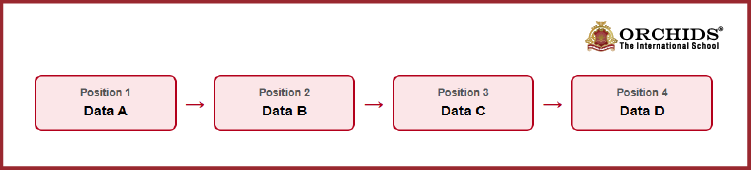
Reading a regular text document from top to bottom. You go through it line by line.
2. Indexed Data Organization
This one's like using a table of contents in a textbook. Instead of reading the whole book to find what you want, you check the index. The index tells you exactly where to look.
Here's how it works:
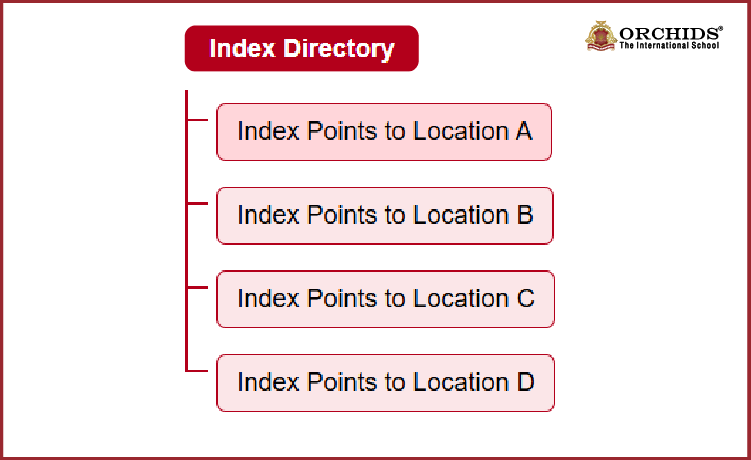
Looking up a word in a dictionary using the alphabetical index. You don't read the whole dictionary, just jump to the right spot.
3. Direct Data Organization (Hashing)
This is the fancy one. With hashing, you use a mathematical formula to calculate exactly where something should be stored.
_20260421_123201.webp "Direct Data Organization (Hashing)")
Using an employee ID number to instantly pull someone's full employee record from a system.
4. Hierarchical Data Organization
You know how a company has a CEO, then directors, then managers, then employees? That's hierarchical. It's structured like a tree - one thing at the top, then branches down.
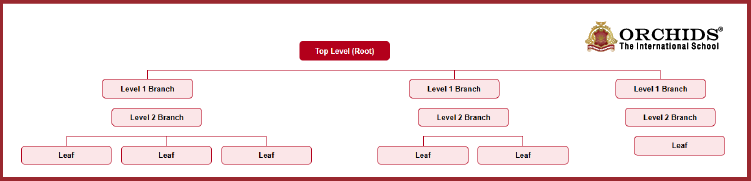
Your computer's folder structure. Main folders contain subfolders contain files. It's all organized in levels.
5. Network Data Organization
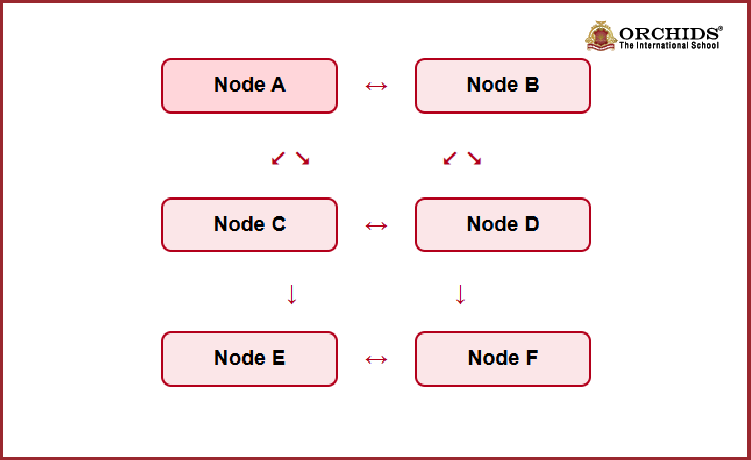
This is what happens when things connect in multiple ways. Instead of a tree structure, imagine a web. Everything can connect to multiple other things.Social media networks where you're friends with multiple people, who are friends with other people, creating this web of connections.
6. Relational Data Organization
Relational organization uses tables rows and columns like in Excel. Different tables can connect to each other through shared information.
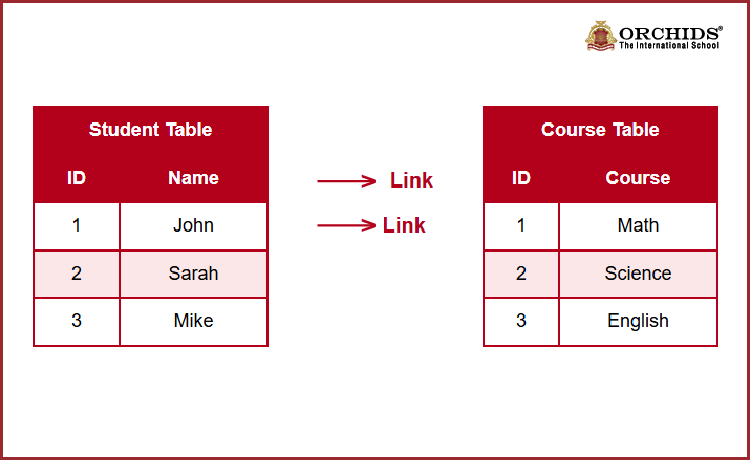
A customer database where you have customer tables, order tables, and product tables all connected through matching information.
Comparison Table
|
Organization Type |
Speed |
Flexibility |
Learning Curve |
Best For |
|---|---|---|---|---|
|
Sequential |
Slow |
Limited |
Very Easy |
Simple Files |
|
Indexed |
Fast |
Moderate |
Easy |
Large Lists |
|
Hashing |
Very Fast |
Limited |
Difficult |
Quick Lookups |
|
Hierarchical |
Moderate |
Limited |
Easy |
Folder Systems |
|
Network |
Moderate |
Very High |
Difficult |
Complex Links |
|
Relational |
Fast |
High |
Moderate |
Business Data |
Solved Examples on Data Organization
1: Sequential File Organization
Question: How do you search for a student named "Anita" in a sequential file?
Solution:
- Data is stored one after another.
- Start from the first record.
- Check each name one by one until "Anita" is found.
Final Answer: Sequential search takes more time because every record may need to be checked.
2: Indexed File Organization
Question: How can you quickly find Roll Number 45 using indexed organization?
Solution:
- First, check the index table.
- The index gives the exact location of Roll Number 45.
- Go directly to that position.
Final Answer: Indexed organization is faster than sequential because it avoids full searching.
3: Hashing File Organization
Question: Find the storage location of key 123 using hash function: Location = Key % 10
Solution:
- So, the data will be stored at position 3.
Final Answer: Hashing provides very fast access to data.
4: Hierarchical Data Organization
Question: How is a file located in a folder system?
Solution:
- Start from the main folder (root).
- Move step by step into subfolders.
- Finally reach the required file.
Final Answer: Hierarchical structure is easy to use but has limited flexibility.
5: Network Data Organization
Question: A student takes multiple subjects, and each subject has many students. Which model is used?
Solution:
- This is a many to many relationship.
- The network model connects data using multiple links.
Final Answer: Network organization is best for complex relationships.
Conclusion
Data organization might not be the most exciting topic, but it's genuinely important. Whether you're managing a small business, running a school, building a software system, or just trying to keep your own files organized, understanding these principles makes everything easier. The right organization system means you spend less time searching and more time actually working. It means faster decisions. It means your data is secure and accessible.
Numbers make sense when they're taught right. To see how Orchids The International School turns Maths from intimidating to intuitive, reach out to our admissions team.
Frequently Asked Questions on Data Organization
1. Why is Data Organization Important?
Data organization is important because it:
- Improves data management efficiency
- Enables fast data retrieval
- Helps in better decision making
- Reduces errors and duplication
2. What are the Types of Data Organization?
The main types of data organization include:
- Sequential Data Organization
- Indexed Data Organization
- Hierarchical Data Organization
- Network Data Organization
- Relational Data Organization
3. What is a Database in Data Organization?
A database is an organized collection of data stored electronically for easy access, management, and updating.
4. What are the Benefits of Data Organization?
- Faster search and retrieval
- Better data security
- Improved productivity
- Efficient data storage
5. What is Data Organization?
Data organization is the process of arranging and structuring data in a meaningful way so it can be easily stored, accessed, and analyzed.
6. What is sequential data organization?
In sequential organization, data is stored one after another in a specific order, usually based on a key field.
7. What is indexed data organization?
Indexed organization uses an index to quickly locate data without scanning the entire dataset.
Related Links


Admissions Open for 2026-27
What type of concept pages would you prefer?
CBSE Schools In Popular Cities
- CBSE Schools in Bangalore
- CBSE Schools in Mumbai
- CBSE Schools in Pune
- CBSE Schools in Hyderabad
- CBSE Schools in Chennai
- CBSE Schools in Gurgaon
- CBSE Schools in Kolkata
- CBSE Schools in Indore
- CBSE Schools in Sonipat
- CBSE Schools in Delhi
- CBSE Schools in Rohtak
- CBSE Schools in Bhopal
- CBSE Schools in Aurangabad
- CBSE Schools in Jabalpur
- CBSE Schools in Jaipur
- CBSE Schools in Jodhpur
- CBSE Schools in Nagpur
- CBSE Schools in Ahmednagar
- CBSE School In Tumkur











Orchids The International School is one of India's leading chains of CBSE and ICSE schools, with 110+ schools across the country.