

Rangoli with Geometrical Shapes for Kids - Easy Designs and Ideas
Rangoli is a beautiful Indian art form made using colours, flowers, rice, or chalk powders to create decorative patterns on the floor. One of the easiest and most creative ways for children to learn rangoli is by using geometrical shapes like circles, triangles, squares, and stars.
Easy rangoli with geometrical shapes helps children improve creativity, concentration, and understanding of basic maths concepts such as symmetry and patterns. These colourful designs are perfect for festivals like Diwali, school competitions, art activities, and classroom projects.
Geometrical rangoli designs are beginner-friendly because they use simple shapes that children already recognise. By combining shapes creatively, kids can make beautiful rangoli patterns while learning geometry in a fun and engaging way.
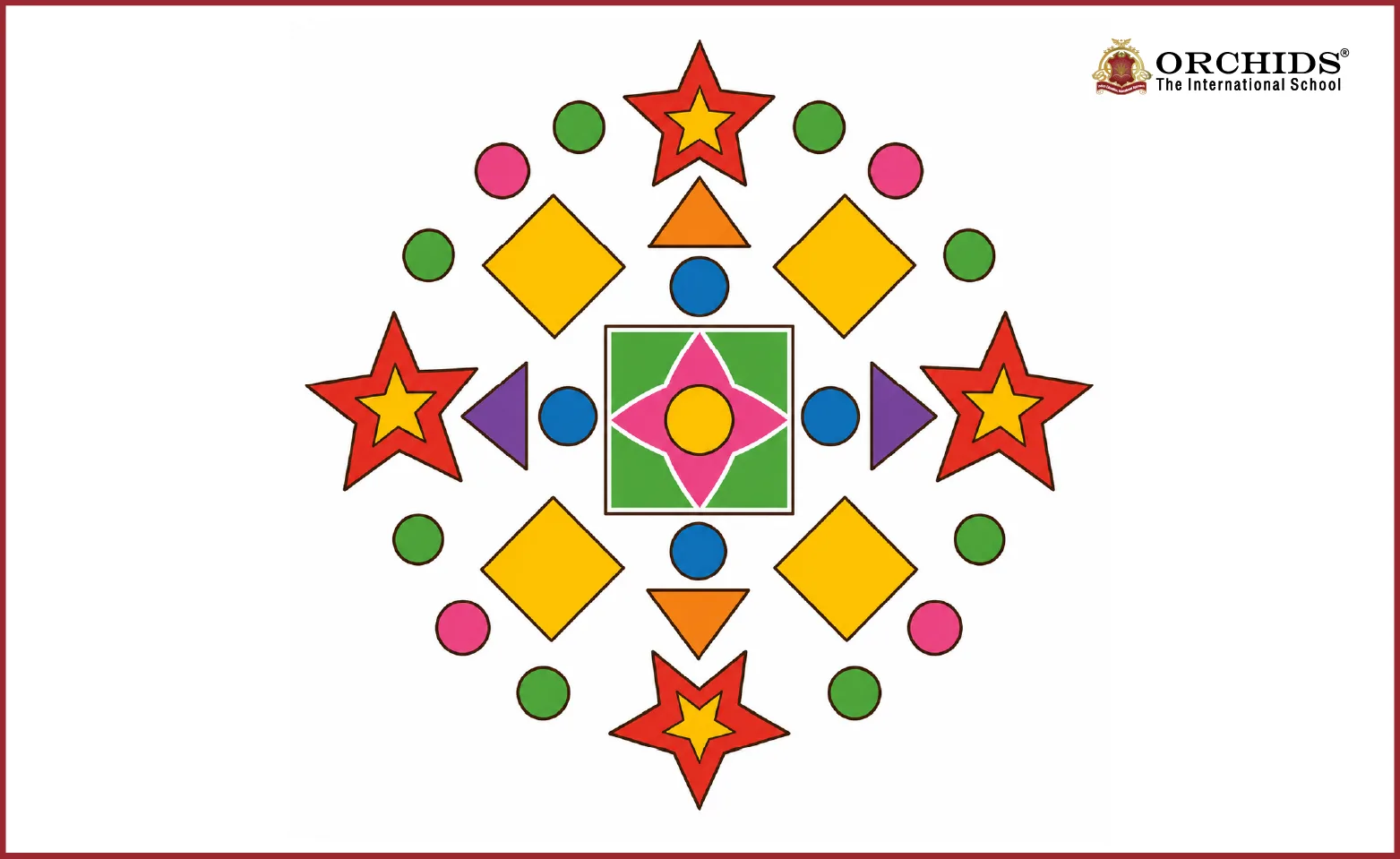
Table of Contents
- What is Geometrical Shape Rangoli?
- What is geometrical rangoli?
- Common Shapes Used in Rangoli Designs
- Step-by-Step Guide to Make Geometrical Rangoli
- Easy Geometrical Rangoli Ideas for Kids
- Maths Concepts in Rangoli
- Practice Activity for Kids
- Benefits of Rangoli with Geometrical Shapes
- Tips for Beginners
- Teacher Activity Tip
- Materials Used for Rangoli
- Rangoli in Different Indian States
- Common Mistakes Kids Make While Drawing Rangoli
- Things You Learn from Geometrical Rangoli
- Frequently Asked Questions on Rangoli with Geometrical Shapes

What is Geometrical Shape Rangoli?
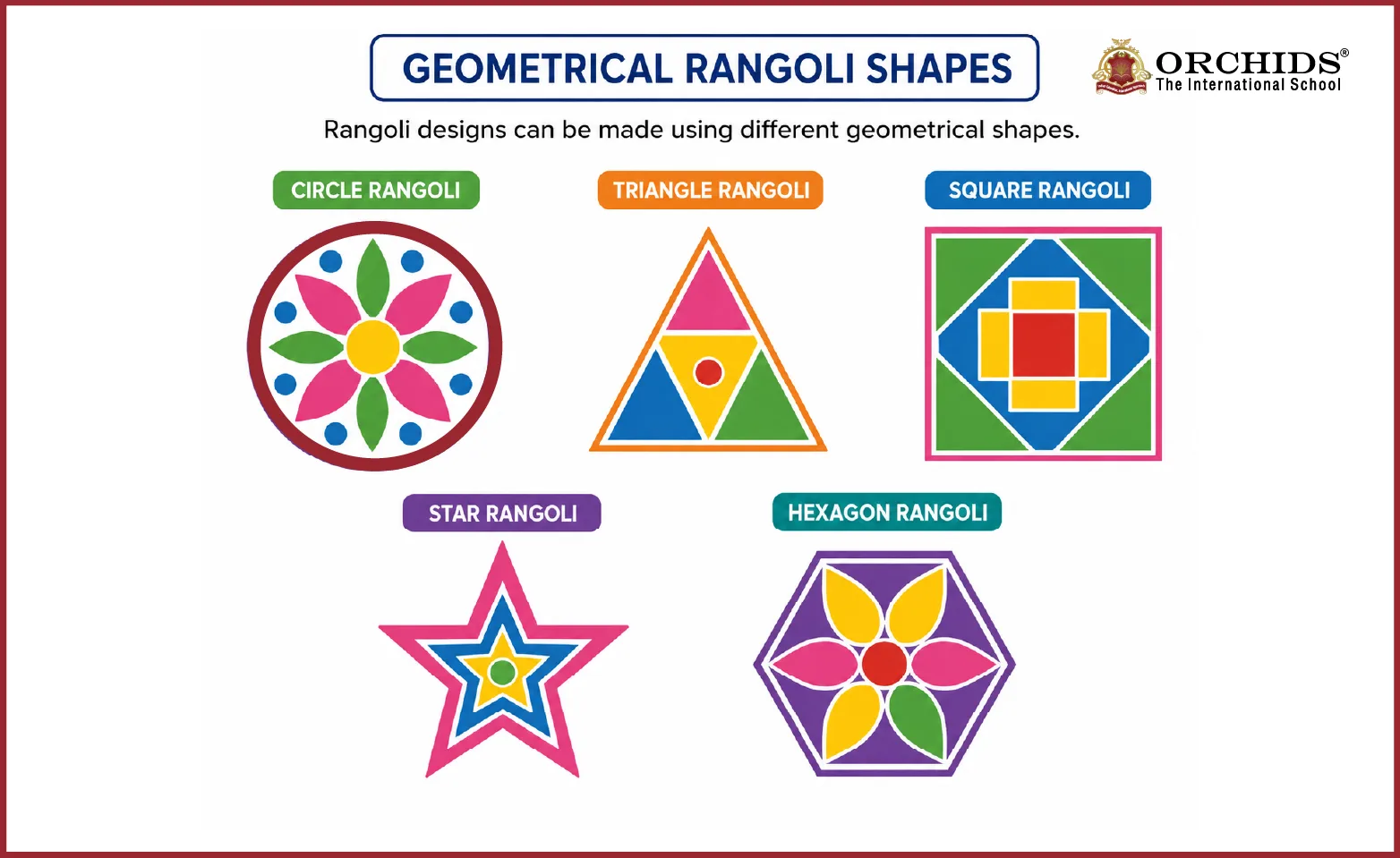
Geometrical shape rangoli is a type of rangoli made using basic mathematical shapes such as:
- Circles
- Squares
- Triangles
- Rectangles
- Stars
- Hexagons
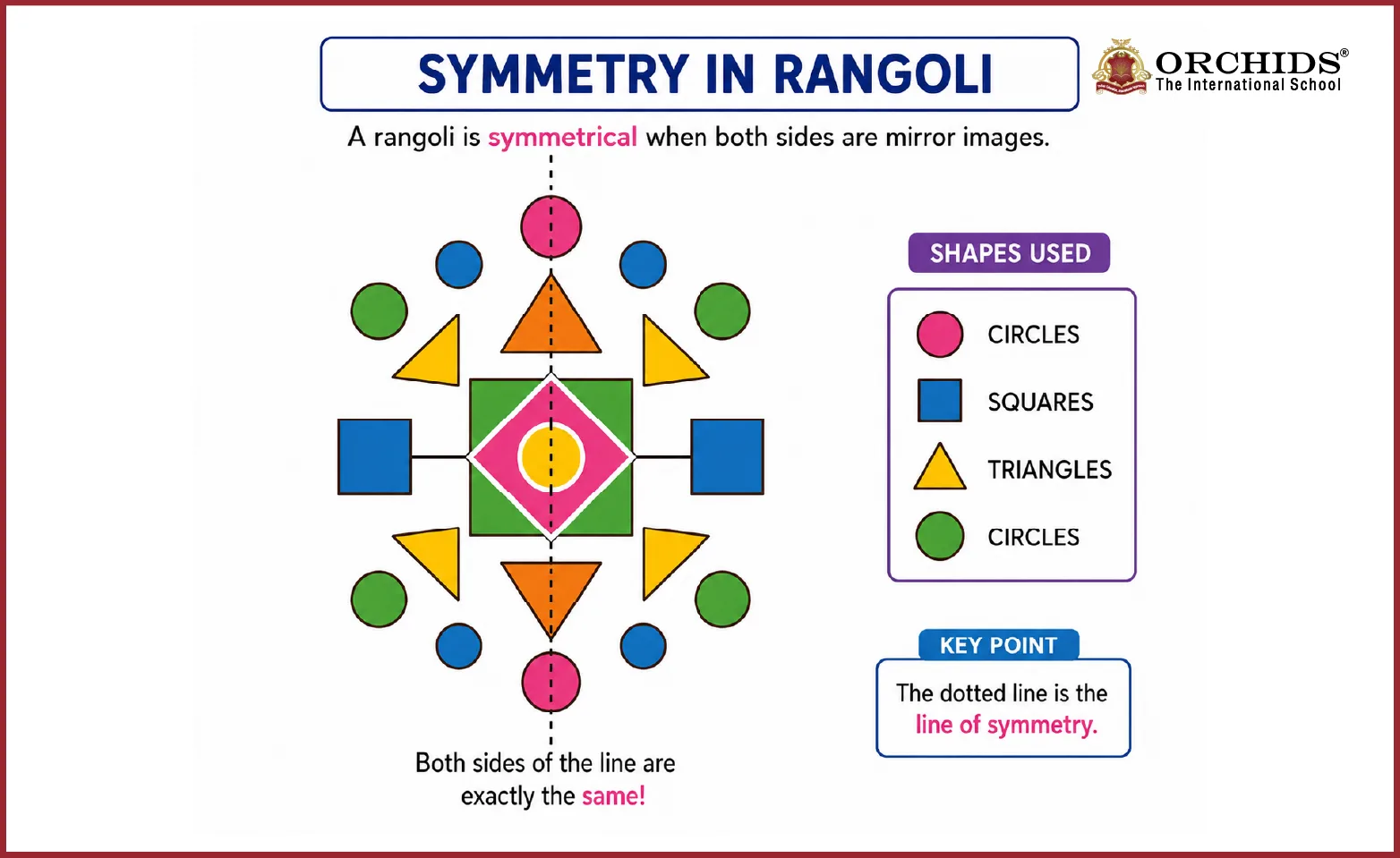
These shapes are arranged in symmetrical patterns to create colourful floor art. Geometrical rangoli is commonly used during Indian festivals and is also popular in schools because it combines art with maths learning.
Many children find circle-based rangoli easier to start with before moving to complex star patterns. (Learn more on Nets 3D Shapes)
Children can easily draw these patterns using dot grids, rulers, and coloured powders or sketch pens. It is a great way to introduce geometry through creative activities.
What is geometrical rangoli?
Geometrical rangoli is a rangoli design made using shapes such as circles, squares, triangles, and stars arranged in symmetrical patterns.
Common Shapes Used in Rangoli Designs
1. Circle Rangoli: Circles are one of the most commonly used shapes in rangoli. They represent unity and completeness. Children can create flower-like patterns by drawing concentric circles and decorating them with colours.
2. Triangle Rangoli: Triangles help create star patterns and symmetrical designs. Overlapping triangles can form attractive rangoli borders and festive patterns.
3. Square Rangoli: Squares are easy to draw and help maintain balance in the design. Kids can combine squares with circles and triangles to create creative geometric rangoli.
4. Star Shapes: Stars are popular during festive rangoli making. They are usually formed using triangles and lines.
5. Hexagon Patterns: Hexagons create honeycomb-style rangoli patterns and help children explore advanced geometrical arrangements.
Step-by-Step Guide to Make Geometrical Rangoli
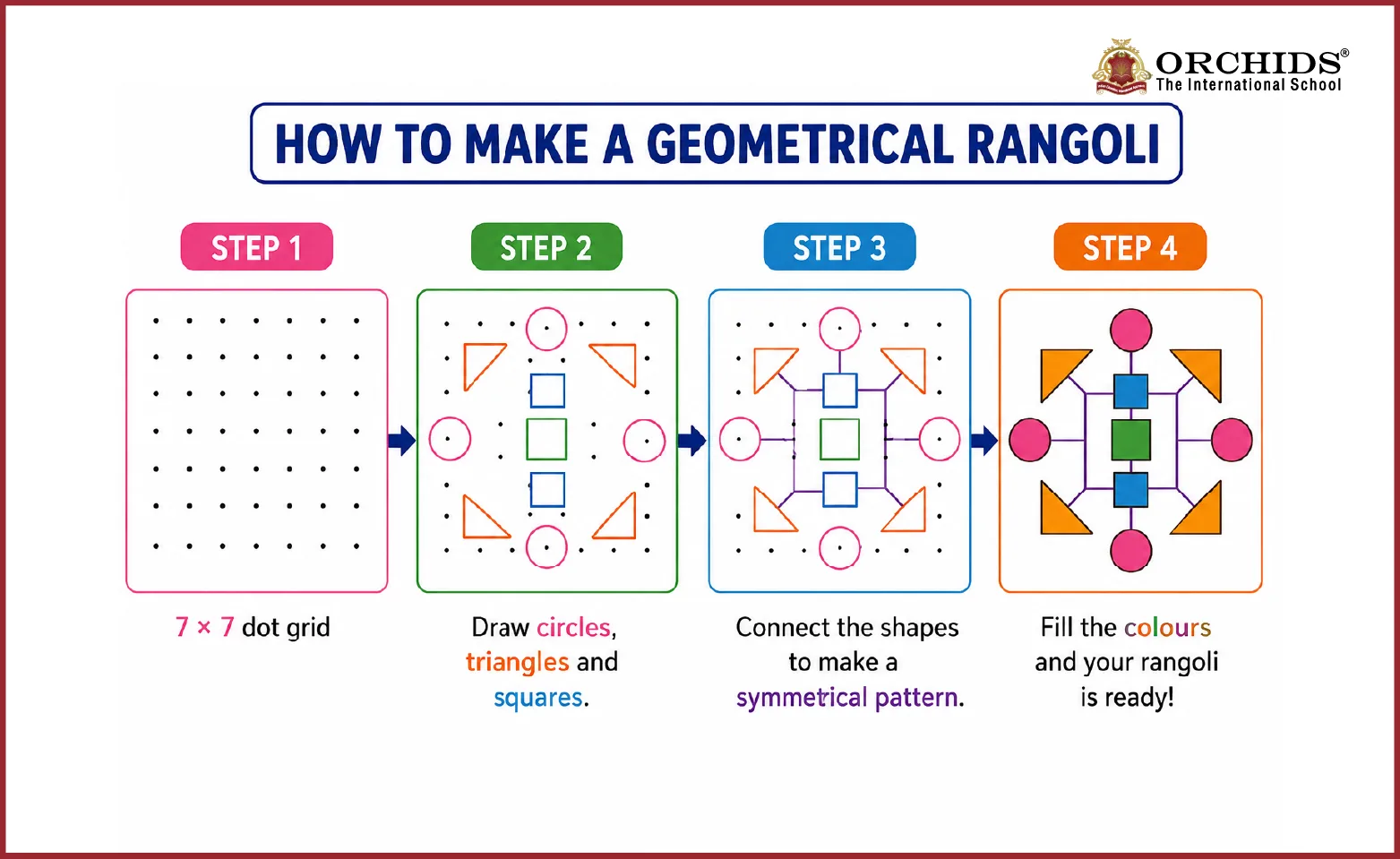
Step 1: Create a Dot Grid: Start by making a simple 7 × 7 dot grid using chalk or pencil dots.
Step 2: Draw Basic Shapes: Use the dots as guides to draw circles, triangles, and squares.
Step 3: Connect the Shapes: Arrange the shapes symmetrically. You can place a circle inside a square or create stars using triangles.
Step 4: Add Colours: Fill the shapes with bright rangoli colours, flower petals, or sketch pens.
Step 5: Outline the Design: Use white chalk or contrasting colours to highlight the borders neatly.
Step 6: Check Symmetry: Make sure both sides of the rangoli look balanced and even.
Easy Geometrical Rangoli Ideas for Kids
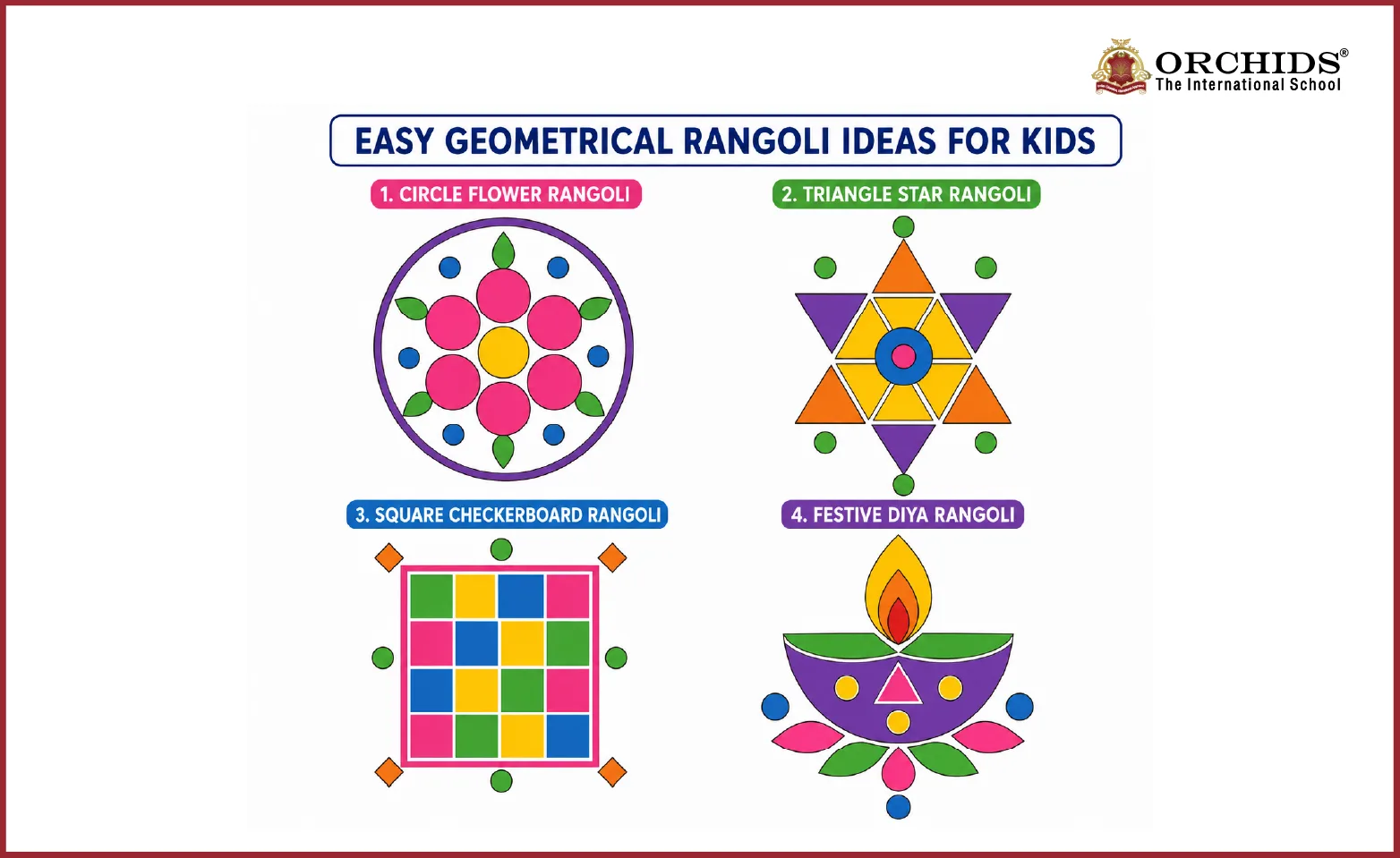
Circle Flower Rangoli: Draw a large circle and add smaller circles around it to create a flower pattern.
Triangle Star Rangoli: Use overlapping triangles to form stars and colour them brightly.
Square Pattern Rangoli: Create a checkerboard design using multiple squares and contrasting colours.
Festival Rangoli: Combine diyas, flowers, and geometric shapes to make festive rangoli designs for Diwali and Pongal.
Maths Concepts in Rangoli
Rangoli is not only an art activity but also a fun way to learn mathematics.
1. Symmetry: Most rangoli patterns are symmetrical, meaning both sides look the same.
2. Patterns: Children learn repeating patterns by arranging shapes in sequences.
3. Counting Shapes: Kids can count the number of circles, triangles, and squares used in their design.
4. Spatial Understanding: Drawing rangoli improves understanding of spacing, alignment, and arrangement.
5. Geometry Learning: Children become familiar with angles, shapes, and proportions through practical activities.
Practice Activity for Kids
Create your own geometrical rangoli using:
- 4 circles
- 6 squares
- 4 triangles
After completing the rangoli, colour the design and count the total number of shapes used.
Download the Geometrical Rangoli Free PDF
Benefits of Rangoli with Geometrical Shapes
- Improves creativity and imagination
- Helps children understand shapes and symmetry
- Develops fine motor skills and hand-eye coordination
- Encourages concentration and patience
- Connects children with Indian culture and traditions
- Makes maths learning more interactive and enjoyable
Tips for Beginners
- Start with simple shapes like circles and squares.
- Use a dot grid for better symmetry.
- Choose bright and contrasting colours.
- Keep the design neat and balanced.
- Practice on paper before using rangoli powders.
- Use flower petals or coloured rice for eco-friendly rangoli.
Teacher Activity Tip
Teachers can divide students into groups and assign different geometric shapes to each team - this will make the rangoli activities more interactive and will help the children recognise patterns better visually.
Materials Used for Rangoli
Children can create rangoli using different materials such as:
- Rangoli powders
- Flower petals
- Coloured rice
- Chalk powder
- Sketch pens and crayons
- Sand and pulses
Rangoli in Different Indian States
Rangoli is known by different names across India.
- Kolam (Tamil Nadu): Made using dots and curved lines.
- Alpana (West Bengal): Floral and circular designs.
- Mandana (Rajasthan): Geometric patterns with straight lines.
- Chowk Purna (Uttar Pradesh): Symmetrical decorative floor art.
These traditional art forms help you learn about India’s cultural diversity.
Common Mistakes Kids Make While Drawing Rangoli
- Using too many colours
- Making shapes uneven
- Forgetting symmetry
- Overcrowding the design
Things You Learn from Geometrical Rangoli
- Basic geometrical shapes can create beautiful artwork.
- Rangoli helps children learn symmetry and patterns.
- Simple designs improve creativity and concentration.
- Geometrical rangoli combines maths, art, and culture.
- Rangoli activities are fun for classrooms, homes, and festivals.
Numbers make sense when they're taught right. To see how Orchids The International School turns Maths from intimidating to intuitive, reach out to our admissions team.
Frequently Asked Questions on Rangoli with Geometrical Shapes
1. What is a rangoli with geometrical shapes?
A rangoli with geometrical shapes is a decorative design created using basic shapes such as circles, triangles, squares, rectangles, stars, and hexagons. These patterns use symmetry and mathematical concepts to create beautiful and balanced artwork.
2. How to make a rangoli using geometrical shapes?
To make a rangoli using geometrical shapes, start by drawing simple shapes such as circles, triangles, squares, and rectangles. Arrange these shapes in a symmetrical pattern and decorate them with colours, dots, and designs. Combining different shapes helps create attractive rangoli patterns while improving understanding of geometry.
3. Which geometrical shapes are commonly used in rangoli?
Common geometrical shapes used in rangoli include circles, squares, triangles, rectangles, pentagons, hexagons, diamonds, and stars. These shapes help create beautiful patterns with symmetry.
4. How is rangoli connected to mathematics?
Rangoli is related to mathematics because it uses concepts like geometry, symmetry, patterns, angles, lines, and spatial arrangement. Many rangoli designs are based on repeating mathematical structures.
5. Why are geometrical rangoli designs useful for students?
Geometrical rangoli designs help students understand shapes, symmetry, and patterns in a creative way. They make learning mathematics more interactive and enjoyable.
6. What are easy geometrical rangoli designs for kids?
Easy geometrical rangoli designs for kids include patterns made with circles, squares, triangles, stars, and simple dot grids. Beginners can start with 4 - 5 shapes and create colorful symmetric designs.
7. Can I make a rangoli using only 5 geometrical shapes?
Yes, you can create a rangoli using only five geometrical shapes such as circles, triangles, squares, stars, and rectangles. Combining and repeating these shapes can produce attractive designs.
8. What are the seven basic geometrical shapes?
The seven commonly used basic geometrical shapes are circle, triangle, square, rectangle, oval, pentagon, and hexagon. These are often used in educational and rangoli activities.
9. How can beginners draw a simple geometrical rangoli step by step?
Beginners can start by drawing a central circle, adding surrounding shapes like triangles or squares, maintaining symmetry, and then coloring the design gradually.
10. Are geometrical rangoli designs used in school activities?
Yes, schools often use geometrical rangoli designs in math activities, competitions, festivals, and art projects to teach geometry and creativity together.
11. How to make a 3D effect in rangoli?
A 3D effect in rangoli can be created by using shading techniques. Apply darker shades on one side and lighter shades on the other to create depth. You can also draw shadow lines around shapes to make the design appear raised or three-dimensional.
12. What is pahadi rangoli called?
Pahadi rangoli is commonly known as Aipan, a traditional folk art form practiced mainly in the Kumaon region of Uttarakhand. It is created using white rice paste on a red background and is often used during festivals and religious ceremonies.
Related Links


Admissions Open for 2026-27
What type of concept pages would you prefer?
CBSE Schools In Popular Cities
- CBSE Schools in Bangalore
- CBSE Schools in Mumbai
- CBSE Schools in Pune
- CBSE Schools in Hyderabad
- CBSE Schools in Chennai
- CBSE Schools in Gurgaon
- CBSE Schools in Kolkata
- CBSE Schools in Indore
- CBSE Schools in Sonipat
- CBSE Schools in Delhi
- CBSE Schools in Rohtak
- CBSE Schools in Bhopal
- CBSE Schools in Aurangabad
- CBSE Schools in Jabalpur
- CBSE Schools in Jaipur
- CBSE Schools in Jodhpur
- CBSE Schools in Nagpur
- CBSE Schools in Ahmednagar
- CBSE School In Tumkur











Orchids The International School is one of India's leading chains of CBSE and ICSE schools, with 110+ schools across the country.