

Inference: Learn to Understand Hidden Meaning Using Clues
Have you ever looked at a situation and understood something without anyone telling you directly? Imagine you walk into a room and see wet umbrellas near the door. Even if no one says it, you can guess that it has been raining outside. That is called making an inference. In this guide, you will learn about inference and how to make inferences with examples.
Table of Contents
- What is Inference
- How to Make an Inference
- Inference Exercises
- Frequently Asked Questions about Making Inferences

What is Inference
Making inferences means to deduce the implied or indirect meaning based on the given information. It involves using clues and what we already know to figure out the hidden meaning. It is like solving a mystery using hints given to us. Inferences help us understand the deeper meaning of a text, find answers that are not clearly stated, improve our thinking and reading skills, and connect ideas using clues and prior knowledge.
How to Make an Inference
To make an inference, follow these steps:
-
Look for clues in the text, picture, or situation.
-
Think about what you already know.
-
Connect the clues with your knowledge.
-
Draw a logical conclusion.
Always remember: Clues + What you know = Inference
Here are some keywords and helpful questions to help you make inferences.
Keywords:
-
Decide
-
Assume
-
Infer
-
Imply
-
Guess
-
Suppose
-
Conclude
-
Probability
Helpful Questions:
-
Why do you think this happened?
-
What can the reader conclude after reading this?
-
What might have caused this?
-
What clues helped you think this way?
-
Which information supports your idea?
-
Can you infer something from this?
-
What is the writer trying to say?
-
Look at the picture and explain what you can infer.
Inference Exercises
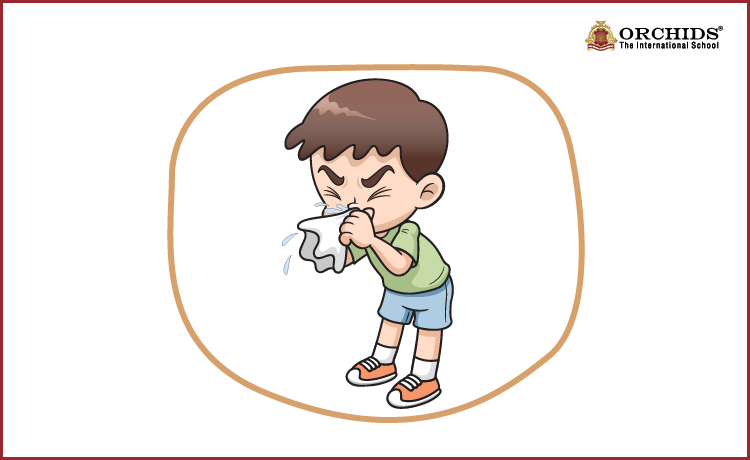
Exercise 1: Look at the images and make an inference.
-
What do you think the boy is feeling?
-
I infer _______
-
I know this because
Answer:
-
I infer the boy is feeling unwell or is sick with a cold.
-
I know this because: He is holding a tissue to his nose, his eyes are closed tight, and there are droplets showing that he just sneezed. He looks like he is struggling with symptoms of an illness.
Exercise 2: Look at the images and make an inference.
Every morning, Pottu gathers his net long before sunrise. He, along with his team, pulls the boat through the water after saying a short prayer. He sets out into the sea to earn his livelihood. A thousand miles away from Pottu lives Pinto. He too wakes up around the same time as Pottu, but instead of a boat, he pulls his cycle out of the shed. He rushes to the railway station. Approximately at 4 a.m., the train passes the station without stopping. But every day, someone from the train throws a bundle of newspapers that lands near him. His job is to deliver it to the people of the town.
-
Pottu is a ........................
-
Boatman
-
Fisherman
-
Priest
-
Merchant
-
What does Pinto do every morning around 4 a.m.?
-
Cycles around the place
-
Collects the newspaper
-
Reads the newspaper
-
Boards the train
-
Why does Pottu go out to sea early in the morning?
-
To enjoy the sunrise
-
To pray in the sea
-
To earn his living
-
To meet his friends
-
What can you infer about Pinto’s job?
-
He works only at night
-
He delivers newspapers to people
-
He travels by train every day
-
He sells cycles
Answers:
-
Fisherman
-
Collects the newspaper
-
To earn his living
-
He delivers newspapers to people
Frequently Asked Questions about Making Inferences
1. What is inference?
Answer: Making inferences means to deduce the implied or indirect meaning based on the given information.
2. What do we need to make an inference?
Answer: We need clues from the text or situation, along with prior knowledge or experience, to make an inference.
3. Why is making inferences important?
Answer: Making inferences helps us understand the deeper meaning of a text and improves our thinking and reading skills.
Strong language skills open doors well beyond the classroom, shaping how confidently a child reads, writes and expresses ideas. If you want to know more about how Orchids The International School builds these skills through its English curriculum, get in touch with our admissions team.


Admissions Open for 2026-27
What type of concept pages would you prefer?
CBSE Schools In Popular Cities
- CBSE Schools in Bangalore
- CBSE Schools in Mumbai
- CBSE Schools in Pune
- CBSE Schools in Hyderabad
- CBSE Schools in Chennai
- CBSE Schools in Gurgaon
- CBSE Schools in Kolkata
- CBSE Schools in Indore
- CBSE Schools in Sonipat
- CBSE Schools in Delhi
- CBSE Schools in Rohtak
- CBSE Schools in Bhopal
- CBSE Schools in Aurangabad
- CBSE Schools in Jabalpur
- CBSE Schools in Jaipur
- CBSE Schools in Jodhpur
- CBSE Schools in Nagpur
- CBSE Schools in Ahmednagar
- CBSE School In Tumkur











Orchids The International School is one of India's leading chains of CBSE and ICSE schools, with 110+ schools across the country.