

Loch Ness Monster: Mystery Behind the Scottish Legend, Geography, Ecosystem and Climate Change Impact
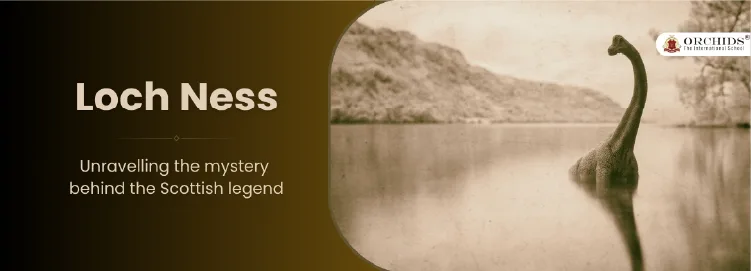
Deep in the Scottish Highlands sits a lake unlike any other. Loch Ness stretches nearly 37 kilometres long and drops to depths of 230 metres. Its water is cold and dark, stained brown by surrounding peatlands. People have been fascinated by this place for over a thousand years and honestly, it is easy to understand why. Somewhere beneath that murky surface supposedly lives a creature the world cannot stop talking about, the legendary Loch Ness Monster, lovingly nicknamed Nessie.
Table of Contents:
- Mystery behind the Scottish Folklore
- Geography of Loch Ness
- The Ecosystem Within
- Climate Change and Its Impact
- Frequently Asked Questions about the Loch Ness Monster

Mystery behind the Scottish Folklore
The Loch Ness Monster legend is far older than most people realise. Back in 565 AD, an Irish monk named Saint Columba reportedly came face to face with a strange beast near the River Ness and ordered it away. Local stories quietly continued for centuries after that. Then, in May 1933, a single newspaper article changed everything and suddenly the whole world was paying attention. John Mackay and his wife described witnessing an ‘enormous animal’ causing a massive commotion on the loch’s surface and the modern myth was born.
The most famous piece of evidence, the 1934 ‘Surgeon’s Photograph’ attributed to Dr Robert Kenneth Wilson, appeared to show a long-necked creature rising from the water. It was taken as near-proof by believers for decades, until 1994, when it was revealed to be an elaborate hoax, a toy submarine fitted with a sculpted head. Yet sightings have never ceased. The Loch Ness Centre has catalogued over a thousand alleged encounters, ranging from rippling wakes to silhouetted humps breaking the glassy surface at dawn.
A landmark 2018 environmental DNA survey led by Professor Neil Gemmell of the University of Otago found no trace of large reptilian or plesiosaur DNA in the loch. The study did, however, reveal a surprisingly high concentration of eel DNA, lending credibility to the theory that exceptionally large European eels may account for many sightings. The mystery endures not because of hard evidence, but because of the human appetite for wonder in a world that feels increasingly mapped and known.
Geography of Loch Ness
Loch Ness forms part of the Great Glen Fault, a dramatic geological fracture that slices diagonally across the Scottish Highlands from Fort William in the southwest to Inverness in the northeast. Loch Ness was shaped by tectonic shifts and then carved even deeper by glaciers during the last Ice Age. This gives it that long, narrow look and remarkable depth. At its deepest, the loch floor sits around 200 metres below sea level.
Surrounding it are steep wooded hillsides, rolling heather moorlands and rivers that tumble down and feed the loch throughout the year. The River Oich flows in from the south, while the River Ness drains the loch northward into the Moray Firth. The peat-rich soils of the catchment area stain the water a dark amber-brown, severely limiting underwater visibility, a natural condition that has, perhaps conveniently, fuelled centuries of speculation about what might lurk below.
The Ecosystem Within
Despite its dramatic reputation, the ecosystem of Loch Ness is a functioning, if relatively sparse, freshwater environment. The cold, dark waters of Loch Ness are home to a hardy mix of wildlife. Atlantic salmon and brown trout pass through seasonally, while Arctic charr, a species left behind from the Ice Age, live permanently in the deeper, colder depths below. Pike lurk in the shallower margins and a rich invertebrate community forms the base of the food web.
Waterfowl such as ospreys, red-throated divers and great crested grebes depend on the loch's fish populations. River otters, increasingly rare across Britain, find shelter along its heavily vegetated banks. The surrounding woodland supports red squirrels, pine martens and red deer. Though not a biodiversity hotspot in the tropical sense, Loch Ness is a vital corridor for Highland wildlife and its ecological health is inseparable from the broader health of the Great Glen.
Climate Change and its Impact
Loch Ness faces a threat far more real than any monster. Climate change is quietly reshaping the loch in ways scientists are still working to fully understand. As temperatures across Scotland gradually rise, the water is warming too. This disturbs the cold, layered conditions that species like Arctic charr have relied on for thousands of years. Researchers at the University of Edinburgh have recorded steady temperature increases over recent decades and the effects are spreading through the entire food chain.
Rainfall patterns are also shifting, bringing more extreme droughts and floods that disturb sediment and alter water chemistry. Milder winters are allowing invasive species to creep in and threaten native fish. Warmer water is also encouraging algal growth, which slowly strips oxygen from the deeper zones. Here is the real irony. The loch that made the world believe in a legendary monster is now facing genuine, invisible dangers that deserve just as much attention and urgency as Nessie ever received.
Frequently Asked Questions about the Loch Ness Monster
1. Has the Loch Ness Monster ever been scientifically proven to exist?
No, science has never confirmed the Loch Ness Monster is real. A 2018 DNA study found nothing unusual. Most sightings are likely eels, floating logs, or tricks of light.
2. Why is the water in Loch Ness so dark?
The water in the loch turns dark brown, almost like tea, when peat from neighbouring moorlands washes into it. Underwater exploration is quite challenging because visibility is only a few meters due to the muddy water.
3. What is the deepest point of Loch Ness and how does it compare globally?
The deepest point of Loch Ness is about 230 meters. It is the second-deepest loch in Scotland and contains more freshwater than all the lakes in Wales and England put together, making it extremely large and challenging to thoroughly explore.
4. How is climate change specifically threatening Loch Ness?
Cold-water fish like Arctic charr are harmed by rising temperatures. Water chemistry is changed by varying rainfall. Invasive species proliferate during warmer winters. Algal blooms reduce oxygen levels. Together, these changes are slowly damaging an ecosystem stable since the Ice Age.
5. When is the best time to visit Loch Ness and what can visitors expect?
May to September is ideal. Days are long, the weather is pleasant and scenery is stunning. Visitors enjoy Urquhart Castle, boat tours, the Loch Ness Centre and scenic walks along the Great Glen Way. Monster sightings not guaranteed!
Understanding the world starts with the environment around us. To see how Orchids The International School brings EVS to life, reach out to our admissions team.


Admissions Open for 2026-27
What type of concept pages would you prefer?
CBSE Schools In Popular Cities
- CBSE Schools in Bangalore
- CBSE Schools in Mumbai
- CBSE Schools in Pune
- CBSE Schools in Hyderabad
- CBSE Schools in Chennai
- CBSE Schools in Gurgaon
- CBSE Schools in Kolkata
- CBSE Schools in Indore
- CBSE Schools in Sonipat
- CBSE Schools in Delhi
- CBSE Schools in Rohtak
- CBSE Schools in Bhopal
- CBSE Schools in Aurangabad
- CBSE Schools in Jabalpur
- CBSE Schools in Jaipur
- CBSE Schools in Jodhpur
- CBSE Schools in Nagpur
- CBSE Schools in Ahmednagar
- CBSE School In Tumkur











Orchids The International School is one of India's leading chains of CBSE and ICSE schools, with 110+ schools across the country.