

What is Cobalt: Definition, Silvery-Blue Colour, Primary Properties and Applications
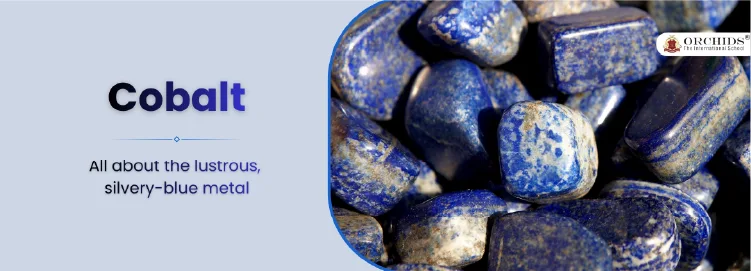
Cobalt is a metal that most people have never heard of, but use every single day without realising it. It is found naturally in the Earth's crust, and its chemical symbol is Co, with atomic number 27. The metal has a shiny, silvery-blue look to it. Cobalt is hard, does not rust easily, and is naturally magnetic. You will not find it sitting alone in nature; it usually occurs with metals like nickel and copper. It may not be as well-known as gold or iron, but cobalt matters a lot in the world we live in today.
Table of Contents:
- Definition of Cobalt
- The Silvery-Blue Colour of Cobalt
- Primary Properties of Cobalt
- Applications of Cobalt
- Frequently Asked Questions about Cobalt

Definition of Cobalt
Cobalt is a transition metal. That simply means it belongs to the middle section of the periodic table, grouped with metals that share similar characteristics. A Swedish chemist named Georg Brandt first identified it as a separate element back in 1739.
The word cobalt comes from Kobold, a German word for goblin. Miners in old Germany named it that because the ore gave them a hard time; it released poisonous fumes when heated, and they could not figure out why. They blamed a mischievous spirit. In reality, it was just a chemical reaction they had no knowledge of at the time.
Most of the world's cobalt today comes from the Democratic Republic of Congo. The country supplies more cobalt than any other nation on Earth.
The Silvery-Blue Colour of Cobalt
In its pure form, cobalt is a shiny metal with a soft blue-grey tone, which is why people describe it as silvery-blue. But the colour that cobalt is truly famous for is something else entirely.
When cobalt is combined with aluminium and oxygen and then heated, it produces a compound called cobalt aluminate. This compound gives off a bold, deep blue colour, commonly known as cobalt blue. This particular shade has been around for centuries, used in pottery, glass, tiles, and paintings across many different cultures.
The striking blue designs on old Chinese porcelain? Cobalt. The deep blue glass in centuries-old churches? Often, cobalt too. It is one of the most reliable and long-lasting blue pigments humans have ever come across.
Primary Properties of Cobalt
Here are the main properties of cobalt, explained simply:
Physical Properties
- Cobalt is a solid metal at room temperature
- It is hard and shiny with a silvery-blue appearance
- Its melting point is around 1,495°C, which is very high
- It is heavier and denser than most common metals
- It is one of only three naturally magnetic metals; the other two are iron and nickel
Chemical Properties
- Cobalt does not rust quickly in air or water
- It reacts slowly with most acids
- It forms colourful compounds, mostly blue and pink
- It stays magnetic even at higher temperatures than iron, which makes it useful in machines that get hot
Applications of Cobalt
Cobalt is used in many areas, from batteries to medicines. Here are the most important ones:
Batteries
This is the biggest use of cobalt today. Lithium-ion batteries, the ones inside your phone, laptop, and electric cars, contain cobalt. It keeps the battery stable and helps it last longer. As more people switch to electric vehicles, the need for cobalt keeps growing.
Jet Engines and Turbines
Cobalt is mixed with other metals to make special alloys that can handle extreme heat without breaking down. These are used in jet engines, gas turbines, and rocket parts. Without cobalt, building such machines would be much harder.
Magnets
Since cobalt is magnetic, it is used in strong permanent magnets found in motors, speakers, headphones, and hard drives.
Pigments
Cobalt blue and cobalt green are used in glass, ceramics, paints, and printing inks. These colours are bright and do not fade easily, which makes them popular in art and manufacturing.
Medicine
Cobalt-60, a radioactive form of cobalt, is used in cancer treatment. It is also part of Vitamin B12, which the human body needs to keep nerves healthy and produce red blood cells.
Frequently Asked Questions about Cobalt
1. Where does cobalt come from?
Cobalt is found inside rocks and ores in the Earth's crust. It is usually extracted along with copper and nickel. The Democratic Republic of Congo produces more than half of the world's cobalt supply.
2. Is cobalt harmful to humans?
In small amounts, cobalt is actually good for the body; it is part of Vitamin B12. But too much cobalt dust or certain cobalt compounds can be harmful if breathed in over a long time. When handled properly in industries, it is safe.
3. Why do electric cars need cobalt?
Electric cars run on lithium-ion batteries, and cobalt is a key ingredient in those batteries. It makes them more efficient, stable, and safe. Without cobalt, the batteries would overheat or wear out much faster.
4. Is cobalt blue the same as cobalt metal?
No, they are different. Cobalt metal is a silvery-blue element. Cobalt blue is a pigment made from a cobalt compound called cobalt aluminate. The pigment is used for colour in art and industry. Both come from the element cobalt, but they look and behave differently.
Understanding the world starts with the environment around us. To see how Orchids The International School brings EVS to life, reach out to our admissions team.


Admissions Open for 2026-27
What type of concept pages would you prefer?
CBSE Schools In Popular Cities
- CBSE Schools in Bangalore
- CBSE Schools in Mumbai
- CBSE Schools in Pune
- CBSE Schools in Hyderabad
- CBSE Schools in Chennai
- CBSE Schools in Gurgaon
- CBSE Schools in Kolkata
- CBSE Schools in Indore
- CBSE Schools in Sonipat
- CBSE Schools in Delhi
- CBSE Schools in Rohtak
- CBSE Schools in Bhopal
- CBSE Schools in Aurangabad
- CBSE Schools in Jabalpur
- CBSE Schools in Jaipur
- CBSE Schools in Jodhpur
- CBSE Schools in Nagpur
- CBSE Schools in Ahmednagar
- CBSE School In Tumkur











Orchids The International School is one of India's leading chains of CBSE and ICSE schools, with 110+ schools across the country.