

What are Amphibians: Definition, Characteristics, Life Cycle and Examples
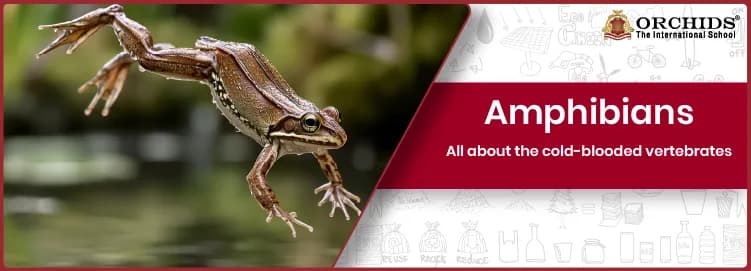
Frogs, toads and salamanders all belong to a group of animals called amphibians. Many of us have watched a frog jump into a pond or seen a tiny tadpole swimming around in water. The name ‘amphibian’ actually comes from a Greek word meaning “two lives,” and it fits these animals really well. They spend part of their lives in water and part on land. Some start life swimming like fish and later grow legs to walk and hop on the ground. In this article, we will look at what amphibians are, how they live and why they matter so much in nature.
Table of Contents
- What are Amphibians
- The Life Cycle of a Frog
- Common Examples of Amphibians
- Why are Amphibians Important
- Protecting Amphibians
- Frequently Asked Questions on What are Amphibians

What are Amphibians
Amphibians are cold-blooded animals. This means their body gets warm or cool depending on the weather around them. Humans are warm-blooded, so our bodies stay at almost the same temperature no matter what. Amphibians don't have that, so they often move to a warmer or cooler spot to feel comfortable.
Their skin is smooth and wet, not covered in fur, feathers, or scales. This skin actually helps them breathe and it also dries out fast if they stay away from water for too long. That's why you usually spot them near ponds, streams, lakes or wet soil.
Most amphibians lay eggs in water. Their eggs don't have a hard shell like a bird's egg. Instead, they are soft and a bit jelly-like. When the baby hatches, it usually looks nothing like its parents and lives in water at first.
The Life Cycle of a Frog
A frog's life cycle is a great way to understand amphibians:
- Egg stage: The frog lays a bunch of eggs in water.
- Tadpole stage: A small tadpole hatches out. It looks like a tiny fish and breathes using gills.
- Growing stage: The tadpole slowly grows legs and its tail starts shrinking.
- Adult frog stage: It finally turns into a full-grown frog with lungs, so it can now live on land too.
This whole change is called metamorphosis and it’s one of the coolest things about amphibians.
Common Examples of Amphibians
- Frogs: Usually found near ponds and fields, known for jumping and croaking.
- Toads: Look a bit like frogs but have drier, bumpier skin.
- Salamanders: Look similar to lizards, but they are amphibians, not reptiles.
- Newts: A type of salamander that spends a lot of time in water.
Why are Amphibians Important
Amphibians eat a lot of insects and mosquitoes, so they help keep pest numbers in control. They're also food for birds, fish and other animals, which makes them an important part of the food chain. Amphibians are also called indicator species. This means scientists check on them to see how healthy an environment is. Since their skin is so soft and sensitive, pollution or dirty water affects them quickly. So if amphibians start vanishing from a place, it's usually a sign that something is wrong there.
Protecting Amphibians
Right now, many amphibians are struggling because of pollution, fewer wetlands and changing weather patterns. As students, we can do small things to help, like keeping ponds clean, avoiding too many chemicals in gardens and learning about the amphibians living around us. Little steps like these really do add up. Amphibians might be small, but they're pretty amazing animals. The way they live two lives, one in water and one on land, makes them one of nature's best examples of adapting to survive.
Frequently Asked Questions on What are Amphibians
1. What does the word ‘amphibian’ mean?
It comes from a Greek word, meaning ‘two lives’. It describes animals that live part of their life in water and part on land, like frogs and salamanders.
2. Are amphibians cold-blooded or warm-blooded?
Amphibians are cold-blooded. Their body temperature changes based on the surroundings, so they often move around to stay warm or cool, unlike humans.
3. What is metamorphosis in amphibians?
It's the process where a young amphibian, like a tadpole, slowly changes into an adult. It grows legs, loses its tail and develops lungs to breathe air.
4. Why are amphibians called indicator species?
Their skin is soft and sensitive, so it reacts fast to pollution. Scientists watch amphibians closely to judge whether an environment is healthy or in trouble.
Understanding the world starts with the environment around us. To see how Orchids The International School brings EVS to life, reach out to our admissions team.


Admissions Open for 2026-27
What type of concept pages would you prefer?
CBSE Schools In Popular Cities
- CBSE Schools in Bangalore
- CBSE Schools in Mumbai
- CBSE Schools in Pune
- CBSE Schools in Hyderabad
- CBSE Schools in Chennai
- CBSE Schools in Gurgaon
- CBSE Schools in Kolkata
- CBSE Schools in Indore
- CBSE Schools in Sonipat
- CBSE Schools in Delhi
- CBSE Schools in Rohtak
- CBSE Schools in Bhopal
- CBSE Schools in Aurangabad
- CBSE Schools in Jabalpur
- CBSE Schools in Jaipur
- CBSE Schools in Jodhpur
- CBSE Schools in Nagpur
- CBSE Schools in Ahmednagar
- CBSE School In Tumkur











Orchids The International School is one of India's leading chains of CBSE and ICSE schools, with 130+ schools across the country.