

The Dead Sea: History, Hypersalinity, Key Geographical & Environmental Traits and the Ecological Crisis
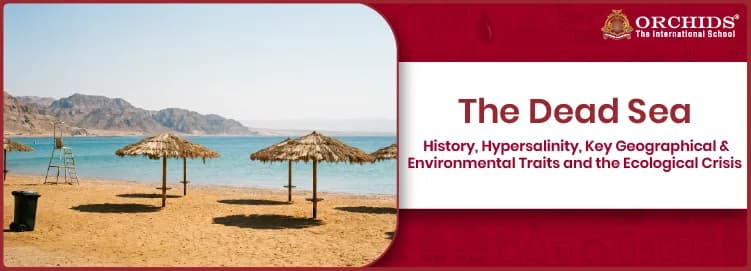
The Dead Sea is called Yam HaMelah in Hebrew, which means ‘Sea of Salt’, and Al-Bahr Al-Mayyit in Arabic. It’s one of the most amazing natural wonders on Earth. It sits at the lowest point of land on the whole planet, right where Israel, Jordan and the Palestinian territories meet. Because of its extreme saltiness, its unusual mix of minerals and thousands of years of history tied to it, the Dead Sea is one of the most studied and most visited bodies of water anywhere. And yet, it's also going through a serious environmental crisis right now.
Table of Contents
- History
- Hypersalinity
- Key Geographical and Environmental Traits
- The Ecological Crisis
- Frequently Asked Questions about the Dead Sea

History
People have been connected to the Dead Sea for thousands of years. It shows up in old texts, including the Bible, which talks about the Cities of the Plain, Sodom and Gomorrah, believed to have sat along its southern shores. The Nabataeans, an ancient Arab people, used to collect bitumen (a kind of asphalt) that floated on the water's surface, then sold it across the Mediterranean world.
Back in Roman times, the Jewish historian Flavius Josephus called it ‘Lacus Asphaltites’, meaning Asphalt Lake. King Herod the Great also built his fortress and palace at Masada, up on the cliffs along the western side. Then there are the Dead Sea Scrolls, ancient Jewish writings dating from 408 BCE to 318 CE. They were found between 1947 and 1956 in the Qumran Caves nearby and that discovery turned the area into one of the most important archaeological sites in the world.
More recently, the Dead Sea has become known for its healing properties, pulling in health tourists from all over. People come for the mineral-rich water and mud, which have been used to help with skin problems like psoriasis and eczema, as well as arthritis.
Hypersalinity
The Dead Sea is around 10 times saltier than a regular ocean. Its salinity sits at about 34%, meaning there's roughly 340 grams of salt in every litre of water, compared to about 3.5% in normal seawater. This happens because of how the Dead Sea is set up: there's no way out for the water. It flows in, mostly from the Jordan River, but the only way it leaves is through evaporation in the desert heat. As the water evaporates, the minerals and salts left behind just keep building up.
The main minerals in the water are magnesium chloride, sodium chloride, calcium chloride and potassium chloride. This mix makes the water incredibly dense. That’s why people float so easily here, way more than in normal seawater. But this same saltiness also makes the water almost impossible for most living things to survive in, which is exactly where the name ‘Dead Sea’ comes from.
Key Geographical and Environmental Traits
- Location: It sits in the Jordan Rift Valley, a low-lying area formed as the African and Arabian tectonic plates pulled apart.
- Elevation: About 430 metres below sea level, making it the lowest natural land surface on Earth.
- Dimensions: Roughly 50 km long and 15 km wide, though both numbers keep shrinking over time.
- Depth: The northern part goes down to about 306 metres at its deepest, while the southern part is much shallower.
- Climate: It has a hot desert climate, with summer temperatures often above 39°C and very little rain each year, only around 50-75 mm.
- Mineral Richness: The sea is a major source of potash, used in fertilisers, along with bromine and magnesium compounds, both extracted commercially by companies in Israel and Jordan.
The Ecological Crisis
The Dead Sea is dealing with one of the most serious environmental problems anywhere in the world. Over the last hundred years, it's lost more than a third of its surface area and the water level keeps dropping by about a metre every year. The main reason behind this is that the Jordan River, which used to feed the sea, has been diverted. Dams and irrigation projects built by Israel, Jordan and Syria have cut the river's flow down to a trickle, now less than 5% of what it used to be. On top of that, mineral companies in Israel and Jordan pump water from the northern part of the sea into evaporation ponds in the south, which speeds up the shrinking even more.
As the shoreline pulls back, it's leaving behind thousands of sinkholes. These form when underground freshwater dissolves the salt layers below ground, causing the surface to suddenly collapse. Beaches, roads and farmland have all been swallowed up this way and tourist spots keep getting damaged and having to move. There’s also been talk of the Red Sea-Dead Sea Canal, a joint project between Jordan, Israel and the Palestinians. The idea was to pump water from the Red Sea into the Dead Sea to help refill it, while also generating power and producing fresh drinking water for the region. But the project has stalled in recent years because of political, financial and environmental concerns, including worries that mixing the two waters could turn the Dead Sea pink from algae growth.
Frequently Asked Questions about the Dead Sea
1. Why is the Dead Sea called ‘dead’?
The name comes from how hostile it is to most living things. Its salt levels, about 10 times higher than the ocean, make it impossible for fish, plants and most other creatures to survive there. The only things that seem to manage are certain tough bacteria and microbial mats built to handle harsh conditions.
2. Can you really float in the Dead Sea without swimming?
Yes. Sinking is practically impossible because the water is much denser than the human body due to its high salinity of about 34%. You don’t even attempt; you just float on top. Nevertheless, if the water goes into your eyes or comes into contact with any open wounds, it can cause excruciating pain.
3. What minerals are extracted from the Dead Sea?
Several valuable minerals come from here. Potash, used to make fertiliser, is the biggest moneymaker. Bromine gets used in flame retardants, photography and medicine. Magnesium metal, regular table salt and bitumen have also been pulled from the area over the years.
4. Is it safe to swim in the Dead Sea?
Floating for a short while is fine, but actual swimming isn’t a great idea. The thick, salty water can badly irritate your eyes or even cause burns if it gets swallowed or splashed on your face. Any cuts or scrapes will sting a lot too. It's best to keep your time in the water short, keep your head above the surface and rinse off with fresh water afterward.
5. Can the Dead Sea be saved from shrinking?
Saving the Dead Sea would mean cutting back sharply on how much water gets diverted from the Jordan River, plus possibly big replenishment projects. Stricter water rules and less industrial extraction across Israel, Jordan and Palestinian areas would help too. The Red Sea-Dead Sea Canal remains the top proposed fix, though political and environmental hurdles keep stalling it.
Understanding the world starts with the environment around us. To see how Orchids The International School brings EVS to life, reach out to our admissions team.


Admissions Open for 2026-27
What type of concept pages would you prefer?
CBSE Schools In Popular Cities
- CBSE Schools in Bangalore
- CBSE Schools in Mumbai
- CBSE Schools in Pune
- CBSE Schools in Hyderabad
- CBSE Schools in Chennai
- CBSE Schools in Gurgaon
- CBSE Schools in Kolkata
- CBSE Schools in Indore
- CBSE Schools in Sonipat
- CBSE Schools in Delhi
- CBSE Schools in Rohtak
- CBSE Schools in Bhopal
- CBSE Schools in Aurangabad
- CBSE Schools in Jabalpur
- CBSE Schools in Jaipur
- CBSE Schools in Jodhpur
- CBSE Schools in Nagpur
- CBSE Schools in Ahmednagar
- CBSE School In Tumkur











Orchids The International School is one of India's leading chains of CBSE and ICSE schools, with 130+ schools across the country.