

Seaweed: Definition, Types, Habitat, Uses and Importance in Marine Ecosystem
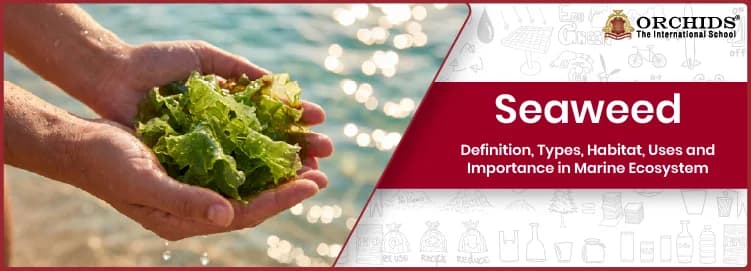
The seaweed is one of the oldest, widespread living things found on earth that supports the entire marine food web. It is a macroscopic, multicellular marine algae that comes in many different sizes and shapes. Mostly green, brown or deep red in colour, seaweed appears like a slippery glass floating in the ocean and coastal sea water. It produces a large amount of oxygen and absorbs massive amounts of carbon dioxide. In countries like China, Japan and North Korea it is considered a nutritional food source. Let’s learn some interesting facts about seaweed, its types, natural habitat and
Table of Contents
- What is Seaweed
- Types of Seaweed
- Where does Seaweed Grow
- Uses of Seaweed
- Seaweed Farming in India
- Frequently Asked Questions about Seaweed

What is Seaweed
Seaweed is a marine macroalgae that exists in countless different species growing in the ocean and shallow coastal waters. Although it looks like plants, it does not have roots, stems and leaves. Instead, they use their root-like hook structure to hold on to rocks and the ocean floor. Seaweeds need sunlight to survive so they grow in the upper layer of the ocean where sunlight can penetrate. This marine algae takes nutrients like nitrogen and phosphorus from the surrounding water.
Types of Seaweed
These macroscopic, multicellular marine algae are classified into three different types based on their pigmentation.
- Chlorophyta: Commonly found in shallow, sunlit coastal waters this green algae contains pigment called chlorophyll. Sea lettuce and caulerpa are some of the common examples of this seaweed.
- Phaeophyta: This brown algae is the largest and most structurally complex of all algae. They contain pigments called fucoxanthin alongside chlorophyll, which gives them a distinctive olive-brown or golden-brown colour.
- Rhodophyta: It is a red algae containing pigments called phycoerythrin. This pigment absorbs blue light, allowing them to perform photosynthesis in deeper, darker water where other types of algae cannot survive. They are the most diverse group, with over 6,000 species.
Where does Seaweed Grow
Seaweed is majorly found in every ocean and sea on our planet. From the tropical region to the polar regions, there are different species of seaweeds growing as per different climatic conditions.
- Intertidal Zone: Seaweed grows in the intertidal zone which is alternatively exposed to sun. Species like sea lettuce cling to rocks in this zone and grow as they get exposure to air, sun and freshwater rain.
- Subtidal Zone: seaweeds can grow completely inside the shallow water. This is the most productive zone for seaweed growth, with consistent sunlight and water coverage.
- Kelp Forest: Found in the cold, nutrient-rich coastal waters of California the giant, dense brown algae forms an underwater forest. It is among the most biodiverse ecosystems on earth that provides food and habitat to thousands of marine species.
- Open Sea: Vast floating macroalgae float freely in the open sea water forming a habitat for numerous marine species.
Uses of Seaweed
For over thousands of years humans have been using seaweed for various purposes. Its applications are also growing rapidly recently.
Food: Seaweed is nutritious food rich in iron, calcium and various vitamins. It is consumed by millions of people in different countries worldwide including Ireland, Wales, China and Japan.
Food Additives: Seaweed is also indirectly consumed by millions of people as it is used as a thickener and stabiliser in dairy products, infant formula, chocolate milk and salad dressings.
Cosmetics: Seaweed extracts are commonly used in skin care products such as moisturiser and anti-aging creams. It contains antioxidants and is highly useful for hydrating skin and promoting hair growth.
Medicinal Use: Seaweed is famous for its anti-inflammatory, antiviral and antioxidant properties. It is used in medicines such as tablets for treating thyroid and boosting immunity.
Seaweed Farming in India
Seaweed farming is common in India and is mainly done in the shallow coastal waters of Tamil Nadu and Gujarat. Small cuttings of seaweed are tied to ropes or nets anchored in the sea. The seaweed grows rapidly using sunlight and nutrients from the water alone, no freshwater, fertilizer or pesticides are needed. It is harvested every 45 days and sold to companies that extract agar and carrageenan from it.
Frequently Asked Questions about Seaweed
1. Is seaweed a plant?
No, although seaweed looks like a plant, it is a cluster of marine algae that belongs to the group of single cell organisms, called protista, and are generally found in red and brown algae.
2. What are the nutritional benefits of seaweed?
Seaweed is considered a superfood as it is rich in iodine, calcium, iron, Vitamin A, B, C, E and dietary fibre.
3. How is seaweed good for our environment?
Seaweed plays an important role in the global carbon cycle. It absorbs CO₂ through photosynthesis and when it sinks to the ocean floor it retains its carbon content for a long duration of time.
4. How many species of seaweed are there?
There are around 12000 species of seaweed worldwide and the common culinary varieties include wakame, kelp and nori which is commonly used to wrap sushi.
Understanding the world starts with the environment around us. To see how Orchids The International School brings EVS to life, reach out to our admissions team.


Admissions Open for 2026-27
What type of concept pages would you prefer?
CBSE Schools In Popular Cities
- CBSE Schools in Bangalore
- CBSE Schools in Mumbai
- CBSE Schools in Pune
- CBSE Schools in Hyderabad
- CBSE Schools in Chennai
- CBSE Schools in Gurgaon
- CBSE Schools in Kolkata
- CBSE Schools in Indore
- CBSE Schools in Sonipat
- CBSE Schools in Delhi
- CBSE Schools in Rohtak
- CBSE Schools in Bhopal
- CBSE Schools in Aurangabad
- CBSE Schools in Jabalpur
- CBSE Schools in Jaipur
- CBSE Schools in Jodhpur
- CBSE Schools in Nagpur
- CBSE Schools in Ahmednagar
- CBSE School In Tumkur











Orchids The International School is one of India's leading chains of CBSE and ICSE schools, with 130+ schools across the country.