

Layers of Earth: Description, Structure, Composition, Temperature and Features
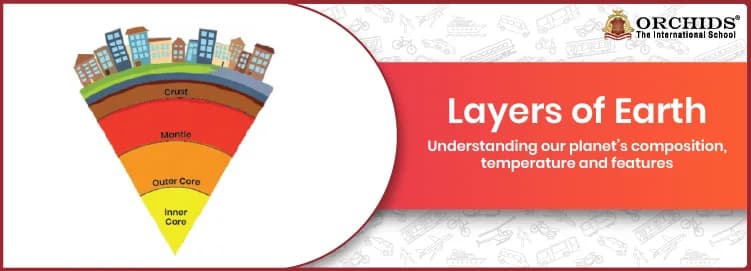
Our earth is the fifth largest planet of the solar system with a diameter of 7,926 miles. It is not just a big solid ball of rocks but it is made of many different layers that form the structure of the earth. Each of these layers have their own unique characteristics, composition and temperature. This structure and layers of earth formed millions of years ago when earth was a hot, molten ball, formed from a massive cloud of dust and gas. In this article, we will learn in detail about the different layers of earth, their composition and properties.
Table of Contents
- What are the Layers of Earth
- Structure of Earth
- Crust: Outer Layers of Earth
- Mantle: Middle Layer of Earth
- Core: Inner Layer of Earth
- Fun Facts about Layers of Earth
- Frequently Asked Questions about the Layers of Earth

What are the Layers of Earth
Our earth is composed of four main layers: the inner core covered by layers of outer core, mantle and crust. The outer-most layer of earth is called crust. It is the surface of the earth where we live or build our houses on. The middle layer is the mantle which makes up to 84% of the total earth. The third and the innermost layer is called core and there are two sub-layers in the core called outer core and inner core. These four layers together form our earth. Let’s explore more about the structure of the earth and properties of each layer one by one.
Structure of Earth
The structure and layers of earth formed billions of years ago when swirling gases and dust particles in space joined together due to gravity and formed planetesimals. These building blocks of planets then combined to form earth. As the planet cooled, heavier materials sank toward the center, while lighter materials rose to the surface. This process, called differentiation, created the layered structure of earth that we see today.
Crust: Outer Layers of Earth
Crust is the outermost layer and the thinnest layer of earth which makes up the earth’s surface. This layer includes soil, mountains, rock and water. It is 5-25 miles thick and is present under oceans too. The layer of earth under oceans is known as the ocean crust and that of the continents is called the continent crust. The crust and the very top of the mantle together form the lithosphere. The inside of the lithosphere is broken into pieces called tectonic plates. These plates keep shifting constant and we experience their movement during earthquakes.
Lithosphere and the asthenosphere are two sub-layers that lie between the crust and mantle. The lithosphere is made up of solid and hard rocks and beneath it is the asthenosphere which is the part of the second layer of earth. It is a semi-molten part of the mantle on which tectonic plates of the crust float.
Mantle: Middle Layers of Earth
The second layer of earth is the mantle. It is the largest layer of our planet, constituting around 84% of the total earth’s volume. This layer is 1,800 miles thick and is made of extremely hot dense rock called magma. It has a temperature of 1,600 degrees fahrenheit on its top and around 4,000 degrees fahrenheit at the bottom. The molten rocks that escape to the earth surface cause volcanic eruptions.
Core: Inner Layers of Earth
At the center of earth is the core, made mostly of two melted metals: iron and nickel. During earth's formation the gravity clumped the heaviest metals to the center and this is why it is the densest part of our earth as. This layer is further divided into inner core and outer core.
Inner Core: The thickness of the inner core is 1,368 miles and there is an extremely high pressure on the iron and nickel from all the above layers of the earth that it cannot melt and stays like a solid.
Outer Core: The outer core is located 1,800 miles below the earth surface and is about 1.400 miles thick. It has temperatures between 4,000 and 9,000 degrees.
Fun Facts about the Layers of Earth
- The inner core of earth has a temperature as high as the surface of the sun, but it is a solid metal.
- Earth's magnetic field is due to the spinning of the liquid present in the outer core of earth which is also known as geodynamo effect.
- The oceanic crust is much younger than continental crust because it is constantly being recycled back into the mantle at subduction zones.
Frequently Asked Questions about the Layers of Earth
1. What is the thinnest layer of Earth?
Crust is the thinnest layer of the earth which is 3-5 miles thick under the ocean and around 25 miles thick under the continents.
2. Why is the inner core solid even though it is extremely hot?
The inner layer of the planet remains solid due to the high pressure from the entire layers of the earth.
3. What creates Earth's magnetic field?
The spinning iron and nickel liquid present in the outer core of earth creates its magnetic field.
4. Name the two types of crust and tell which one is denser.
Ocean crust and continent crust are the two types of the earth’s crust. The continental crust is denser than the oceanic crust.
Understanding the world starts with the environment around us. To see how Orchids The International School brings EVS to life, reach out to our admissions team.


Admissions Open for 2026-27
What type of concept pages would you prefer?
CBSE Schools In Popular Cities
- CBSE Schools in Bangalore
- CBSE Schools in Mumbai
- CBSE Schools in Pune
- CBSE Schools in Hyderabad
- CBSE Schools in Chennai
- CBSE Schools in Gurgaon
- CBSE Schools in Kolkata
- CBSE Schools in Indore
- CBSE Schools in Sonipat
- CBSE Schools in Delhi
- CBSE Schools in Rohtak
- CBSE Schools in Bhopal
- CBSE Schools in Aurangabad
- CBSE Schools in Jabalpur
- CBSE Schools in Jaipur
- CBSE Schools in Jodhpur
- CBSE Schools in Nagpur
- CBSE Schools in Ahmednagar
- CBSE School In Tumkur











Orchids The International School is one of India's leading chains of CBSE and ICSE schools, with 130+ schools across the country.