

Lighthouse: Definition, History, Role in Maritime Navigation and Operational Lighthouses in India
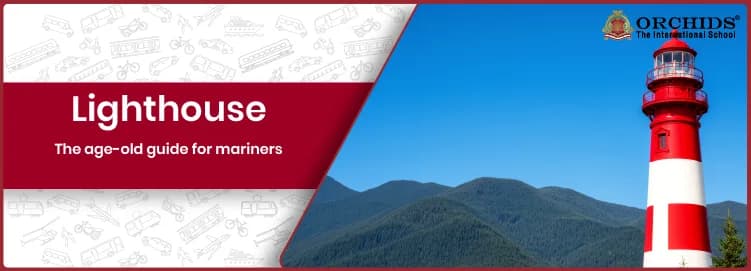
A lighthouse is basically a tall structure with a strong light on top, built in key spots along the coast or out at sea to help ships find their way. These structures act as permanent markers that warn sailors about dangers, rough coastlines and where it's safe to enter a harbour. The light helps sailors figure out exactly where they are, especially at night or when it's hard to see and it's often paired with foghorns and radio signals.
Table of Contents
- History
- Role in Maritime Navigation
- List of Operational Lighthouses in India
- Frequently Asked Questions about Lighthouses

History
Lighthouses have been around for more than two thousand years. The Pharos of Alexandria, built around 280 BCE on an island in Egypt, is generally considered the first major lighthouse in the world and was even counted among the Seven Wonders of the Ancient World. It stood somewhere between 100 and 140 metres tall and used fire along with polished bronze mirrors to guide ships into Alexandria's harbour for hundreds of years before it eventually fell apart.
In ancient Rome, Emperor Caligula had a lighthouse built at Boulogne in France around 40 CE and it stayed in use for over a thousand years. The Romans also built the Tower of Hercules in Corunna, Spain, which is still working today, making it the oldest lighthouse in the world that's still in use. During the Middle Ages, not many new lighthouses were built. Churches and monasteries would sometimes keep fires burning on towers as a kind of charitable gesture toward sailors.
Things picked up again in the 17th and 18th centuries as engineering improved and a big turning point came in 1822 when French physicist Augustin-Jean Fresnel invented the Fresnel lens. This lens made the light beam travel much farther than before. Later, in the late 1800s, electricity took over from oil lamps and these days most lighthouses run automatically, so there's no longer much need for someone to live there and keep watch.
Role in Maritime Navigation
Before GPS and electronic navigation, lighthouses were indispensable to maritime safety. They serve several critical functions:
Position Fixing: Sailors can determine their precise location by identifying two or more recognised lighthouses and calculating their position.
Hazard Warning: Ships are notified of underwater rocks, reefs, shoals and lights that flash or change colour.
Harbour Entry Guidance: Ships are guided safely through narrow harbour openings by lights or range lights.
Fog Signals: Similar technology is also used by several lighthouses to warn sailors of thick fog.
Landmark Reference: A lighthouse serves as a helpful signpost for ships travelling along the coast and is easy to notice even during the day.
Each lighthouse has a unique light pattern, or characteristic, consisting of a certain colour, timing and flash sequence. This enables mariners to identify the precise lighthouse they are viewing, even from a distance, by comparing it to nautical maps.
List of Operational Lighthouses in India
India's coastline stretches for around 7,516 km. The Directorate General of Lighthouses and Lightships (DGLL), which falls under the Ministry of Ports, Shipping and Waterways, looks after more than 190 lighthouses along the Indian coast. Here are a few well-known ones:
Minicoy Lighthouse, Lakshadweep: One of the tallest lighthouses in India, standing 47 metres high, built in 1885.
Mahabalipuram Lighthouse, Tamil Nadu: Close to the well-known Shore Temple, it's been running since 1900.
Pamban Lighthouse, Tamil Nadu: It serves ships travelling through the Palk Strait and is situated close to Rameswaram.
Prongs Reef Lighthouse, Mumbai: It was discovered in Mumbai Harbour and has been aiding ships since 1874.
Aguada Lighthouse, Goa: One of Asia's earliest lighthouses, it was constructed by the Portuguese in 1612.
Alleppey Lighthouse, Kerala: A famous lighthouse in Alappuzha that has been operational since 1862.
Gopalpur Lighthouse, Odisha: Serves the fishing and trading port town of Gopalpur.
Digha Lighthouse, West Bengal: Located at the popular Digha beach town.
Dwarka Lighthouse, Gujarat: Near the holy town of Dwarka, it guides ships in the Gulf of Khambhat.
Karwar Lighthouse, Karnataka: Overlooks Karwar Bay and the Arabian Sea.
Frequently Asked Questions about Lighthouses
1. What is the purpose of different light flash patterns in lighthouses?
Each lighthouse has its own pattern of flashes, dark gaps and colours and together these make up what's called its characteristic. This makes it easy for sailors to tell one lighthouse from another and check it against nautical charts to be sure of their location.
2. Which is India's tallest lighthouse?
The Minicoy Lighthouse in Lakshadweep is among the tallest in India, rising 47 metres. The British built it back in 1885.
3. Are there still lighthouse keepers in India?
Not as many as before. Since most lighthouses now run on automation, there isn't much need for keepers anymore. A few lighthouses still keep some staff on hand, though, mainly for maintenance and keeping an eye on things.
4. What is the Fresnel lens and why was it significant?
Augustin-Jean Fresnel came up with this lens in 1822. It's made of rings of prisms set in a circle and together they pull the light into one strong, focused beam. This mattered a lot because it meant the light from a lighthouse could be seen from much farther away than before.
5. Can the public visit lighthouses in India?
Yes. The DGLL has opened a number of lighthouses to visitors as part of an effort to highlight India's maritime history. Spots like Mahabalipuram, Aguada and Alleppey are open to tourists and give some really nice views of the coastline.
Understanding the world starts with the environment around us. To see how Orchids The International School brings EVS to life, reach out to our admissions team.


Admissions Open for 2026-27
What type of concept pages would you prefer?
CBSE Schools In Popular Cities
- CBSE Schools in Bangalore
- CBSE Schools in Mumbai
- CBSE Schools in Pune
- CBSE Schools in Hyderabad
- CBSE Schools in Chennai
- CBSE Schools in Gurgaon
- CBSE Schools in Kolkata
- CBSE Schools in Indore
- CBSE Schools in Sonipat
- CBSE Schools in Delhi
- CBSE Schools in Rohtak
- CBSE Schools in Bhopal
- CBSE Schools in Aurangabad
- CBSE Schools in Jabalpur
- CBSE Schools in Jaipur
- CBSE Schools in Jodhpur
- CBSE Schools in Nagpur
- CBSE Schools in Ahmednagar
- CBSE School In Tumkur











Orchids The International School is one of India's leading chains of CBSE and ICSE schools, with 130+ schools across the country.