

Food Waste: Definition, Causes, Environmental Impact and Actionable Solutions
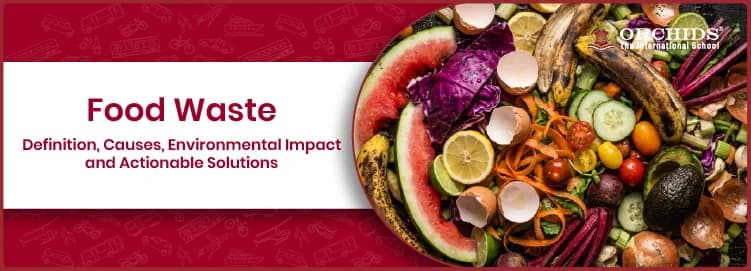
India is one of the largest producers of food. It produces approx 354 million tonnes of food grains and 334 million tonnes of fruits and vegetables annually. Yet, around 78.2 million tonnes of food is wasted only by households. Some of it gets wasted from our plates while some never even reaches our plates. All the food waste results in landfills and contamination of our soil as well as water. This causes a large impact on various ecosystems. Food wastage is not only an environmental concern, it is also a wastage of the resources used in growing and transporting this food. In this article, we will learn some effective ways to reduce food waste and its impact on our life.
Table of Contents
- What is Food Waste
- Causes of Food Waste
- Environmental and Social Impact of Food Waste
- Ways to Reduce Food Waste
- Frequently Asked Questions on Food Waste

What is Food Waste
Food waste refers to the leftover food discarded that gets wasted not only at homes and restaurants but in retail stores. When food is wasted, various resources such as land, water, energy and labour to produce this food is also wasted. The discarded food that decomposes in the landfills releases methane that is a harmful greenhouse gas. Let’s understand in detail about the various impacts and causes of food waste.
Causes of Food Waste
Food waste and loss can occur at different levels of the food supply chain and is driven by various factors including farming inefficiencies, supply chain limitations and consumption habits. The loss of food that happens early in the food supply chain during harvesting, processing and transportation is known as food loss. While food waste occurs at the later stage during consumption like in restaurants, home and hotels.
Household: Densely populated countries like India and China produce the highest amount of household food waste every year.
Food Services: Restaurants, hotels, catering and other food services contribute to around 26% of the total food waste.
Retails: Grocery stores and super markets add to around 13% of the food waste that comes from overstock or bruised fruits and vegetables.
Environmental and Social Impact of Food Waste
Food waste has a huge impact on our environment and economy.
- Resource Depletion: The wastage of resources used in growing wasted food such as water, land and energy causes depletion of our natural resources.
- Climate Change: The food waste decomposes in the landfills and produces large amounts of methane which is a greenhouse gas that creates global warming and climate change.
- Ecological Disruptions: Deforestation done to grow crops on agriculture leads to loss of biodiversity.
- Global Inequality: While around 19% of the global food is wasted during consumption, there are 780 million people who face hunger worldwide. So, to reduce food waste is highly important.
Ways to Reduce Food Waste
There are many reduction efforts that we can make at different levels to avoid food waste such as planning preparation of food, donating, repurposing and composting food waste.
- Meal Planning: Prepare just the right amount of food, freeze food to store it and never overbuy products that can be wasted.
- Donate to Needy: Share surplus food to needy people or donate it to the community fridge.
- Composting: Discard the inevitable scraps into composting rather than the trash.
- Spread Awareness: Educate friends and family about the importance of food preservation and waste reduction methods.
Frequently Asked Questions on Food Waste
1. Why is it important to reduce food waste?
Reducing food waste is crucial for saving our environment and natural resources. It has a huge impact on our economy, environment and social life. Reducing food waste saves money, avoids climate change and saves resources used in food production.
2. Where does food waste happen the most?
A large amount of food wastes at homes. Households generate about 60% of all global food waste.
3. What is the difference between food loss and food waste?
Food loss occurs at the initial stages of the food supply chain including harvesting, processing and transportation. Food waste occurs at the later stage during consumption such as in restaurants, homes and hotels.
Understanding the world starts with the environment around us. To see how Orchids The International School brings EVS to life, reach out to our admissions team.


Admissions Open for 2026-27
What type of concept pages would you prefer?
CBSE Schools In Popular Cities
- CBSE Schools in Bangalore
- CBSE Schools in Mumbai
- CBSE Schools in Pune
- CBSE Schools in Hyderabad
- CBSE Schools in Chennai
- CBSE Schools in Gurgaon
- CBSE Schools in Kolkata
- CBSE Schools in Indore
- CBSE Schools in Sonipat
- CBSE Schools in Delhi
- CBSE Schools in Rohtak
- CBSE Schools in Bhopal
- CBSE Schools in Aurangabad
- CBSE Schools in Jabalpur
- CBSE Schools in Jaipur
- CBSE Schools in Jodhpur
- CBSE Schools in Nagpur
- CBSE Schools in Ahmednagar
- CBSE School In Tumkur











Orchids The International School is one of India's leading chains of CBSE and ICSE schools, with 130+ schools across the country.