

Counting and Understanding Numbers Up to 150 for Class 1
Knowing Numbers up to 150 for Class 1 introduces young learners to the idea that numbers keep growing and that we can read, write, and compare numbers beyond 100. The guide focuses on simple actions like recognising number names and symbols, counting forwards and backwards, grouping tens and ones, and comparing which number is bigger or smaller.
Table of Contents
- Building Numbers Using Blocks up to 99
- Building Numbers Using Blocks up to 150
- Number Names for Class 1
- Comparison of Numbers for Class 1
- Ordering Numbers for Class 1
- Practice Questions for Knowing Numbers up to 150
- Frequently Asked Questions of Knowing Numbers Up to 150 for Class 1

Building Numbers Using Blocks up to 99
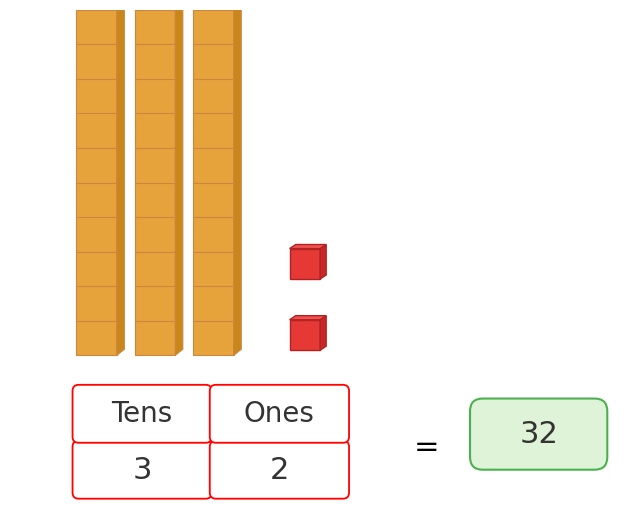
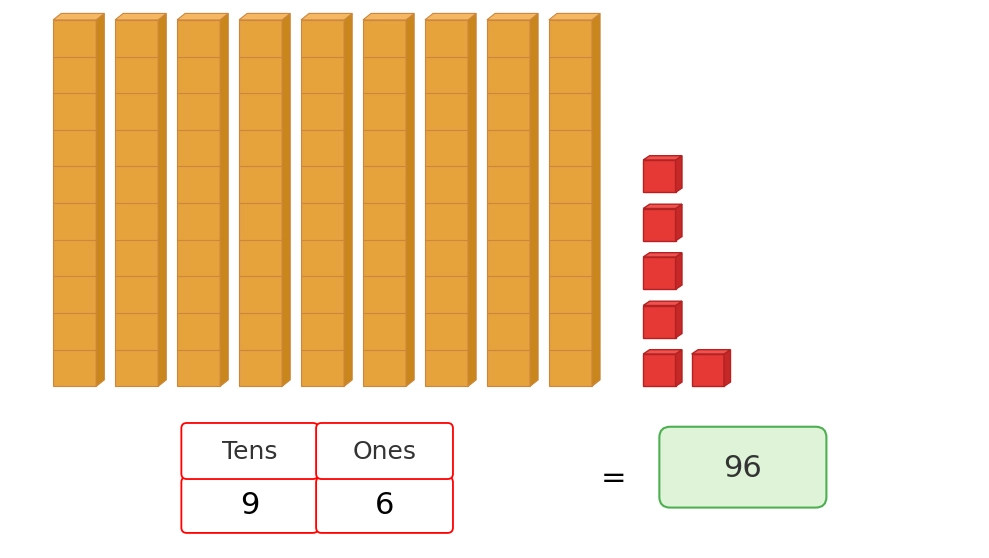
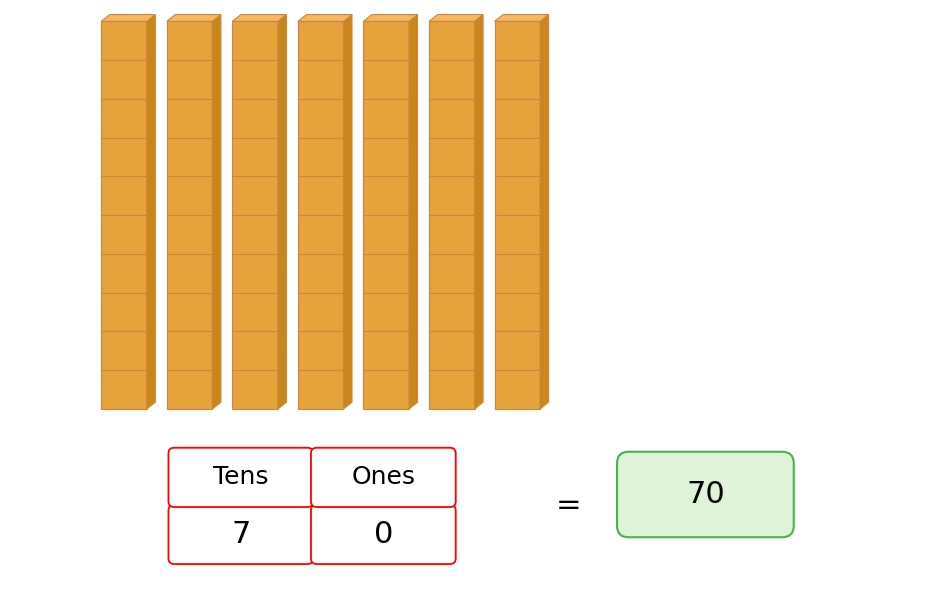
In Class 1, numbers are shown using two kinds of blocks: a long rod stands for a ten, which is made up of 10 small cubes and a small cube stands for one. Counting the rods and cubes tells us the number.
Example 1: 3 tens + 2 ones make the number 32.
Example 2: 9 tens + 6 ones make the number 96.
Example 3: When there are tens but no ones like 7 rods and 0 cubes the number is 70, not just 7. The zero in the ones place matters. It tells us there are no loose cubes at all.
Building Numbers Using Blocks up to 150
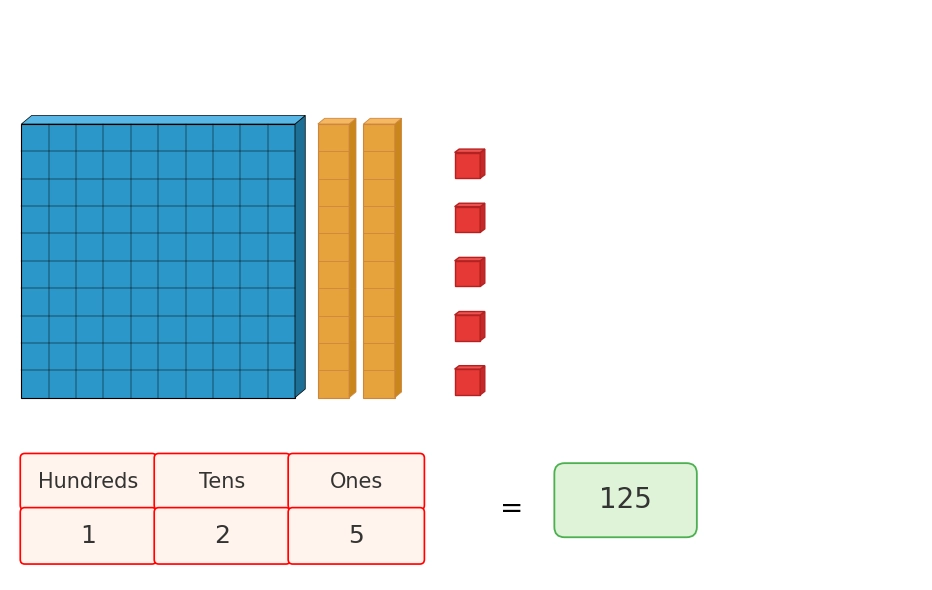
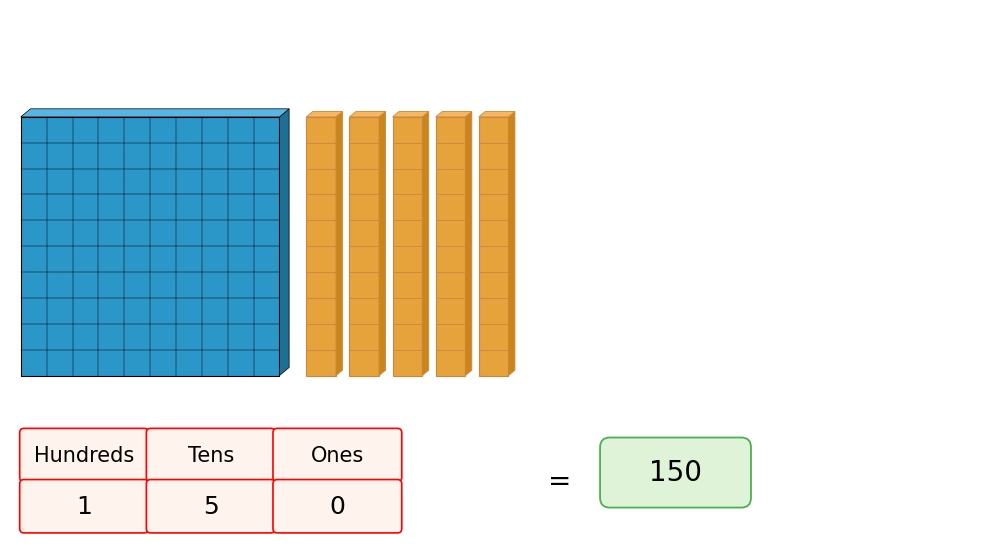
We keep adding ones and once we reach 10 ones, those 10 ones are regrouped into 1 more ten. And once we have 10 tens together, they are regrouped into 1 hundred.
10 ones = 1 ten, and 10 tens = 1 hundred.
A hundred is shown using a flat square block made of 100 small cubes.
Example 1: 1 hundred + 2 tens + 5 ones = 125
Example 2: 1 hundred + 5 tens + 0 ones = 150
150 is made of exactly 1 hundred and 5 tens, with no loose cubes left over. So the ones place gets a 0, giving us 150.
Number Names for Class 1
Stage 1: Numbers 1 to 20 (learnt by name, not by rule)
Children simply learn to recognise them by sight and sound, the same way they learn any new word.
Stage 2: Numbers 21 to 99 (tens name + ones name)
From 21 onwards, there's a reliable pattern: say the tens name first, then the ones name.
A hyphen joins the two parts: thirty-four, seventy-seven, eighty-three.
Stage 3: Numbers 100 to 150 (hundred + tens-ones name)
Past 100, we simply say ‘one hundred’ first and then read whatever is left using the same tens-and-ones rule as before.
Comparison of Numbers for Class 1
Comparing means figuring out which of two numbers is bigger, smaller, or if they are equal, using the signs > (greater than), < (less than) and = (equal to).
The Four Rules of Comparing:
Rule 1: Same number of digits, compare the tens
If both numbers have two digits, look at the tens place first. Whichever has the bigger tens digit is the bigger number.
74 < 86
Since 7 tens is less than 8 tens, 74 < 86.
Rule 2: Different number of digits
A number with more digits is always bigger than a number with fewer digits, no matter what the digits are.
99 < 100
99 is a 2-digit number, 100 is a 3-digit number, so 99 < 100.
Rule 3: Same hundreds digit, compare the tens
If both numbers start with the same hundreds digit, move to the tens place and compare there.
111 < 126
Both start with 1 hundred, but 1 ten is less than 2 tens, so 111 < 126.
Rule 4: Same hundreds and tens, compare the ones
If the hundreds and tens digits are both the same, the number with the bigger ones digit is greater.
119 > 114
Both have 1 hundred and 1 ten, but 9 ones is greater than 4 ones, so 119 > 114.
Ordering Numbers for Class 1
Ordering means arranging a group of numbers from smallest to biggest (ascending order) or biggest to smallest (descending order).
Example 1: Arrange 97, 54, 71 from smallest to biggest
Compare the tens digits: 5, 7, 9. Since 5 < 7 < 9, the order is 54 < 71 < 97.
Example 2: Arrange 137, 131, 132 from biggest to smallest
All three share 1 hundred and 3 tens, so compare the ones digits: 7, 1, 2. That gives 137 > 132 > 131.
Example 3: Arrange 113, 27, 149 from smallest to biggest
27 has only 2 digits while the others have 3, so 27 is automatically the smallest. Between 113 and 149, compare the tens digit: 1 < 4. Final order: 27 < 113 < 149.
Practice Questions for Knowing Numbers Upto 150
1. Write the number for 1 hundred, 4 tens and 3 ones.
2. Write the number name for 148.
3. Compare using <, > or =: 150 ___ 15
4. Compare using <, > or =: 113 ___ 131
5. Arrange 42, 108, 99 from the smallest to the biggest.
6. Write in hundreds, tens and ones: 137
7. What number comes right before 110 and right after 110?
Frequently Asked Questions of Knowing Numbers Up to 150 for Class 1
1. What comes after 99 when counting?
After 99, we get 100. This happens because 9 tens and 9 ones make 99, and one more one makes 10 ones. Those 10 ones regroup into 1 more ten, giving 10 tens in total, which regroup into 1 hundred. So the number after 99 is 100.
2. How do you write the number name for 127?
127 has 1 hundred, 2 tens and 7 ones. Its number name is one hundred twenty-seven.
3. Why does 100 have a zero in the tens and ones place?
Since there are no tens, we write 0 in the tens place, and since there are no ones, we write 0 in the ones place, giving us 1-0-0.
4. How do you compare a 2-digit number and a 3-digit number, like 99 and 100?
When two numbers have a different number of digits, the number with more digits is always the greater one. 100 has 3 digits while 99 has only 2 digits, so 99 is less than 100.
5. What is the easiest way to compare two 3-digit numbers up to 150?
First compare the hundreds digit. If it's the same, compare the tens digit. If that's also the same, compare the ones digit; whichever number has the bigger digit at the first place where they differ is greater.
Numbers make sense when they're taught right. To see how Orchids The International School turns Maths from intimidating to intuitive, reach out to our admissions team.


Admissions Open for 2026-27
What type of concept pages would you prefer?
CBSE Schools In Popular Cities
- CBSE Schools in Bangalore
- CBSE Schools in Mumbai
- CBSE Schools in Pune
- CBSE Schools in Hyderabad
- CBSE Schools in Chennai
- CBSE Schools in Gurgaon
- CBSE Schools in Kolkata
- CBSE Schools in Indore
- CBSE Schools in Sonipat
- CBSE Schools in Delhi
- CBSE Schools in Rohtak
- CBSE Schools in Bhopal
- CBSE Schools in Aurangabad
- CBSE Schools in Jabalpur
- CBSE Schools in Jaipur
- CBSE Schools in Jodhpur
- CBSE Schools in Nagpur
- CBSE Schools in Ahmednagar
- CBSE School In Tumkur











Orchids The International School is one of India's leading chains of CBSE and ICSE schools, with 130+ schools across the country.