

Understanding the Author’s Purpose: Persuade, Inform, Teach, and Entertain
Have you ever wondered why an author writes a story, an article, or even an advertisement? Is it to make you laugh, teach you something new, or convince you to think in a certain way? Every piece of writing has a purpose, and discovering it can make reading much more interesting and meaningful. When you understand the author’s purpose, you don’t just read the words; you understand the message behind them. In this guide, you will learn what an author’s purpose is, the different types, and how to identify them easily with simple clues and examples.
Table of Contents
- What is the Author
- Main Types of an Author
- Clues to Identify the Author
- Practice Exercises on Author
- Frequently Asked Questions about Author’s Purpose

What is the Author’s Purpose
Have you ever read a story and laughed out loud, or learned something new from a book? That happens because every author writes with a purpose. Every author writes with a purpose in mind. The author's purpose helps us understand the reason why he/she wrote the story.
For example, an author may want to tell you interesting facts, make you enjoy a fun story, teach you a lesson, or even convince you to agree with them. When you understand the author’s purpose, reading becomes more fun and meaningful!
Main Types of an Author’s Purpose
Authors write for different reasons, and most texts fall into one of these main types:
-
Persuade: The author wants to convince readers of a particular piece of information. For example, a book about animals or a science article.
-
Inform: The author helps readers learn something new. For example, an advertisement asking you to buy a toy.
-
Teach a lesson: The author teaches the readers moral values, such as fables like “The Tortoise and the Hare.”
-
Entertain: The author wants the readers to enjoy themselves and have fun. For example, Stories, comics, or adventure books.
Clues to Identify the Author’s Purpose
-
Persuade: Tries to change the reader’s viewpoint by sharing some new facts. For example, the author is trying to persuade the child to buy the puzzle game. This will help the child think logically and analytically.
-
Inform: Educate the reader about some new or special information and guide them to think differently. For example, Pandit Jawaharlal Nehru wrote a series of letters from prison to his 10-year-old daughter, Indira. The book is a collection of those letters. It is about the history of our Earth and mankind.
-
Teach a lesson: Teach a moral value and identify good and evil, and act accordingly. For example, Aesop's Fables teaches good moral values like kindness, truthfulness, honour, and respect.
-
Entertain: Makes you happy, sad, laugh, or scared and keeps the reader engrossed or relaxes the readers. For example, the book features a superhero who fights evil to save the world. The story has many action sequences that seize the reader’s attention.
Practice Exercises on Author’s Purpose
Exercises 1: 1. Read the given titles of the books. Decide the purpose of the author.
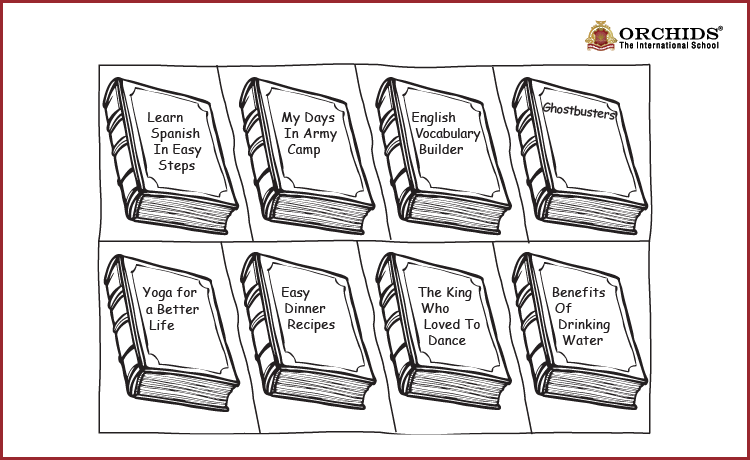
Answer: Learn Spanish In Easy Steps - Inform
My Days In Army Camp - Entertain
English Vocabulary Builder - Inform
Ghostbusters - Entertain
Yoga for a Better Life - Persuade
Easy Dinner Recipes - Inform
The King Who Loved To Dance - Entertain
Benefits of Drinking Water - Persuade
Exercise 2: Read the following statements and identify the author’s purpose
-
What is the purpose of writing letters?
-
What is the purpose of writing letters?
-
What is the author’s purpose for making a jigsaw puzzle?
-
What is the author’s purpose for drawing a poster to prevent the wastage of fuel?
-
What is the author’s purpose in writing a news report about an accident?
-
What is the author’s purpose for writing a poem?
Answers:
-
Inform
-
Inform
-
Entertain
-
Persuade
-
Inform
-
Entertain
Frequently Asked Questions about Author’s Purpose
1. What are the 4 author’s purpose of writing?
Answer: The 4 purposes are: Persuade, Inform, Teach a Lesson, and Entertain.
2. What is the author’s purpose for writing?
Answer: The author’s purpose is the reason why they wrote the story, book, article, or poem.
3. How can I tell if a text is meant to inform?
Answer: If the text gives facts, instructions, or teaches you something new, it is meant to inform.
4. Can a text have more than one purpose?
Answer: Yes, a text can have more than one purpose, like informing and entertaining at the same time.
Strong language skills open doors well beyond the classroom, shaping how confidently a child reads, writes and expresses ideas. If you want to know more about how Orchids The International School builds these skills through its English curriculum, get in touch with our admissions team.


Admissions Open for 2026-27
What type of concept pages would you prefer?
CBSE Schools In Popular Cities
- CBSE Schools in Bangalore
- CBSE Schools in Mumbai
- CBSE Schools in Pune
- CBSE Schools in Hyderabad
- CBSE Schools in Chennai
- CBSE Schools in Gurgaon
- CBSE Schools in Kolkata
- CBSE Schools in Indore
- CBSE Schools in Sonipat
- CBSE Schools in Delhi
- CBSE Schools in Rohtak
- CBSE Schools in Bhopal
- CBSE Schools in Aurangabad
- CBSE Schools in Jabalpur
- CBSE Schools in Jaipur
- CBSE Schools in Jodhpur
- CBSE Schools in Nagpur
- CBSE Schools in Ahmednagar
- CBSE School In Tumkur











Orchids The International School is one of India's leading chains of CBSE and ICSE schools, with 110+ schools across the country.