

Supporting Details: Learn How to Identify and Use Them
Have you ever heard a story and wanted to know more about it? Imagine your friend says, “I had an amazing birthday!” You might ask, What made it amazing? Who came? What did you do? These extra bits of information make the story clearer and more interesting. They are called supporting details. Supporting details help explain the main idea by giving more information, examples, or descriptions.
Table of Contents
- What are Supporting Details
- How to Identify Supporting Details
- Exercises on Supporting Details
- Frequently Asked Questions on Supporting Details

What are Supporting Details
Supporting details give more information about the main idea. Think of the main idea as the trunk of a tree, and the supporting details as branches that grow from it. Without branches, a tree looks bare. Similarly, without supporting details, a story feels incomplete.
For example, here is an image of Gaurav celebrating his birthday with his friends and family.
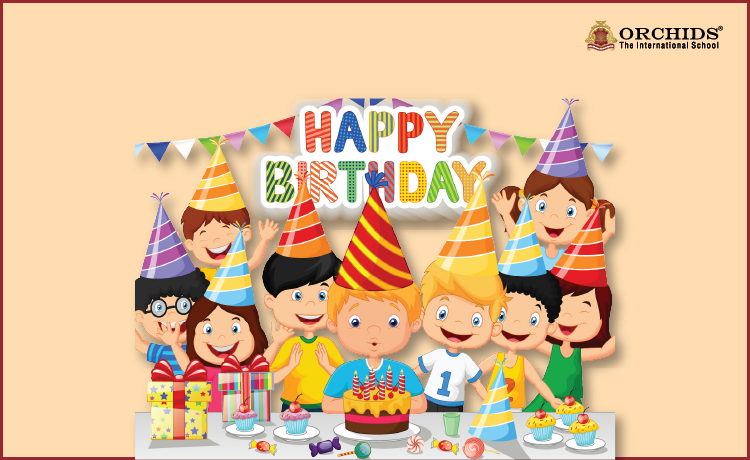
Here, the main idea is that Gaurav is celebrating his birthday with his friends and family. The supporting details include:
-
Children are wearing birthday caps.
-
Presents are kept on the table.
-
Streamers hang on the wall.
-
Children are blowing out candles.
How to Identify Supporting Details
To identify supporting details, ask questions such as where, how, why, when, and what. Look for sentences that explain or describe the main idea, notice people, things, or actions, and check if they provide extra information about the story.
-
Look for sentences that tell more about the main idea
-
Find details about what is happening
-
Notice people, things, or actions in the scene
-
Check if the detail explains or describes the main idea
Exercises on Supporting Details
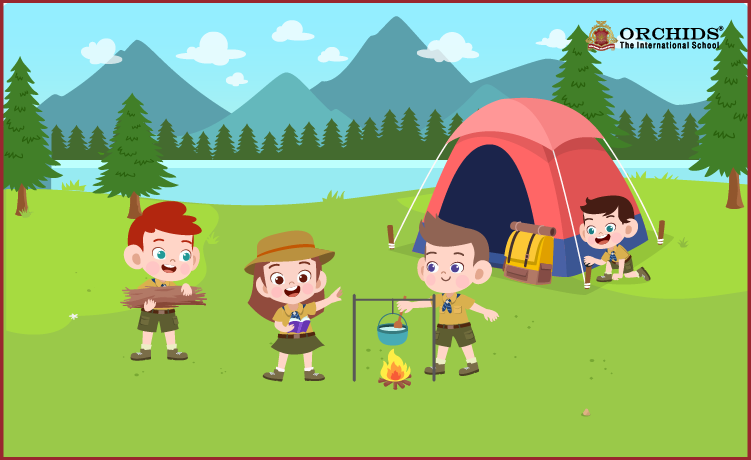
Exercise 1: Look at the picture given and answer the following questions. Here, the main idea is “A few children are on a camping trip”.
-
Find the supporting details?
-
Where is the story taking place? What clues in the picture help you identify the setting?
Answers:
-
The supporting details are:
-
Children are sitting around a campfire
-
A tent is set up nearby
-
One child is cooking or roasting food
-
Children are carrying bags for camping
-
Trees and mountains are around them
-
The story takes place in a forest or an outdoor natural area. This is shown by trees and mountains, open grassy space, and camping items like a tent and campfire.
Exercise 2: Read the story and answer the questions.
There lived a young colt named Blackie, on a faraway farm in Germany. Blackie was fascinated by saddles. He admired any horse wearing a saddle. In his dreams, Blackie imagined himself wearing a red leather glossy saddle and running around the countryside. Blackie eagerly waited for the day when he would wear one. The day arrived when Blackie was finally saddled. He was excited and galloped all around. The very next day, he was sad. Blackie understood that a saddle is not an ornament for a horse but was for the benefit of the rider.
-
What does the story tell you about the colt?
-
He loved to dream.
-
He was always sad.
-
He wanted a saddle.
-
He galloped all day.
-
Write two details that tell you about the location of the story.
-
Write two supporting details that explain why Blackie wanted a saddle.
Answers:
-
a. He loved to dream.
b. He wanted a saddle. -
The details that tell you about the location of the story are:
-
The story takes place on a farm.
-
The farm is in Germany.
-
Blackie wanted a saddle because:
-
He admired horses wearing saddles.
-
He dreamed of wearing a red, glossy, leather saddle and running around.
Frequently Asked Questions on Supporting Details
1. What are supporting details?
Answer: Supporting details are sentences or clues that give more information about the main idea.
2. Why are supporting details important?
Answer: Supporting details make the story clearer, more interesting, and easier to understand.
3. What are the clues to identify the supporting details?
Answer: To identify supporting details, ask questions like where, how, why, when, and what.
Strong language skills open doors well beyond the classroom, shaping how confidently a child reads, writes and expresses ideas. If you want to know more about how Orchids The International School builds these skills through its English curriculum, get in touch with our admissions team.


Admissions Open for 2026-27
What type of concept pages would you prefer?
CBSE Schools In Popular Cities
- CBSE Schools in Bangalore
- CBSE Schools in Mumbai
- CBSE Schools in Pune
- CBSE Schools in Hyderabad
- CBSE Schools in Chennai
- CBSE Schools in Gurgaon
- CBSE Schools in Kolkata
- CBSE Schools in Indore
- CBSE Schools in Sonipat
- CBSE Schools in Delhi
- CBSE Schools in Rohtak
- CBSE Schools in Bhopal
- CBSE Schools in Aurangabad
- CBSE Schools in Jabalpur
- CBSE Schools in Jaipur
- CBSE Schools in Jodhpur
- CBSE Schools in Nagpur
- CBSE Schools in Ahmednagar
- CBSE School In Tumkur











Orchids The International School is one of India's leading chains of CBSE and ICSE schools, with 110+ schools across the country.