

Face Parts Names: List, Pictures, Functions and Teaching Methods
Every day, we use different parts of our face without even thinking about them. Our face helps us see, hear, smell, taste, speak, smile, and show emotions. Learning face part names in English is one of the first and most important steps in vocabulary building for kids. It helps them improve their speaking skills, communication, pronunciation, and body-part identification in a fun and easy way. In this article, you will learn the list of face parts name, face parts name with pictures, their functions, and simple examples.
Table of Contents
- What Are Face Parts?
- Complete List of Face Parts Name in English
- Face Parts Name with Pictures
- Face Part Names Used in Sentences
- Teaching Methods to Teach Face Parts Name
- Importance of Learning Face Parts Name
- Frequently Asked Questions on Face Part Names

What Are Face Parts?
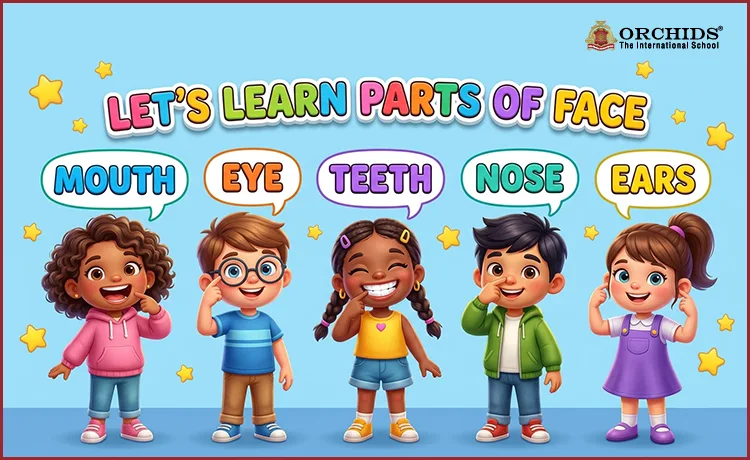
The human face is the frontal part of the head that contains our primary sense organs. It includes several different organs, each with a specific name and a specific role in our daily life. These organs help us see, hear, smell, taste, speak, and express our emotions. Learning human face parts name is important for vocabulary development, communication, body awareness, and basic science learning.
Complete List of Face Parts Name in English
Face Parts Name with Pictures
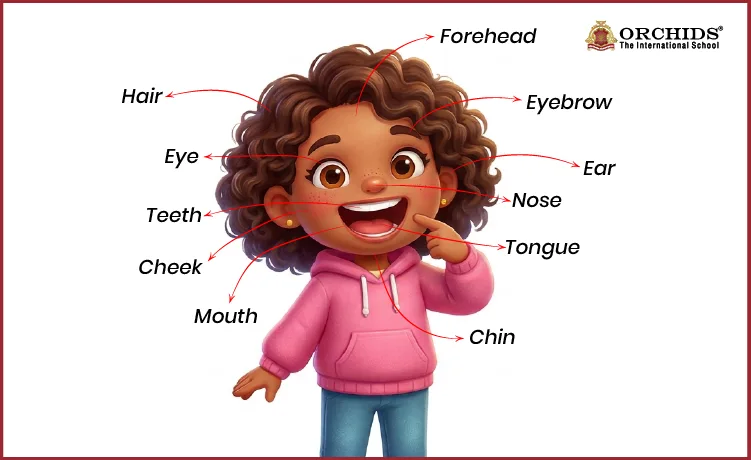
Here is a detailed description of each face part with their functions and images:
Forehead
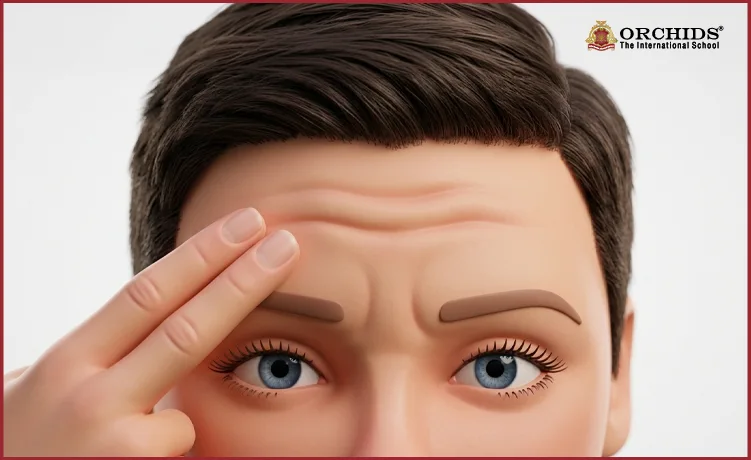
The forehead is the flat area of the face above the eyebrows and below the hairline. It is covered by skin. The forehead plays a key role in facial expressions. We raise it when surprised and wrinkle it when we frown or concentrate.
Eyebrows
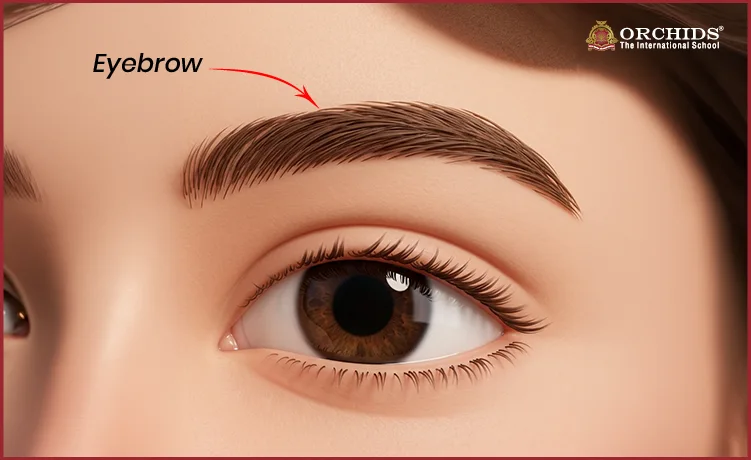
Eyebrows are the two arched lines of short hair located directly above each eye. Their primary function is protective; they prevent sweat, dust, and rain from falling directly into the eyes. However, they are equally important for non-verbal communication. When we raise our eyebrows, we signal surprise; when we furrow them together, we express anger or confusion.
Eyes
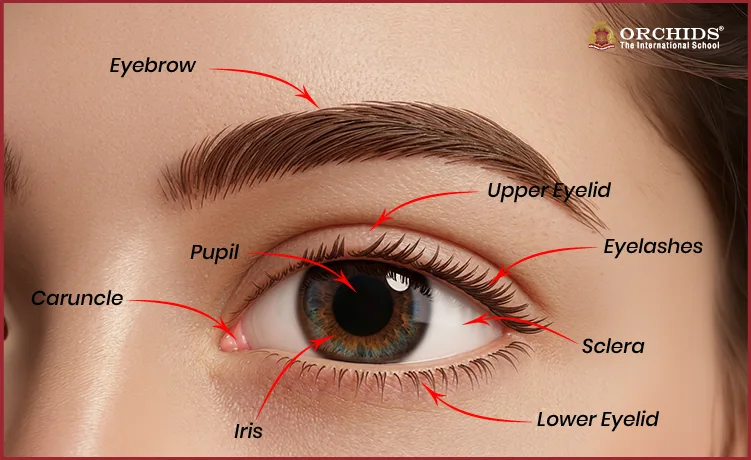
The eyes are the organs of sight. They detect light and send visual signals to the brain through the optic nerve, allowing us to see shapes, colours, and movement. The area around the eyes includes the eye socket, eyelids, eyelashes, tear ducts, and eyebrows all working together for protection and function.
Ears
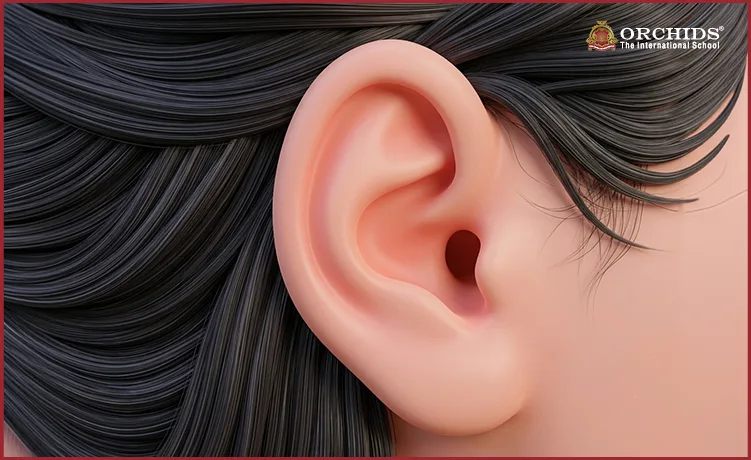
The ears serve two vital functions: hearing and balance. Sound waves enter the outer ear, travel to the middle ear and then the inner ear, where they are converted into nerve signals sent to the brain. The inner ear also contains the vestibular system, which controls our sense of balance. We have one ear on each side of the head
Nose
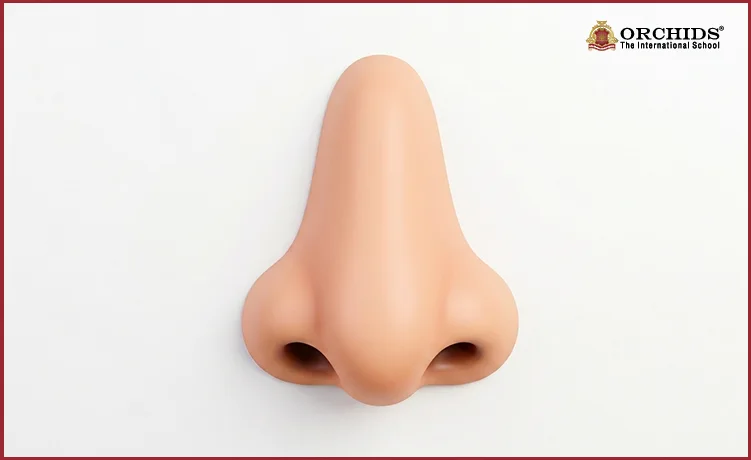
The nose is the primary organ of smell and plays an important role in breathing. Air enters through the nostrils (the two openings at the base of the nose), gets filtered and warmed before reaching the lungs. The nose also enhances our sense of taste.
Mouth, Lips and Teeth
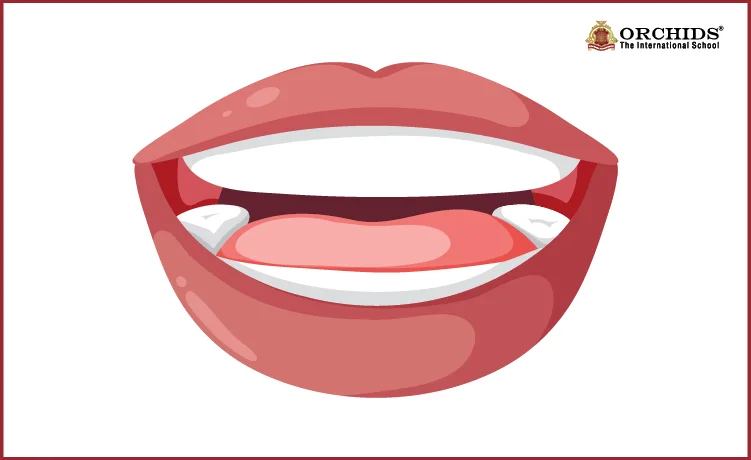
The mouth is the entry point to the digestive system and also helps us communicate. It is used for eating, speaking, and breathing. Lips are the soft, fleshy borders of the mouth opening. They help shape sounds when speaking, hold food inside the mouth, and are important in expressing emotions like smiling and frowning. Teeth are the hard, white structures inside the mouth that chew and break down food.
Tongue
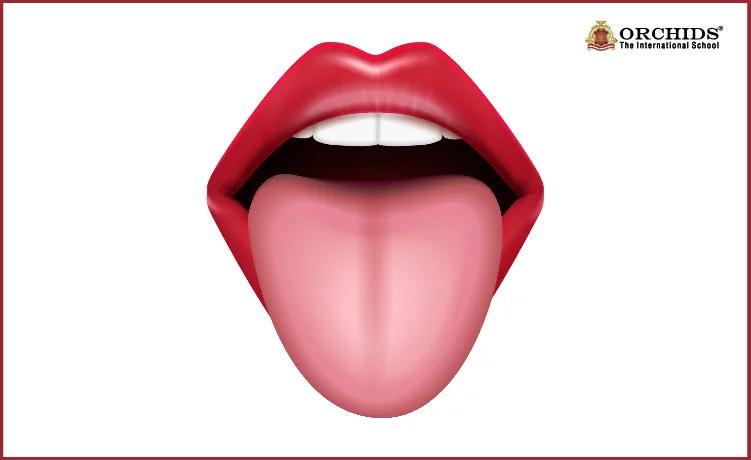
The tongue is a muscular organ inside the mouth covered with taste buds. It detects flavours like sweet, sour, salty, bitter, and umami. It also helps mix food with saliva during chewing and plays a crucial role in swallowing and in articulating speech. Without the tongue, producing many consonant sounds would be impossible.
Chin
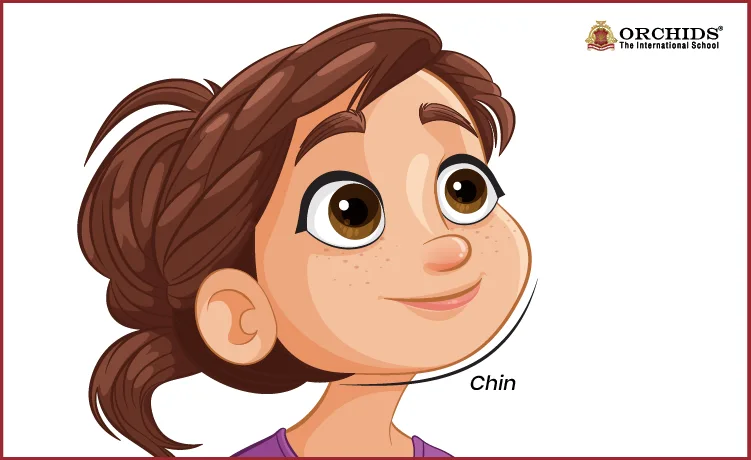
The chin is the lowermost part of the face, below the mouth. It is the external surface of the lower jaw (mandible). The chin provides support to the lower face structure and gives the face its distinct profile.
Face Part Names Used in Sentences
Here are some simple examples using face parts name:
-
My eyes are brown.
-
She has long eyelashes.
-
We use our nose to smell flowers.
-
The baby smiled with his tiny teeth.
-
His cheeks turned red.
-
I brush my teeth twice a day.
-
The teacher pointed to her forehead.
Teaching Methods to Teach Face Parts Name
Teaching face parts names is an engaging activity when the right methods are used. Below are some of the most effective and fun teaching strategies:
-
Self-Portrait Activity: Seat the child in front of a mirror and give them paper and colours. Ask them to draw their own face. Once done, they should label or point to the different face parts. This engages creativity and vocabulary recall simultaneously.
-
Singing Songs About Body Parts: Songs like Head, Shoulders, Knees and Toes are classic examples of using music to teach body and face parts. As the song plays, children point to the corresponding part of their body. You can adapt this to focus specifically on face parts by creating a simple song that names each feature.
-
The Quiz Method: Children enjoy being quizzed. Point to a face part on yourself or on a flashcard and ask, ‘What is this called?’ Or ask the child to point: ‘Where are your eyebrows?’
-
The Instruction Game: Give simple instructions that require the child to interact with their face: ‘Show me your teeth.’ ‘Close your eyelids.’ ‘Touch your chin.’ This method is especially effective for toddlers, who respond enthusiastically to physical instructions.
-
Flashcard Activities: Create or print flashcards with a picture of each face part on one side and its name on the other. Use them for matching games, memory games, or simple show-and-name activities. Flashcards with face parts name with picture are widely available and very effective for visual learners.
Importance of Learning Face Parts Name
Learning the names of all face parts is important for a wide range of reasons:
-
Language Development: Knowing the correct vocabulary for face and body parts builds general English language proficiency. It expands word power and helps students describe themselves and others with confidence.
-
Body Awareness: Understanding the names of face parts gives children a sense of body awareness, which is an important part of early childhood development. Children who know their body parts can communicate their needs, for example, saying ‘my tooth hurts’ rather than pointing vaguely at their mouth.
-
Academic Foundation: In science and biology lessons, students revisit face and body parts in greater depth. A strong early vocabulary foundation makes these lessons much easier to understand.
-
Communication and Expression: Knowing face part names helps students describe emotions, give directions, follow health instructions, and even understand literature and poetry that uses facial metaphors.
Frequently Asked Questions on Face Part Names
1. What are the names of face parts of humans?
Answers: Some common human face parts names are eyes, ears, nose, mouth, lips, teeth, tongue, cheeks, forehead, eyebrows, eyelashes, and chin.
2. Why is learning face parts name important?
Answers: Learning face parts name improves vocabulary, communication skills, and body awareness in children.
3. What are the main parts of the human face?
Answers: The main parts of the human face are eyes, nose, mouth, ears, cheeks, forehead, chin, and lips.
Strong language skills open doors well beyond the classroom, shaping how confidently a child reads, writes and expresses ideas. If you want to know more about how Orchids The International School builds these skills through its English curriculum, get in touch with our admissions team.


Admissions Open for 2026-27
What type of concept pages would you prefer?
CBSE Schools In Popular Cities
- CBSE Schools in Bangalore
- CBSE Schools in Mumbai
- CBSE Schools in Pune
- CBSE Schools in Hyderabad
- CBSE Schools in Chennai
- CBSE Schools in Gurgaon
- CBSE Schools in Kolkata
- CBSE Schools in Indore
- CBSE Schools in Sonipat
- CBSE Schools in Delhi
- CBSE Schools in Rohtak
- CBSE Schools in Bhopal
- CBSE Schools in Aurangabad
- CBSE Schools in Jabalpur
- CBSE Schools in Jaipur
- CBSE Schools in Jodhpur
- CBSE Schools in Nagpur
- CBSE Schools in Ahmednagar
- CBSE School In Tumkur











Orchids The International School is one of India's leading chains of CBSE and ICSE schools, with 130+ schools across the country.