

What is a Pond: Definition, Formation, Ecological Zones and Aquatic Species
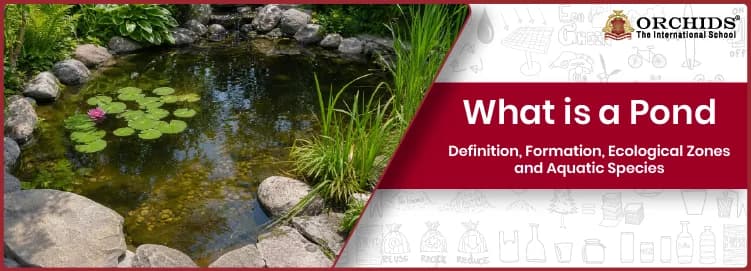
A pond is among the most life-giving and unique ecosystems on our planet. Although they are not as fascinating as rivers or as massive as oceans, they are home to thousands of plants and animal species that play a crucial role in our environment. Let’s discover what a pond is, its formation and unique species in different ecological zones.
Table of Contents
- What is a Pond
- How is a Pond Formed
- Ecological Zones of a Pond
- Importance of Ponds
- Frequently Asked Questions about Ponds

What is a Pond
A pond is a small, shallow water body that is home to a variety of aquatic plants and animals. The word pond is derived from an old English word pund, which means enclosure. Unlike rivers, water in a pond is closed, stationary and not so deep. This allows the sunlight to penetrate through its floor. There are various plant species that grow across the entire pond floor and contribute greatly to the uniqueness of this freshwater ecosystem.
How is a Pond Formed
A pond can form as a result of many natural processes such as rainfall or surface runoff. Here are some of the ways in which a pond is formed:
- The large glaciers create holes on land as they move across the earth’s surface. Once the ice of the glaciers melts, the water gets pooled in these holes, creating ponds. Such ponds are known as kettle ponds.
- There are some natural dips in the earth surface in which rainfall gets collected over time and creates a natural pond.
- A river curves naturally while flowing. During floods when the river changes its usual path and the curve gets isolated from the main river and becomes an oxbow pond.
- In some low-lying areas water from underground springs gets accumulated resulting in the formation of a spring-fed pond.
- There are many man-made ponds that store water for irrigation and livestock. These ponds are filled with rainfall or underground water.
Ecological Zones of a Pond
A pond is not just a small water body, it is a freshwater ecosystem that consists of various aquatic plants and animals that interact with each other. In the next section we will learn more about the distinct ecological zones, its conditions and forms of life living in it.
Littoral Zone: It is the shallow area near the sides of the pond in which sunlight can fully travel to the core. This is the most biologically diverse zone that provides food and shelter to species of birds, amphibians and insects. This layer has lots of rooted plants, insects, frogs and small fish. Some of the main plants growing in this zone include cattails, lotus, water hyacinth, reeds and water lilies.
Limnetic Zone: This open, sunlit water area extends from the shore to the middle of the pond. It is a little bit far from the shore but not very deep. This is the primary oxygen producing zone in the pond with small floating Phytoplankton, that are at the base of the pond food chain. Various organisms such as phytoplankton, zooplankton and small fish are found here.
Profundal Zone: This zone of pond has very little or no sunlight. There are deep rooted plants and algae along with a few organisms like bacteria, leeches and worms that can adapt and survive in this layer. Majorly decomposers and bottom-dwelling invertebrates are found in this zone of a pond.
Benthic Zone: This is the bottom layer of the pond containing organic sediments and soil. In this zone only bacteria, fungi, worms and bottom-feeding fish can survive.
Importance of Ponds
- Freshwater Supply: There are many villages and rural areas in our country that rely on pond water for their daily needs.
- Farming and Irrigation: Many farmers are dependent on pond water for irrigating their crops majorly during the dry seasons and hot weather.
- Replenishes Groundwater: Ponds restore the underground as the water in the pond gets absorbed deep into the ground and gets stored as groundwater.
- Hubs of Biodiversity: Ponds are homes for a variety of birds, insects and animal species.
- Carbon Sink: The aquatic plants, algae and phytoplankton absorb the carbon present in the atmosphere and sediments are efficient in absorbing carbon released by decomposed bacterias.
- Cultural Importance: Ponds are culturally very important and are part of many rituals, festivals and community life across India.
Frequently Asked Questions about Ponds
1. Why does pond water sometimes turn green?
The water in the pond turns green due to the growth of the microscopic algae known as phytoplankton.
2. What is the difference between a pond and a lake?
A pond is a small, enclosed and shallow water body that is smaller than a lake. The lakes are deep water bodies with sunlight only penetrating to its upper layer. In a pond the sunlight can penetrate to the bottom.
3. What are the four zones of a pond?
There are various ecological zones in a pond that support diverse aquatic species:
Littoral Zone
Limnetic Zone
Profundal Zone
Benthic Zone
4. How are ponds important for birds?
Ponds offer birds with food such as fish, frogs and insects. Migratory birds often use ponds as stopover points during long journeys.
Understanding the world starts with the environment around us. To see how Orchids The International School brings EVS to life, reach out to our admissions team.


Admissions Open for 2026-27
What type of concept pages would you prefer?
CBSE Schools In Popular Cities
- CBSE Schools in Bangalore
- CBSE Schools in Mumbai
- CBSE Schools in Pune
- CBSE Schools in Hyderabad
- CBSE Schools in Chennai
- CBSE Schools in Gurgaon
- CBSE Schools in Kolkata
- CBSE Schools in Indore
- CBSE Schools in Sonipat
- CBSE Schools in Delhi
- CBSE Schools in Rohtak
- CBSE Schools in Bhopal
- CBSE Schools in Aurangabad
- CBSE Schools in Jabalpur
- CBSE Schools in Jaipur
- CBSE Schools in Jodhpur
- CBSE Schools in Nagpur
- CBSE Schools in Ahmednagar
- CBSE School In Tumkur











Orchids The International School is one of India's leading chains of CBSE and ICSE schools, with 130+ schools across the country.