

No more sugar rush: How to help your child kick the sweet tooth habit in 21 days
By Priyadarshini Bhattacharjee |
Date 27-07-2026

Research indicates that kids have a significantly lower threshold for sweetness than adults.
Admissions Open for 2026-27
It was 9:47 PM when Meera finally understood the problem. Arjun, seven years old, was supposed to be asleep. Instead, he was wide awake, explaining something at length and with great enthusiasm, powered entirely by the three chocolate biscuits and a juice box he had eaten four hours earlier. Meera had tried everything. He was not going to sleep. His brain, it turned out, had other plans.
If you have lived a version of this evening, you already know what she realised that night: this was not a bedtime problem. It was a sugar problem. And it had been hiding in plain sight.
Why children and sugar are a particularly complicated combination
Children are not simply undisciplined when it comes to sweet things. Their relationship with sugar is physiologically different from an adult’s, and understanding that difference is the first step to changing it.
Children have a significantly lower threshold for sweetness than adults. Their taste receptors are more sensitive to sweet flavours and less sensitive to bitterness, which is one reason a food that tastes pleasantly sweet to a parent tastes mild to a child and why vegetables remain a harder sell at every age. Children are biologically orientated toward sweetness in a way that made sense when ‘sweet’ meant fruit and naturally occurring sugars, but makes considerably less sense when it means processed food engineered to hit that preference as powerfully as possible.
When sugar enters the bloodstream, it triggers a release of dopamine, the brain’s reward chemical. This is the sugar rush: a real, measurable neurological event that produces a burst of energy, elevated mood and heightened alertness. The body remembers that feeling and begins to anticipate it, which is why cravings intensify over time rather than diminishing with repeated exposure.
The crash that follows, when blood sugar drops rapidly after a spike, leaves a child tired, irritable and craving more sugar to restore the energy. This cycle, spike, crash, crave, can repeat several times across a day in a child who regularly eats high-sugar foods.
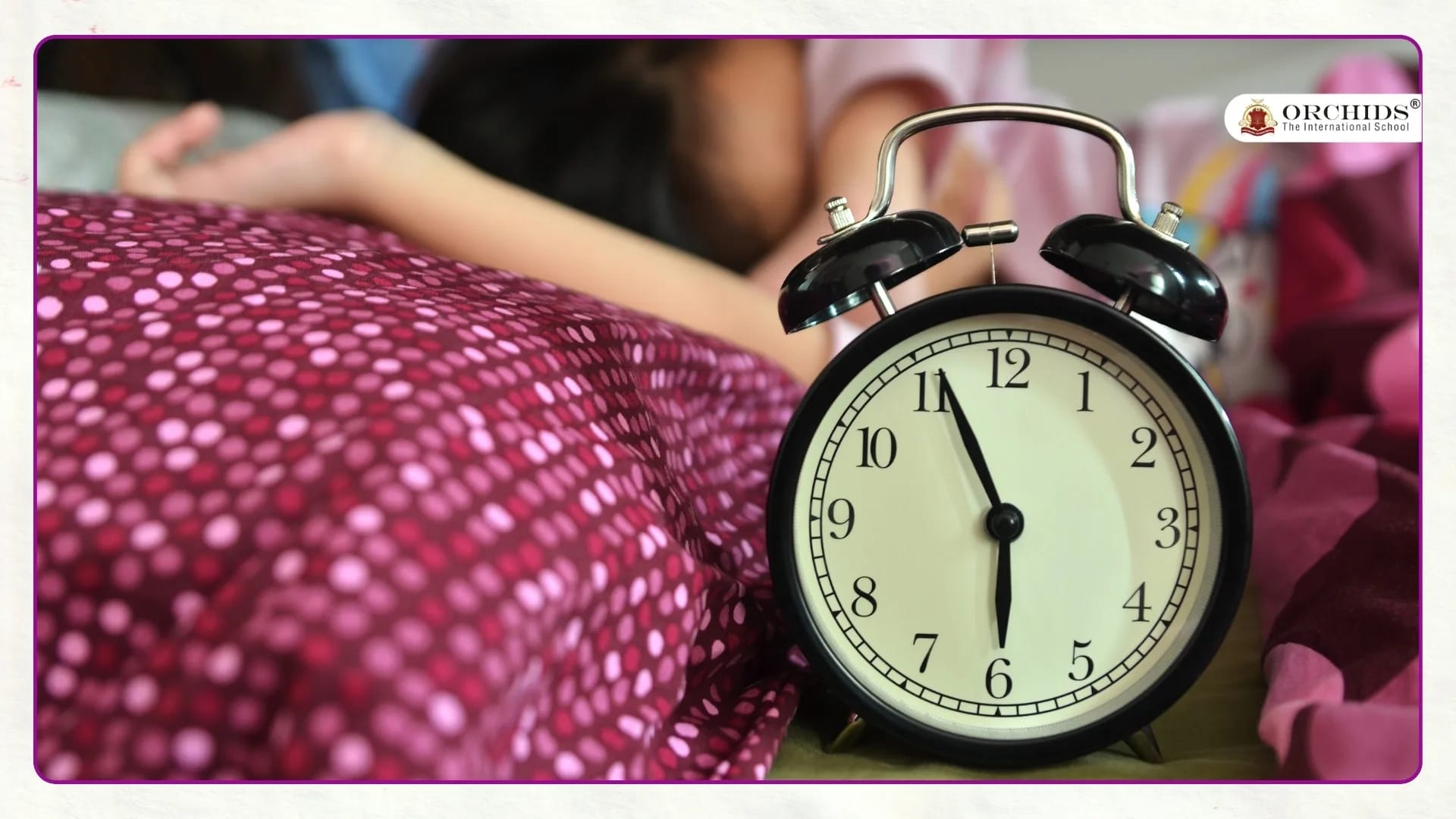
The sleep connection is particularly important and frequently overlooked. Sugar interferes with melatonin production, the hormone that signals to the body that it is time to sleep. A child who has had significant sugar in the hours before bed is not being stubborn about sleeping. Their brain has received a chemical signal to stay alert. This was Arjun’s 9:47 PM, explained entirely by biology.
Also read: Biology made easy for kids: Simple experiments using kitchen ingredients

The science behind 21 days
The 21-day habit framework comes from research on how long it takes for new neural pathways to begin establishing themselves with consistent repetition. Three weeks of consistent behaviour does not create a permanent habit, but it does create the neurological foundation on which a lasting habit can be built.
For sugar specifically, 21 days of reduced intake does several things simultaneously.
-
Dopamine receptors that have adapted to high sugar inputs begin to recalibrate, reducing the intensity of cravings.
-
Taste perception shifts: foods that previously tasted pleasantly sweet begin to taste overwhelmingly so, and naturally sweet foods like fruit become genuinely satisfying rather than a pale substitute.
-
Sleep quality typically improves, often noticeably, within the first ten days, as melatonin production normalises.
-
And blood sugar volatility smooths out, which means more stable energy and mood across the day.
None of this happens dramatically or all at once. But it does happen, consistently, in children whose sugar intake is meaningfully reduced for three weeks. The body, given the opportunity, recalibrates.
Week 1: The hardest 7 days
The first week is where most parents give up, and it is worth being honest about why.
Cravings peak in the first few days as the body continues to expect the sugar hits it has adapted to receiving. Children will ask, negotiate, go limp on kitchen floors and deploy the full range of tactics available to a small person who is accustomed to getting what they want. The guilt that arrives alongside this is real and convincing.
The most effective strategy in Week 1 is replacement, not just removal. Taking sugar away without offering alternatives creates a vacuum that children fill with misery. The goal is to reduce the sugar spike, not to eliminate sweetness entirely. Cut fruit left at eye level in the fridge, smoothies made with whole fruit rather than juice, water with a slice of lime or cucumber: these give the sweet craving somewhere to land while overall sugar intake drops.
Removing high-sugar foods from the home environment matters more than most parents initially want to admit. If the biscuits are in the cupboard, they will be eaten by children and by the adults who were supposed to be managing the plan. Reducing availability is not about willpower. It is about design.
By Day 7, most children’s requests for sugar begin to shift from urgent to simply habitual. The intensity drops. This is the first signal that the recalibration is underway.
Week 2: When things start to change
Something tends to happen around Days 8 to 10 that parents consistently report as surprising: the child sleeps better. Not dramatically, not perfectly, but measurably. Children who have been falling asleep late and waking in the night begin to settle earlier and sleep more solidly. This is melatonin doing what it is supposed to do when it is no longer being suppressed by an evening sugar load. Morning moods shift with it. The crackling irritability of a child who woke up underrested and blood-sugar-volatile begins to smooth out.
This is also the week when taste perception starts to shift. A child who has not had high quantities of sugar for ten days will often find that previously favourite sweet foods now taste stronger than they remember. This is not a problem. It is a sign that the palate is resetting.
The most effective addition in Week 2 is giving the child agency within the new structure. One agreed sweet thing per day, chosen by the child, at a time they both decide on, transforms the dynamic. The child is no longer being deprived. They are managing their choices within a framework. That distinction matters enormously to children, and it makes the remaining days of the plan significantly less combative.
Reading ingredient labels together is a useful project for this week. Sugar appears in foods that feel like a personal betrayal: bread, pasta sauce, breakfast cereal, flavoured yoghurt. Involving children in discovering this, rather than simply removing products without explanation, builds the kind of awareness that outlasts the 21 days.
Also read: Protein on every plate: 10 Indian kitchen staples children actually love
Week 3: The recalibration completes
By Week 3, most children are noticeably different. Not angelic, not transformed, but different. The sugar craving is present but no longer urgent. Foods that tasted fine three weeks ago may now taste too sweet. Fruit is often eaten voluntarily. Sleep is more settled. The afternoon crash that used to arrive reliably and used to be blamed on tiredness or mood has largely disappeared because the spike that preceded it is no longer happening.
Meera noticed all of this in Arjun somewhere around Day 19. She had taken him to a birthday party on Day 15, had braced herself for the whole plan to collapse over cake and ice cream, and watched him eat a reasonable amount of cake and leave the rest. When she asked about the bag of sweets he had been given, he said they tasted too sweet.
She thought she had misheard him. The recalibration had done exactly what it was supposed to do.
What to do when the 21 days are over
The 21 days are a beginning, not an endpoint. The neural pathways that support the new habit have been laid, but they are not yet stable. The month that follows matters considerably.
The One Sweet Rule, one agreed treat per day, chosen by the child, tends to work well as a long-term framework. It provides enough structure to prevent the drift back toward high sugar intake while giving children enough agency to feel that the choice is genuinely theirs.
Continuing to keep fruit accessible, continuing to read labels and continuing to have honest conversations with children about how sugar affects their energy and sleep, treated as interesting information rather than a moral position, builds the kind of food literacy that persists into adolescence.
At Orchids The International School, the connection between nutrition, sleep and a child's capacity to learn and engage is taken seriously. A child who arrives at school well-rested and with stable blood sugar is a fundamentally different learner from one who arrives tired and in the middle of a crash. The habits built at home in the first decade of a child's life matter in ways that show up in the classroom for years.
A few things worth knowing before you start
Children’s sugar cravings are not a character flaw. They are a physiological reality that can be addressed with the right approach and the right expectations.
The first week is the hardest. It gets easier, measurably, after that. Replacement is more effective than removal alone. Fruit is genuinely effective, especially after the first ten days. Sleep will improve before almost anything else does. Track it from Day 1.
And on Day 22, when your child asks for water with a lime wedge in it instead of a juice box, take a moment to appreciate it. It took three weeks and probably at least one kitchen floor moment to get there.
Want to know more about how Orchids The International School approaches children's holistic development? Reach out to our admissions team to learn more.


Admissions Open for 2026-27
Recent Blogs




CBSE Schools In Popular Cities
- CBSE Schools in Bangalore
- CBSE Schools in Mumbai
- CBSE Schools in Pune
- CBSE Schools in Hyderabad
- CBSE Schools in Chennai
- CBSE Schools in Gurgaon
- CBSE Schools in Kolkata
- CBSE Schools in Indore
- CBSE Schools in Sonipat
- CBSE Schools in Delhi
- CBSE Schools in Rohtak
- CBSE Schools in Bhopal
- CBSE Schools in Aurangabad
- CBSE Schools in Jabalpur
- CBSE Schools in Jaipur
- CBSE Schools in Jodhpur
- CBSE Schools in Nagpur
- CBSE Schools in Ahmednagar
- CBSE School In Tumkur

Call Us to know more about Orchids











Orchids The International School is one of India's leading chains of CBSE and ICSE schools, with 130+ schools across the country.