

Protein on every plate: 10 Indian kitchen staples children actually love
By Priyadarshini Bhattacharjee |
Date 15-07-2026
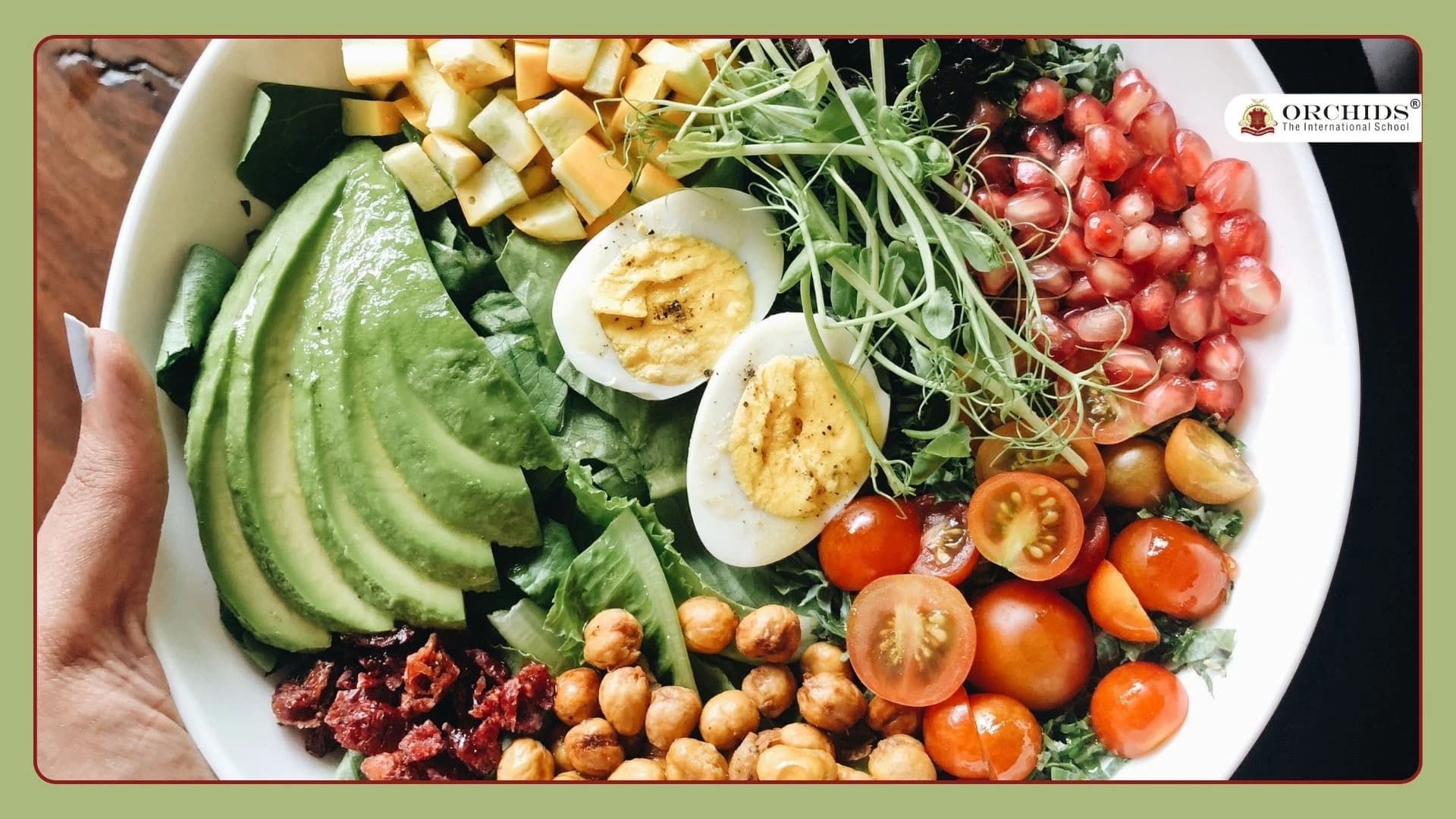
Protein does not always have to mean a supplement scoop or a complicated recipe.
Admissions Open for 2026-27
Ask most parents what they worry about when it comes to their child’s diet, and protein usually appears somewhere near the top of the list. It is the nutrient most closely associated with growth, and yet it is also one of the most straightforward to provide, particularly in an Indian kitchen where protein-rich ingredients have been at the centre of everyday cooking for centuries.
The good news is that most families are already most of the way there. Dal on the stove. Eggs in the fridge. A block of paneer. A jar of peanuts. These are not specialist health foods. They are the ingredients that have fed generations of Indian children, and they are as nutritionally sound today as they have ever been.
Here’s a closer look at 10 of the best protein sources for growing children, all of them rooted firmly in the Indian kitchen.
10 protein-rich foods your child already knows and loves
Protein does not have to mean a supplement scoop or a complicated recipe. The foods below are familiar, versatile and genuinely enjoyed by most children, which is ultimately the most important thing about any food a parent is trying to add to a child’s regular diet.
1. Dal
Dal is perhaps the most universally eaten protein source in the Indian subcontinent, and for very good reason. Lentils - whether toor, moong, masoor or chana - are rich in plant-based protein, high in fibre and deeply versatile. A single cup of cooked dal contains anywhere between 8 and 18 grams of protein depending on the variety.
For children, dal is a natural first food and a lifelong staple. It is easy to digest, mild enough for young palates and can be made as thin or as thick as the child prefers. Moong dal khichdi, toor dal with rice and ghee, chana dal with vegetables: the combinations are almost endless, and children raised on dal tend to reach for it without prompting.
Protein content: Approximately 8 to 18 grams per cup cooked, depending on variety.
2. Eggs
Eggs are among the most complete sources of protein available in any kitchen, meaning they contain all nine essential amino acids that the human body cannot produce on its own. A single egg delivers around 6 grams of protein, and two eggs at breakfast will take a child a significant part of the way toward their daily protein requirement.
What makes eggs particularly well-suited to children is their adaptability. Scrambled, boiled, as an omelette with vegetables tucked in, as the base for French toast or folded into a paratha: eggs take on flavour readily and can be made in minutes. Most children develop a strong preference for a particular egg preparation and will eat it happily and repeatedly, which makes eggs one of the most reliable protein sources a parent can rely on.
Protein content: Approximately 6 grams per egg.
3. Paneer
Paneer holds a special place in the Indian kitchen and in the hearts of most Indian children. Fresh, mild and satisfying, it is one of the most protein-rich dairy foods available, delivering around 18 to 20 grams of protein per 100 grams, along with calcium and healthy fats that support bone development.

Children who will not touch dal or vegetables will often eat paneer without complaint, which makes it one of the more useful tools in a parent’s nutritional toolkit. Paneer bhurji, palak paneer, paneer paratha, paneer tikka, paneer in a simple tomato gravy: the form barely matters. What matters is that paneer is flavourful, filling and reliably well-received.
Protein content: Approximately 18 to 20 grams per 100 grams.
4. Chana and rajma
Chickpeas and kidney beans belong to the same family of legumes as dal but deserve a separate mention because of how differently they appear in the Indian diet. Chana chole, rajma chawal, chana chaat: these are dishes that children across the country grow up eating and asking for.
Both are excellent sources of plant protein, with chickpeas delivering around 15 grams per cooked cup and kidney beans around 13 grams. They are also high in fibre and iron, making them particularly valuable for vegetarian children. Rajma is frequently cited as a comfort food by adults who ate it throughout childhood, and that emotional warmth is nutritionally not irrelevant: a food a child loves is a food they will actually eat.
Protein content: Approximately 13 to 15 grams per cup cooked.
5. Curd and yoghurt
Curd, or dahi, is a daily presence in most Indian homes and a significant source of protein that is often underestimated. A cup of full-fat curd contains around 8 to 10 grams of protein, along with probiotics that support gut health and calcium that contributes to bone strength.
For children, curd is one of the easiest proteins to introduce early and maintain throughout childhood. It works as a side dish with dal-rice, as the base for a lassi or chaas, as raita alongside a heavier meal, or simply eaten plain with a little sugar or fruit. Children who are hesitant about other protein sources often take to curd without any persuasion at all.
Protein content: Approximately 8 to 10 grams per cup.
6. Peanuts and peanut butter
Peanuts are one of the most protein-dense snacks available and have the significant advantage of being something most children enjoy without any nutritional framing required. A small handful of roasted peanuts contains around 7 grams of protein, and two tablespoons of peanut butter deliver a similar amount.
In the Indian kitchen, peanuts appear in chaat, in poha, in groundnut chutney, in laddoos and as a standalone snack. Peanut butter, which has become significantly more common in Indian households over the past decade, is one of the more popular spreads for children and works on bread, with fruit, stirred into oats or eaten directly off the spoon, which is how most children prefer it.
Protein content: Approximately 7 grams per small handful of roasted peanuts; similar per two tablespoons of peanut butter.
7. Milk
Milk has been central to the Indian understanding of children’s nutrition for as long as most families can remember, and the nutritional basis for that is entirely sound. A glass of full-fat milk contains around 8 grams of protein, along with calcium, vitamin D and B vitamins.
The challenge with milk is that not all children drink it willingly, particularly as they get older. A glass of milk before bed, warm milk with turmeric or a little sugar, milk blended into a banana shake or used as the base for oats or upma: the delivery mechanism matters less than the consistency of the habit. For children who genuinely resist milk, curd and paneer offer the same nutritional benefits in more accepted forms.
Protein content: Approximately 8 grams per glass.
8. Chicken and fish
For families that include non-vegetarian foods, chicken and fish are among the most efficient protein sources available. A 100 gram serving of cooked chicken breast delivers around 31 grams of protein, while fish like rohu, pomfret and mackerel, all widely eaten across India, deliver between 20 and 25 grams per 100 grams.
Children who eat non-vegetarian food tend to enjoy chicken in its many Indian preparations: in a simple curry, grilled with spices, in a kathi roll or as the filling in a paratha. Fish, similarly, can be prepared in ways that are familiar and enjoyable, from simple fish curry eaten with rice to lightly spiced pan-fried preparations. Both are nutrient-dense, relatively easy to prepare and genuinely satisfying for hungry children after a long day at school.
Protein content: Approximately 25 to 31 grams per 100 grams cooked.
9. Soya
Soya is the most protein-rich plant-based food on this list and one that is well-suited to Indian cooking. Soya chunks, also known as meal maker or nutri nuggets, absorb the flavours of any spice or gravy they are cooked in, which makes them remarkably versatile in the Indian kitchen. A 100 gram serving of dried soya chunks contains around 52 grams of protein, though this reduces to around 13 grams once cooked and rehydrated.
Soya is particularly valuable for vegetarian children who need a protein source with the texture and bulk of meat. Soya chunks in a simple masala curry, mixed into pulao, added to a vegetable stir-fry or served as a dry preparation with spices are all preparations that children tend to eat readily once they are familiar with the ingredient.
Protein content: Approximately 13 grams per 100 grams cooked.
10. Nuts and seeds
Almonds, walnuts, cashews, pumpkin seeds, sunflower seeds: the nut and seed family offers both protein and a range of healthy fats that support brain development, which makes them particularly relevant for school-age children. A small handful of mixed nuts delivers around 5 to 7 grams of protein alongside vitamins and minerals that are difficult to obtain in equivalent quantities from other sources.
In the Indian kitchen, nuts appear in sweets, in kheer, in chutneys, in sabzis and as standalone snacks. For children, a small portion of mixed nuts as an after-school snack is one of the more nutritionally complete options available, combining protein, healthy fat and micronutrients in a form that most children find genuinely enjoyable.
Protein content: Approximately 5 to 7 grams per small handful, depending on variety.
Also read: Brain-boosting food for students: These munchies can improve kids’ memory and focus during exams
How much protein does a growing child actually need
Protein requirements vary by age and body weight, but a general guide for Indian children is as follows:
-
Ages 1 to 3: approximately 13 grams per day
-
Ages 4 to 8: approximately 19 grams per day
-
Ages 9 to 13: approximately 34 grams per day
-
Ages 14 to 18: approximately 46 to 52 grams per day
These numbers are more achievable than they might initially appear. A child who eats dal and rice for lunch, a glass of milk and a handful of peanuts for an after-school snack and two eggs or a serving of paneer at dinner is likely already meeting their daily requirement from foods they enjoy and recognise.
At Orchids The International School, the connection between nutrition and learning is taken seriously. A child who is adequately nourished is a child who can concentrate, retain information and engage fully with what is in front of them. Protein, in particular, supports the cognitive development and sustained energy that a full school day demands.
A practical note for parents
The most common mistake parents make around children’s protein intake is overcomplicating it. Protein does not require special planning or expensive additions to the weekly shop. The Indian kitchen, with its deep tradition of dal, dairy, legumes and eggs, is already one of the most protein-friendly food cultures in the world.
The goal is consistency rather than perfection: a reliable source of protein at most meals, introduced in familiar and enjoyable forms, eaten without stress. That is all it takes. The foods listed above have been doing exactly this job for generations of Indian families, and there is no reason to look much further.
Want to know more about how we support children’s overall development at Orchids The International School? Reach out to our admissions team to learn more.


Admissions Open for 2026-27
Recent Blogs



CBSE Schools In Popular Cities
- CBSE Schools in Bangalore
- CBSE Schools in Mumbai
- CBSE Schools in Pune
- CBSE Schools in Hyderabad
- CBSE Schools in Chennai
- CBSE Schools in Gurgaon
- CBSE Schools in Kolkata
- CBSE Schools in Indore
- CBSE Schools in Sonipat
- CBSE Schools in Delhi
- CBSE Schools in Rohtak
- CBSE Schools in Bhopal
- CBSE Schools in Aurangabad
- CBSE Schools in Jabalpur
- CBSE Schools in Jaipur
- CBSE Schools in Jodhpur
- CBSE Schools in Nagpur
- CBSE Schools in Ahmednagar
- CBSE School In Tumkur
Call Us to know more about Orchids











Orchids The International School is one of India's leading chains of CBSE and ICSE schools, with 110+ schools across the country.