

CBSE vs ICSE vs IGCSE vs state board: How to choose the right one for your child
By Orchids Editorial Team |
Date 04-07-2026
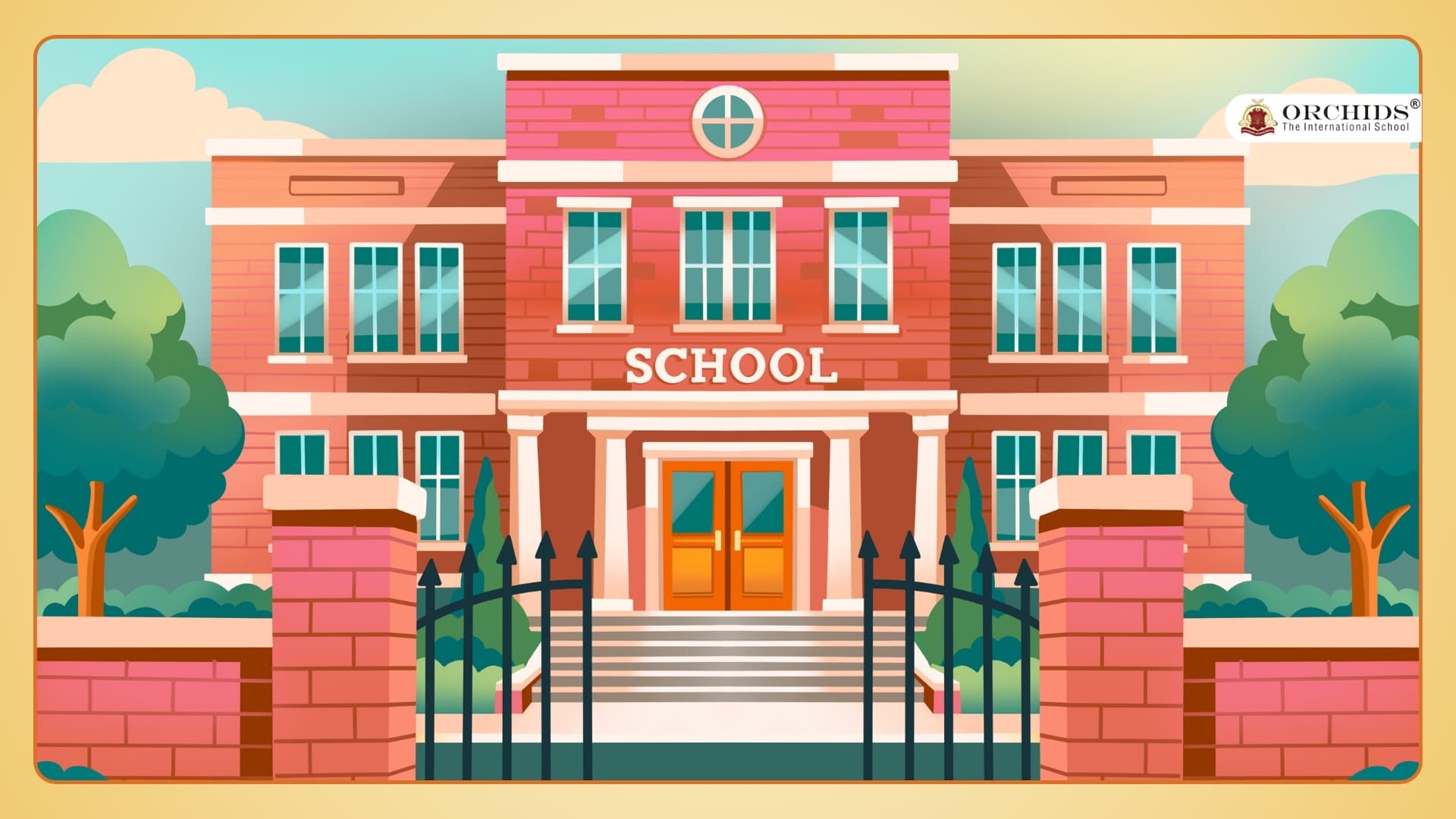
CBSE vs ICSE vs IGCSE vs state board: How to choose the right one for your child
Admissions Open for 2026-27
Every year, thousands of Indian parents face the same decision, often without quite enough information to make it confidently. Which school board should their child study under? The answer matters more than most people initially realise, because the board shapes not just what a child learns but how they learn it, what examinations they will prepare for and what doors open most naturally at the end of school.
The four boards that most Indian families consider are CBSE, ICSE, IGCSE and the state board. Each has a distinct philosophy, a different kind of syllabus and a different idea of what a well-educated student looks like. This guide attempts to lay out those differences honestly, so the choice feels less like a guess and more like a considered decision.
What each board is, and where it comes from
Before comparing them, it helps to understand what each board actually is and who runs it.
-
CBSE (Central Board of Secondary Education) is a national board run by the Government of India. It has been in operation for over a century, with its current form established in 1962. Today, more than 28,000 schools across India and over 200 schools in 28 other countries follow CBSE. All CBSE schools use the NCERT curriculum, particularly in Grades 9 through 12. Its wide reach makes it the most commonly chosen board in the country.
-
ICSE (Indian Certificate of Secondary Education) was established under the 1986 Education Policy, with English as both the medium of instruction and the language of examination. It is recognised internationally, including by UCAS in the United Kingdom, and is well-regarded for its comprehensive curriculum and rigorous assessment standards.
-
IGCSE (International General Certificate of Secondary Education) is a Cambridge programme overseen by Cambridge Assessment International Education. It is designed for students aged 14 to 16 and is globally recognised, with pathways that lead to the Cambridge AS and A levels or the IB Diploma. It was created with an international student body in mind.
-
State boards are run by the respective state government’s Department of Education. Each state has its own syllabus, and the medium of instruction often includes the regional language alongside English. State boards are generally the most accessible and affordable option, and they cater to the widest range of students across India.
How the four boards compare
No two boards are designed around the same idea of what education should achieve, and that difference runs deeper than just the syllabus. Here is how they stack up across the dimensions that matter most to families making this decision.
Curriculum and learning approach

The CBSE curriculum is structured and relatively streamlined, with a strong emphasis on Mathematics and Science. It is aligned closely with the syllabuses for competitive examinations like JEE and NEET, making it a natural choice for families who anticipate their child pursuing engineering or medicine.
ICSE takes a broader approach, giving roughly equal weight to all subjects, including languages, arts and sciences. The focus is on depth of understanding rather than coverage of topics, and students are expected to develop strong analytical and writing skills. The syllabus is wider and more demanding than CBSE, but it produces students who are often exceptionally well-rounded.
IGCSE was designed with an international perspective and is genuinely global in scope. It is particularly well-suited to students who may pursue higher education abroad, as it is recognised by universities worldwide. Its assessment is largely external, which some parents view as more objective.
State board curricula vary by state but generally follow NCERT guidelines and emphasise regional relevance. The syllabus is typically less extensive than the CBSE or ICSE, and the focus is on accessibility and local context. State board students who aspire to national competitive exams may need additional preparation beyond the standard curriculum.
Also read: NCERT syllabus and textbook update: Key changes for the 2026-27 academic session
Medium of instruction
State boards teach in the regional language as well as English, which is a genuine advantage for students from non-English-speaking households. CBSE schools primarily use Hindi and English. ICSE and IGCSE use English exclusively for all subjects except language papers.
Examination patterns
CBSE examinations test application and logical reasoning alongside textbook knowledge, which can initially surprise students used to purely rote learning. ICSE examinations are wide-ranging and detailed, often covering topics from outside the core textbook, which makes them more demanding for the average student. State board examinations are generally textbook-based and more predictable. IGCSE also follows a textbook-based pattern but includes externally graded assessments.
Grading systems
CBSE uses a GCPA system, which means the difference of a few marks does not dramatically alter a student’s grade, a system that many feel reduces unnecessary pressure. ICSE follows a percentage-based system, where individual marks carry more weight. State boards and IGCSE schools have their own grading systems, which vary by region.
Fee structures
State boards are the most affordable, typically ranging from Rs 10,000 to Rs 80,000 per year. CBSE schools generally start from around Rs 35,000 annually, though fees vary considerably by institution. ICSE schools tend to start from Rs 60,000 and go upward. IGCSE is the most expensive of the four, with fees often ranging from Rs 2 to 4 lakh annually, reflecting the international infrastructure and resources these schools provide.
The honest case for each board
Every board has genuine strengths, and every board has real trade-offs. The question is not which board is best in the abstract, but which combination of strengths and trade-offs fits your child’s profile, your family’s circumstances and the future you are planning toward. Here is an honest look at what each board offers and who it suits best.
CBSE is a strong choice if:
The family moves frequently across states, since CBSE schools are available almost everywhere in the country. The child has a clear interest in Mathematics and Science, and a competitive entrance examination like JEE or NEET is likely to be on the horizon. The family values a curriculum that is nationally recognised, well-resourced and aligned with India's most important academic pathways.
The trade-off is that CBSE places less emphasis on languages and practical skills. It is a focused curriculum, which is a strength for some students and a limitation for others.
ICSE is a strong choice if..
The child shows strength across multiple subjects and is likely to pursue higher education that values a well-rounded academic profile. Strong English language skills are a priority, and the possibility of studying abroad is genuinely on the table. The family values a curriculum that develops analytical thinking, writing ability and depth of subject knowledge over a streamlined focus on a few core areas.
The trade-off is that the ICSE syllabus is extensive and demanding. Students who struggle with breadth and volume of study may find it difficult to keep pace, and private tuition options can be limited in some cities.
IGCSE is a strong choice if..
The family is internationally mobile, or the child is likely to pursue undergraduate education outside India. Global recognition is important, and the family can accommodate the higher fee structure. The child benefits from an externally assessed, internationally benchmarked curriculum.
The trade-off is that IGCSE is heavily weighted toward the UK educational framework and is not designed around Indian competitive examinations. Students who later choose to pursue JEE or NEET may face a more significant gap to bridge.
State Board is a strong choice if..
Affordability and accessibility are genuine priorities. The child is more comfortable learning in a regional language, or the family's circumstances make consistency of location likely but not guaranteed. The curriculum's relatively lighter load creates room for extracurricular development and other interests.
The trade-off is that state board students who aspire to top national competitive examinations typically need supplementary coaching to close the gap between the board curriculum and the examination requirements.
What parents often overlook in this decision
The board comparison tends to dominate the conversation, but there are a few factors that deserve equal attention.
-
The child's own learning style matters. A child who thrives under breadth and depth of exploration will likely flourish in ICSE. A child who prefers focus and structure may perform better under CBSE. No board is inherently superior: the question is always which environment best suits the particular child in front of you.
-
The school matters as much as the board. A well-run CBSE school will produce better outcomes than a poorly run ICSE one, and vice versa. The quality of teaching, the culture of learning and the pastoral support available are often more determinative of a child's outcomes than which board their syllabus belongs to.
-
Long-term goals should anchor the decision. If there is genuine clarity about what a child wants to pursue, engineering, medicine, arts, international study, that clarity should drive the board choice. Where there is no clarity yet, a more flexible and well-rounded curriculum like ICSE or IGCSE tends to keep more doors open.
At Orchids The International School, both CBSE and ICSE streams are offered across branches, which reflects the understanding that no single board suits every child. What remains consistent across both is the commitment to building students who can think critically, communicate clearly and approach challenges with genuine confidence, qualities that matter long after the board examination results are in.
A final word on making the decision
No board choice is permanent in the way it might feel at the time of making it. Students do change boards, and many make that transition successfully. What matters most is that the initial choice is made thoughtfully, with an honest assessment of the child's strengths, the family's circumstances and the kind of learning environment most likely to bring out the best in them.
The best board for your child is the one that challenges them appropriately, supports them genuinely and gives them a foundation solid enough to build on well into adult life.
Want to know more about how Orchids The International School approaches learning across its CBSE and ICSE streams? Reach out to our admissions team to find out more.


Admissions Open for 2026-27
Recent Blogs




CBSE Schools In Popular Cities
- CBSE Schools in Bangalore
- CBSE Schools in Mumbai
- CBSE Schools in Pune
- CBSE Schools in Hyderabad
- CBSE Schools in Chennai
- CBSE Schools in Gurgaon
- CBSE Schools in Kolkata
- CBSE Schools in Indore
- CBSE Schools in Sonipat
- CBSE Schools in Delhi
- CBSE Schools in Rohtak
- CBSE Schools in Bhopal
- CBSE Schools in Aurangabad
- CBSE Schools in Jabalpur
- CBSE Schools in Jaipur
- CBSE Schools in Jodhpur
- CBSE Schools in Nagpur
- CBSE Schools in Ahmednagar
- CBSE School In Tumkur
Call Us to know more about Orchids











Orchids The International School is one of India's leading chains of CBSE and ICSE schools, with 130+ schools across the country.