

A day in the life of a primary school student: What learning looks like today
By Priyadarshini Bhattacharjee |
Date 30-06-2026
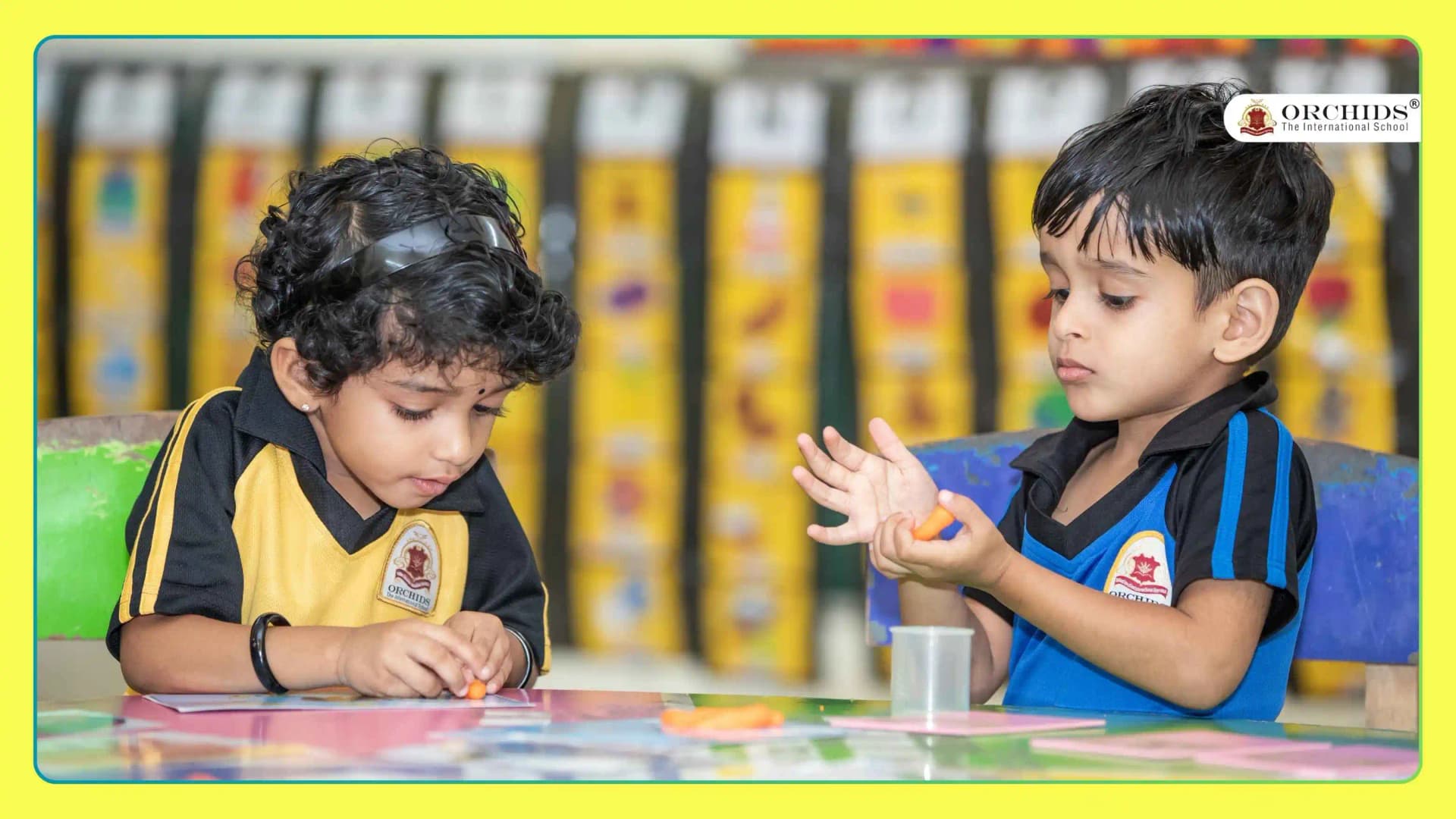
Children learning how to separate, adapt and build trust in a new environment.
Admissions Open for 2026-27
There’s something special about the start of a new school year. New books. Fresh stationery. Crisp uniforms. A sense of excitement that fills the house. For children stepping into primary school, it feels like a big moment. And for parents, it often comes with a mix of pride, curiosity and some anxiety. What does a typical school day actually look like now? Will my child adjust? Will they be happy? If these questions have crossed your mind, you’re not alone.
The first few weeks: excitement meets emotion
The first month of school is rarely perfect, and that’s completely normal. While children may begin with excitement about new bags and notebooks, the reality of a new environment, unfamiliar faces, and structured routines can feel overwhelming. It is common to see:
-
Tears during drop-offs
-
Moments of hesitation or reluctance before school
-
Resistance to waking up early
-
Wanting to stay close to parents a little longer than usual
This phase is not a setback. It is a transition. Children are learning how to separate, adapt and build trust in a new environment. What helps most during this time is reassurance, not pressure. Simple conversations can make a big difference:
-
“What was your favourite part of today?”
-
“Did anything make you feel uncomfortable?”
-
“Who did you sit with?”
Listening patiently, without rushing to fix everything, helps children feel safe and understood.

Also read: How to deal with a hyperactive child at home: Smart tips for parents
A typical school day: more than just academics
Primary school today looks very different from what many parents remember. A child’s day is thoughtfully structured to balance learning, interaction and play. A typical day may include the following:
-
Morning circle time, where students settle in and connect with their teachers and peers
-
Core subjects like English and Mathematics, taught through activities and examples
-
Break time, which plays an important role in social development
-
Interactive sessions, include storytelling, group work, or hands-on learning
-
Co-curricular activities such as art, music, or physical education
The focus is not just on completing the syllabus but also on making learning engaging and meaningful.
As the weeks go by: a gentle shift in routine
Once the initial adjustment phase settles, classrooms begin to take on a more structured rhythm. Children slowly:
-
Become familiar with routines
-
Start participating more actively
-
Build friendships
-
Gain confidence in expressing themselves
Academics also become slightly more focused. There is more emphasis on:
-
Reading and writing independently
-
Understanding concepts rather than memorising
-
Completing small tasks and assignments
However, learning is still designed to feel approachable and not overwhelming.
Addressing common parent concerns
It is natural for parents to worry, especially in the early days.
-
“What if my child cries every day?”
Such anxiety is common in the beginning. Most children settle within a few weeks as they build comfort with their surroundings.
-
“What if they are not making friends?”
Social connections take time. Teachers actively encourage group activities to help children bond.
-
“Will the academics be too much?”
Primary classrooms today focus on gradual learning. The aim is to build understanding, not pressure.
What learning looks like today
Modern primary education is designed to go beyond textbooks. Children are encouraged to:
-
Ask questions
-
Explore ideas
-
Participate in discussions
-
Learn through activities and real-life examples
At Orchids The International School, this approach is further supported through interactive classrooms and a focus on building both academic and life skills from an early stage.
How parents can support this journey
The transition becomes smoother when school and home work together. A few simple things can help:
-
Maintain a consistent daily routine
-
Avoid comparing your child with others
-
Celebrate small wins, even if it's just getting through the day
-
Stay calm during emotional moments
Most importantly, give it time. Adjustment is a process, not a one-day change.
A new beginning, every single day
A day in the life of a primary school student is filled with small but meaningful moments. From learning a new word to making a new friend, each day adds something new.
There will be a few tears, a few tough mornings and many questions along the way. But there will also be laughter, curiosity and growth. And before you know it, the same child who once hesitated at the school gate will start walking in with confidence.
Explore how Orchids The International School creates a nurturing and engaging environment where children feel comfortable, confident and excited to learn. Connect with our admissions team to learn more.


Admissions Open for 2026-27
Recent Blogs




CBSE Schools In Popular Cities
- CBSE Schools in Bangalore
- CBSE Schools in Mumbai
- CBSE Schools in Pune
- CBSE Schools in Hyderabad
- CBSE Schools in Chennai
- CBSE Schools in Gurgaon
- CBSE Schools in Kolkata
- CBSE Schools in Indore
- CBSE Schools in Sonipat
- CBSE Schools in Delhi
- CBSE Schools in Rohtak
- CBSE Schools in Bhopal
- CBSE Schools in Aurangabad
- CBSE Schools in Jabalpur
- CBSE Schools in Jaipur
- CBSE Schools in Jodhpur
- CBSE Schools in Nagpur
- CBSE Schools in Ahmednagar
- CBSE School In Tumkur

Call Us to know more about Orchids











Orchids The International School is one of India's leading chains of CBSE and ICSE schools, with 130+ schools across the country.