

Building discipline to fostering unity: Why school uniforms are not merely a dress code
By Orchids Editorial Team |
Date 08-01-2026

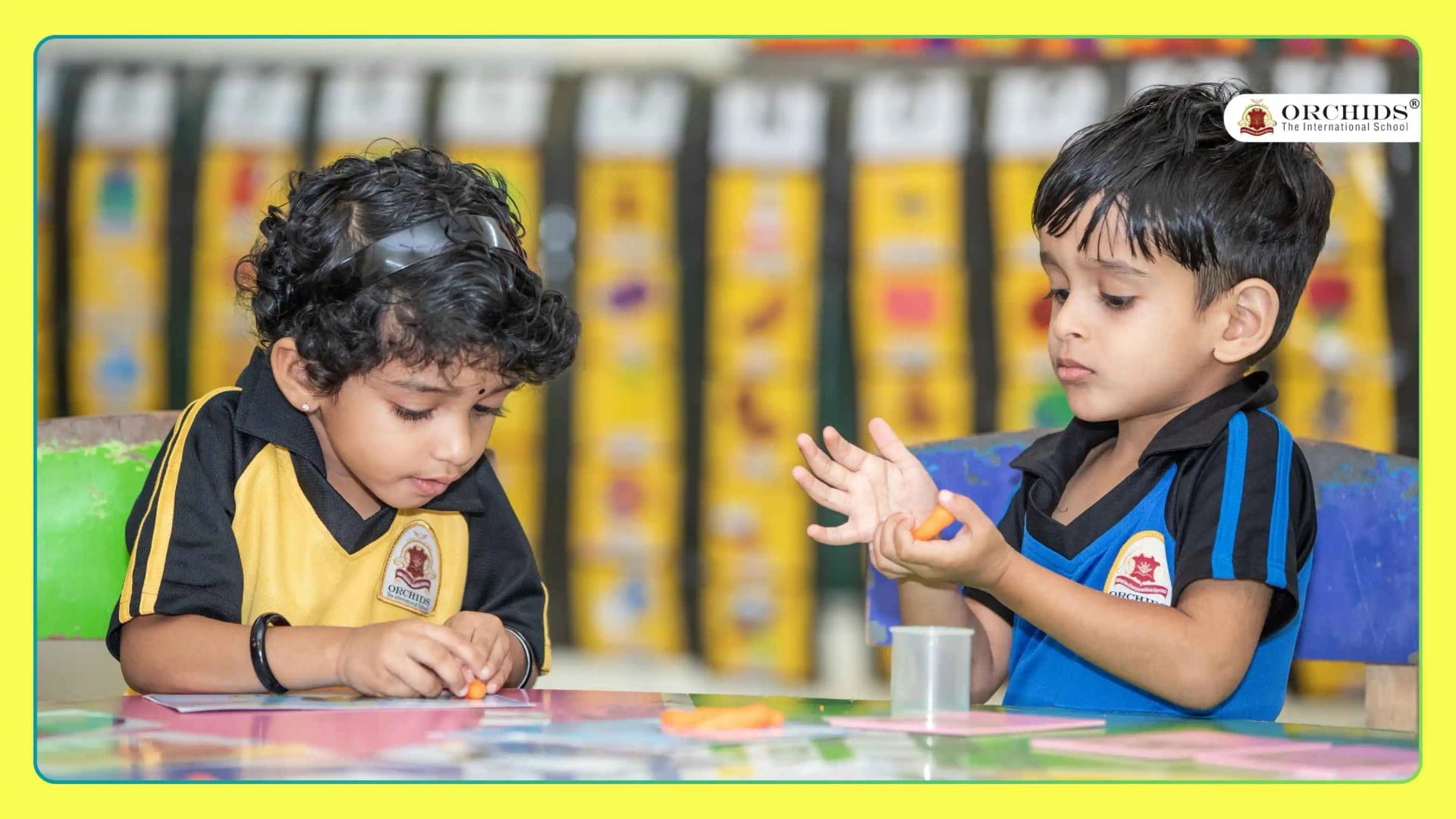
School uniforms create a shared learning environment where students engage together with focus and purpose.
Admissions Open for 2026-27
School uniforms are often perceived as a basic requirement of school life. However, their role extends far beyond standardised attire. Rooted in history and shaped by modern educational needs, school uniforms play an important role in building discipline, fostering unity, and creating structured learning environments where students can focus on growth and development.
Origin of school uniforms
The concept of school uniforms originated in 1222 when Archbishop of Canterbury mandated the wearing of robe-like cloak, for church-associated students in England, emphasizing modesty. It was in the 16th century that ‘modern uniform’ was first introduced in charity schools in England. These uniforms were designed to create equality among students by minimising visible socio-economic differences. Uniforms became widespread as the 1870 Education Act made schooling universal in England, reflecting Victorian values of cleanliness and order, with distinct styles for boys (blazers, shorts, caps) and girls (tunic dresses, pinafores).
Over time, elite private schools adopted unique, elaborate uniforms, further cementing them as markers of class and prestige, a tradition that influenced global adoption. Today, school uniforms have evolved from being a symbol of regulation to becoming an integral part of holistic schooling, supporting both academic and social development.

The purpose of school uniforms in modern education
In contemporary education, school uniforms serve a purposeful role in shaping student behaviour and mindset. By standardising attire, schools aim to reduce distractions, encourage consistency, and establish a sense of routine. Uniforms help create an environment where learning takes precedence over appearance, allowing students to engage more meaningfully in academics and co-curricular activities.
Uniforms also reinforce the idea of belonging, reminding students that they are part of a collective learning community rather than individuals defined by external differences.
Key benefits of wearing school uniforms
School uniforms offer a wide range of academic, social, and practical benefits that support students, families, and schools alike.
-
Builds discipline and routine: Wearing a uniform encourages structure in a student’s daily life. It reinforces punctuality, preparedness, and adherence to school norms, helping students develop disciplined habits from an early age.
-
Encourages academic focus: Uniforms minimise distractions related to fashion trends and peer comparison. With fewer concerns about clothing choices, students are better able to concentrate on classroom learning and participation.
-
Promotes equality and inclusion: By reducing visible economic differences, uniforms foster a more inclusive environment where students are valued for their abilities, efforts, and character rather than appearance.
-
Fosters unity and school identity: A shared dress code strengthens the sense of belonging among students. Uniforms promote school pride and encourage students to identify with their institution as part of a unified community.
-
Enhances safety and accountability: Uniforms make it easier to identify students within school premises, contributing to campus safety. They also encourage responsible behaviour, as students represent their school both inside and outside the classroom.
-
Prepares students for future environments: Uniforms introduce students to the concept of context-appropriate dressing, helping them understand the importance of presentation and discipline in higher education and professional settings.
One common concern is that school uniforms limit individuality. However, schools often provide opportunities for self-expression through extracurricular activities, house systems, and special non-uniform days. Another concern relates to comfort, which modern uniforms address through climate-appropriate fabrics and functional designs that support ease of movement and active participation.
School uniforms are not merely a dress code - they are a purposeful educational tool. From their historical origins to their role in modern schooling, uniforms contribute to building discipline, fostering unity, and creating focused, inclusive learning environments. When thoughtfully designed and implemented, school uniforms support students in developing responsibility, confidence, and a strong sense of belonging that extends well beyond the classroom.


Admissions Open for 2026-27
Recent Blogs





CBSE Schools In Popular Cities
- CBSE Schools in Bangalore
- CBSE Schools in Mumbai
- CBSE Schools in Pune
- CBSE Schools in Hyderabad
- CBSE Schools in Chennai
- CBSE Schools in Gurgaon
- CBSE Schools in Kolkata
- CBSE Schools in Indore
- CBSE Schools in Sonipat
- CBSE Schools in Delhi
- CBSE Schools in Rohtak
- CBSE Schools in Bhopal
- CBSE Schools in Aurangabad
- CBSE Schools in Jabalpur
- CBSE Schools in Jaipur
- CBSE Schools in Jodhpur
- CBSE Schools in Nagpur
- CBSE Schools in Ahmednagar
- CBSE School In Tumkur

Call Us to know more about Orchids











Orchids The International School is one of India's leading chains of CBSE and ICSE schools, with 110+ schools across the country.