

Critical thinking to phygital classrooms: Education trends shaping 2026 school year
By Reema Gowalla |
Date 22-12-2025
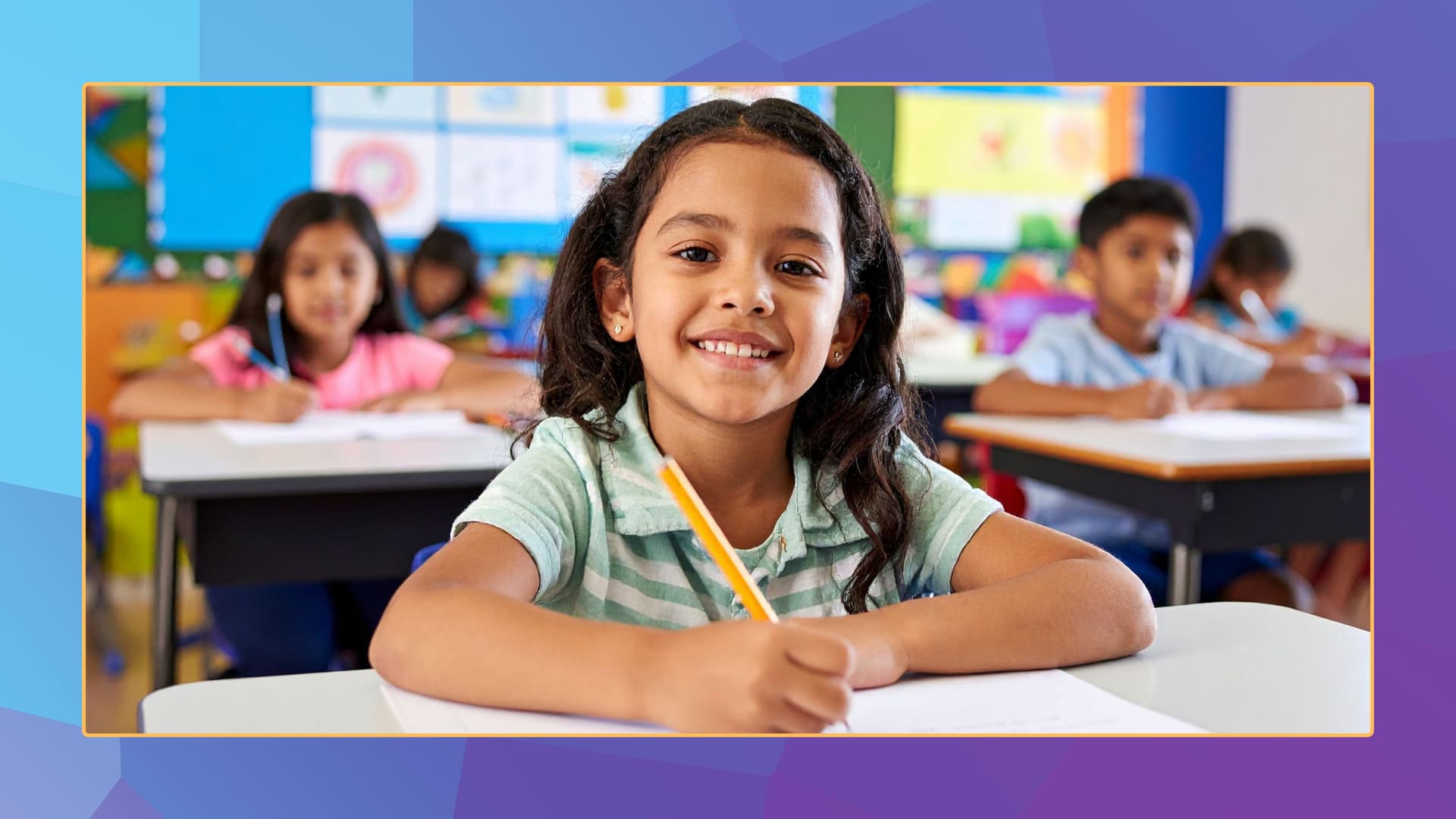
Critical thinking is emerging as a core competency amid AI integration
Admissions Open for 2026-27
There’s no denying that lately the role of artificial intelligence (AI) in education has been a topic of great curiosity and concern among students, educators and thinkers alike. Many are of the opinion that harnessing technology to create innovation and growth can help narrow the skills gap, while also enabling personalised learning and creating innovative ways to educate and engage young people. Let’s take a quick look at the trends that’ll inform and shape the 2026 school year.
1. Critical thinking: Amid fears of AI increasingly eroding young people’s ability to think with their brain, it’s become doubly important for the school of the future to focus more on critical thinking as a core competency. Students should be encouraged to engage in discussion-based learning. In order to build a more informed, compassionate and resilient generation, classroom education must look beyond rote learning and simple lessons in history, sociology, math and science toward critical thinking, problem-solving, creativity and collaboration.

Also read: India’s big push to bolster AI-driven education in schools: Are we ready for it?
2. AI integration: AI literacy is the need of the hour, and the ability to use AI tools safely and effectively will be crucial both for professionals and students in the near future. In 2025, the Ministry of Skill Development and Entrepreneurship (MSDE) introduced the ambitious Skilling for AI Readiness (SOAR) programme for educators and students from classes 6 to 12. It’s aimed at integrating AI competencies into the educational framework. The National Council of Educational Research and Training (NCERT) had also reportedly formed a textbook development team to design syllabi and textbooks on AI for classes 11 and 12. This comes under the National Education Policy (NEP) 2020.
3. Immersive experiences: If technology is in discourse, Virtual Reality (VR) and Augmented Reality (AR) cannot be far behind. Equipped with headsets and hand controllers, AR and VR tools promise enticing immersive experiences in a simulated, computer-generated environment. Lately, these have become one of the most interactive, engaging and sought-after mediums for students to explore historical sites and carry out virtual science experiments.
4. Phygital classrooms: The term ‘phygital’ is an amalgamation of the words ‘physical’ and ‘digital’. Likewise, it refers to the hybrid model of physical and digital learning, where technology is used to enhance traditional methods of teaching, but not necessarily replace the latter. Dubbed a more suitable mode of learning for the new generation, phygital classrooms are typically characterised by flexible and immersive environments - comprising VR, AR, simulations and interactive apps - alongside traditional teaching. Such modules are perceived to be more efficient, engaging and futuristic, given their curious and tech-driven style.
5. Intercultural learning: Human-centred learning and emotional intelligence are no longer just discussed in theory. These have now become the central tenets of holistic education, ensuring that every child gets individual care. Along with the traditional curriculum (focussed on math, science, literature and social studies), it’s crucial to help students understand the importance of kindness, imagination, inclusivity and teamwork. Shrugging excessive focus on performance and competition, diversity, intercultural learning and collective care are likely to be a dominant force in school education next year.


Admissions Open for 2026-27
Recent Blogs



CBSE Schools In Popular Cities
- CBSE Schools in Bangalore
- CBSE Schools in Mumbai
- CBSE Schools in Pune
- CBSE Schools in Hyderabad
- CBSE Schools in Chennai
- CBSE Schools in Gurgaon
- CBSE Schools in Kolkata
- CBSE Schools in Indore
- CBSE Schools in Sonipat
- CBSE Schools in Delhi
- CBSE Schools in Rohtak
- CBSE Schools in Bhopal
- CBSE Schools in Aurangabad
- CBSE Schools in Jabalpur
- CBSE Schools in Jaipur
- CBSE Schools in Jodhpur
- CBSE Schools in Nagpur
- CBSE Schools in Ahmednagar
- CBSE School In Tumkur
Call Us to know more about Orchids










Orchids The International School is one of India's leading chains of CBSE and ICSE schools, with 110+ schools across the country.