

How NASA is making space science fun and engaging through colouring books
By Bharati Balasaheb Wakchuare |
Date 06-05-2026
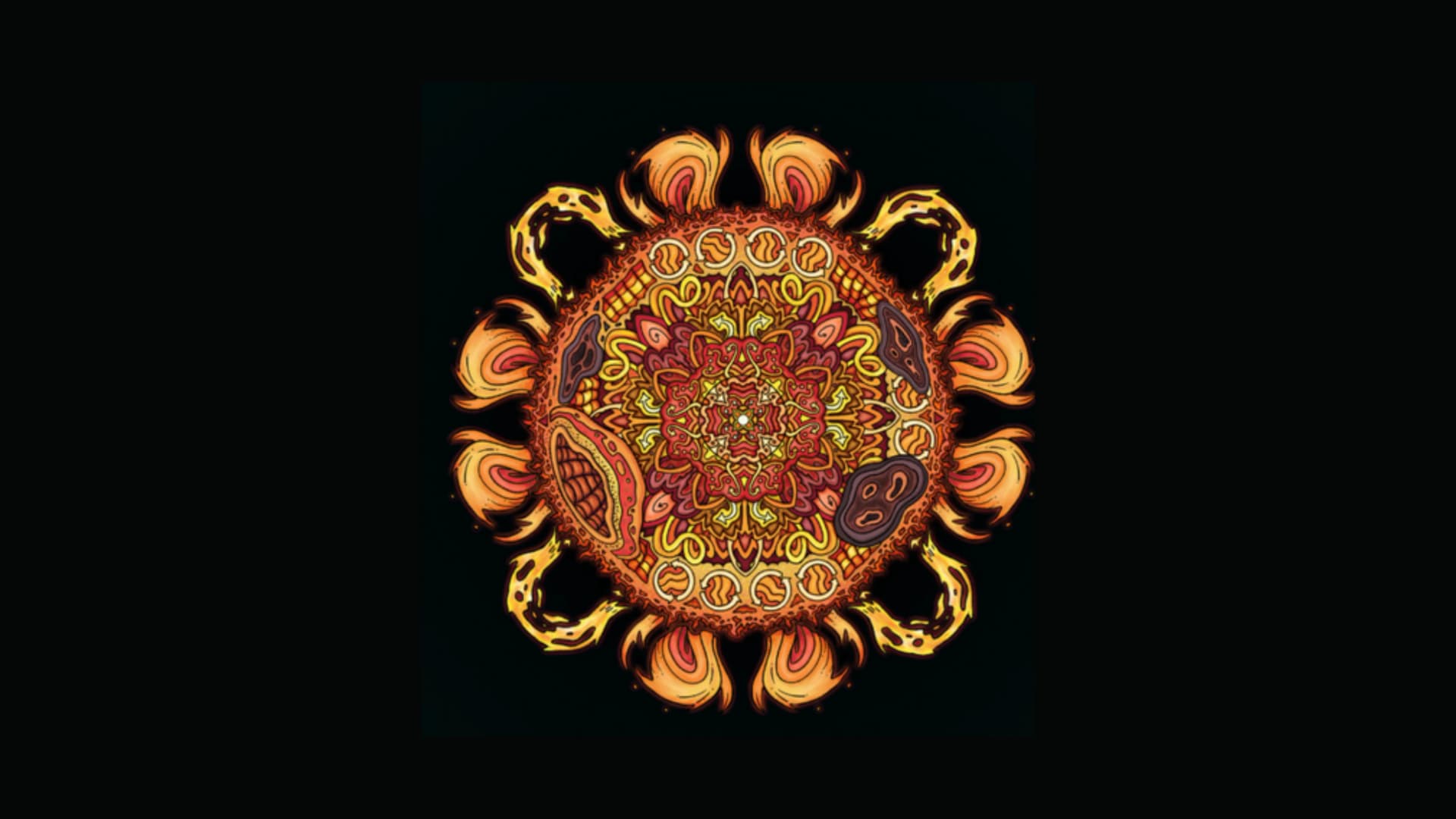
NASA’s ‘Journey Through the Heliosphere’ colouring book combines science, creativity, and interactive learning for students (image credit: NASA/UAF).
Admissions Open for 2026-27
Space science can sometimes feel so complicated for young learners. Simple terms like heliosphere, solar wind and coronal mass ejections may sound very difficult at first. And honestly, many of these words sound so confusing even for adults as well at first glance. But what if learning these concepts felt less like studying from a textbook and more like studying through creativity?
That's what NASA is trying to do with its new educational colouring book, ‘Journey Through the Heliosphere: The Sun-Earth System in Color’. It is created in collaboration with the University of Alaska Fairbanks (UAF).
What is NASA’s ‘Journey Through the Heliosphere’ Colouring Book
Have you ever heard about heliophysics before? Not yet? Don’t worry, we’re not here to overwhelm you with complicated scientific terms. In simple words, heliophysics is the study of the Sun and how it affects Earth and the rest of the solar system.
NASA’s Journey Through the Heliosphere colouring book introduces these ideas through creative visuals, science facts and interactive learning activities. The 28-page educational resource includes several exciting topics, including:
-
Solar magnetic fields
-
Solar wind
-
Aurora
-
Eclipses
-
Earth’s climate
-
The habitable zone
-
The solar system
-
Life cycles of stars
And this is where things get more interesting. It is not just a colouring book; it is also a creative educational tool designed to encourage curiosity, imagination and scientific thinking.

Also read: Earthrise to Earthset: How our view of the planet has changed with time
Why is NASA using colouring books to teach science
Have you ever wondered how students remember diagrams more easily than textbook paragraphs?
Most students remember a colourful diagram much faster than a long paragraph from a textbook. That is why classrooms today use real models, experiments, charts, visuals and activity-based learning methods along with textbooks.
colouring activities encourage students to carefully observe details, patterns and complicated scientific illustrations. And most surprisingly, this simple activity can help students stay curious for longer.
Creative learning methods can also:
-
Improve the concentration
-
Support visual memory
-
Encourage curiosity
-
Increase classroom participation
-
Make science feel less intimidating
That’s only one part of the story. But that’s not where it ends. NASA’s colouring book also shows that science can feel creative instead of intimidating.
Understanding the Sun made simple
One of the most interesting parts of the colouring book focuses on the Sun. Have you ever wondered what happens inside that giant glowing ball in the sky?
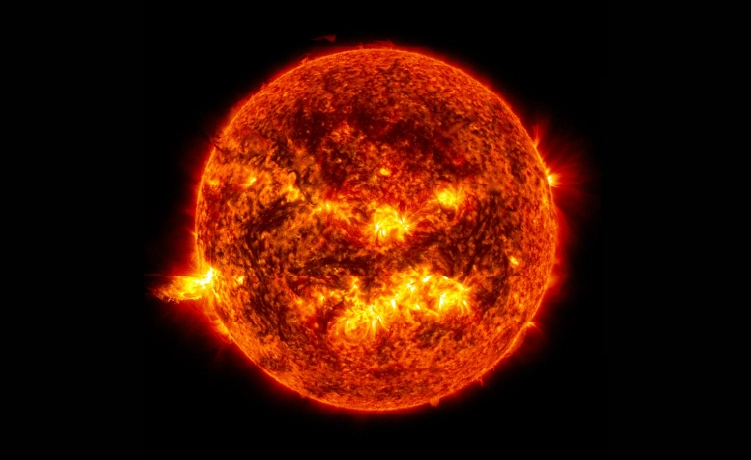
The Sun is a huge ball of hot, glowing gas made of charged particles called plasma. It gives Earth light, heat, and energy, making life possible. Deep inside the Sun is the core, where hydrogen atoms combine through nuclear fusion and release energy. This energy moves through different layers before reaching the photosphere, the visible surface of the Sun. Beyond the photosphere lies the corona, the outer atmosphere of the Sun, which becomes visible during a total solar eclipse.
The 11-year solar cycle and auroras
Interestingly, the Sun follows a repeating 11-year solar cycle. During its most active phase, dark spots - called Sunspots - appear due to intense magnetic activity.
This period also brings powerful solar flares and Coronal Mass Ejections (CMEs), which send energy and charged particles into space. These events can affect satellites and communication systems on Earth. But have you ever wondered how auroras form?
When charged particles from the Sun interact with Earth’s atmosphere, they create colorful lights called auroras, also known as the Aurora Borealis.
Also read: Aurora Borealis: Formation, Causes, and Northern Lights Explained
How do art and science work together
Many people think art and science are completely different subjects. But they often work together in interesting ways. NASA’s initiative is a wonderful example of STEAM education, which combines Science, Technology, Engineering, Arts and Mathematics. Visual representations help make scientific ideas more understandable. Scientists regularly use visual illustrations, diagrams, and models to simplify complicated discoveries. Just because, without visuals, many space concepts would feel much harder to imagine. In the same way, colouring activities encourage young learners to connect creativity with scientific thinking.
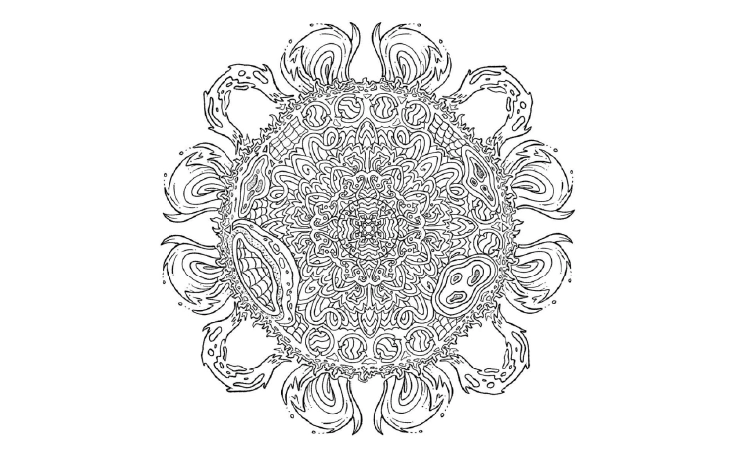
The illustration given above helps students visualise the layers of the Sun, solar activity, and the movement of energy in a much more interactive way. Instead of simply memorizing scientific terms, learners can connect concepts with visuals, colors, and imagination.
Inspiring young scientists through creativity
Sometimes, all it takes is a different way of presenting the same idea. Space science does not always have to feel overwhelming. Sometimes, a creative approach can make an impact on a traditional learning approach. NASA’s Journey Through the Heliosphere colouring book demonstrates how imagination and interactive activities can lead learners to connect more deeply with science.
Projects like this remind us that science learning does not always have to begin with formulas and textbooks; sometimes, it can begin with curiosity, colors, and creativity.
Explore how Orchids The International School piques your child’s interest in space science, astronomy and critical thinking. To know more about our STEM curriculum and science labs, reach out to the admissions team.


Admissions Open for 2026-27
Recent Blogs



CBSE Schools In Popular Cities
- CBSE Schools in Bangalore
- CBSE Schools in Mumbai
- CBSE Schools in Pune
- CBSE Schools in Hyderabad
- CBSE Schools in Chennai
- CBSE Schools in Gurgaon
- CBSE Schools in Kolkata
- CBSE Schools in Indore
- CBSE Schools in Sonipat
- CBSE Schools in Delhi
- CBSE Schools in Rohtak
- CBSE Schools in Bhopal
- CBSE Schools in Aurangabad
- CBSE Schools in Jabalpur
- CBSE Schools in Jaipur
- CBSE Schools in Jodhpur
- CBSE Schools in Nagpur
- CBSE Schools in Ahmednagar
- CBSE School In Tumkur
Call Us to know more about Orchids











Orchids The International School is one of India's leading chains of CBSE and ICSE schools, with 110+ schools across the country.