

Where have all the sparrows gone? A World Environment Day guide to bringing birds back to your balcony
By Priyadarshini Bhattacharjee |
Date 03-06-2026
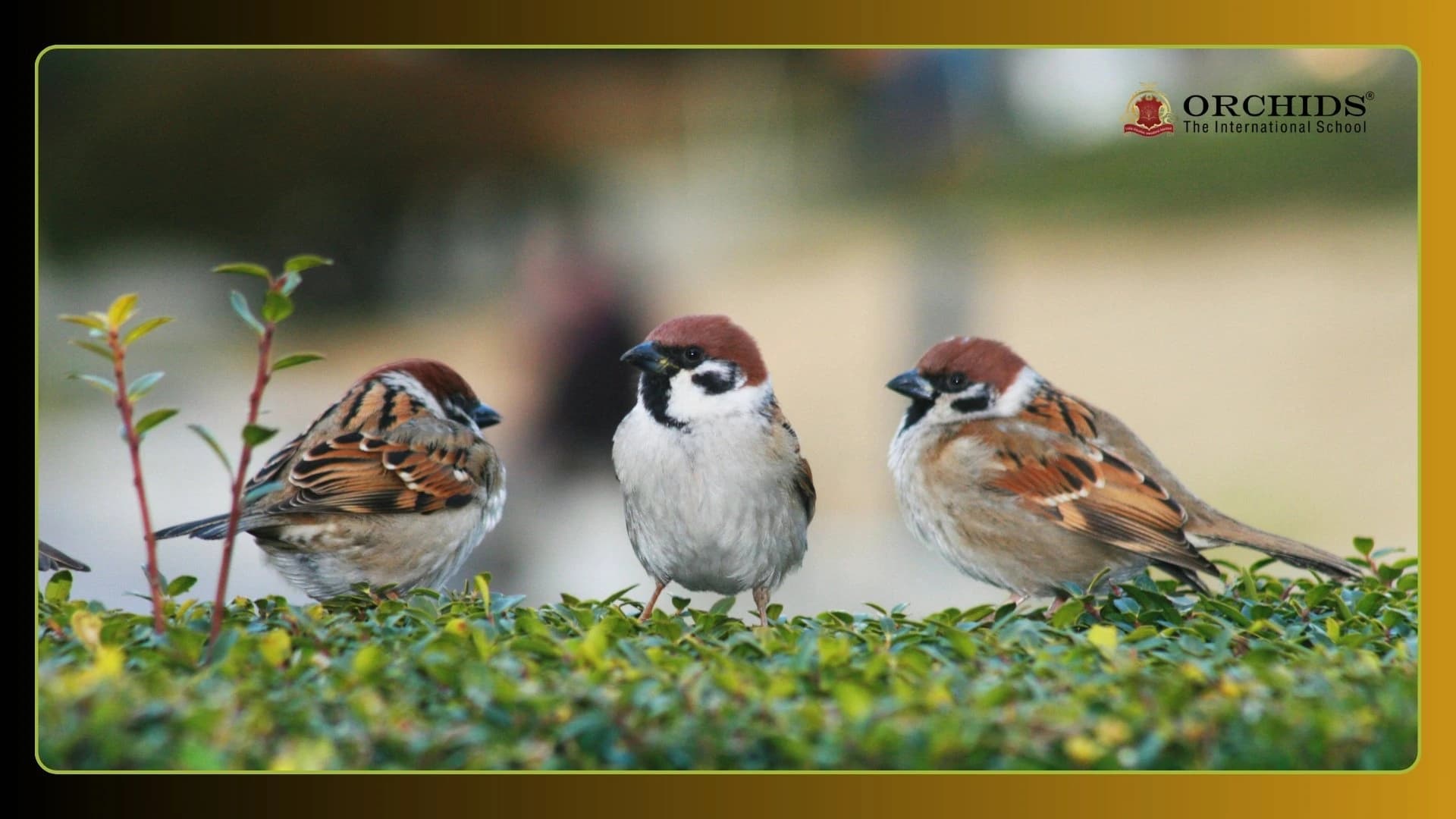
Not very long ago, sparrows used to be the chirpy companions of every Indian household.
Admissions Open for 2026-27
There was a time, not so long ago, when sparrows were simply part of the morning. They arrived on windowsills without invitation, nested in the gaps above doorframes and filled balconies with a kind of cheerful, unassuming chirps that most people never thought to appreciate until it was gone. For anyone who grew up in an Indian city in the 1980s or 1990s, the house sparrow was as ordinary as a cup of chai. It was just there.
Today, many families go weeks without seeing one. The balconies are quieter. The windowsills are empty. And when someone does spot a sparrow, there is often a small, surprised moment of recognition, as though something that had been quietly missed has briefly returned. This World Environment Day, it is worth asking: where did they go? And more importantly, what can we do about it?
What World Environment Day 2026 is asking of us
Every year on June 5, World Environment Day is observed across the globe as the largest platform for environmental public awareness and action. In 2026, the day is led by the UN Environment Programme (UNEP) and hosted by the Republic of Azerbaijan in Baku, under the theme: ‘Inspired by Nature. For Climate. For Our Future’.
The campaign, running under the hashtag #NowForClimate, calls for urgent climate action, the protection of natural ecosystems and nature-based solutions for future generations. It is a global message, but it is also a personal note.
Nature-based solutions do not only happen at the level of policy or international summits. They happen in school gardens, community parks and, yes, on the balconies of apartment buildings in Chennai, Bengaluru, Mumbai and Delhi. Our environment day is, in many ways, a reminder that the most meaningful action often begins closest to home.
Also read: World Environment Day: Theme, Activities, Awareness and Complete Guide
Why birds are disappearing from urban spaces
The decline of sparrows, crows and other common urban birds is not a mystery. The causes are well-documented, and most of them come down to the same thing: cities have become increasingly inhospitable to wildlife, often without anyone making that choice deliberately.
-
Loss of nesting spaces. Older buildings had ledges, gaps and recesses where birds could build nests. Modern architecture is smoother, cleaner and far less accommodating. As buildings are renovated or replaced, the informal housing that sparrows and pigeons relied upon disappears with them.

-
Decline of food sources. Urban green cover has reduced significantly across Indian cities over the past two decades. Fewer trees mean fewer insects, fewer seeds and fewer of the small invertebrates that many birds depend on. Gardens that were once planted with native flowering species have given way to concrete, tiles and ornamental plants that offer little nutritional value to wildlife.
-
Increased use of pesticides. The widespread use of pesticides in urban gardens, parks and agricultural land surrounding cities has reduced insect populations dramatically. For birds like sparrows, which feed insects to their chicks during the nesting season, this is a serious problem. A garden that looks green but contains no insects is, from a bird’s perspective, essentially empty.
-
Electromagnetic interference. There is growing research suggesting that the proliferation of mobile towers and wireless networks may disrupt bird navigation and communication. The evidence is not yet conclusive, but the correlation between urban densification and bird population decline is difficult to ignore.
-
Pets and other predators. The domestic and feral animal population in Indian cities has grown considerably. For ground-feeding birds, like sparrows, this may create a persistent and significant threat.
What you can do from your balcony
The encouraging thing about this situation is that individual action genuinely helps. Urban bird populations respond to the availability of food, water and shelter, and these are things that any family with a balcony, a terrace or even a window ledge can provide.
1. Put up a bird feeder
A simple bird feeder does not need to be expensive or elaborate. A shallow plate, a hanging container or even a repurposed plastic bottle can hold seeds that attract sparrows, bulbuls, sunbirds and other common urban species. For sparrows and finches, millet and small seeds work well. For larger birds like mynas and crows, rice, broken grains or fruit are effective. The most important thing is consistency: birds learn to return to reliable food sources, and a feeder that is filled regularly will attract more visitors over time than one that is topped up sporadically. Place the feeder in a spot that is visible from inside the home. One of the quieter pleasures of urban bird feeding is watching what arrives, and children in particular tend to become genuinely absorbed in identifying the different species that visit.
2. Provide fresh water
Water is often more valuable to birds than food, particularly during the hotter months. A shallow dish or tray filled with clean water and placed in a shaded spot on the balcony can attract a surprising variety of birds for drinking and bathing. Change the water every day or two to prevent mosquito breeding and to keep it appealing to birds. A few small stones placed in the dish give smaller birds something to perch on while they drink.
3. Grow native plants
If you have space for pots or planters, native flowering plants are among the most effective things you can do for urban birds. Plants like hibiscus, curry leaf, tulsi and native grasses attract insects, which in turn attract insect-eating birds. Fruiting plants like mulberry, figs and small berry-producing shrubs offer direct food sources. Native plants are also generally hardier and lower-maintenance than exotic species, making them a practical choice as well as an ecological one.
4. Avoid pesticides
If you maintain a balcony or terrace garden, switching to natural pest management makes a significant difference. Insects are not the enemy. They are the food source that keeps insectivorous birds, including sparrows during nesting season, alive. A garden with a healthy insect population is a garden that will attract birds.
5. Create nesting opportunities
Small nest boxes attached to walls or railings can provide sparrows and other cavity-nesting birds with the sheltered spaces they have lost as older buildings disappear. Designs are available online, and many are simple enough to make at home with children, which has the added benefit of turning a conservation act into a family activity.
Also read: More than a life skill! Why gardening with kids is worth the dirt and mess
What children can learn from all of this
There is something particularly valuable about teaching children to notice the natural world, not through a screen or a worksheet, but through the simple act of watching what comes to a feeder on a Tuesday morning.
Children who grow up paying attention to birds develop something that is difficult to teach directly: a sense of connection to the living world around them and an understanding that their own actions, however small, have consequences for other creatures. At Orchids The International School, this kind of environmental awareness is woven into how children engage with the world beyond the classroom because curiosity about nature is one of the foundations of genuine scientific thinking.
Keeping a bird journal, learning to identify three or four species by sight, counting the number of visits a feeder receives in a week: these are small activities with a surprisingly large impact on how a child understands their place in an ecosystem.
This World Environment Day, start with a sparrow
The theme of this year’s Global Environment Day asks us to be inspired by nature and to act on that inspiration in ways that serve both the climate and the generations that follow. That’s a big task, and it can feel abstract when set against the scale of what the planet is facing.
But inspiration starts somewhere. It starts with a child who notices that the balcony is quieter than it used to be and asks why. It starts with a dish of water placed in the shade on a hot afternoon. It starts with a handful of millet left on a ledge and the small, patient act of waiting to see who comes.
The sparrows have not gone forever. They are looking for somewhere that feels safe, where there is food and water and a little shelter from a city that has been growing too fast to leave room for them.
That somewhere could be your balcony.
Want to know more about how Orchids The International School nurtures environmental awareness and curiosity in every child? Reach out to our admissions team to learn more.


Admissions Open for 2026-27
Recent Blogs



CBSE Schools In Popular Cities
- CBSE Schools in Bangalore
- CBSE Schools in Mumbai
- CBSE Schools in Pune
- CBSE Schools in Hyderabad
- CBSE Schools in Chennai
- CBSE Schools in Gurgaon
- CBSE Schools in Kolkata
- CBSE Schools in Indore
- CBSE Schools in Sonipat
- CBSE Schools in Delhi
- CBSE Schools in Rohtak
- CBSE Schools in Bhopal
- CBSE Schools in Aurangabad
- CBSE Schools in Jabalpur
- CBSE Schools in Jaipur
- CBSE Schools in Jodhpur
- CBSE Schools in Nagpur
- CBSE Schools in Ahmednagar
- CBSE School In Tumkur

Call Us to know more about Orchids











Orchids The International School is one of India's leading chains of CBSE and ICSE schools, with 110+ schools across the country.