

What is an Oasis: Definition, Formation, Classification and Ecological Importance
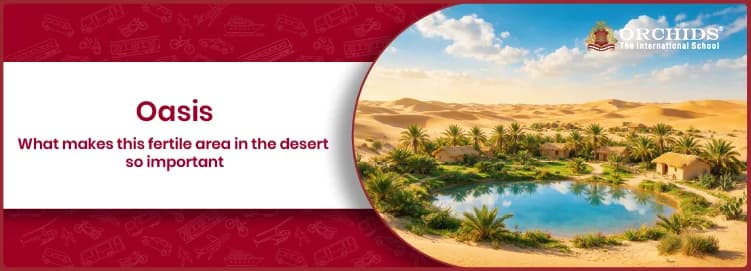
Oasis have played a significant role in developing trade routes, agriculture and civilizations in the desert for over centuries. Oasis are the small island of life in the middle of deserts that have significance in shaping life in some of the harshest ecosystems on earth. Without them, there would be no human settlement in the deserts of the world including Sahara and Arabian desert. Understanding what an oasis is and how it is formed, will help you learn how water availability can sustain life in some of the arid regions on the earth.
Table of Contents
- What is an Oasis
- How is an Oasis Formed
- Types of Oasis
- Importance of Oasis
- Frequently Asked Questions about an Oasis

What is an Oasis
The word oasis is an ancient Egyptian word which means cauldron that signifies a dwelling place or a settlement in the desert where plants, animals and humans can survive. The oasis is a green fertile land in the middle of an arid region such as desert. The water in an oasis is either present on the surface or inside the ground for the region to become green with the plants growing around. In the dry and lifeless desert, the oasis is a highly significant island of life which provides shelter, water and food for its inhabitants. Let’s learn how an oasis is formed and its types along with importance in our life
How is Oasis Formed
An oasis is formed when underground water comes on the surface. Although there is very little rainfall in most of the deserts, the closeby hills and mountains may receive some rainfall that lets the water seep into the ground and store there. By slowly going through layers of rock and sand, sometimes for hundreds of kilometres this water collects underground to form a large underground store of water called aquifer. When the water in some low-lying spots in the desert rises naturally to the surface it becomes an oasis. Sometimes people dig wells to reach the water where plants and life appear in a region. If there is groundwater available, plants like date palms start growing slowly and over time and a green oasis is formed.
Types of Oasis
Oasis can be classified into three major categories:
Spring Oasis: The spring oasis is a natural area of plantation that is formed due to underground spring or freshwater wells. An example of such an oasis is the Seva oasis in Egypt.
River-fed Oasis: A river that flows through some desert may give a permanent source of water for large elongated oasis in the desert. An example of such an oasis is the Nile valley oases in the Egyptian desert.
Artesian Oasis: This is a natural oasis that is formed when underground water rises to the surface on its own, without any human help. For instance, oases of Algeria and Tunisia.
Importance of Oasis
Oasis are an incredibly important resource of freshwater in the driest areas on earth and protecting them is highly important for sustaining life in such regions.
- They are a vital source of fresh drinking water for the settlements. People, animals and plants can survive in such dry regions solely due to the presence of these natural oases.
- They support agriculture and food production in some of the driest parts. Foods like dates, olives, figs and a few vegetables grow in the fertile soil around the oasis.
- Most villages and towns are built around oases as water is an essential commodity for the survival of humans and animals.
- It provides habitat to many plants and animals species and is also a tourist attraction due to its scenic beauty.
- Oasis have historical significance. In ancient times many travellers going through deserts regions relied heavily on oases during their journey for drinking water and refilling their supplies.
- The development of trade routes through oasis in the desert made them significant contributors to the economy. They have contributed to the economy in the past as well as today as many people in deserts are still dependent on them for livelihood.
Frequently Asked Questions about an Oasis
1. What is an oasis in the desert? How are they important?
An oasis is a life supporting land found in the desert. This green, fertile area with water in the middle of a desert is formed when underground water rises to the surface or is brought up through wells. They provide water, support farming and help people to live in deserts.
2. What are some famous oases around the world?
Siwa Oasis in Egypt, Al-Ain Oasis in United Arab Emirates, Huacachina Oasis in Peru,
Liwa Oasis in the United Arab Emirates and Tafilalt Oasis in Morocco are some of the famous oases across the world.
3. Which is the most common plant found across the oases?
The date palm tree is one of the most common plants found in oases because its deep roots can reach underground water.
4. What is the role of oasis in the historical trade routes?
Oases played an important role in development of trade by serving as a resting place for traders and travellers crossing the desert. Many trade routes were developed around them such as the silk route.
Understanding the world starts with the environment around us. To see how Orchids The International School brings EVS to life, reach out to our admissions team.


Admissions Open for 2026-27
What type of concept pages would you prefer?
CBSE Schools In Popular Cities
- CBSE Schools in Bangalore
- CBSE Schools in Mumbai
- CBSE Schools in Pune
- CBSE Schools in Hyderabad
- CBSE Schools in Chennai
- CBSE Schools in Gurgaon
- CBSE Schools in Kolkata
- CBSE Schools in Indore
- CBSE Schools in Sonipat
- CBSE Schools in Delhi
- CBSE Schools in Rohtak
- CBSE Schools in Bhopal
- CBSE Schools in Aurangabad
- CBSE Schools in Jabalpur
- CBSE Schools in Jaipur
- CBSE Schools in Jodhpur
- CBSE Schools in Nagpur
- CBSE Schools in Ahmednagar
- CBSE School In Tumkur











Orchids The International School is one of India's leading chains of CBSE and ICSE schools, with 130+ schools across the country.