

Nikola Tesla
Nikola Tesla, who is the “Father of Radio”, didn’t just imagine ideas; he transformed them into real inventions. And because of this, Nikola Tesla is best known for his work in Alternating Current (AC), electromagnetism, and wireless communication. His inventions have had a long-lasting impact on technology and our daily lives.
This perfect guide shares all about his life, his inventions, and the reason why he is remembered as one of the smartest minds in history.
Table of Contents
- Who is Nikola Tesla?
- Nikola Tesla’s Education and His Scientific Achievements
- Nikola Tesla’s Contribution to Alternating Current (AC)
- Nikola Tesla’s Other Contribution
- Frequently Asked Questions on Nikola Tesla

Who is Nikola Tesla?
Nikola Tesla was a famous scientist who changed the world with his interesting ideas. He was a tireless experimenter. Over his lifetime, Nikola Tesla had 700 patents in the US and Europe. He was born on 10th July 1856 in Smiljan. From a young age, he showed the world his sharp mind and a love for learning.
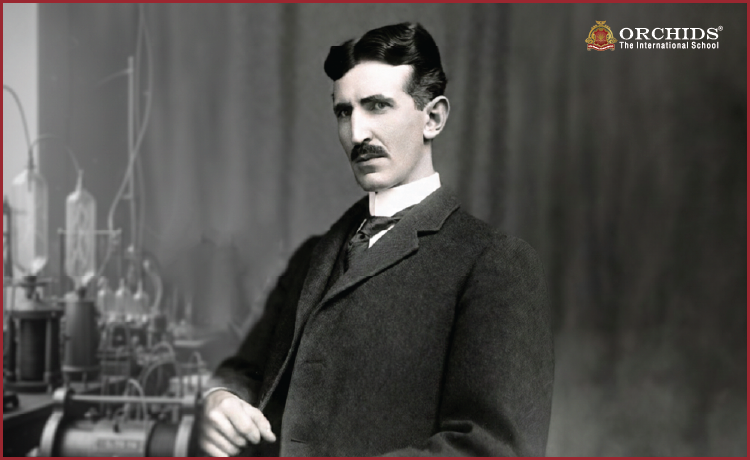
Nikola Tesla created many important electric devices, such as the Tesla coil and induction motor, which are still widely used in today's technology. But he didn’t stop. He also worked in electricity and electromagnetism continued to influence our modern physics.
Now, let’s see how his education and his hard work helped him achieve all this.
Nikola Tesla’s Education and His Scientific Achievements
Tesla studied in several European countries, including Germany, Austria, and Prague. He pursued electrical engineering at the Austrian Polytechnic in Graz and later studied at Charles-Ferdinand University in Prague.
In the late 1870s, Tesla worked at the Telephone Exchange in Budapest, where he improved several inventions and developed the idea for the induction motor, which used electromagnetic induction instead of direct electrical connections.
You may be surprised to know that at age 28, Tesla moved to the United States to grab more opportunities. For a short period, he worked with Thomas Edison. But when Edison refused to pay him properly, Tesla left and continued his inventions independently.
Nikola Tesla’s brilliance was recognised in many different ways around the world. Here are some of the major honours he received:
|
Honour / Recognition |
Year |
Details |
|
U.S. Postal Service Stamp |
1983 |
Tesla was honoured with a commemorative postage stamp. |
|
Inducted into Inventor’s Hall of Fame |
1975 |
Recognised for his major contributions to science and engineering. |
|
Nikola Tesla Award (Institute of Electrical Engineers) |
Since 1976 |
One of the most prestigious awards in electrical engineering. |
|
Nikola Tesla Award (Area Power Conference, Duluth, Minnesota) |
Since 1968 |
Presented annually; sponsored by Siemens Westinghouse Power Corporation. |
|
Nikola Tesla Statue, Goat Island |
— |
Honours Tesla’s work at the Niagara Falls Power Station in 1896. |
|
Nikola Tesla Corner, New York City |
— |
A street corner at 40th St. & 6th Ave is named to celebrate Tesla’s legacy. |
Nikola Tesla's name has been honoured with an International Unit of Magnetic Flux Density called "Tesla".
Nikola Tesla’s Contribution to Alternating Current (AC)
Nikola Tesla is best known for his groundbreaking work on Alternating Current (AC), a system that changed the world of electricity. Unlike Direct Current (DC), which could only travel short distances, AC allowed electricity to be transmitted efficiently over long distances without major energy loss.
And interestingly, this made it possible to distribute power to large cities, remote areas, and industries far from power stations.
Tesla’s innovative AC patents were later purchased by George Westinghouse, who recognised their potential. They were famously used to power and illuminate the Chicago World’s Fair in 1893.
An interesting fact about this public demonstration is, it proved that AC was safer, more efficient, and more practical than competing systems. His contribution to AC technology not only revolutionised the energy industry but also established him as one of the most visionary inventors in history.
Nikola Tesla’s Other Contribution
Nikola Tesla inventions include discovering and developing many devices, though some were later patented by others. So, let’s take a closer look at his life’s amazing contributions and discoveries.
- In 1895, Tesla helped build one of the first AC hydroelectric power plants at Niagara Falls. By the next year, it powered Buffalo, New York.
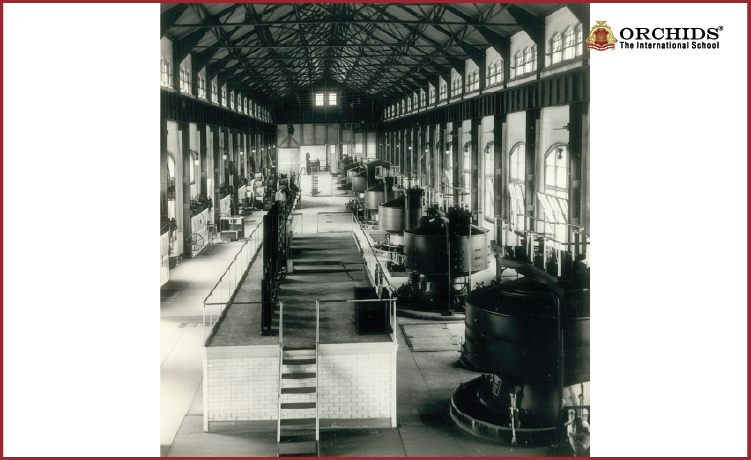
This proved that AC electricity could work on a large scale and helped it become the global standard.
- Tesla patented the Tesla coil in the late 1800s. This device produces high-voltage, high-frequency electricity.
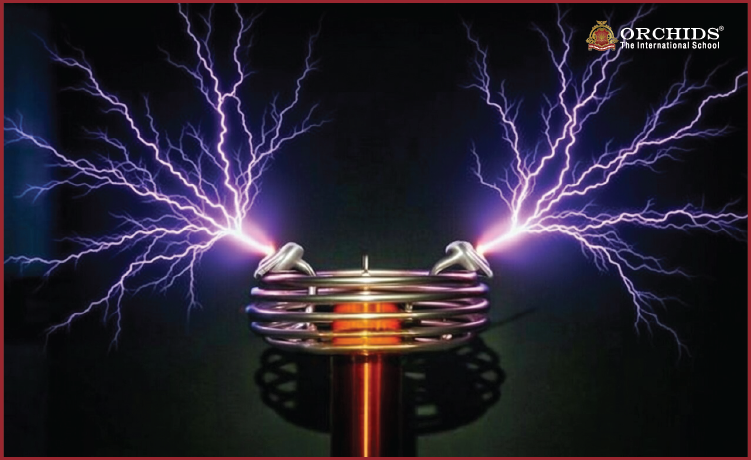
He used it to study X-rays, radio waves, fluorescence, and wireless power. Even today, the Tesla coil is important in radio and electrical experiments.
- Later in life, Tesla claimed he had designed a powerful “Death ray”. It is a theoretically directed-energy weapon (electromagnetic weapon), he believed, that could destroy targets from a distance.
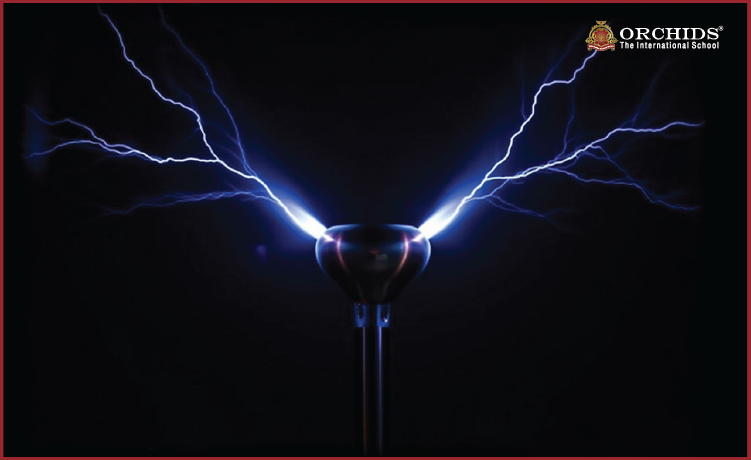
While it was never built, it attracted attention from the FBI and even the Soviet Union during WWII. This shows just how daring and imaginative Tesla was! Interesting!
- Around 1900, Tesla dreamed of wireless electricity for everyone. With support from J.P. Morgan, he built a huge tower called Wardenclyffe in New York.
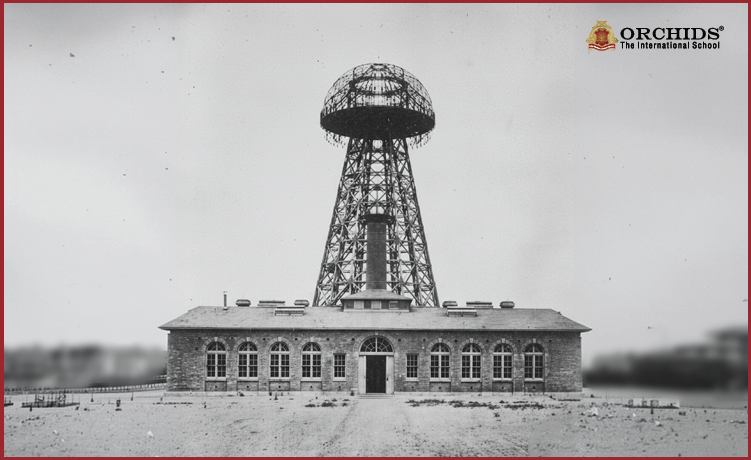
The goal was to send electricity and information across the world without wires.
- Tesla experimented with radio waves as early as 1892. In 1898, he demonstrated a radio-controlled boat at Madison Square Garden, impressing everyone.
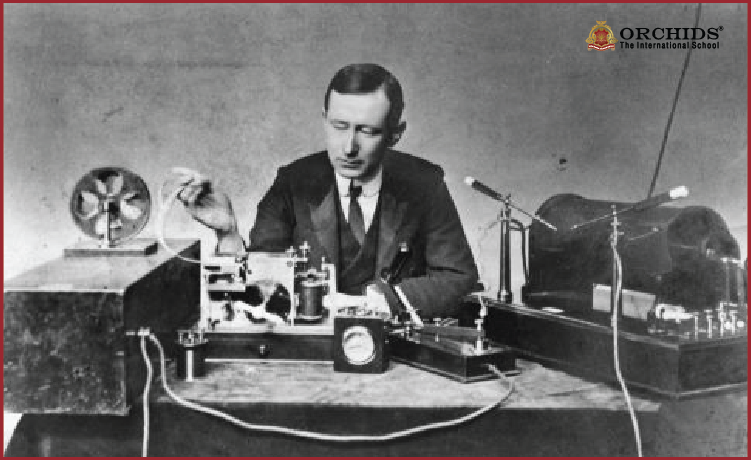
Later, the U.S. Supreme Court officially recognised Tesla as the true inventor of radio in 1943. So, people started calling him the “Father of Radio.”
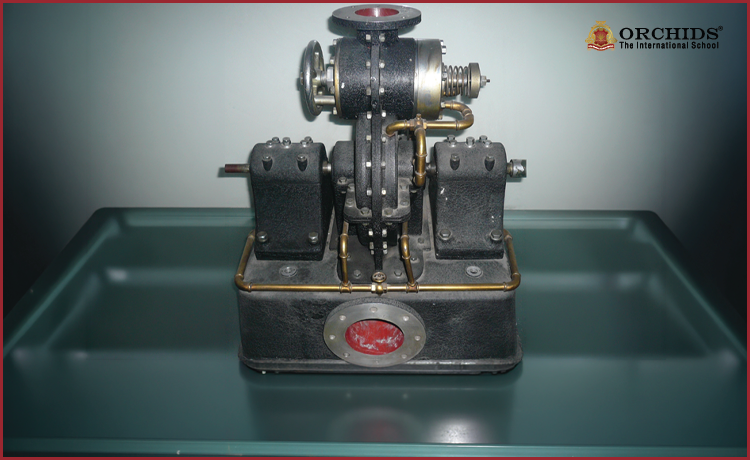
- Tesla invented a bladeless turbine engine using spinning disks instead of pistons. It achieved 90% fuel efficiency, making it far ahead of its time.
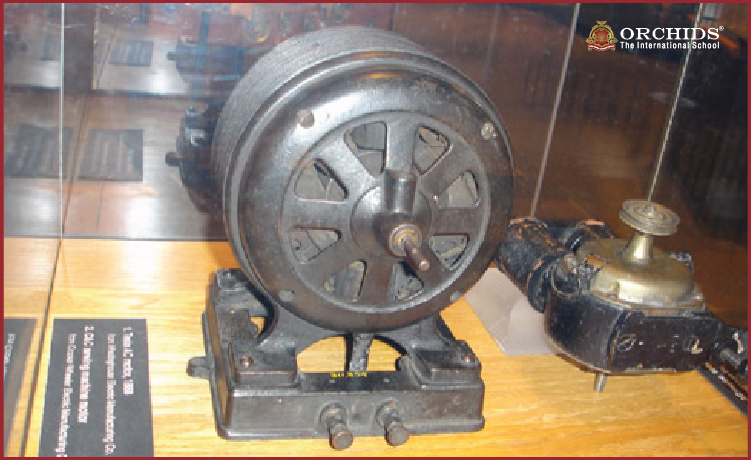
- In 1885, Tesla developed the first AC commutator-free three-phase induction motor, independently alongside Galileo Ferraris. These motors are still used in vacuum cleaners, hair dryers, and power tools today.
So far, we have seen that Nikola Tesla changed the world with his brilliant ideas and inventions. His work in electricity, radio, and wireless technology still powers our modern world. Even today, Tesla is remembered as a genius whose imagination and hard work shaped the future of science and technology.
Frequently Asked Questions on Nikola Tesla
1. Who is Nikola Tesla?
Nikola Tesla was a Serbian‑American inventor and electrical engineer, famous for his work in alternating current (AC) and many other groundbreaking discoveries.
2. What is Tesla best known for?
Tesla is best known for inventing the AC electrical system, which made it possible to power distant cities efficiently.
3. What are some of Nikola Tesla inventions?
Nikola Tesla inventions include the Tesla coil, induction motor, bladeless turbine, and his ideas for wireless power and radio.
4. How did Tesla contribute to wireless communication?
Tesla experimented early with radio waves, showing a radio‑controlled boat and later being legally recognised as the true inventor of radio.
5. What was Tesla’s dream of “free energy”?
Tesla planned a global, wireless power system at Wardenclyffe Tower to share both electricity and information without wires.
6. What is a Tesla coil, and why is it important?
A Tesla coil is a special transformer that creates high-voltage, high-frequency electricity, used by Tesla for experiments in X‑rays, glowing lamps, and wireless power.
7. Did Tesla work on power plants?
Yes, his AC system was used in the early hydroelectric power plant at Niagara Falls, helping power the city of Buffalo, New York.
8. What is the Tesla turbine?
The Tesla turbine is a bladeless engine that utilises stacked, smooth disks instead of blades, making it highly efficient.
Science isn't just a subject, it's the way of seeing the world. Curious how Orchids The International School teaches it that way? Talk to our admissions team.
Admissions Open for 2026-27
What type of concept pages would you prefer?
CBSE Schools In Popular Cities
- CBSE Schools in Bangalore
- CBSE Schools in Mumbai
- CBSE Schools in Pune
- CBSE Schools in Hyderabad
- CBSE Schools in Chennai
- CBSE Schools in Gurgaon
- CBSE Schools in Kolkata
- CBSE Schools in Indore
- CBSE Schools in Sonipat
- CBSE Schools in Delhi
- CBSE Schools in Rohtak
- CBSE Schools in Bhopal
- CBSE Schools in Aurangabad
- CBSE Schools in Jabalpur
- CBSE Schools in Jaipur
- CBSE Schools in Jodhpur
- CBSE Schools in Nagpur
- CBSE Schools in Ahmednagar
- CBSE School In Tumkur










Orchids The International School is one of India's leading chains of CBSE and ICSE schools, with 110+ schools across the country.