

Effects of Force for Class 8 Science: How Force Changes Motion, Direction, Speed and Shape
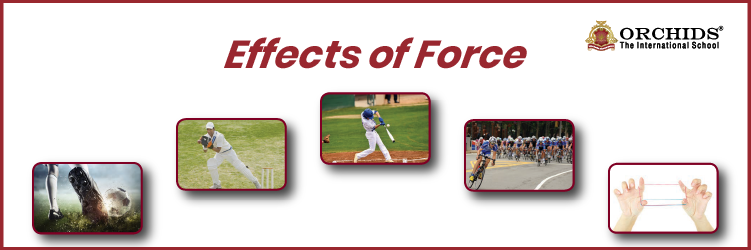
The effects of force help us understand how objects behave when a push or pull is applied to them. Even though we cannot see force directly, we can clearly observe its impact on objects around us. Have you ever wondered why a football starts moving when you kick it or why a bicycle stops when the brakes are applied? All these changes happen because of force.
From moving a ball to shaping clay, force plays a very important role in changing the state and motion of objects in everyday life. In this article, we will understand the different effects of force with simple examples for class 8 students.
Table of Contents
- What Are the Effects of Force
- How Force Changes the State of Rest
- How Force Changes the State of Motion
- CHow Force Changes the Direction of an Object
- CHow Force Changes the Speed of an Object
- How Force Changes the Size or Shape of an Object
- Frequently Asked Questions on Effects of Force

What Are the Effects of Force
A force, which acts as a push or pull, can change the state of an object by affecting its motion, speed, direction, or shape. It can make a stationary object move, stop a moving object, change its speed, or even change its shape.
You cannot see force, but you can observe its effects. A force acting on an object causes the object to:
- Change its state of rest
- Change its state of motion
- Change its direction:
- Change its speed
- Change its size or shape
Let's discuss them one by one.
How Force Changes the State of Rest
Think about a ball lying on the ground. What happens when you kick it?
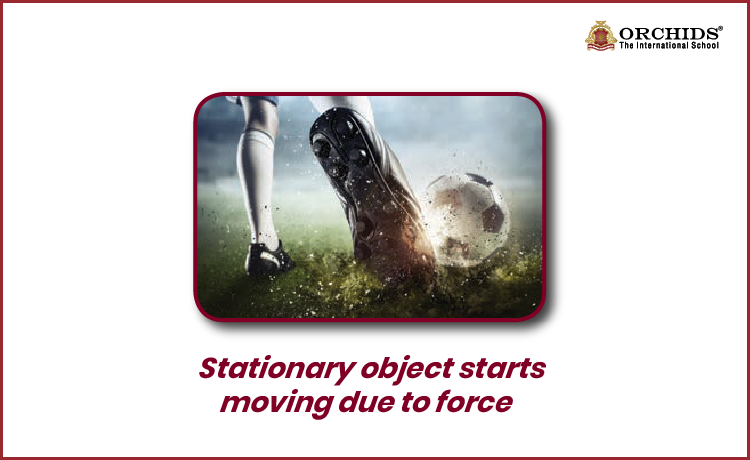
A stationary object starts moving when acted upon by a force. For example, a football starts moving when you kick it. A toy car can be made to move by giving it a little push.
This shows how force can bring an object from rest into motion.
How Force Changes the State of Motion
A moving body comes to rest when acted upon by a force. Have you ever tried stopping a moving object?
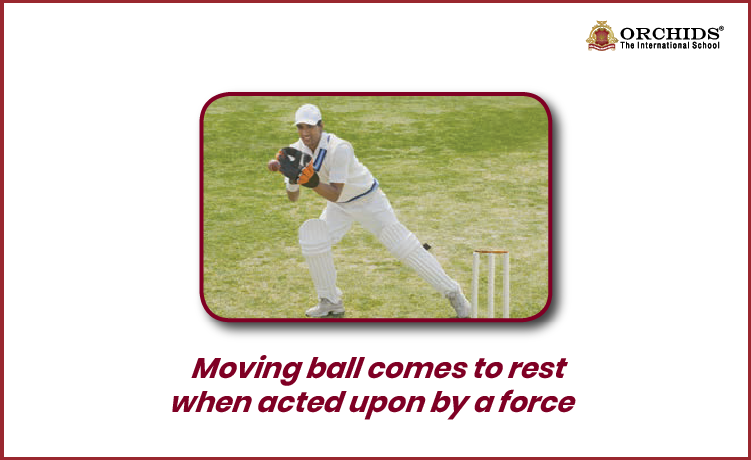
For example, a moving ball caught by a fielder comes to rest. A moving toy car can be made to stop by applying force. A bicycle can be stopped by applying the brakes.
How Force Changes the Direction of an Object
A moving body can change its direction when a force is applied to it.
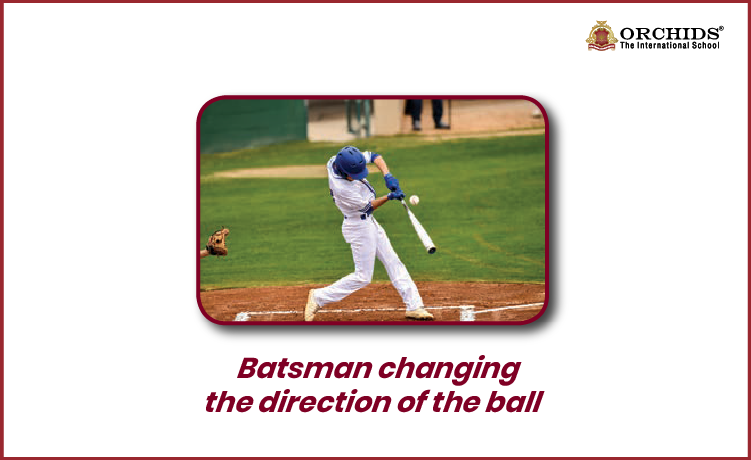
Have you noticed how players control the direction of a ball during a game? For example, a batsman changes the direction of the ball bowled by a fast bowler. While playing football, the players can change the direction of the moving ball by kicking it in a different direction.
How Force Changes the Speed of an Object
A moving body can change its speed when acted upon by a force.
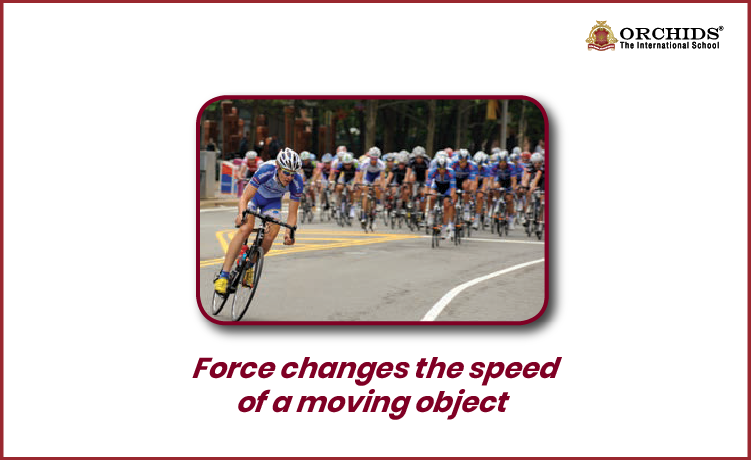
What happens when you pedal a bicycle faster? For example, the cycle starts moving faster when we apply more force on the pedals.
Also, a bicycle can be slowed down by applying the brakes.
How Force Changes the Size or Shape of an Object
Objects change their shape or size when acted upon by a force.
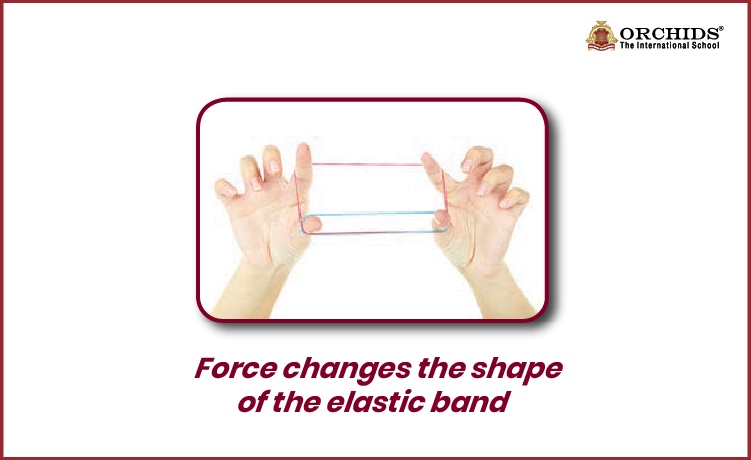
For example, a rubber band, when stretched, changes its size and shape. We can mould a lump of clay into a variety of shapes by applying force.
The effects of force explain how a push or pull can change an object's state of rest, motion, direction, speed, or shape. These changes can be observed in many everyday activities, such as kicking a football, applying bicycle brakes, stretching a rubber band, or moulding clay. Learning about the effects of force helps Class 8 students understand how forces act on objects and why they are important in science as well as in daily life.
Frequently Asked Questions on Effects of Force
1. What are the effects of force on objects?
Force can change the state of rest, motion, direction, speed, and shape of an object.
2. Can force change the direction of an object?
Yes, force can change the direction of a moving object.
3. How does force affect the speed of a moving object?
Force can increase or decrease the speed of an object.
4. How does force change the shape of any object?
Force can stretch, compress, or mould objects, changing their shape.
5. Give examples of force changing motion.
Catching a ball or applying brakes to a bicycle stops motion.
6. Why can’t we see force with our eyes?
Force is invisible, but its effects can be observed.
7. Can force change both the speed and direction of an object at the same time?
Yes. A single force can change both the speed and direction of an object. For example, when a cricketer hits a moving ball, the ball's speed and direction both change.
8. Which effect of force is seen when applying bicycle brakes?
Applying bicycle brakes decreases the speed of the bicycle and eventually brings it to rest. This shows that force can reduce speed and stop a moving object.
Science isn't just a subject, it's the way of seeing the world. Curious how Orchids The International School teaches it that way? Talk to our admissions team.
Admissions Open for 2026-27
What type of concept pages would you prefer?
CBSE Schools In Popular Cities
- CBSE Schools in Bangalore
- CBSE Schools in Mumbai
- CBSE Schools in Pune
- CBSE Schools in Hyderabad
- CBSE Schools in Chennai
- CBSE Schools in Gurgaon
- CBSE Schools in Kolkata
- CBSE Schools in Indore
- CBSE Schools in Sonipat
- CBSE Schools in Delhi
- CBSE Schools in Rohtak
- CBSE Schools in Bhopal
- CBSE Schools in Aurangabad
- CBSE Schools in Jabalpur
- CBSE Schools in Jaipur
- CBSE Schools in Jodhpur
- CBSE Schools in Nagpur
- CBSE Schools in Ahmednagar
- CBSE School In Tumkur











Orchids The International School is one of India's leading chains of CBSE and ICSE schools, with 110+ schools across the country.