

Earthing
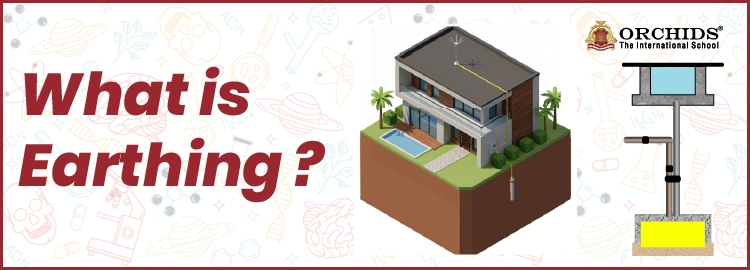
Earthing is an electrical safety measure that connects an electrical system to the ground, providing a low resistance path for excess current to flow safely into the earth. Have you ever touched a metal appliance, such as a refrigerator, washing machine and felt a tiny shock? It might last only a moment, but it surely makes you jump. Now imagine if that shock were stronger. Scary, right?
That’s why buildings and electrical systems need earthing to prevent electric shock to people and damage to equipment caused by faults, short-circuits, or lightning strikes. This article mainly focuses on what earthing is, why earthing is necessary, and its types in detail.
Table of Contents

What Is Earthing?
Earthing is the process of safely transferring excess electric charge from an appliance to the ground using a low resistance wire.
Have you ever noticed the third pin on an electric plug and wondered what it’s actually used for?
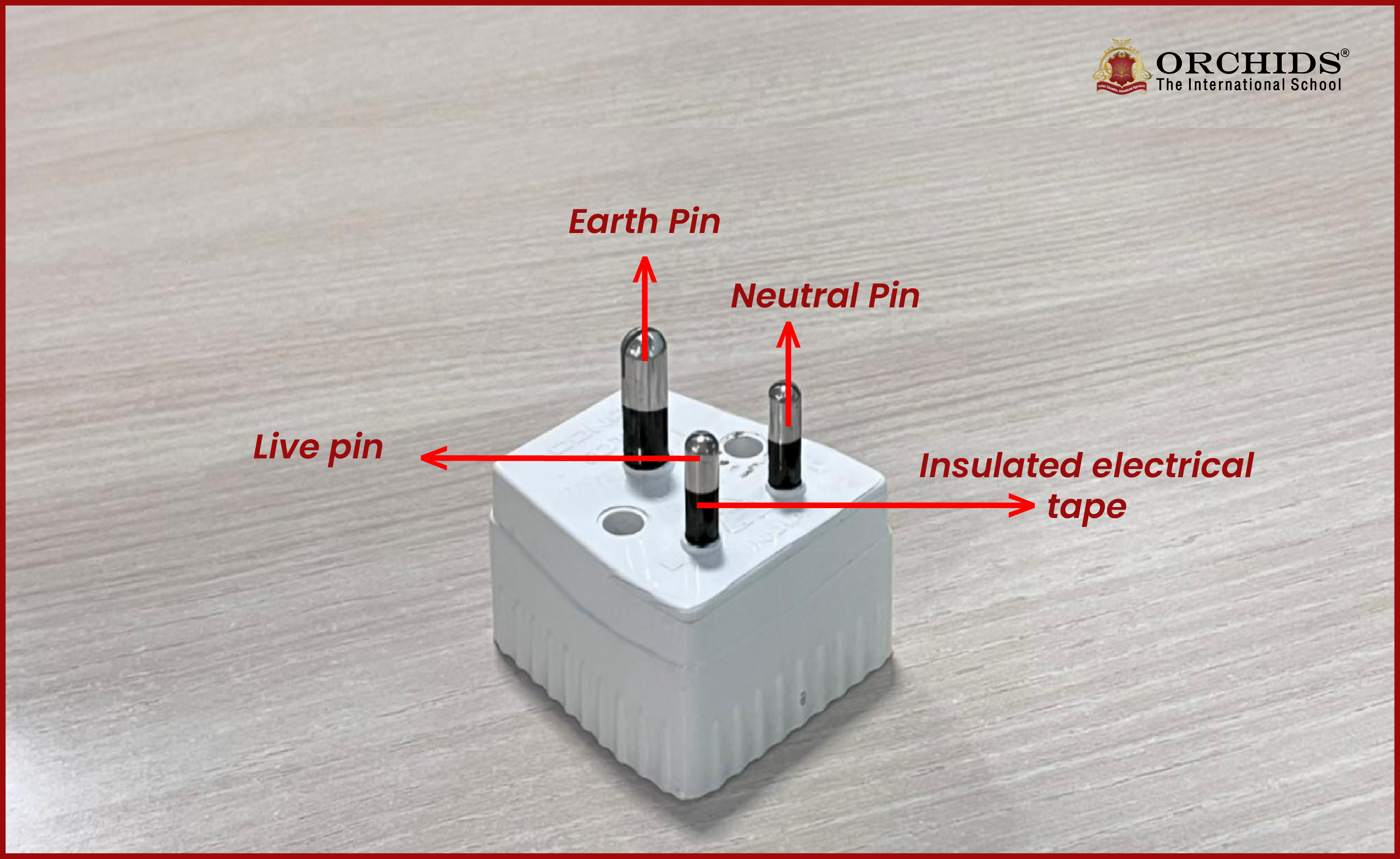
That’s the earth pin, and it is thicker because it carries unwanted current to the ground.
When too much electricity builds up in a device, earthing acts like a “safety door” that lets the extra current escape into the ground. This protects people from electric shocks and prevents devices from getting damaged.
In simple language, Earthing is,
|
“The process in which the sudden discharge of the electric current takes place by transferring charges directly to the earth's ground using a low resistance wire.” |
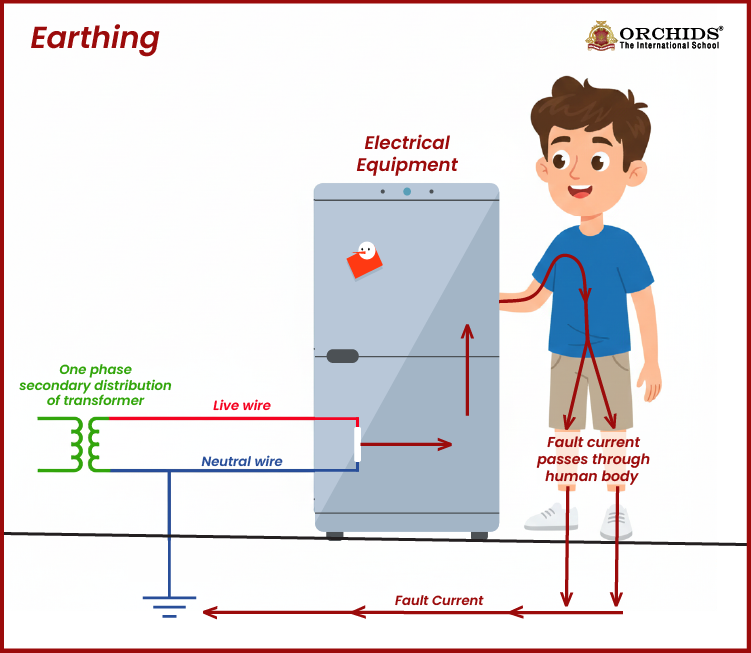
You may wonder after knowing that electricity always chooses the path of least resistance. Earthing provides that easy path so the current does not harm people or damage devices.
|
Did you know?
|
However, one important question arises here: why is earthing necessary? Let's discuss it in the next section,
Why Earthing is Necessary?
Earthing plays a major role in protecting people and devices in homes, schools, and industries. But why is it so important? Here are the key reasons explained below:
-
It prevents electric shocks by giving faulty current a safe path.
-
It protects devices from short circuits and voltage surges.
-
During lightning, the electric charge is safely passed into the ground.
-
It reduces the chances of fire caused by electrical faults.
-
It makes electrical systems more stable and reliable.
Now, let's discuss how earthing is exactly done.
Understanding How Earthing is Done?
Earthing is created by connecting electrical appliances to special metal electrodes placed deep underground.
The picture below shows how the earthing system is connected within an electrical setup.
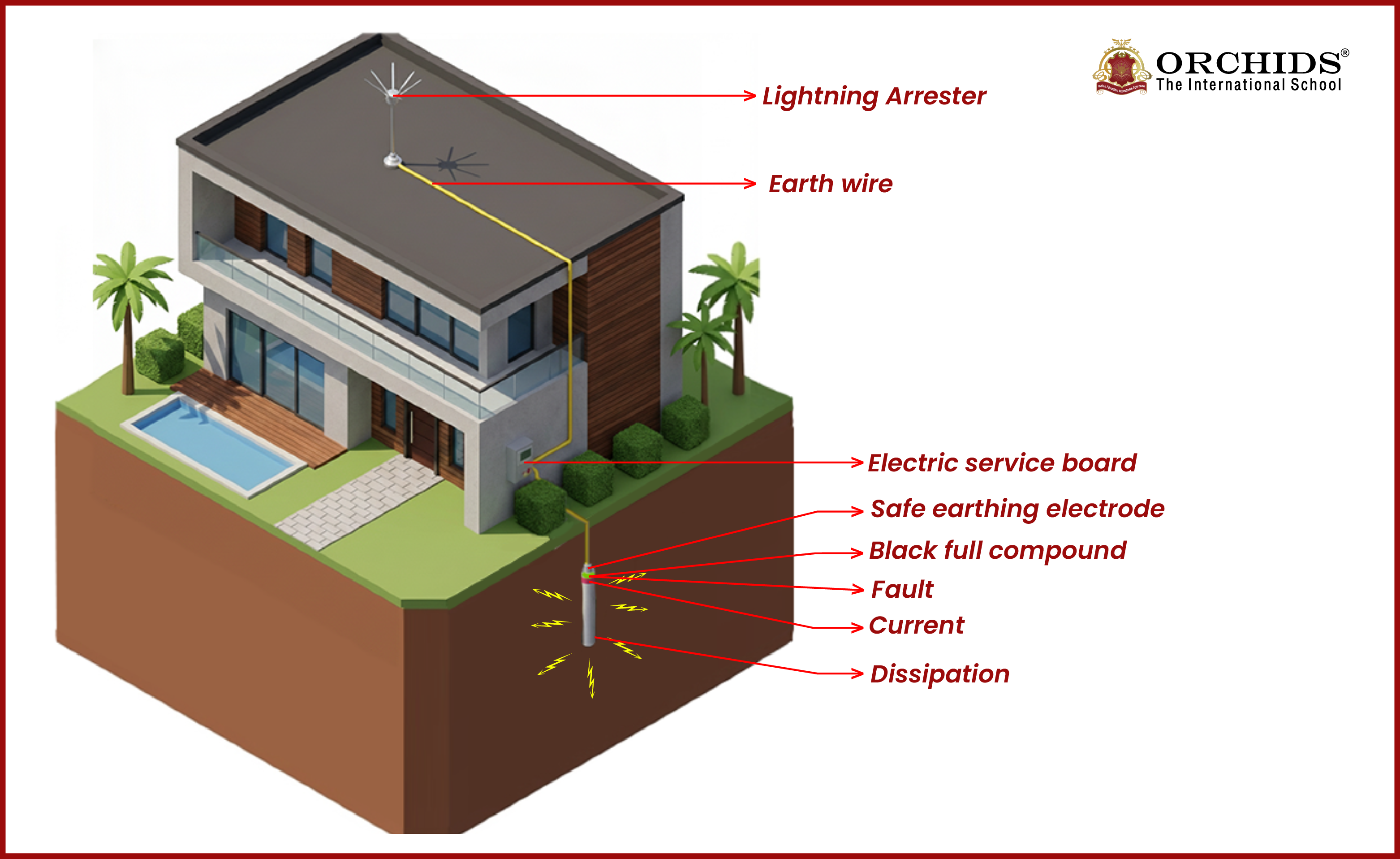
Let's discuss how earthing is done, with the help of easy steps.
-
A metal electrode or metallic plate (made of copper or G.I.) is placed in the ground at a certain depth.
-
It is connected to your electrical system of home using a low-resistance wire.
-
All non-current-carrying metal parts of appliances, like the outer bodies of refrigerators or iron boxes, are connected to the earth wire.
-
If extra current flows due to a fault, it travels safely into the ground.
When you plug in your washing machine, its metal body is already connected to the earth wire. So if any current leakage happens inside the machine, the current escapes into the ground instead of passing through you.
Different Types of Earthing
There are three common types of earthing used in electrical installations:
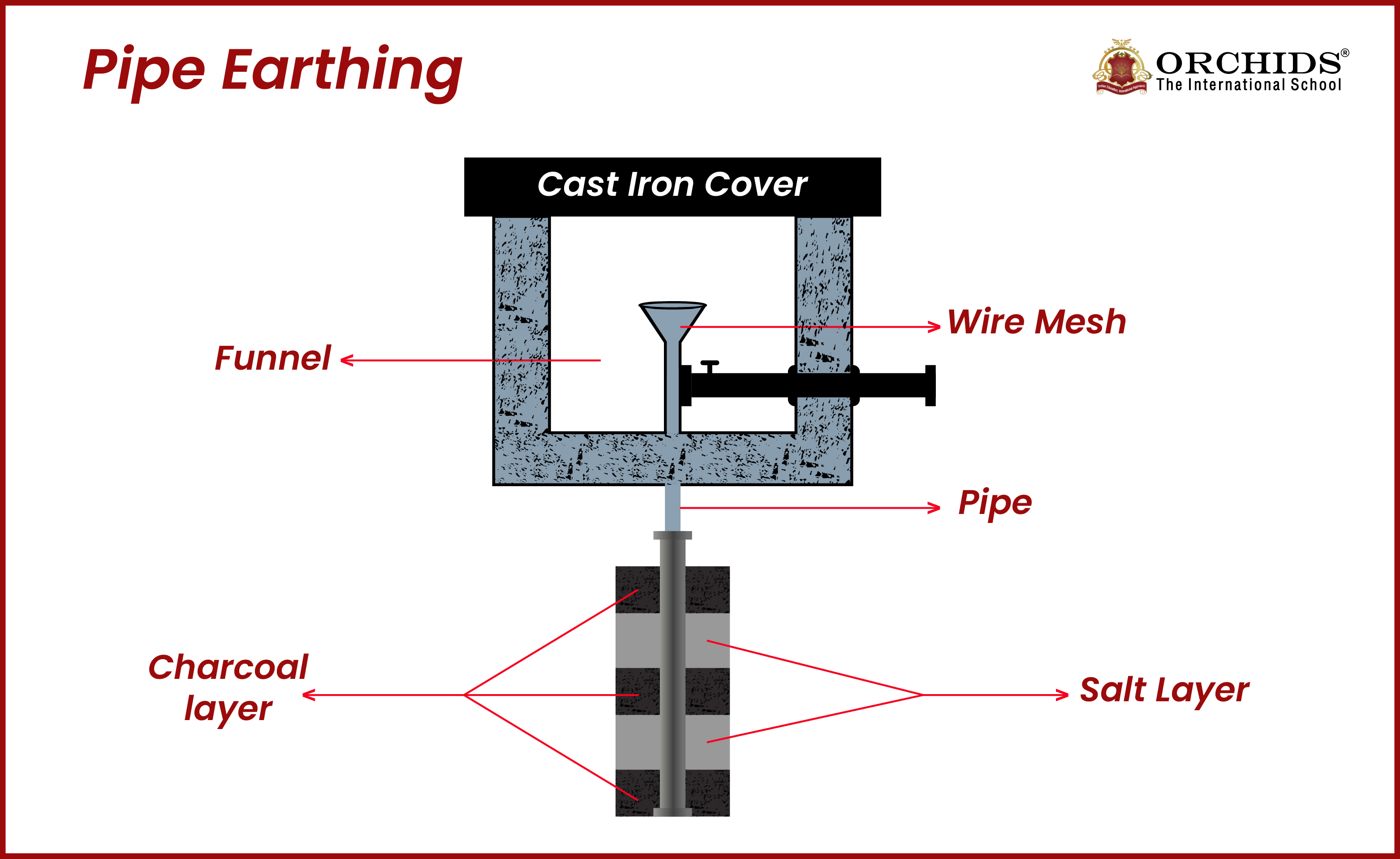
1. In a type of Pipe Earthing, a long, perforated metal pipe (usually galvanised steel) is placed deep into the ground.
Typically, a 38 mm diameter and 2-metre-long pipe is installed vertically to act as the earth electrode. Pipe earthing is economical and widely used in residential areas.
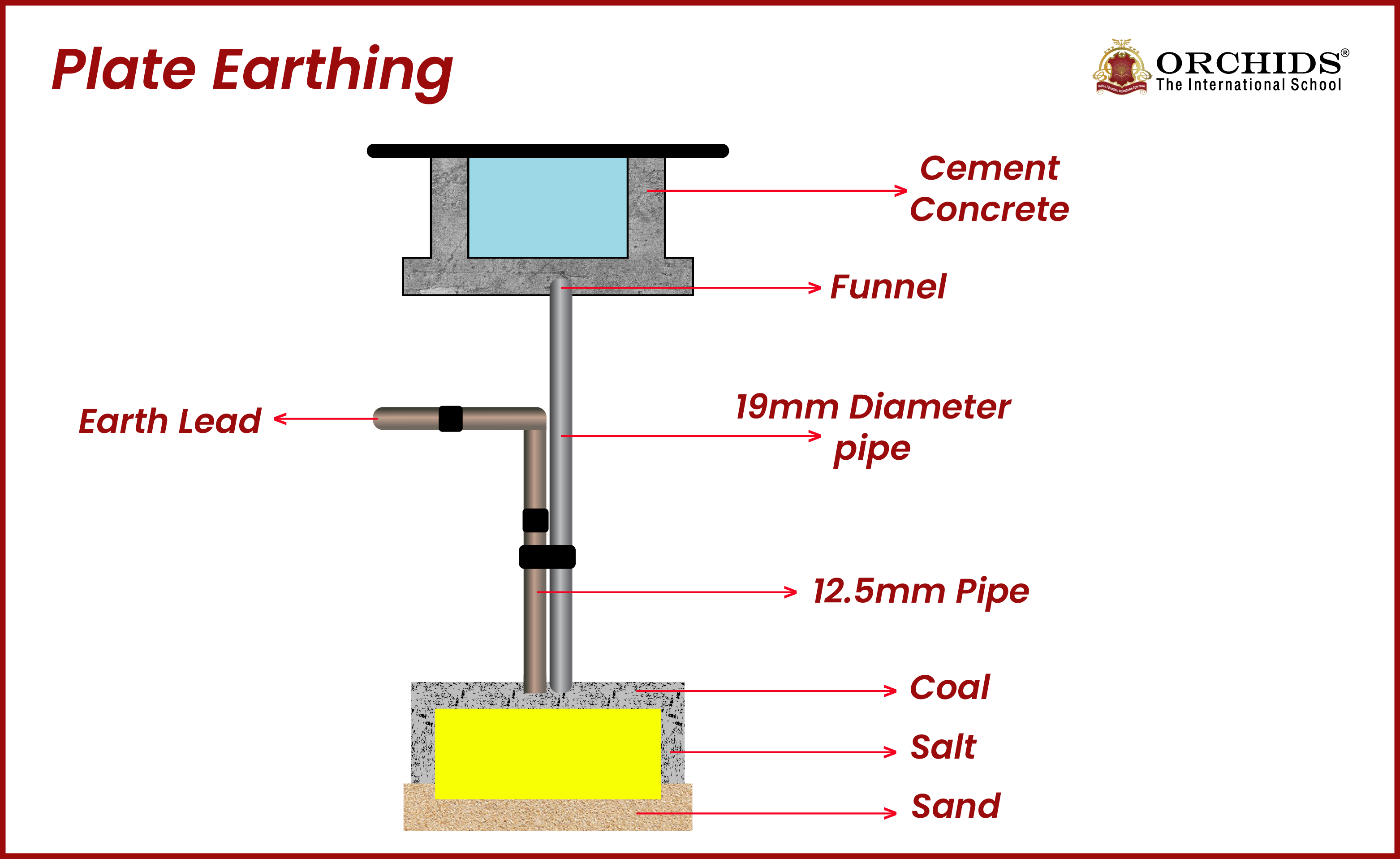
2. Next, in Plate Earthing, a metal plate made of copper or galvanised iron is placed vertically in the ground at a depth of more than 3 metres.
This plate is then connected to the earthing wires of a building or electrical equipment to safely carry excess current into the earth.
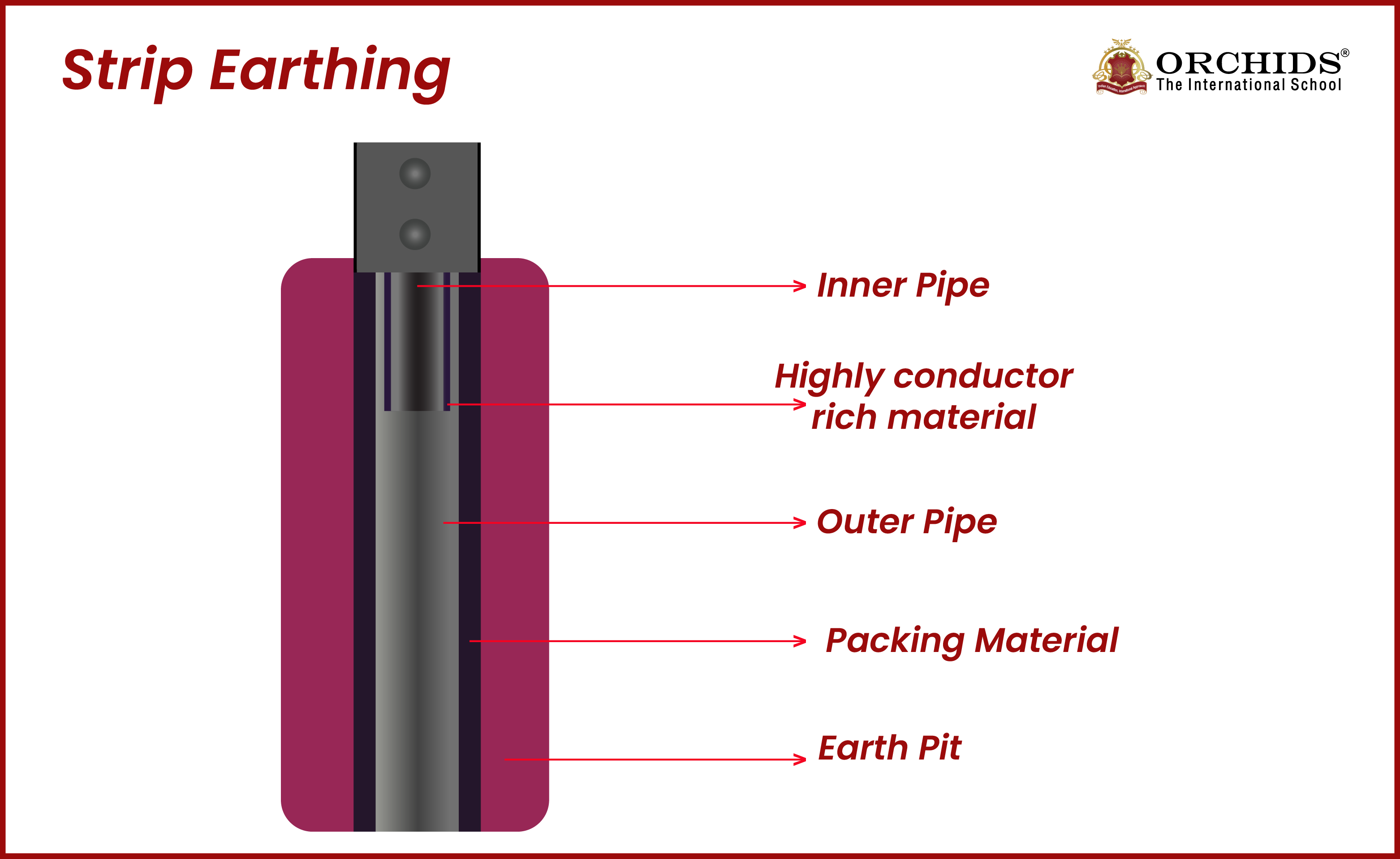
3. At last, in Strip Earthing, long metal strips are buried horizontally in the ground. Strip electrodes, at least 25 mm × 1.6 mm (copper) or 25 mm × 4 mm (G.I. or steel), that are placed in horizontal trenches at a minimum depth of 0.5 metres. This type of earthing is commonly used in areas with limited space, such as factories or industrial zones.
Advantages and Disadvantages of Earthing
Earthing is an essential safety practice in electrical systems. It helps direct excess or fault current safely into the ground, protecting people, appliances, and buildings. While earthing offers many benefits, it also has a few limitations depending on installation quality and environmental conditions.
Below are some of the advantages and disadvantages of earthing.
Advantages of Earthing
-
Prevents electric shocks.
-
Reduces fire risks caused by electrical faults.
-
Protects appliances from high voltage surges.
-
Safeguard buildings during lightning.
-
Minimises electrical noise in sensitive equipment.
-
Improves the overall safety of electrical systems.
Disadvantages of Earthing
-
Poor installation can create a false sense of safety.
-
Earthing materials may corrode over time.
-
Designing and installing proper earthing can be costly.
-
Soil conditions may affect performance.
So far, we have learned that earthing keeps our homes, appliances, and most importantly, us, completely safe from electrical faults. It acts like a safety bridge, allowing excess electricity to escape harmlessly into the ground.
Frequently Asked Questions on Earthing
1. Why is earthing important?
Earthing keeps us safe by sending extra electric current into the ground. It prevents shocks and protects appliances from damage.
2. What is earthing?
Earthing is the basic idea of linking electrical equipment to the earth, providing a low resistance path for excess electrical current to safely flow into the ground.
3. What are the types of earthing?
The types of earthing include plate earthing, pipe earthing, and rod earthing. Each type is used based on soil conditions and safety needs.
4. What does earthing mean, and why is earthing necessary?
Earthing refers to grounding electrical systems for safety. Earthing is necessary to avoid shocks, fires, and sudden power issues.
5. Why is earthing necessary in homes and buildings?
Earthing is necessary because it protects people from electric shocks. It also helps electrical appliances last longer by preventing overloads.
6. How does earthing improve electrical safety?
Earthing improves safety by creating a safe path for excess electricity. This reduces the chance of accidents during faults or short circuits.
Science isn't just a subject, it's the way of seeing the world. Curious how Orchids The International School teaches it that way? Talk to our admissions team.
Admissions Open for 2026-27
What type of concept pages would you prefer?
CBSE Schools In Popular Cities
- CBSE Schools in Bangalore
- CBSE Schools in Mumbai
- CBSE Schools in Pune
- CBSE Schools in Hyderabad
- CBSE Schools in Chennai
- CBSE Schools in Gurgaon
- CBSE Schools in Kolkata
- CBSE Schools in Indore
- CBSE Schools in Sonipat
- CBSE Schools in Delhi
- CBSE Schools in Rohtak
- CBSE Schools in Bhopal
- CBSE Schools in Aurangabad
- CBSE Schools in Jabalpur
- CBSE Schools in Jaipur
- CBSE Schools in Jodhpur
- CBSE Schools in Nagpur
- CBSE Schools in Ahmednagar
- CBSE School In Tumkur











Orchids The International School is one of India's leading chains of CBSE and ICSE schools, with 110+ schools across the country.