

Convex Lens

A Convex lens is one of the most important discoveries in optics. It helps us see things more clearly, magnify small objects, and even focus sunlight to a single point. From the lens in our eyes to the magnifying glasses we play with as kids, convex lenses are everywhere around us.
This article provides insights into what a convex lens is, how it differs from a concave lens, and where we use it in real life.
Table of Contents
- What is a Convex Lens?
- Lens Formula of a Convex Lens
- Types of convex lenses
- Difference Between Convex and Concave Lenses
- Uses of a Convex Lens
- Frequently Asked Questions on Convex Lens

What is a Convex Lens?
A convex lens is nothing but a converging lens, which bends light rays inward to meet at a single point. It is thicker at the centre and thinner at the edges, which is the opposite of a concave lens.
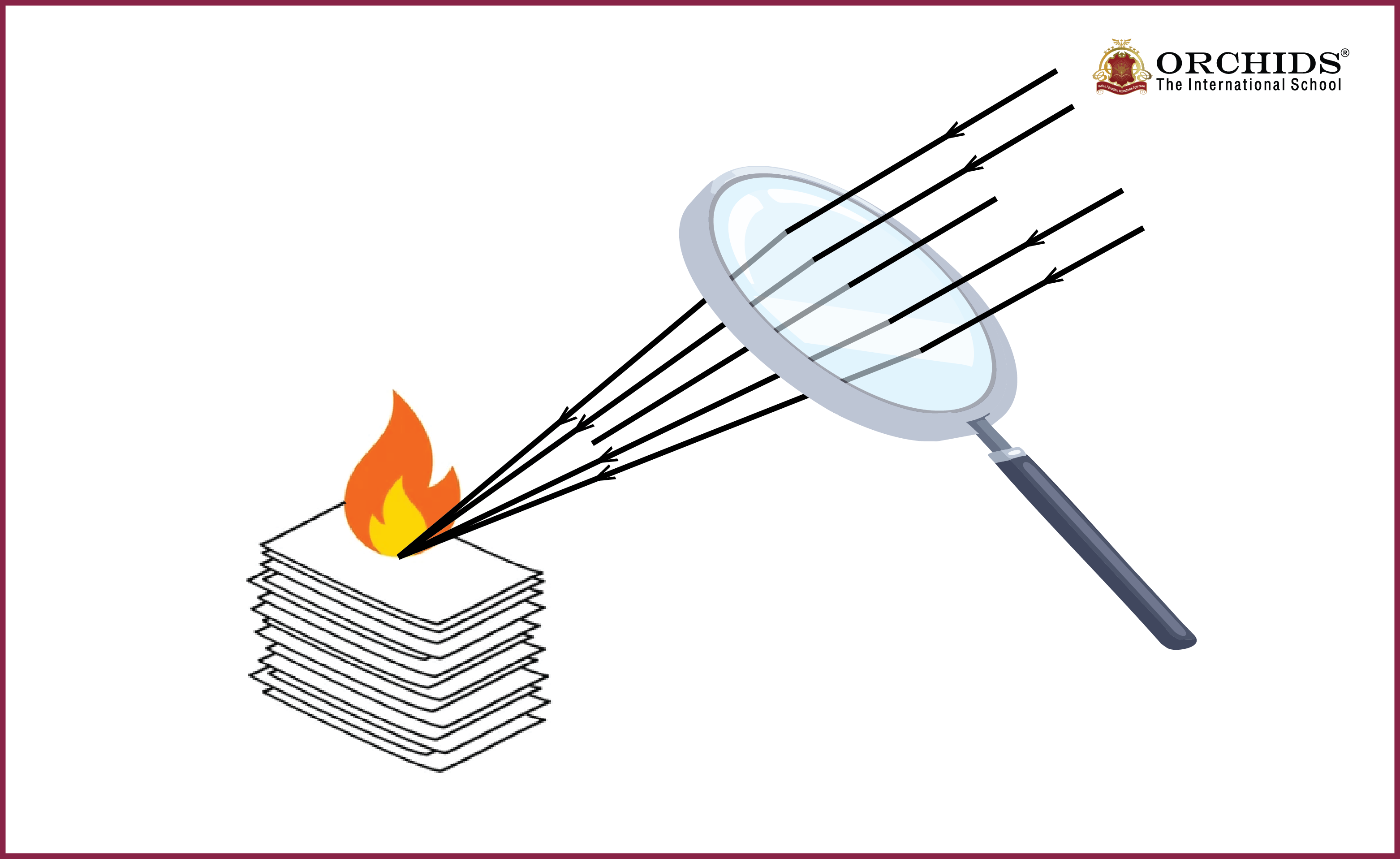
Now, an interesting question comes here: how are convex lenses made?
We already know that a lens is a transparent medium that is bounded by two surfaces, of which one or both may be spherical.
A convex lens is made up of two outwardly spherical surfaces. As we can see in the below convex lens ray diagram,
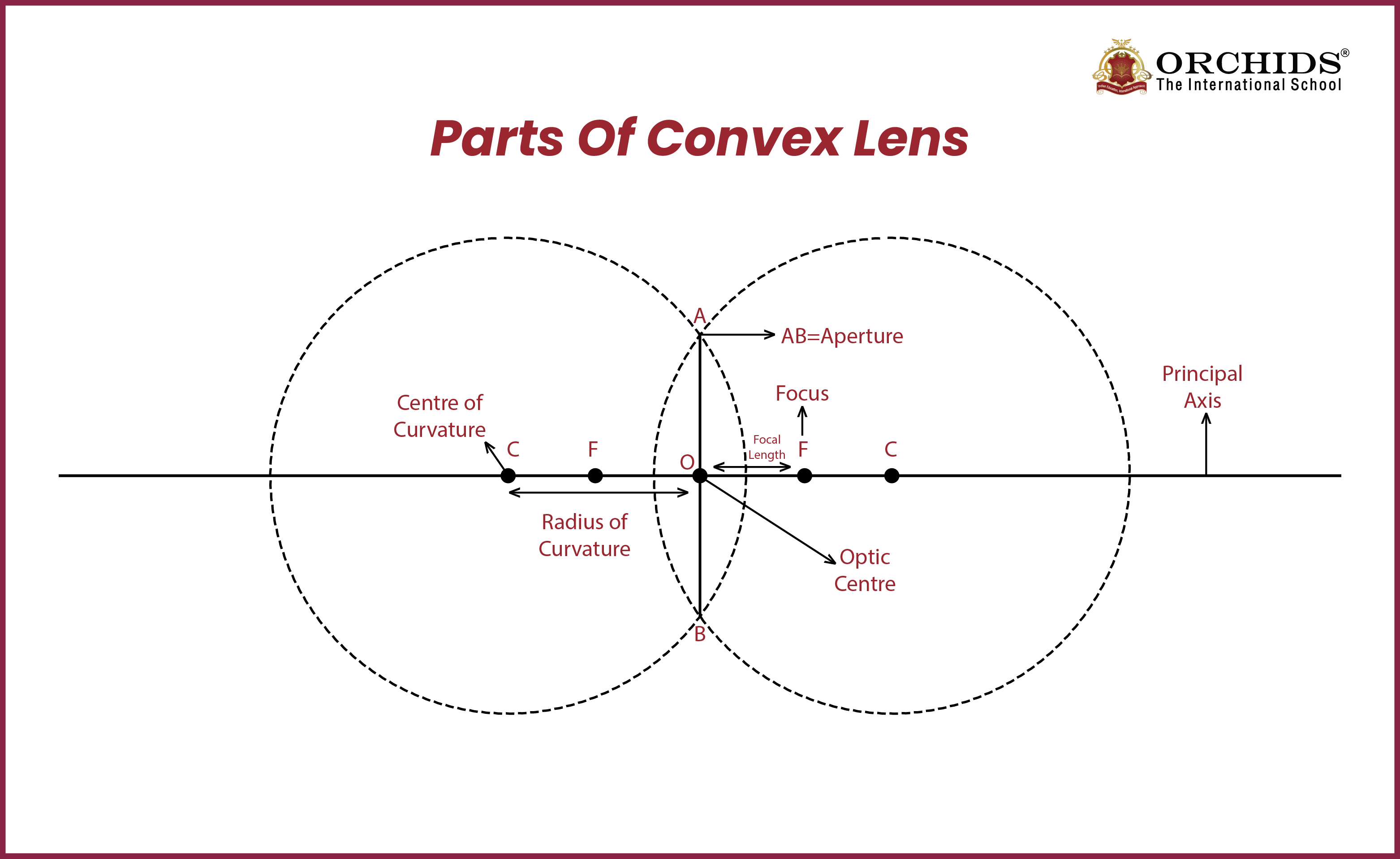
Here are some important terminologies which is related to convex lenses that everyone must know,
-
Aperture AB is the diameter of the lens through which light can pass.
-
The centre of Curvature of the lens is the centre of the sphere from which the convex lenses are made up. It is denoted by C.
-
The optical centre of the lens is the middle point of the lens. It is denoted by O.
-
The radius of curvature is the radius of the sphere. It is denoted by R.
-
The principal axis is an imaginary line passing through the optical centre of the lens, and it is perpendicular to the surface of the lens.
-
Focus is a point on the principal axis at which the parallel light rays converge after the refraction, and the distance of this point from the optical centre is known as the focal length of a convex lens.
Interestingly, The focal length of a convex lens plays an important role in determining where the image will form for a given object position.
To understand this relationship more clearly, let’s look at the mathematical connection between the object distance, image distance, and focal length of a convex lens.
Lens Formula of a Convex Lens
The lens formula shows the relationship between the object distance (u), image distance (v), and focal length of a convex lens (f).
For a convex lens, the focal length (f) is taken as positive because it converges light rays to a point on the opposite side of the lens. The lens formula is:
Where,
-
f = focal length of the convex lens
-
v = image distance from the optical centre
-
u = object distance from the optical centre
Do you know, this formula helps us find the position of the image when the object distance and focal length are known.
The magnification of a convex lens tells us how much larger or smaller the image is compared to the object.
Where:
-
M = Magnification
-
= height of the image
-
= height of the object
For a convex lens, the magnification is usually positive because it forms a real and inverted image on the opposite side of the lens.
Now, let’s move ahead and see how many types of convex lenses exist.
Types of Convex Lenses
There are three main types of convex lenses, each with a unique shape and purpose.
Let’s take a look at them one by one
-
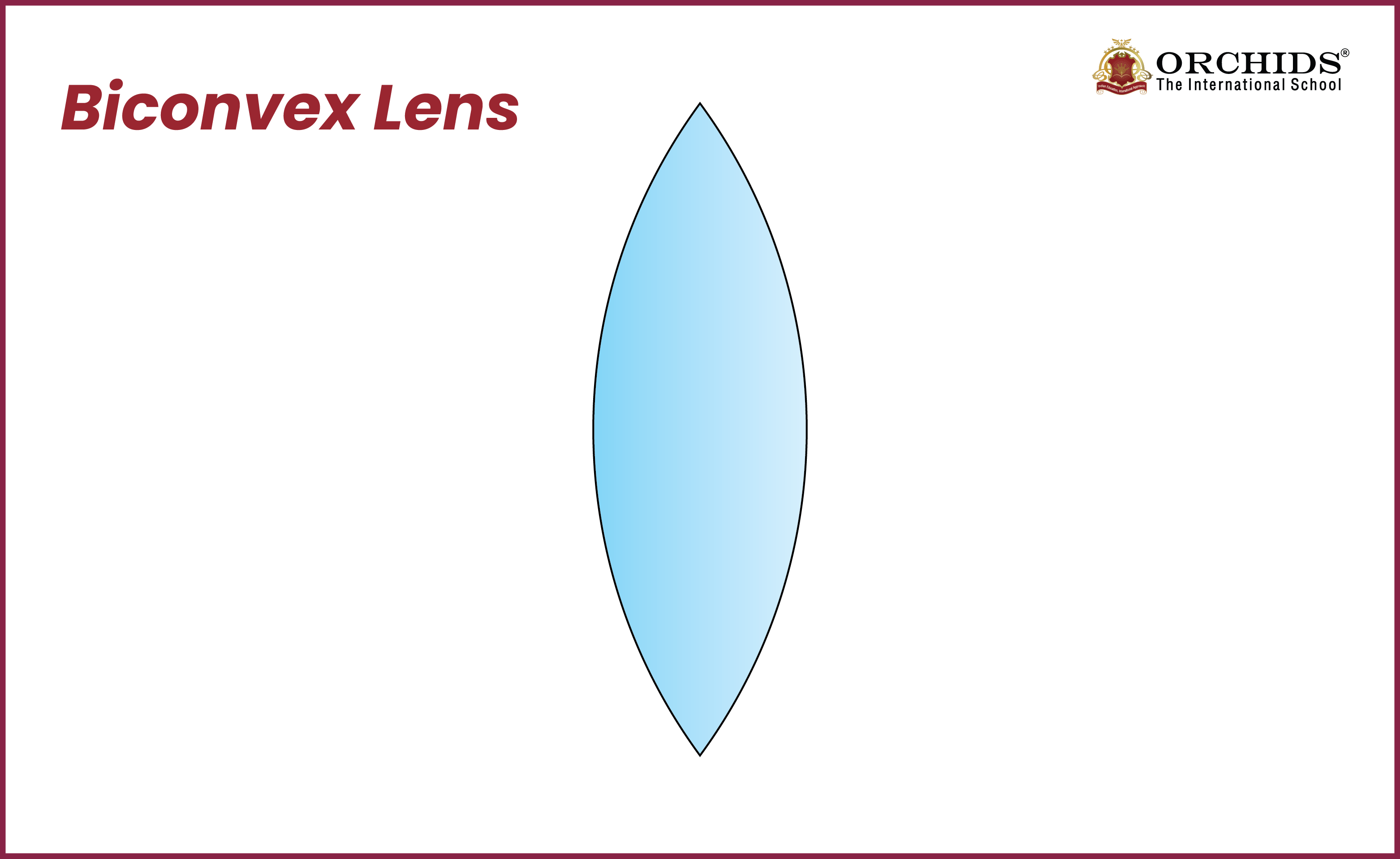
If both surfaces are curved outwards, it is called a Biconvex lens. This is the most common type and is often used in magnifying glasses and cameras.
-
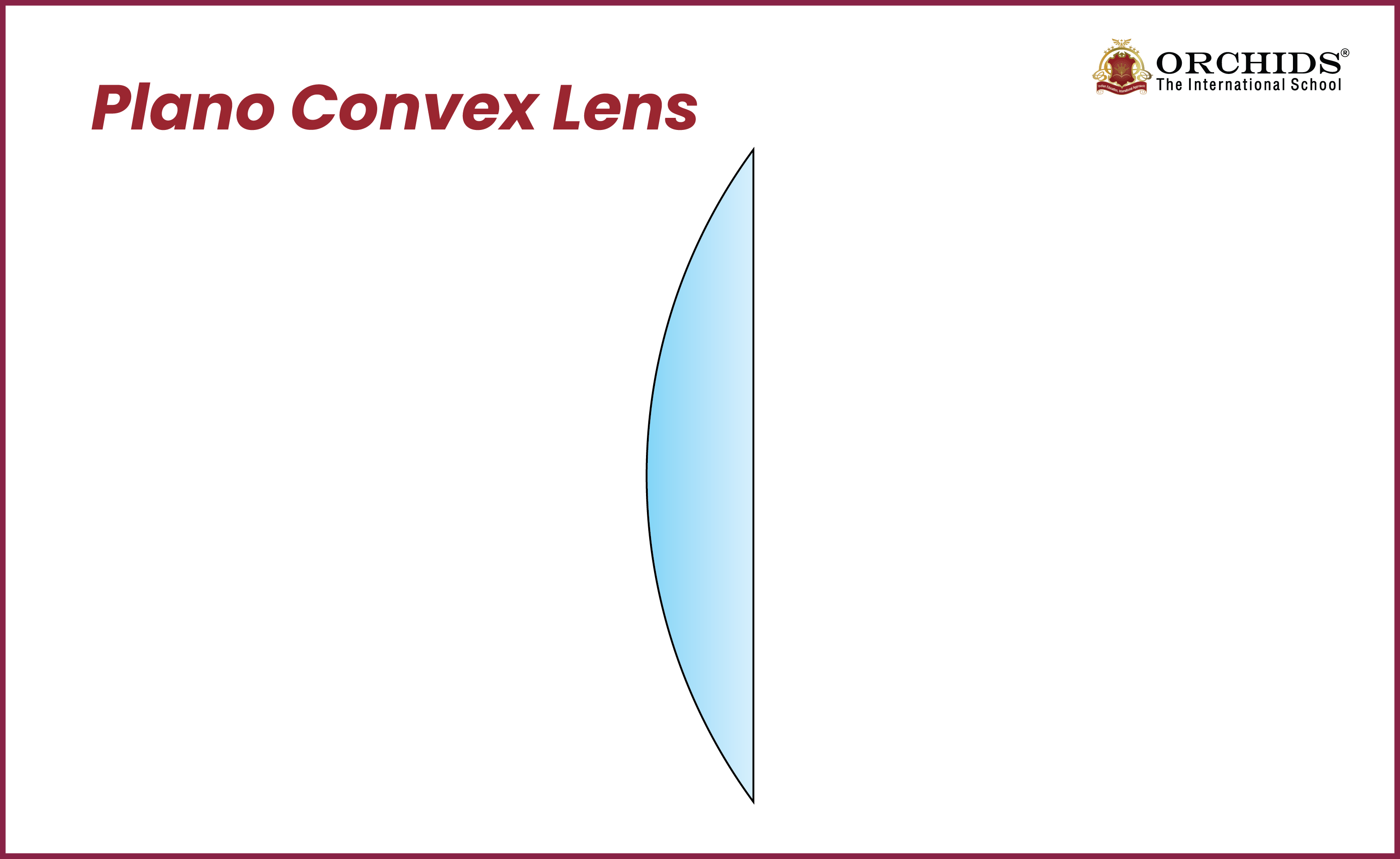
If only one surface is curved while the other one is flat, it is known as a plano-convex lens. These are useful for focusing light in a single direction.
-
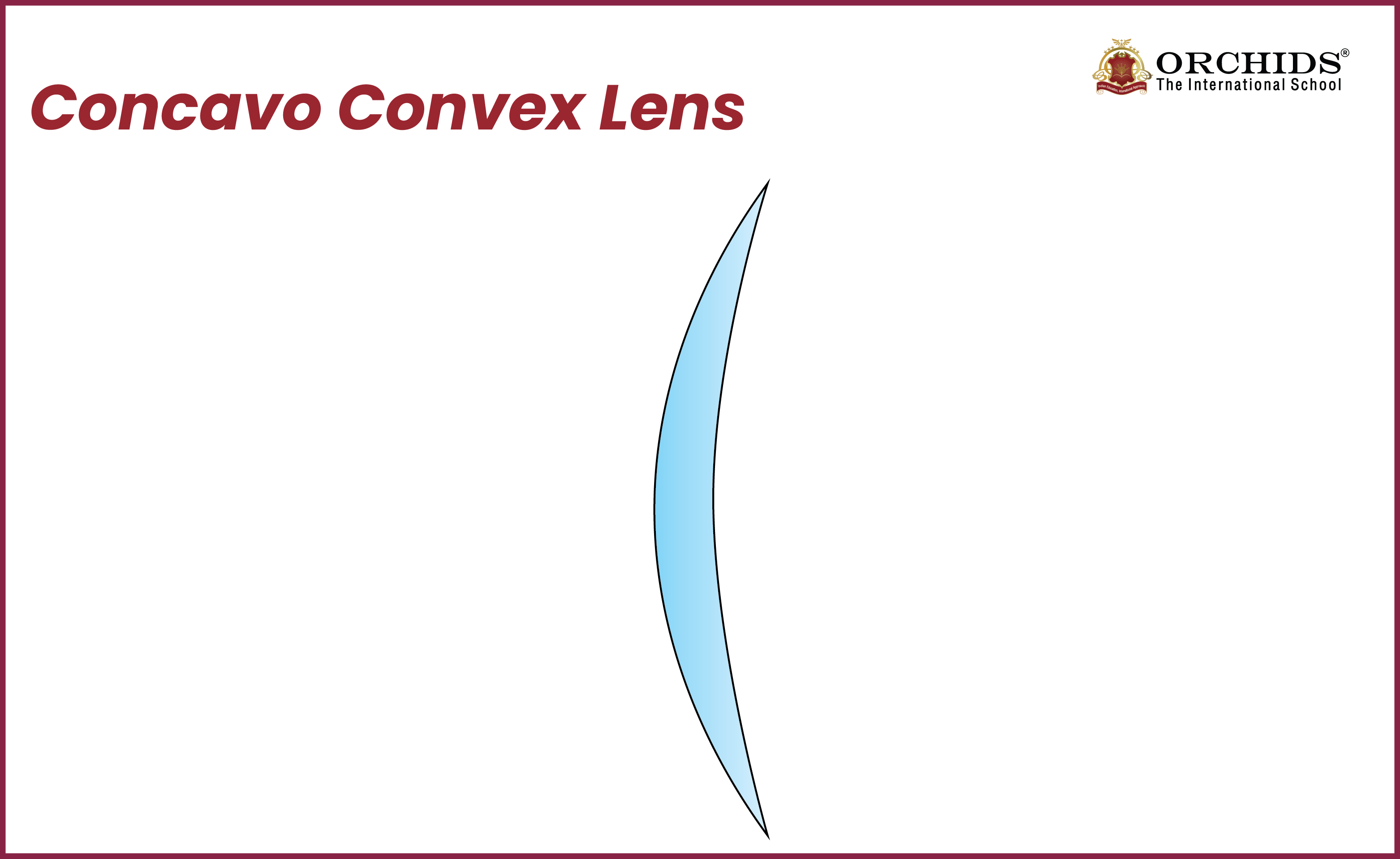
If one section is curved out on one side and the other one is in, it is known as a concavo-convex lens. This type is used in optical systems to reduce distortion.
Have you ever wondered how a convex lens is different from a concave lens? Let’s find out!
Difference Between Convex and Concave Lenses
To understand the convex lens better, let’s compare it with its opposite, the concave lens.
|
Convex Lens |
Concave Lens |
|
1. A concave lens diverges light rays. |
|
2. This lens is thinner at the centre and thicker at the edges. |
|
3. A concave lens always forms virtual and diminished images. |
|
4. Used in spectacles for correcting short-sightedness and in peepholes. |
Now that we’ve seen how convex lenses differ from concave lenses, you might be wondering where we actually use them in real life.
Read More: Difference between Concave and Convex Lenses
Let’s find out some amazing applications of convex lenses that make them so important in our daily lives!
Uses of a Convex Lens
From helping us see tiny objects to improving how cameras and telescopes capture light, convex lenses play a major role in everyday life.
Let’s discuss where we use them:
-
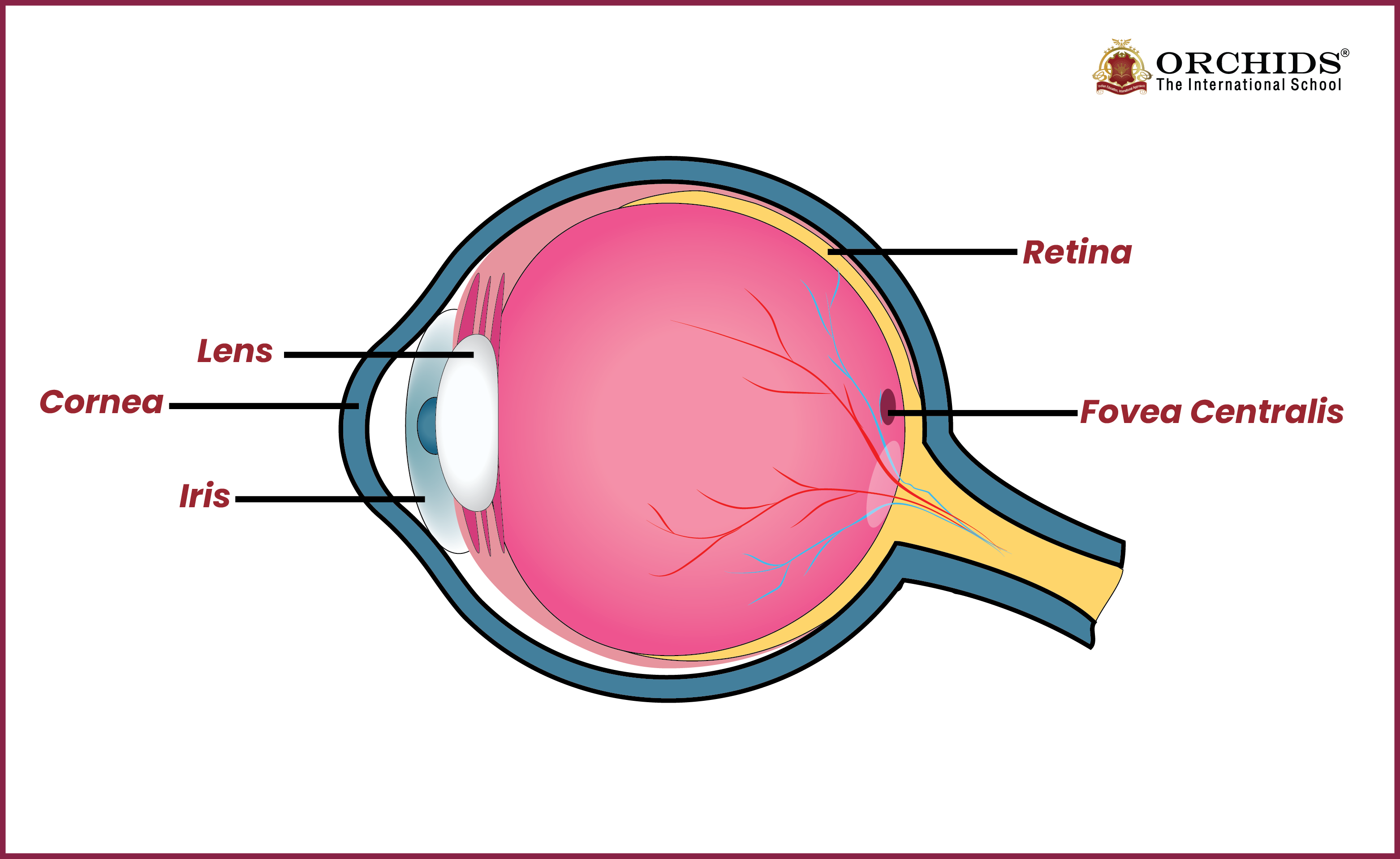
The natural lens in Human Eyes is Biconvex in shape. It helps focus light on the retina so we can see clearly.
-
Convex lenses in Cameras focus incoming light and produce sharp images on the sensor or film.
-
In Magnifying Glasses, convex lenses are used to increase the size of the viewed object.
-
To correct Hypermetropia (Long-Sightedness), people who cannot see nearby objects clearly use convex lenses in their spectacles to converge light correctly onto the retina.
-
Optical Instruments, like microscopes, telescopes, and projectors, use convex lenses to enlarge or focus images precisely.
Read More: Uses of Convex Lens
Till now, we have learned that convex lenses are designed specially for focusing, magnifying, or improving image clarity. A convex lens is a converging lens that focuses light to form clear, real, or magnified images. It plays an essential role in vision, photography, and scientific instruments and helps us study both the microscopic and the distant world with clarity.
Frequently Asked Questions on Convex Lens
1. What is a convex lens in simple terms?
A convex lens is a transparent piece of glass that converges light rays to a single point and forms either real or virtual images.
2. What are convex lenses made of?
Convex lenses are usually made of glass or clear plastic materials.
3. What is the shape of a convex lens?
A convex lens is thicker at the centre and thinner at the edges. This curved shape helps it bend light rays inward to meet at a focus point.
4. What are the types of convex lenses?
There are three main types, including:
-
Biconvex lenses.
-
Plano-convex lenses.
-
Concavo-Convex lenses.
5. What is the difference between concave and convex lenses?
A convex lens converges light rays, while a concave lens diverges them.
6. Give some real-life examples of convex lenses?
Magnifying glasses, cameras, microscopes, telescopes, and human eyes.
7. What is the focal length in a convex lens?
It is the distance between the optical centre of the lens and the point where parallel rays converge (focus).
Science isn't just a subject, it's the way of seeing the world. Curious how Orchids The International School teaches it that way? Talk to our admissions team.
Admissions Open for 2026-27
What type of concept pages would you prefer?
CBSE Schools In Popular Cities
- CBSE Schools in Bangalore
- CBSE Schools in Mumbai
- CBSE Schools in Pune
- CBSE Schools in Hyderabad
- CBSE Schools in Chennai
- CBSE Schools in Gurgaon
- CBSE Schools in Kolkata
- CBSE Schools in Indore
- CBSE Schools in Sonipat
- CBSE Schools in Delhi
- CBSE Schools in Rohtak
- CBSE Schools in Bhopal
- CBSE Schools in Aurangabad
- CBSE Schools in Jabalpur
- CBSE Schools in Jaipur
- CBSE Schools in Jodhpur
- CBSE Schools in Nagpur
- CBSE Schools in Ahmednagar
- CBSE School In Tumkur











Orchids The International School is one of India's leading chains of CBSE and ICSE schools, with 110+ schools across the country.