

Stephen Hawking
Stephen Hawking was one of those rare people whose mind changed the way we see the universe. Even when his body grew weaker due to a degenerative disease, his ideas only grew stronger. With courage, humour, and brilliance, he studied amazing mysteries, from black holes to the birth of the cosmos.
This article shares his life, inspiring journey, his major theories, and why he remains one of the greatest scientific thinkers in our history.
Table of Contents
- Who Was Stephen Hawking?
- Hawking’s Education and His Scientific Achievements
- Stephen Hawking’s Contribution
- Frequently Asked Questions on Stephen Hawking

Who Was Stephen Hawking?
Stephen William Hawking was born on8 January 1942 in Oxford, England. Today, he is often compared to Albert Einstein because of the way his ideas reshaped modern physics.
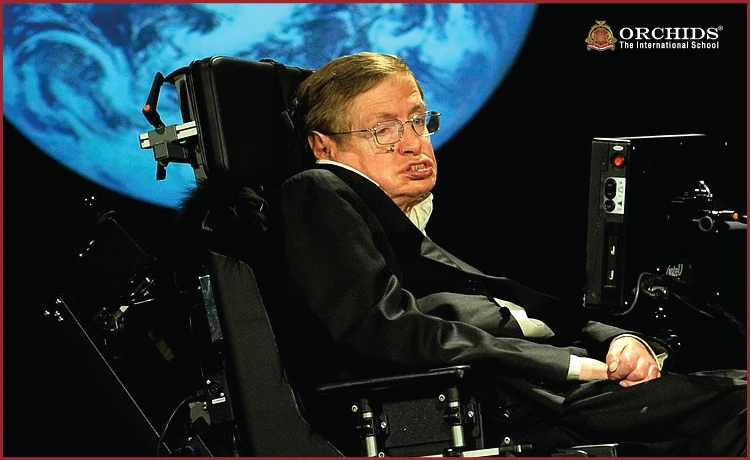
Hawking spent his entire life answering some of the biggest questions:
- How did the universe begin?
- What happens inside a black hole?
- How does space behave at the tiniest level?
What made him an extraordinary person was not just his intelligence but how he could explain complicated ideas in simple concepts. His books, lectures, talks, and interviews helped millions of people around the world understand physics in a very simple way.
So, let’s take a closer look at his higher studies and achievements.
Hawking’s Education and His Scientific Achievements
Stephen Hawking studied physics at Oxford University, and after that, he completed his PhD from Cambridge University in Applied Mathematics and Theoretical Physics, where he began his lifelong journey into understanding the universe.
Even after being diagnosed with ALS, a serious disease that affected his body, he continued to work, teach, and make useful discoveries.
Some of his most famous honours and awards include:
|
Award / Honour |
Year |
|
Commander of the Order of the British Empire (CBE) |
1982 |
|
Fellow of Honour |
1989 |
|
Presidential Medal of Freedom |
2009 |
|
Copley Medal |
2006 |
|
Wolf Prize |
1988 |
|
Adams Prize |
1966 |
You may be amazed after knowing that Hawking was also a member of several prestigious academies worldwide, showing how respected he was globally.
Beyond his formal awards, he authored popular science books such as A Brief History of Time, gave inspiring lectures, and became a global ambassador for science. His achievements showed that curiosity and determination could overcome even the toughest challenges, which is so inspiring for us.
Stephen Hawking’s Contribution
As we already know, Stephen Hawking’s work shaped modern cosmology. He shared many brilliant ideas that helped scientists understand how our universe works.
Now, let’s look at his major contributions one by one and understand why they changed the way we study the universe.
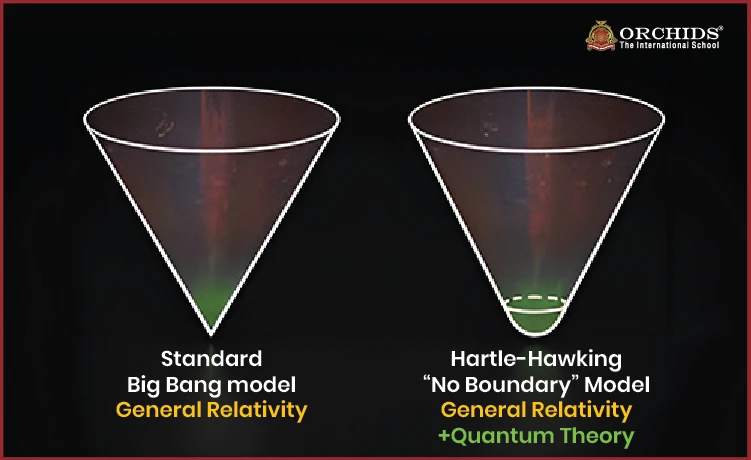
- Hawking proposed that the universe has no space-time boundaries. But nobody accepted that, but using advanced mathematics and quantum physics, he proved that space and time began with the Big Bang, meaning there was no “before”.
You may wonder after knowing this, our universe is finite but unbounded, much like the surface of a sphere, with no edge or border. Interesting!
- In the 1970s, Hawking brought together two powerful but very different theories: Einstein’s theory of relativity and quantum mechanics to studyBlack Holes.
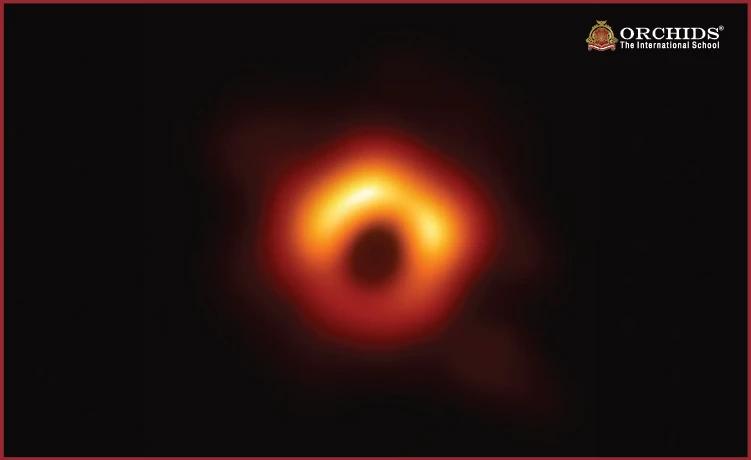
From his observations, Hawking concluded that black holes weren’t just cosmic traps swallowing everything around them. Instead, they were dynamic objects with surprising behaviour. Later on, Stephen William Hawking’s most famous thesis on black holes was proven right.
- When Stephen Hawking began his doctoral work, scientists were debating two ideas about how the universe began: the Big Bang theory and the Steady Statetheory. Both agreed that the universe is expanding, but they explained its origin differently.
The Big Bang theory suggested that our universe started from a tiny, super-dense point and has been expanding ever since. And according to the Steady State theory, the universe had no beginning and always looked the same, with new matter forming continuously.
Hawking’s research showed that the Steady State model had mathematical contradictions. His work supported the idea that the universe began from an extremely dense point called a singularity. The interesting part is that this conclusion is now widely accepted and remains central to modern cosmology.
- Next, Hawking made a revolutionary prediction thatBlack holes can slowly release energy.
He explained that near the event horizon, tiny particles can appear and escape because of quantum effects. This weak glow is called Hawking Radiation.
Years later, experiments with “sonic black holes” supported this idea.
- Toward the end of his life, Stephen Hawking studied one of the most interesting ideas in modern physics, the Multiverse. He suggested that our universe, which began with the Big Bang, might be just one of countless “bubble universes” existing side by side.
In his final research paper, which was published in 2018, Hawking introduced a new mathematical approach to help scientists understand and possibly identify our universe among many others.
However, like all theories about parallel universes, it remains unproven. Perhaps future discoveries will reveal whether Hawking’s bold ideas were right.
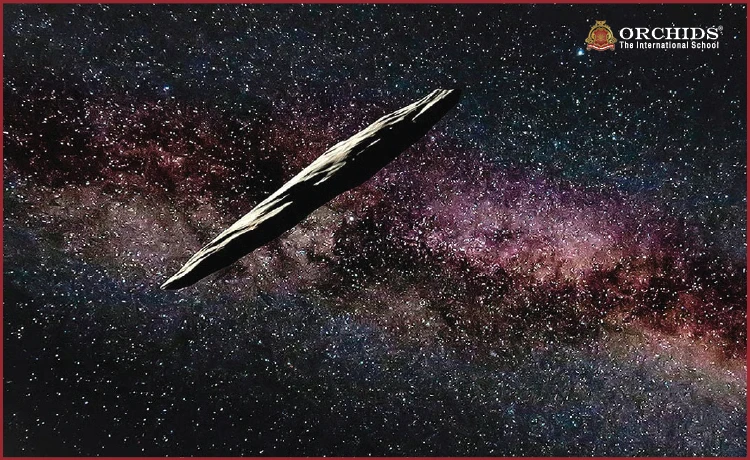
- Hawking also strongly believed that life beyond Earth is likely, saying that the vastness of the universe makes extraterrestrial life probable.
- Hawking even suggested that Earth might already have been visited, not by advanced beings, but possibly by microorganisms like bacteria or viruses.
So far, we have learned that Stephen Hawking was a famous scientist who helped people understand complex universe-related terms in simple words. Even though he was very sick, he studied black holes, the Big Bang, and space. He also explained hard science in ways everyone could understand. His life teaches us that curiosity, courage, and hard work can help us achieve great things.
Frequently Asked Questions on Stephen Hawking
1. Why is Stephen Hawking so famous?
He is known for his theories on black holes, the origin of the universe, and his ability to explain complex science to the public.
2. How many types of black holes exist?
Four main types of black holes are stellar, intermediate, supermassive, and miniature.
3. What does the Big Bang Theory explain?
It explains that the universe started from a highly dense, extremely small point and has been expanding ever since.
4. Who is Stephen Hawking, and what is he famous for?
A theoretical physicist and cosmologist who made groundbreaking contributions to understanding the universe, black holes, and the origin of time.
5. What is Stephen Hawking's most famous theory?
His prediction of Hawking Radiation and his work showing that the universe has no space-time boundaries.
Science isn't just a subject, it's the way of seeing the world. Curious how Orchids The International School teaches it that way? Talk to our admissions team.
Admissions Open for 2026-27
What type of concept pages would you prefer?
CBSE Schools In Popular Cities
- CBSE Schools in Bangalore
- CBSE Schools in Mumbai
- CBSE Schools in Pune
- CBSE Schools in Hyderabad
- CBSE Schools in Chennai
- CBSE Schools in Gurgaon
- CBSE Schools in Kolkata
- CBSE Schools in Indore
- CBSE Schools in Sonipat
- CBSE Schools in Delhi
- CBSE Schools in Rohtak
- CBSE Schools in Bhopal
- CBSE Schools in Aurangabad
- CBSE Schools in Jabalpur
- CBSE Schools in Jaipur
- CBSE Schools in Jodhpur
- CBSE Schools in Nagpur
- CBSE Schools in Ahmednagar
- CBSE School In Tumkur











Orchids The International School is one of India's leading chains of CBSE and ICSE schools, with 130+ schools across the country.